Heavy industry equipment suppliers and the spare parts gap
Author
Date Published
Reading Time
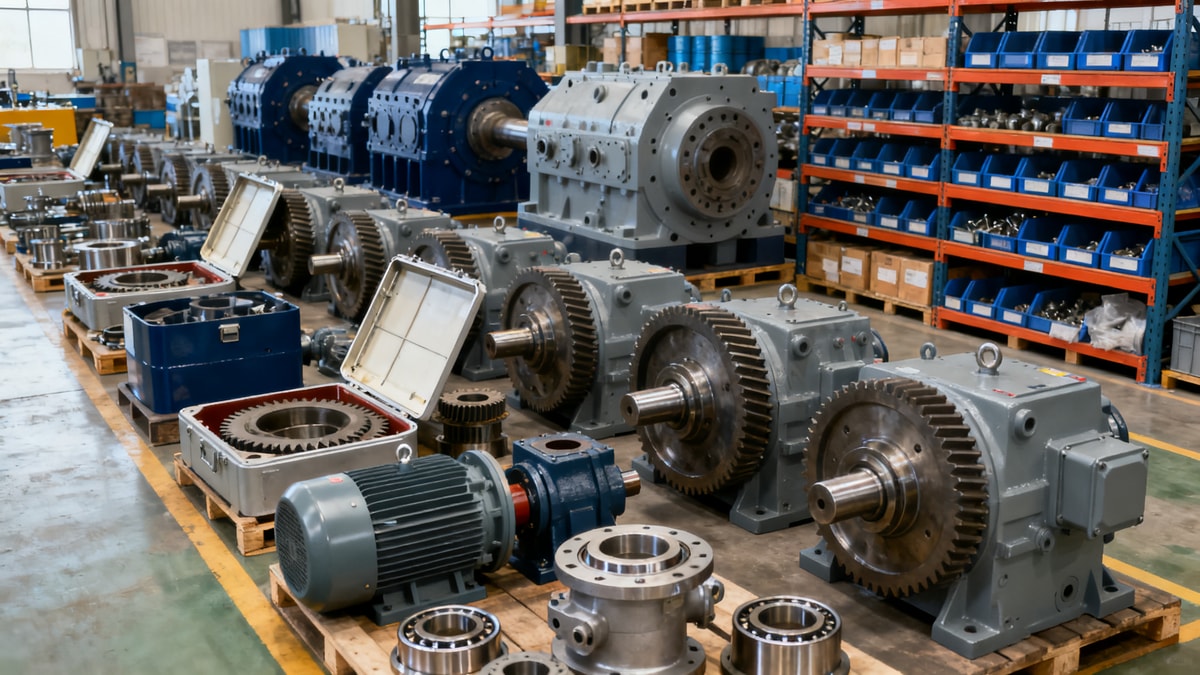
For after-sales maintenance teams, the real challenge often begins after installation—when delays, mismatched inventory, and aging systems expose the spare parts gap. Working with reliable heavy industry equipment suppliers is no longer just about sourcing machinery; it is about securing long-term uptime, compliance, and service continuity. This article explores how maintenance professionals can close that gap with smarter supplier strategies and stronger lifecycle support.
Why maintenance teams should use a checklist before judging suppliers
For after-sales service personnel, the spare parts problem is rarely caused by one issue alone. It usually comes from a chain of weak points: poor documentation, unclear part numbering, obsolete components, limited stock visibility, or suppliers that focus on equipment sales but not lifecycle support. That is why a checklist-based approach works better than broad supplier comparisons.
When evaluating heavy industry equipment suppliers, maintenance teams need fast answers to practical questions: Can the supplier identify the exact part revision? Are emergency replacements available? Do they support legacy equipment? Can they prove compliance with CE, UL, ISO, or plant-specific standards? A structured review prevents expensive surprises during shutdowns and helps teams defend maintenance decisions internally.
First-pass checklist: what to confirm before a spare parts gap becomes a downtime event
Use the following checklist as an initial screening tool when working with heavy industry equipment suppliers. It is designed for maintenance environments where uptime, safety, and continuity matter more than lowest unit cost.
- Verify part traceability: confirm whether each spare part has a unique part number, revision history, material specification, and compatibility note for older equipment generations.
- Check lead-time realism: ask for standard lead time, expedited lead time, and actual historical delivery performance rather than brochure claims.
- Review critical stock support: determine whether the supplier can recommend minimum on-site stock levels for high-failure or long-lead components.
- Confirm obsolescence management: ask how the supplier handles discontinued motors, bearings, sensors, seals, switchgear parts, valves, or control modules.
- Assess technical response quality: maintenance teams should test how quickly the supplier can answer fitment, tolerance, installation, or troubleshooting questions.
- Validate compliance records: request certificates, testing data, and safety documentation relevant to the operating environment.
- Check service documentation: installation manuals, exploded views, maintenance intervals, torque values, and troubleshooting guides should be current and easy to access.
- Review warranty and failure handling: clarify root-cause support, replacement process, and responsibility for repeat failures.
Core evaluation criteria for heavy industry equipment suppliers
Not all heavy industry equipment suppliers are equally useful to maintenance teams. Some are strong in project delivery but weak in post-installation support. Others can supply parts, but lack engineering depth. The table below helps maintenance personnel prioritize what matters most.
For organizations operating across mechanical systems, instrumentation, electrical distribution, environmental controls, and safety systems, supplier strength must be judged across the full asset lifecycle. This is especially important in complex industrial environments where one unavailable part can stop multiple processes.
How the spare parts gap usually appears in real maintenance operations
Maintenance teams often notice the gap only when a failure occurs, but the warning signs show up earlier. Recognizing them early helps teams hold more productive discussions with heavy industry equipment suppliers.
- Equipment was sourced for capital efficiency, but spare parts planning was never standardized.
- The original supplier changed product lines, factory locations, or approved component brands.
- Documentation does not match as-built site conditions after field modifications.
- Procurement relies on old descriptions instead of exact technical references.
- Critical parts exist, but no one has ranked them by downtime impact or replacement difficulty.
In each case, the issue is not simply “missing stock.” The real problem is missing visibility. Strong heavy industry equipment suppliers help close that visibility gap by combining parts support with documentation discipline, engineering guidance, and clear escalation paths.
Scenario-based checks: what matters most in different maintenance environments
For aging plants and legacy systems
Ask whether the supplier maintains cross-reference databases for obsolete components. Good heavy industry equipment suppliers can propose retrofit kits, material upgrades, or approved alternates without forcing a full system replacement. Maintenance teams should also request drawings and interface dimensions to confirm interchangeability before ordering.
For high-risk safety or compliance applications
When parts affect fire protection, pressure integrity, electrical safety, environmental performance, or operator protection, the lowest-cost substitute may create audit or legal exposure. In these cases, prioritize suppliers that can deliver test records, certification continuity, and documented approval paths for substitutions.
For shutdown-driven maintenance schedules
If plant access windows are short, supplier coordination matters as much as inventory. Confirm packaging readiness, partial shipment rules, kit assembly capability, and site delivery timing. Heavy industry equipment suppliers with weak logistics coordination can turn a planned shutdown into a costly extension.
For remote sites or global fleets
Maintenance staff at remote operations should review regional warehousing, export paperwork support, and multi-site standardization. Suppliers that can support the same part family across several countries reduce training burden and simplify spare parts strategy.
Common oversights that widen the spare parts gap
Even experienced teams can overlook details that later cause service delays. Watch for these high-impact mistakes:
- Assuming part numbers are unchanged after design updates or regional production shifts.
- Buying non-critical and critical parts through the same approval speed and stocking logic.
- Ignoring consumables, seals, fasteners, connectors, calibration items, and installation accessories that are necessary to complete the repair.
- Failing to collect root-cause data after repeated part failure, which prevents supplier-side design correction.
- Treating all heavy industry equipment suppliers as interchangeable, even when technical support depth differs dramatically.
A practical rule is simple: if a spare part affects uptime, safety, or restart validation, it must be reviewed not only as a product but as part of a service workflow.
Execution plan: how maintenance teams can improve supplier performance in 90 days
Closing the spare parts gap does not always require a full vendor overhaul. In many cases, maintenance teams can improve outcomes quickly by creating a more disciplined operating process with their current heavy industry equipment suppliers.
- Map critical assets: rank equipment by downtime impact, safety impact, and parts lead time.
- Build a critical spares register: include part numbers, alternates, revision status, stock location, and reorder trigger.
- Standardize supplier scorecards: track on-time delivery, accuracy, technical response time, and failure follow-up quality.
- Run an obsolescence review: ask suppliers to flag vulnerable components six to twelve months in advance.
- Consolidate documentation: ensure manuals, certificates, BOMs, and service bulletins are accessible to both maintenance and procurement.
- Set escalation rules: define who approves alternates, expedited shipping, and emergency sourcing during outages.
Questions to ask heavy industry equipment suppliers before the next urgent order
A strong supplier conversation is specific. Before your next outage, shutdown, or high-risk maintenance intervention, prepare these questions:
- Which spare parts in this system have the highest failure frequency and longest replenishment cycle?
- What approved alternates exist if the original component becomes obsolete?
- Can you provide the latest revision drawings, material data, and compliance certificates?
- What stock is available regionally, and what can be reserved for planned shutdowns?
- How do you support troubleshooting when the issue may involve installation conditions rather than the part itself?
- What service metrics can you commit to for urgent after-sales support?
FAQ for after-sales maintenance teams
How do we know if a supplier is truly maintenance-friendly?
Look beyond sales responsiveness. Maintenance-friendly heavy industry equipment suppliers can identify exact parts quickly, support older equipment, provide complete technical documents, and respond effectively when failures repeat.
Should we reduce the number of suppliers or diversify?
For critical systems, the answer is usually selective diversification. Consolidate where standardization brings control, but maintain backup options where lead time, obsolescence, or single-source exposure is high.
What is the biggest warning sign in spare parts support?
A supplier that cannot clearly explain part compatibility, revision changes, or replacement pathways for legacy assets is a major risk for after-sales maintenance teams.
Final action guide for closing the spare parts gap
The best heavy industry equipment suppliers do more than ship components. They help maintenance teams protect uptime, preserve compliance, and extend the useful life of industrial assets. For after-sales professionals, the most effective next step is to treat spare parts support as a strategic capability, not a reactive purchasing task.
If your organization needs to improve supplier fit, start by gathering five items: critical asset lists, historical failure data, current spare parts inventory, equipment revision records, and expected shutdown schedules. With those inputs, you can ask better questions about compatibility, lifecycle support, lead time, stocking strategy, budget priorities, and cooperation models. That is the fastest path to narrowing the spare parts gap and building more reliable partnerships with heavy industry equipment suppliers.
Technical Specifications
- SASO Mandates Dual Energy Label for Industrial Transformers in Saudi Arabia from May 2026Author :Grid Infrastructure Analyst
- EN 61000-4-30:2026 Enforced: Class A Harmonic Traceability Mandatory for EU PQ AnalyzersAuthor :Precision Metrology Expert
- US DOE Level 3 Transformer Efficiency Standard Effective July 1, 2026Author :Grid Infrastructure Analyst
Expert Insights

Chief Security Architect
Dr. Thorne specializes in the intersection of structural engineering and digital resilience. He has advised three G7 governments on industrial infrastructure security.
Related Analysis
- May 06, 2026SASO Mandates Dual Energy Label for Industrial Transformers in Saudi Arabia from May 2026Author :Grid Infrastructure Analyst
- May 06, 2026EN 61000-4-30:2026 Enforced: Class A Harmonic Traceability Mandatory for EU PQ AnalyzersAuthor :Precision Metrology Expert
- May 06, 2026US DOE Level 3 Transformer Efficiency Standard Effective July 1, 2026Author :Grid Infrastructure Analyst
Core Sector // 01
Security & Safety
- EPC contractors for mining projects: what causes budget driftAuthor :Heavy Industry Strategist

- Heavy industry equipment suppliers and the spare parts gapAuthor :Heavy Industry Strategist

- How heavy industry machinery manufacturers are adapting to lead timesAuthor :Heavy Industry Strategist

- Mechanical Engineering Standards That Commonly Delay ApprovalAuthor :Heavy Industry Strategist

- When a mechanical engineering supplier becomes a project riskAuthor :Heavy Industry Strategist

- Conveyor Roller Belts: Early Wear Signs You Should Not IgnoreAuthor :Heavy Industry Strategist

- Gear Rack and Pinion Backlash Problems Often Start HereAuthor :Heavy Industry Strategist

- PU Timing Belts Wholesale: Why Cheap Belts Cost More LaterAuthor :Heavy Industry Strategist