EPC contractors for mining projects: what causes budget drift
Author
Date Published
Reading Time
For finance approvers, cost certainty is as critical as production output. Yet even experienced EPC contractors for mining projects can face budget drift when scope changes, logistics tighten, compliance demands rise, or procurement decisions miss lifecycle realities. This article examines the hidden cost drivers behind overruns and highlights how better planning, supplier scrutiny, and risk controls can protect capital efficiency in complex mining developments.
Why do EPC contractors for mining projects struggle to keep budgets stable?
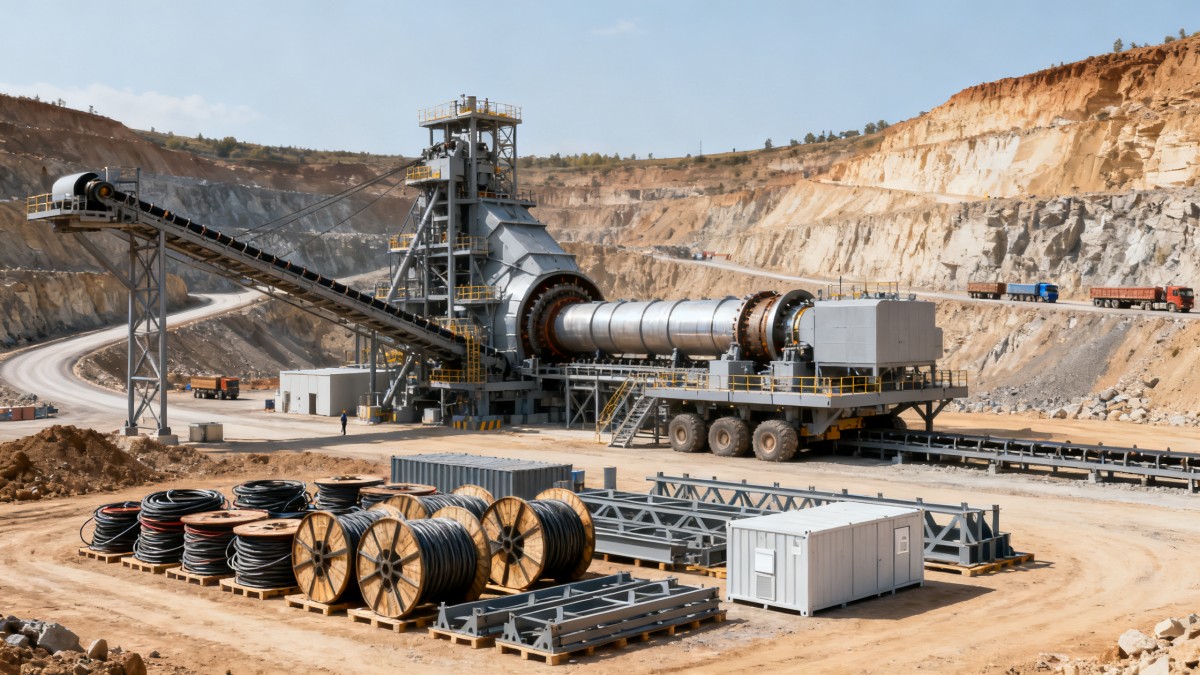
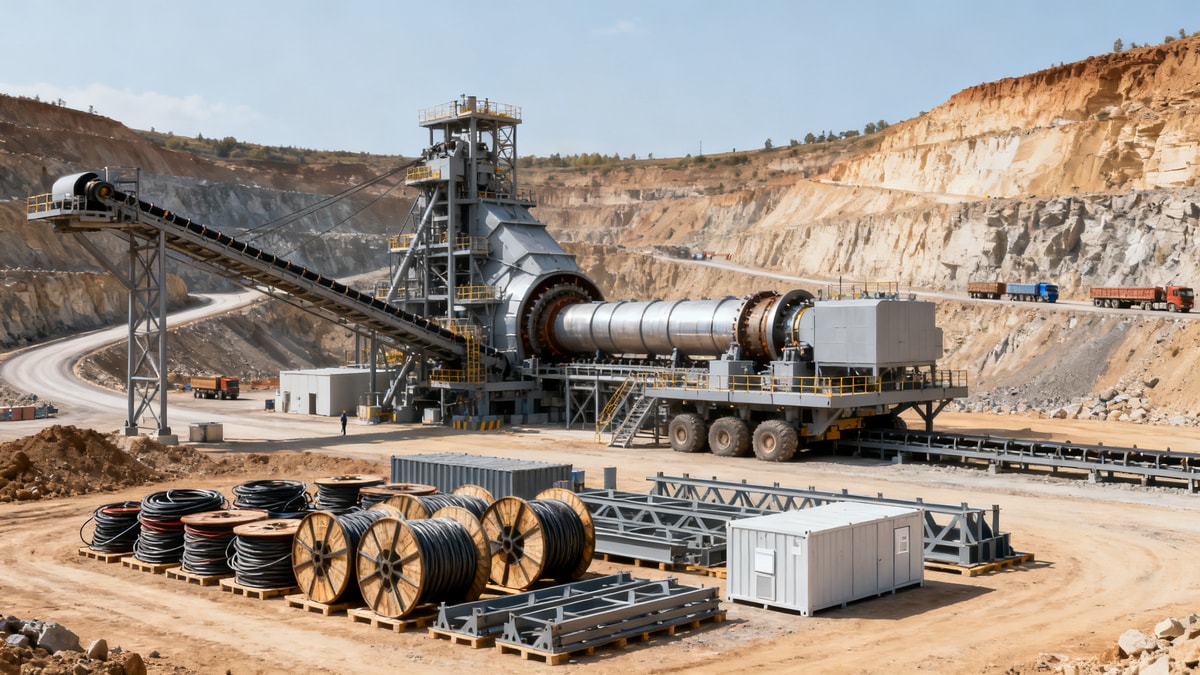
Mining developments rarely behave like standard industrial builds. They combine civil works, process systems, heavy mechanical packages, electrical distribution, water management, environmental controls, and safety infrastructure in remote and often volatile operating conditions. For finance teams, that means the approved budget is exposed to multiple moving variables long before commissioning starts.
When stakeholders review proposals from EPC contractors for mining projects, the headline number can appear disciplined, yet the real cost picture often sits in assumptions, exclusions, escalation clauses, freight allowances, and technical compliance gaps. Budget drift usually begins not with one dramatic failure, but with a chain of underestimated decisions.
In capital-intensive mining, financial risk is closely tied to engineering definition quality. If the design basis is immature, procurement packages are incomplete, and site constraints are not fully modeled, then every downstream activity becomes more expensive. This is why finance approvers should evaluate cost reliability, not just initial bid competitiveness.
- Early estimates may exclude difficult access conditions, temporary power, camp infrastructure, or specialized lifting requirements.
- Supplier quotations may be based on limited specifications, leaving room for later variation claims.
- Compliance upgrades can emerge after design reviews, especially for electrical safety, emissions control, pressure systems, and instrumentation integrity.
- Global logistics and commodity price swings can reshape procurement costs between approval and purchase order release.
For organizations managing board approvals or investment committee reviews, the lesson is direct: budget discipline depends on technical clarity, procurement governance, and realistic contingency logic from the start.
Which hidden cost drivers create budget drift in mining EPC contracts?
The most common overrun drivers are usually visible before contract award, but they are often buried inside fragmented responsibilities. Finance approvers need a structured way to identify where EPC contractors for mining projects are most likely to encounter cost expansion.
The table below summarizes frequent sources of budget drift and why they matter during financial review.
For finance reviewers, these cost drivers should not be treated as generic project risk. Each one can be tested during bid review, supplier validation, and contract negotiation. If they remain untested, a low bid may simply be an underexplained bid.
Design immaturity is often the first source of financial erosion
A mining EPC budget is only as reliable as its design basis. If ore characteristics, water chemistry, dust control needs, load profiles, or metallurgy assumptions shift, then piping classes, material selections, instrumentation ranges, and motor sizing can change with them. Those changes do not stay in engineering; they spread into procurement, installation, commissioning, and spares.
Procurement shortcuts can create larger lifecycle liabilities
Finance teams sometimes see procurement substitutions as savings opportunities. In mining, a cheaper valve, cable gland, analyzer, bearing assembly, or enclosure can trigger failure in corrosive, abrasive, or high-vibration conditions. Replacement costs are then amplified by shutdown risk, labor mobilization, and safety exposure.
Schedule compression has a direct cost premium
When owners require faster delivery, EPC contractors for mining projects often face expedited fabrication, premium freight, parallel work crews, overtime, and reduced time for factory testing. A compressed schedule may still be justified, but finance approvers should insist on explicit visibility of the cost premium rather than letting it appear later as claims.
What should finance approvers compare before selecting EPC contractors for mining projects?
Selecting between proposals requires more than comparing engineering fees or total installed cost. For capital governance, the better question is which contractor presents the most controllable risk profile. The matrix below helps finance approvers compare bids on factors that typically influence final outturn cost.
A strong financial approval process should force alignment between technical and commercial review. If a contractor appears cheaper only because documentation is thinner, assumptions are broader, or exclusions are more aggressive, the proposal may be shifting risk rather than reducing it.
- Ask for a list of long-lead items and the date by which each purchase order must be placed to preserve the schedule.
- Require visibility on vendor prequalification for safety-critical, metrology-critical, and power-critical equipment.
- Separate firm pricing from provisional allowances so capital exposure is transparent.
- Test whether freight, customs, inspection, and commissioning support are fully carried in the estimate.
How do compliance, technical standards, and supplier quality affect total project cost?
For heavy industry, compliance is not a paperwork side issue. It directly shapes equipment selection, inspection scope, installation method, and start-up readiness. Mining projects often require alignment with international safety, electrical, environmental, and quality management frameworks. Even when local law defines the baseline, global lenders, insurers, or operating partners may demand stricter documentation and testing discipline.
Global Industrial Core focuses on the foundational systems behind safe and resilient industrial infrastructure: security and safety, instruments and measurement, electrical and power grid systems, environment and ecology controls, and mechanical components and metallurgy. For finance approvers, this perspective matters because these five pillars are where hidden non-compliance costs often emerge.
Typical areas where standards increase or protect budget
- Electrical packages may require revised protection studies, enclosure ratings, cable specifications, or grounding design to satisfy operating conditions and safety expectations.
- Instrumentation may need tighter calibration traceability, environmental sealing, material compatibility, or hazardous area suitability than originally assumed.
- Mechanical and metallurgical components may need upgraded alloys, wear resistance, or corrosion protection to handle slurry, dust, heat, or chemical exposure.
- Environmental systems may require additional monitoring, containment, filtration, or treatment steps that materially change both capital and operating budgets.
The financial advantage of rigorous supplier scrutiny is not that it guarantees no variation. It is that it identifies technical gaps before fabrication and site installation make correction expensive. That is one reason data-driven sourcing intelligence is valuable to organizations reviewing EPC contractors for mining projects.
How can finance teams reduce budget drift before contract award?
The strongest cost control actions happen before the notice to proceed. Once equipment is released, steel is cut, and site works begin, leverage falls quickly. Finance approvers should require a disciplined pre-award checklist that challenges assumptions across engineering, sourcing, logistics, and compliance.
A practical pre-approval checklist
- Confirm design maturity. Review whether process criteria, site data, utility interfaces, and environmental conditions are sufficiently defined for firm pricing.
- Map commercial exclusions. Identify every excluded item and estimate whether it is likely to return later as an owner cost or variation.
- Stress-test long-lead procurement. Ask what happens if a key transformer, pump, analyzer, MCC component, or structural package slips by four to eight weeks.
- Validate supplier quality. Require evidence of manufacturing controls, inspection planning, and documentation discipline for critical equipment classes.
- Check contingency logic. Contingency should reflect genuine uncertainty, not compensate for undefined scope.
This is where a specialist intelligence partner can add value. By evaluating sourcing pathways, technical documentation, and risk concentration across foundational systems, finance teams can move beyond price comparison toward capital protection.
What are common misconceptions about mining EPC budgets?
Several assumptions repeatedly undermine approval quality. They sound reasonable in meetings, but they usually weaken cost control in the field.
“The lowest compliant bid is the safest financial choice”
Not always. Two bids may appear technically compliant while carrying very different levels of schedule realism, documentation depth, logistics planning, or supplier robustness. Low price without detailed execution credibility often turns into claims, substitutions, or deferred quality issues.
“Contingency will solve uncertainty”
Contingency is not a substitute for scope clarity. If the basis of design is weak, contingency can disappear quickly and still leave the project underfunded. Finance teams should separate foreseeable scope completion from true residual risk.
“A cheaper component saves money if it fits the specification”
In mining service, nominal specification alignment may not reflect actual duty severity. Abrasion, temperature swings, humidity, dust ingress, chemical attack, and vibration can shorten service life. Lifecycle cost often matters more than the initial purchase price.
FAQ: what do finance approvers ask most about EPC contractors for mining projects?
The questions below are common in procurement reviews, internal approval discussions, and lender-facing documentation for mining capital projects.
How should we evaluate contingency in proposals from EPC contractors for mining projects?
Check what uncertainty the contingency is covering. If it addresses unresolved engineering, missing site data, or unclear owner responsibilities, it may indicate the estimate is still immature. A more reliable proposal explains defined scope, assumptions, escalation treatment, and residual risk separately.
Which procurement categories most often trigger overruns?
Long-lead electrical equipment, specialized instrumentation, process pumps, wear-resistant mechanical parts, structural steel, and imported compliance-sensitive items are common pressure points. These categories are vulnerable to design updates, factory capacity constraints, commodity changes, and documentation delays.
What documentation should finance reviewers request before approval?
At minimum, ask for scope boundaries, procurement plan, long-lead item register, vendor qualification logic, assumptions and exclusions list, logistics basis, preliminary inspection plan, and change management method. These documents reveal whether the budget is being built on evidence or optimism.
How do we balance lower capex against reliability?
Use a lifecycle lens. Compare not only purchase price, but also expected maintenance interval, spare parts burden, installation complexity, energy impact, and consequence of failure. In remote mines, a modest capex saving can become expensive if replacement requires downtime and specialist mobilization.
Why choose us when reviewing risk in mining capital procurement?
Global Industrial Core supports financial and procurement decision-makers who need more than vendor marketing claims. Our focus is on the industrial systems that most directly influence safety, uptime, compliance, and capital efficiency. That includes the sourcing and technical realities behind instruments and measurement, electrical infrastructure, environmental controls, mechanical components, metallurgy, and safety-critical systems.
If your team is assessing EPC contractors for mining projects, we can help you review bid assumptions, compare supplier pathways, identify cost exposure in technical specifications, and clarify where compliance requirements may affect procurement timing or budget. We can also support discussions around parameter confirmation, product selection logic, delivery lead times, certification expectations, replacement alternatives, and quotation alignment across critical equipment categories.
Contact us if you need a more disciplined basis for capital approval. We can help your team examine whether a proposal is genuinely cost-controlled, which packages deserve deeper supplier scrutiny, how to structure questions before award, and where hidden lifecycle costs may sit inside an apparently competitive mining EPC budget.
Technical Specifications
- SASO Mandates Dual Energy Label for Industrial Transformers in Saudi Arabia from May 2026Author :Grid Infrastructure Analyst
- EN 61000-4-30:2026 Enforced: Class A Harmonic Traceability Mandatory for EU PQ AnalyzersAuthor :Precision Metrology Expert
- US DOE Level 3 Transformer Efficiency Standard Effective July 1, 2026Author :Grid Infrastructure Analyst
Expert Insights

Chief Security Architect
Dr. Thorne specializes in the intersection of structural engineering and digital resilience. He has advised three G7 governments on industrial infrastructure security.
Related Analysis
- May 06, 2026SASO Mandates Dual Energy Label for Industrial Transformers in Saudi Arabia from May 2026Author :Grid Infrastructure Analyst
- May 06, 2026EN 61000-4-30:2026 Enforced: Class A Harmonic Traceability Mandatory for EU PQ AnalyzersAuthor :Precision Metrology Expert
- May 06, 2026US DOE Level 3 Transformer Efficiency Standard Effective July 1, 2026Author :Grid Infrastructure Analyst
Core Sector // 01
Security & Safety
- EPC contractors for mining projects: what causes budget driftAuthor :Heavy Industry Strategist

- Heavy industry equipment suppliers and the spare parts gapAuthor :Heavy Industry Strategist

- How heavy industry machinery manufacturers are adapting to lead timesAuthor :Heavy Industry Strategist

- Mechanical Engineering Standards That Commonly Delay ApprovalAuthor :Heavy Industry Strategist

- When a mechanical engineering supplier becomes a project riskAuthor :Heavy Industry Strategist

- Conveyor Roller Belts: Early Wear Signs You Should Not IgnoreAuthor :Heavy Industry Strategist

- Gear Rack and Pinion Backlash Problems Often Start HereAuthor :Heavy Industry Strategist

- PU Timing Belts Wholesale: Why Cheap Belts Cost More LaterAuthor :Heavy Industry Strategist