Heavy industry automation solutions that cut downtime first
Author
Date Published
Reading Time
For project managers under pressure to deliver uptime, compliance, and cost control, heavy industry automation solutions are no longer optional—they are the fastest path to reducing unplanned shutdowns first. From power systems and process measurement to safety integration and predictive maintenance, the right automation strategy helps industrial teams stabilize operations, protect assets, and keep complex projects on schedule.
What do heavy industry automation solutions actually include?
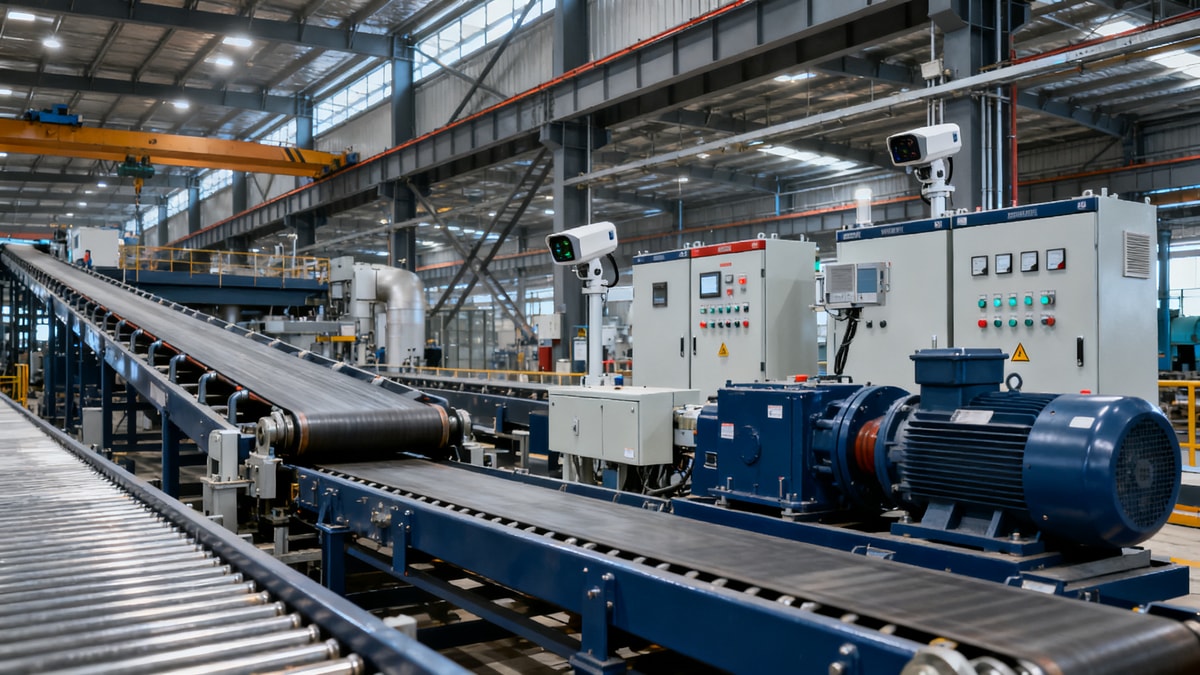
When project leaders search for heavy industry automation solutions, they are rarely looking for a single product. They are usually evaluating a connected stack of hardware, software, safety logic, and monitoring tools designed to keep industrial assets running under harsh, high-risk conditions. In practical terms, this can include PLC and DCS platforms, SCADA visualization, industrial sensors, power monitoring, condition-based maintenance systems, machine safety interlocks, networked control panels, and data integration layers that turn raw plant information into decisions.
In steel, mining, water treatment, cement, energy, chemical processing, and large manufacturing environments, downtime often starts small: unstable power quality, drifting instrumentation, a missed alarm, motor overload, lubrication failure, or poor operator visibility. Automation does not eliminate all risk, but it reduces the time between problem detection and response. That is why modern heavy industry automation solutions are often judged not only by control capability, but by how quickly they identify abnormal conditions before they escalate into shutdowns.
For EPC teams and facility managers, the most useful approach is to think of automation as an operational reliability framework. It connects field devices, control systems, safety requirements, electrical infrastructure, and maintenance planning into one coordinated architecture. This is especially important when compliance with CE, UL, ISO, or plant-specific safety protocols must be built into the project from the beginning rather than added later at extra cost.
Why are these systems becoming the first choice for cutting downtime?
Heavy industry automation solutions earn attention because downtime is expensive in more ways than production loss. A stoppage can trigger safety incidents, contractual penalties, utility inefficiency, product quality issues, delayed commissioning, and rushed emergency procurement. For project managers, this means one unplanned event can affect schedule, budget, stakeholder confidence, and long-term asset performance at the same time.
Automation addresses this by improving three areas first: visibility, response speed, and repeatability. Visibility comes from continuous measurement of flow, pressure, temperature, vibration, current, voltage, and process status. Response speed improves because alarms, trip conditions, and remote diagnostics shorten the lag between failure onset and intervention. Repeatability matters because standardized control logic reduces operator variation across shifts, sites, and operating modes.
Another reason these systems matter is that many heavy facilities operate with aging assets mixed with newer digital equipment. In such environments, reliability gains often come not from replacing everything, but from connecting what already exists into a smarter control and monitoring layer. A phased automation upgrade can therefore deliver measurable uptime improvements without forcing a complete plant rebuild.
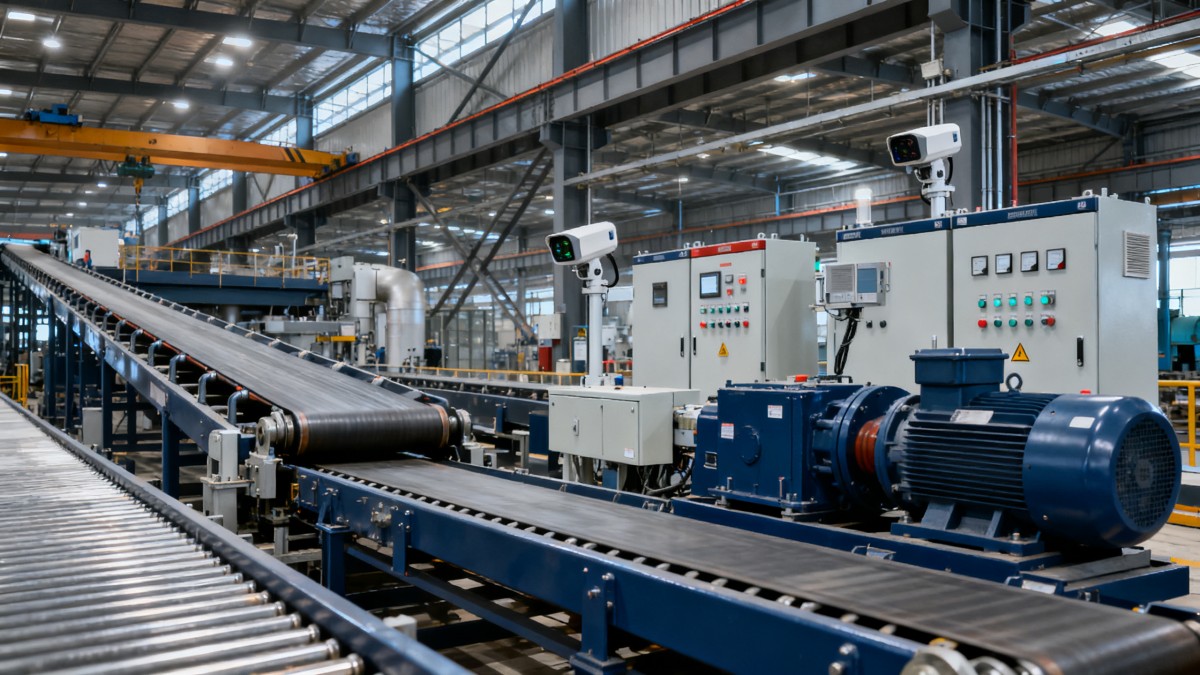
Which industrial scenarios benefit most from heavy industry automation solutions?
Not every operation needs the same level of automation maturity, but some scenarios almost always justify early investment. The first is any process with high-value continuous production, where even brief stoppages create major financial impact. Examples include smelting lines, turbine systems, kiln operations, large pumping networks, and high-throughput conveyor systems. In these environments, predictive alerts and automatic protective responses are often more valuable than manual supervision alone.
The second scenario involves safety-critical operations. If equipment failure can endanger personnel, cause fire risk, create pressure events, contaminate output, or breach environmental limits, automation becomes part of the risk control strategy. Safety PLCs, gas detection, emergency shutdown logic, and compliant instrumentation are no longer optional enhancements; they become project essentials.
A third scenario is multi-site or multi-contractor project execution. When EPC contractors, operators, electrical teams, and maintenance departments all need a common operating picture, heavy industry automation solutions help standardize data, reporting, and fault response. This is particularly useful during commissioning, ramp-up, and handover, when inconsistent documentation and fragmented controls often cause avoidable delays.
Finally, sectors under tighter energy, emissions, or quality pressure benefit strongly. Automated measurement and control can reduce process variation, improve energy efficiency, and document compliance performance in a way manual systems cannot sustain consistently.
How should project managers compare automation options without getting lost in features?
A common mistake is to compare heavy industry automation solutions only by software interface or initial equipment cost. That approach misses what matters most in heavy industrial settings: reliability under load, compatibility with harsh conditions, safety certification, spare parts strategy, lifecycle support, and integration with existing electrical and mechanical systems.
A better comparison method is to evaluate the solution against operational failure modes. Ask what typically causes downtime in your project: unstable power input, instrument drift, motor or gearbox wear, human error, process excursions, or limited troubleshooting capability. Then map automation features directly to those risks. This keeps the selection grounded in uptime results rather than vendor claims.
The table below provides a practical comparison framework for project management teams.
For international projects, another practical filter is sourcing resilience. If a system depends on hard-to-replace proprietary components with long lead times, it may look efficient on paper but become a major operational liability later. Project managers should therefore weigh total uptime value, not just capital expenditure.
What are the most common implementation mistakes?
One major mistake is treating automation as an isolated controls package rather than part of the plant’s foundational infrastructure. In reality, heavy industry automation solutions work best when aligned with power quality, safety engineering, instrumentation selection, mechanical reliability, and maintenance workflows. If these disciplines are planned separately, the final system often suffers from communication gaps, nuisance alarms, poor data quality, or weak handover procedures.
Another mistake is over-automating unstable processes. Automation can stabilize operations, but it cannot permanently compensate for poor mechanical design, inadequate environmental protection, wrong material selection, or chronic utility issues. If the root cause of failure is corrosion, vibration, contamination, or undersized electrical infrastructure, software alone will not deliver the expected uptime improvement.
A third problem is ignoring operator usability. Complex dashboards and excessive alarms may satisfy technical specifications but still fail in daily use. In heavy operations, systems must support fast interpretation under pressure. Clear alarm prioritization, intuitive trend views, and well-documented manual override procedures are often more valuable than visually impressive but cluttered control screens.
Teams also underestimate commissioning and change management. Even strong heavy industry automation solutions need sensor validation, logic testing, cybersecurity checks, and operator training before they deliver real value. When these steps are compressed to protect schedule, downtime often reappears during startup or early production.
How can teams justify cost, schedule, and ROI to stakeholders?
The most credible business case does not start with broad digital transformation language. It starts with measurable operational pain. Project managers should quantify how much unplanned downtime currently costs per hour, how often key assets fail, how long diagnosis takes, and where compliance or quality risks create hidden expense. Once these numbers are clear, the value of heavy industry automation solutions becomes easier to explain in financial terms.
ROI usually comes from a combination of fewer stoppages, faster fault isolation, lower maintenance waste, reduced safety exposure, more stable energy use, and improved output consistency. In many heavy facilities, one prevented failure event can justify a large portion of the automation investment. This is particularly true for substations, rotating equipment, burner systems, process lines, and remote utility networks where interruption costs are disproportionate to component price.
From a scheduling perspective, phased deployment often works better than a single large transformation. Teams can prioritize the assets with the highest downtime risk first, such as critical motors, switchgear, boilers, compressors, pumping stations, or process bottlenecks. This allows results to appear earlier while reducing implementation risk. It also gives stakeholders proof that the automation roadmap is grounded in plant reality rather than technology trend chasing.
What should buyers confirm before selecting a supplier or partner?
Before moving toward procurement or design finalization, teams should verify whether the supplier understands the specific industrial environment, not just generic automation theory. Heavy industry automation solutions for a water treatment plant differ from those for a foundry, a bulk material handling terminal, or a high-voltage utility interface. The supplier should be able to discuss environmental conditions, safety obligations, process variability, installation constraints, and maintenance realities in detail.
It is also essential to confirm certification pathways, testing documentation, integration capability, and lifecycle service model. Can the provider support factory acceptance testing and site acceptance testing? Can they coordinate with electrical, instrumentation, and mechanical teams? Do they offer a spare parts plan, upgrade roadmap, and clear documentation package for long-term asset management? These questions often matter more than a polished product presentation.
For global projects, sourcing clarity is especially important. Project managers should confirm lead times, alternate component strategy, regional support availability, and the vendor’s ability to meet local and international standards simultaneously. A technically strong system with weak supply continuity can still become a downtime risk.
Quick FAQ: what do project managers ask most often?
Below is a concise decision table that reflects the most common real-world questions around heavy industry automation solutions.
How should you move from interest to a workable automation plan?
The most effective next step is not to ask for a generic quotation. It is to define the operational problem with precision. Identify where downtime starts, which assets are critical, what standards apply, what data is currently missing, and how quickly teams need to respond when abnormal conditions appear. With that baseline, heavy industry automation solutions can be matched to actual risk rather than assumed need.
For project managers and engineering leads, early discussions should focus on a few practical points: current failure patterns, control system gaps, instrumentation reliability, electrical stability, safety integration, environmental conditions, maintenance readiness, and expansion plans. If you need to confirm a specific solution, parameters, implementation path, timeline, budget range, or cooperation model, those are the questions to bring into the first technical conversation. Clear answers there usually determine whether the automation investment will simply modernize equipment—or genuinely cut downtime first.
Technical Specifications
- Hidden Environment & Ecology cost after project approvalAuthor :Environmental Engineering Director
- When does an Environment & Ecology impact assessment need updating?Author :Environmental Engineering Director
- Security & Safety standards that affect product approval speedAuthor :Safety Compliance Lead
Expert Insights

Chief Security Architect
Dr. Thorne specializes in the intersection of structural engineering and digital resilience. He has advised three G7 governments on industrial infrastructure security.
Related Analysis
- May 07, 2026Hidden Environment & Ecology cost after project approvalAuthor :Environmental Engineering Director
- May 07, 2026When does an Environment & Ecology impact assessment need updating?Author :Environmental Engineering Director
- May 07, 2026Security & Safety standards that affect product approval speedAuthor :Safety Compliance Lead
Core Sector // 01
Security & Safety
- Heavy industry automation solutions that cut downtime firstAuthor :Heavy Industry Strategist

- EPC contractors for mining projects: what causes budget driftAuthor :Heavy Industry Strategist

- Heavy industry equipment suppliers and the spare parts gapAuthor :Heavy Industry Strategist

- How heavy industry machinery manufacturers are adapting to lead timesAuthor :Heavy Industry Strategist

- Mechanical Engineering Standards That Commonly Delay ApprovalAuthor :Heavy Industry Strategist

- When a mechanical engineering supplier becomes a project riskAuthor :Heavy Industry Strategist

- Conveyor Roller Belts: Early Wear Signs You Should Not IgnoreAuthor :Heavy Industry Strategist

- Gear Rack and Pinion Backlash Problems Often Start HereAuthor :Heavy Industry Strategist