Wholesale Geomembrane HDPE: Thickness Claims vs Real Project Needs
Author
Date Published
Reading Time
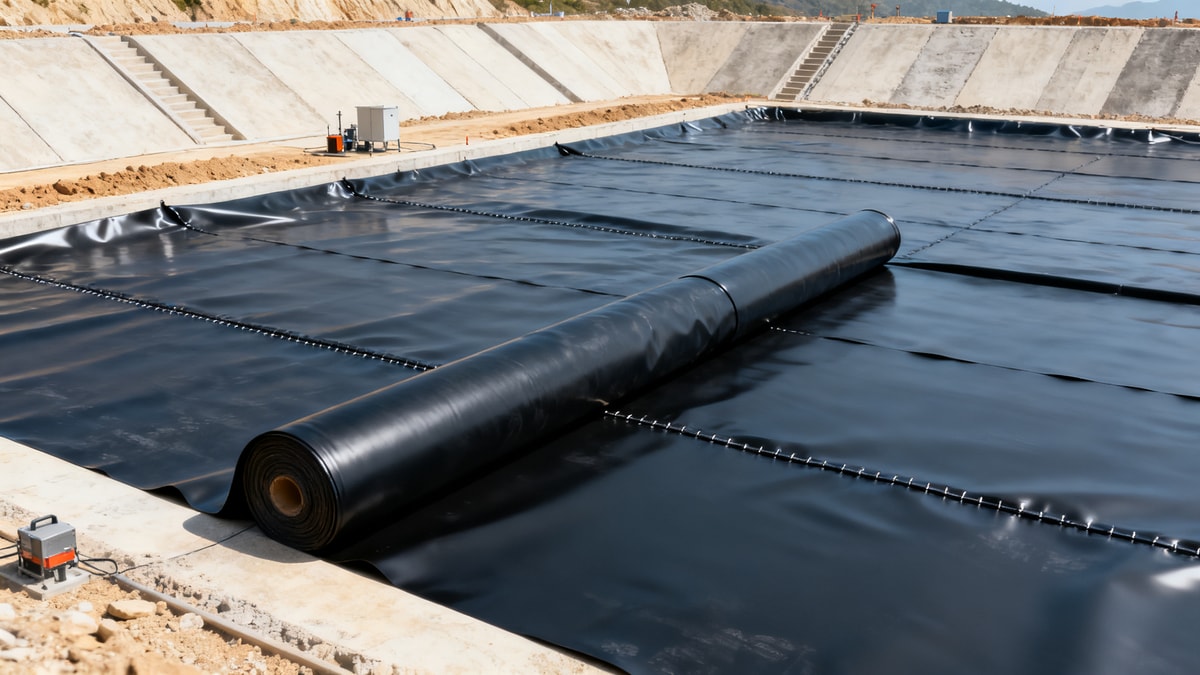
Choosing wholesale geomembrane HDPE based only on thickness claims can expose projects to avoidable risk, cost overruns, and performance failures. For project managers and engineering leads, the real question is whether the material matches site conditions, load demands, installation quality, and long-term compliance requirements. This article examines how to evaluate HDPE geomembrane specifications against real project needs.
The market is shifting from “thicker is safer” to “fit-for-service” decisions
Across containment, mining, water infrastructure, landfill, aquaculture, and industrial wastewater projects, a noticeable change is underway: buyers of wholesale geomembrane HDPE are becoming less impressed by headline thickness alone and more focused on verified engineering performance. This shift is not cosmetic. It reflects pressure from tighter environmental accountability, more complex site conditions, and rising lifecycle cost scrutiny from EPC teams and asset owners.
In earlier procurement cycles, thickness often acted as a shorthand for quality. A 1.5 mm or 2.0 mm liner was assumed to be a safer option than a thinner sheet, especially in tenders where technical review time was limited. Today, project failures and audit trails have made that shortcut less acceptable. A thicker liner with poor resin quality, weak stress crack resistance, or inconsistent welding behavior can underperform a thinner but better engineered alternative.
For project leaders, the trend matters because the cost of wrong specification now extends well beyond material waste. It can affect installation productivity, seam integrity, slope stability, leak risk, regulatory exposure, and long-term maintenance obligations. In other words, wholesale geomembrane HDPE selection is moving from a simple material purchase toward a risk-managed engineering decision.
What is driving this change in wholesale geomembrane HDPE evaluation
Several forces are pushing the market toward more disciplined specification. First, environmental compliance has become more visible. Whether the project involves leachate containment, tailings storage, wastewater lagoons, or secondary containment, owners increasingly need traceable evidence that the liner system was chosen on technical merit rather than on generic assumptions.
Second, project sites are becoming harder. More facilities are being developed in regions with stronger UV exposure, larger thermal swings, aggressive chemical conditions, higher subgrade variability, or more demanding anchorage geometry. Under these conditions, the behavior of wholesale geomembrane HDPE depends on a broader set of properties: tensile yield, puncture resistance, carbon black dispersion, oxidative induction time, and weldability under real weather windows.
Third, procurement itself is changing. Buyers increasingly compare multiple suppliers across different countries, which widens price spread but also increases inconsistency in quality assurance. This makes factory audits, certification checks, and roll-to-roll quality consistency more important than nominal thickness statements in brochures.
Fourth, total installed cost is under more pressure. A thicker liner can reduce some risks, but it can also slow deployment, require more handling effort, complicate welding on uneven terrain, and increase freight cost. If the application does not truly need that extra section, the project may be overbuying material while underinvesting in subgrade preparation or installer qualification.
Thickness claims are only one signal, not the whole engineering answer
The core mistake in many wholesale geomembrane HDPE buying decisions is treating thickness as if it automatically captures durability, chemical resistance, and project suitability. In reality, thickness helps, but only within a system view. A liner interacts with subgrade roughness, drainage design, cover materials, vehicle traffic, settlement behavior, and welding quality. Once those variables are introduced, a single number stops being a reliable decision tool.
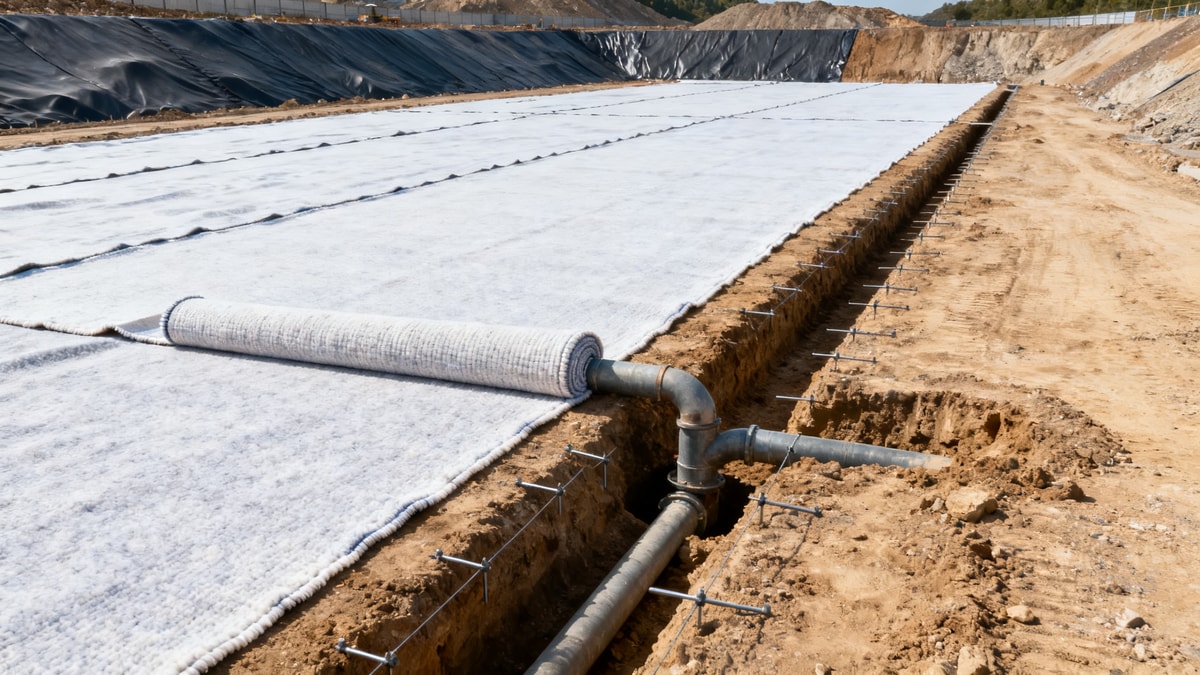
For example, if the subgrade contains angular particles or poor compaction, puncture risk may rise sharply. The answer might be a geotextile cushion or better subgrade finishing, not simply a thicker HDPE liner. If the project involves steep side slopes, friction interface and deployment control can be more relevant than adding thickness. If the pond stores chemicals at elevated temperature, chemical compatibility and long-term oxidation resistance may dominate the specification discussion.
This is why experienced teams review wholesale geomembrane HDPE through a matrix of performance properties rather than a single dimension. Thickness still matters, but it must be interpreted in context.
Where project needs are changing fastest
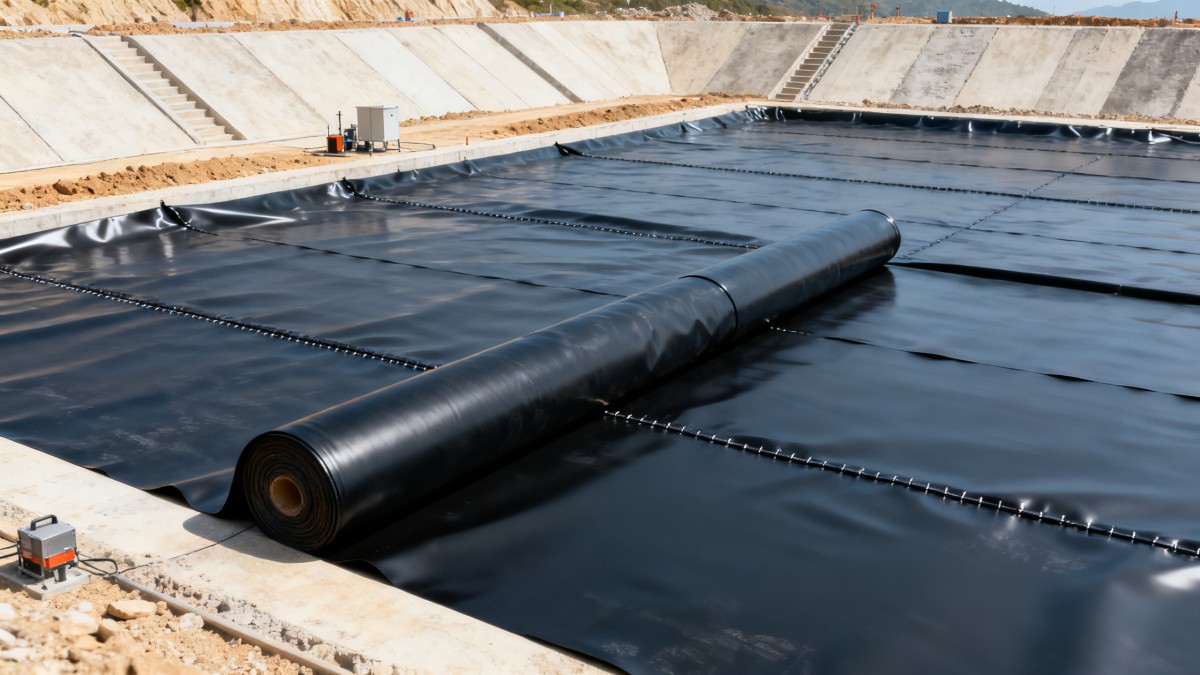
Not all applications are evolving at the same speed. Project managers should pay attention to where requirements are becoming more demanding, because these areas are where generic wholesale geomembrane HDPE selections are most likely to fail.
Water and wastewater containment
Owners are increasingly concerned with long service intervals, UV durability, and leakage accountability. In exposed lagoons, weathering stability and seam reliability often matter as much as base thickness.
Mining and tailings applications
This segment demands stronger attention to chemical exposure, settlement, interface friction, and damage during placement of protective layers. In these settings, wholesale geomembrane HDPE must be reviewed alongside the full lining system rather than in isolation.
Landfill and environmental barrier projects
Regulatory expectations make documentation critical. Buyers need clear manufacturing records, conformance data, and field quality control plans. The liner must satisfy both engineering and audit requirements.
Industrial secondary containment
Facilities increasingly want rapid installation with predictable long-term performance. Here, the best wholesale geomembrane HDPE option is often the one that balances chemical resistance, handling efficiency, and dependable field seaming.
How the change affects key decision-makers
The move away from thickness-only thinking affects multiple roles across the project chain. It changes who must be involved earlier and what questions need to be answered before purchase orders are issued.
What to evaluate beyond thickness when sourcing wholesale geomembrane HDPE
A stronger sourcing approach starts with a simple reframing: ask what the liner must survive, not just what the liner must measure. That change in thinking improves both technical fit and commercial discipline.
Key evaluation points include resin quality, formulation stability, mechanical performance, and field weld consistency. For exposed applications, UV resistance and carbon black dispersion deserve close attention. For chemically aggressive environments, compatibility review is essential. For irregular subgrades, puncture resistance must be considered together with protection layers. For projects with tight schedules, roll size, handling behavior, and installer familiarity can materially affect execution risk.
Documentation also matters more than many teams expect. When reviewing wholesale geomembrane HDPE, buyers should request test data tied to production lots, relevant standard references, quality assurance records, and clarity on how the supplier manages process control. This is especially important in international sourcing where product descriptions may sound similar while manufacturing discipline differs significantly.
A practical decision framework for current projects
For engineering teams under time pressure, the most useful response to this market shift is a structured screening process. Rather than starting with thickness and working backward, start with the application environment and narrow the liner profile from there.
Signals worth watching over the next procurement cycle
Several forward-looking signals deserve attention. One is the growing importance of verifiable quality data in cross-border procurement. Another is the stronger linkage between geomembrane selection and whole-system design, especially in environmentally sensitive facilities. A third is the increasing expectation that suppliers support technical review, not merely quote product thickness and roll price.
Project managers should also watch for more owner-side scrutiny of field installation plans. Even high-quality wholesale geomembrane HDPE can fail if welding, testing, or subgrade preparation is weak. The procurement trend therefore favors suppliers and contractors that can support a more integrated quality chain from factory to field.
Conclusion: the better question is not “how thick,” but “how appropriate”
The industry direction is clear: wholesale geomembrane HDPE decisions are becoming more evidence-based, more application-specific, and more accountable over the full asset life. Thickness remains important, but it is no longer sufficient as the main buying signal. Real project needs are defined by exposure, loading, compliance, constructability, and supplier consistency working together.
If your team is evaluating wholesale geomembrane HDPE for an upcoming project, focus first on the conditions the liner must handle, the installation realities on site, the standards the project must satisfy, and the proof the supplier can provide. Those questions will do far more to protect budget, schedule, and long-term performance than any thickness claim considered on its own.
For companies that want to judge the impact of this trend on their own procurement strategy, the most useful next step is to confirm four points: whether current specifications are too generic, whether suppliers can provide traceable quality evidence, whether installation constraints are being addressed early enough, and whether lifecycle risk is being weighed alongside initial price. That is where better HDPE liner decisions now begin.
Technical Specifications
- India BIS Draft IS 17832:2026 Sets Noise & Dust Limits for Waste CrushersAuthor :Environmental Engineering Director
- Korea MFDS Mandates Korean UI & KOSHA OEL Database for Industrial Water AnalyzersAuthor :Precision Metrology Expert
- Indonesia BPOM Mandates PM0.1 Efficiency & CADR Decay Labeling for Industrial Air PurifiersAuthor :Environmental Engineering Director
Expert Insights

Chief Security Architect
Dr. Thorne specializes in the intersection of structural engineering and digital resilience. He has advised three G7 governments on industrial infrastructure security.
Related Analysis
- May 03, 2026India BIS Draft IS 17832:2026 Sets Noise & Dust Limits for Waste CrushersAuthor :Environmental Engineering Director
- May 03, 2026Korea MFDS Mandates Korean UI & KOSHA OEL Database for Industrial Water AnalyzersAuthor :Precision Metrology Expert
- May 03, 2026Indonesia BPOM Mandates PM0.1 Efficiency & CADR Decay Labeling for Industrial Air PurifiersAuthor :Environmental Engineering Director
Core Sector // 01
Security & Safety
- Geosynthetic Clay Liner GCL: Where Installation Errors Usually HappenAuthor :Heavy Industry Strategist

- Wholesale Geomembrane HDPE: Thickness Claims vs Real Project NeedsAuthor :Heavy Industry Strategist

- How Geotextile Fabric Bulk Orders Go Wrong on Spec MatchingAuthor :Heavy Industry Strategist

- Plastic Geogrid Wholesale: What Changes Unit Cost Most?Author :Heavy Industry Strategist

- India BIS to Require Intergranular Corrosion Reports for Stainless Steel SectionsAuthor :Heavy Industry Strategist

- Binggang Group & AHUT Advance Steel Slag Valorization TechAuthor :Heavy Industry Strategist
![]()
- Alloy purity gaps in metallurgical engineeringAuthor :Heavy Industry Strategist

- How to Choose an Investment Casting ManufacturerAuthor :Heavy Industry Strategist