India BIS to Require Intergranular Corrosion Reports for Stainless Steel Sections
Author
Date Published
Reading Time
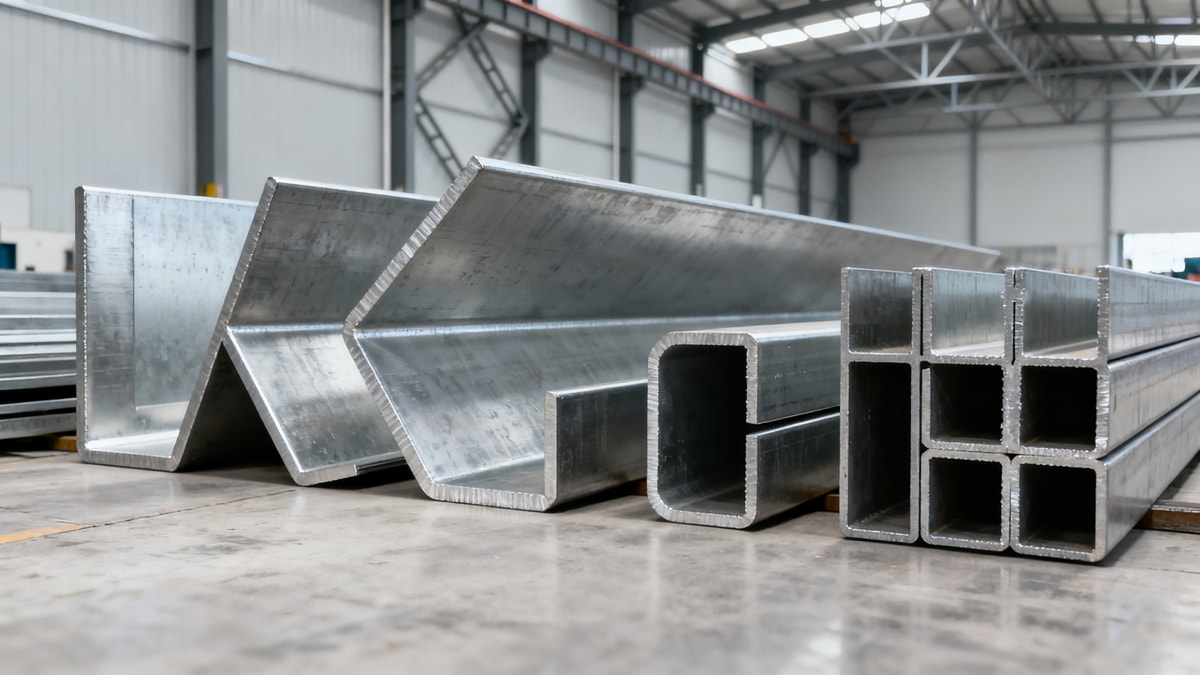
India’s Bureau of Indian Standards (BIS) has proposed an amendment to IS 13234:2026 that would mandate intergranular corrosion test reports for all industrial stainless steel structural sections imported into India — including angle, channel, and H-sections. Effective 1 August 2026, this requirement is expected to impact quality assurance workflows and customs documentation for exporters, particularly those based in China.
Event Overview
On 29 April 2026, BIS published IS 13234 Draft Amendment 2, proposing that all imported industrial stainless steel structural sections must be accompanied by a test report conforming to ASTM A262 Practice E (‘Detection of Susceptibility to Intergranular Attack’). The amendment is scheduled to enter into force on 1 August 2026. No further procedural details — such as acceptance criteria, third-party accreditation requirements, or transitional provisions — have been disclosed in the draft notice.
Industries Affected
Direct Exporters (e.g., Chinese Steel Producers & Trading Firms)
These entities will face new pre-shipment compliance obligations. The requirement adds a mandatory testing step not previously stipulated under IS 13234:2026, directly affecting export readiness timelines and documentation completeness for Indian customs clearance.
Downstream Fabricators & Project Contractors
Fabricators sourcing stainless steel sections from overseas suppliers may encounter delays if upstream vendors lack validated ASTM A262 Practice E reports. This could affect just-in-time delivery schedules for infrastructure, power, or process plant projects in India.
Supply Chain & Logistics Service Providers
Cargo agents, customs brokers, and certification support firms will need to verify the presence and validity of intergranular corrosion reports prior to filing import declarations. Incomplete documentation may trigger verification holds or rejections at Indian ports.
Key Considerations and Recommended Actions
Monitor official BIS communications for final amendment text
The current version is a draft. Final regulatory language — including scope exclusions, grace periods, or recognized laboratories — remains pending. Stakeholders should track BIS’s official gazette notifications and consult authorized Indian standards distributors for updates.
Identify high-risk product categories and shipment lanes
Focus initial readiness efforts on stainless steel angle, channel, and H-sections destined for industrial end-use in India — especially those supplied under engineering procurement contracts where material certification is contractually binding.
Distinguish between regulatory signal and operational implementation
While the draft signals tightening conformity assessment, actual enforcement capacity (e.g., port-level verification of test reports) remains unconfirmed. Companies should treat the amendment as a formal compliance trigger but avoid overextending internal controls until implementation guidance is issued.
Prepare documentation protocols and supplier coordination now
Exporters should align with metallurgical testing labs capable of issuing ASTM A262 Practice E reports. Internal SOPs for document assembly — including report retention, bilingual labelling, and traceability linkage to mill test certificates — should be reviewed and updated ahead of the 1 August 2026 deadline.
Editorial Perspective / Industry Observation
Observably, this amendment reflects BIS’s broader shift toward aligning stainless steel structural standards with international corrosion-performance expectations — particularly for applications in aggressive environments (e.g., chemical processing or coastal infrastructure). Analysis shows it functions primarily as a regulatory signal rather than an immediate operational constraint, given its draft status and absence of implementation guidelines. From an industry perspective, it underscores growing scrutiny of material suitability beyond dimensional and mechanical compliance — a trend likely to extend to other alloy families in future revisions.
Current more appropriate interpretation is that this is a procedural escalation in conformity assessment, not a technical revision of material specifications. It signals increasing emphasis on documented corrosion resistance verification — but does not alter base composition, heat treatment, or mechanical property requirements under IS 13234:2026.
Conclusion: The proposed amendment introduces a new documentary requirement with tangible implications for export logistics and quality system alignment. Its significance lies less in technical novelty and more in its role as an early indicator of evolving Indian import gatekeeping practices for critical industrial materials. Stakeholders are advised to treat it as a defined compliance milestone — actionable, time-bound, and scoped — rather than a broad market access risk.
Information Source: Bureau of Indian Standards (BIS), Draft Amendment Notice for IS 13234, published 29 April 2026. Note: Final regulatory text, enforcement timeline details, and laboratory recognition criteria remain pending and require ongoing monitoring.
Technical Specifications
Expert Insights

Chief Security Architect
Dr. Thorne specializes in the intersection of structural engineering and digital resilience. He has advised three G7 governments on industrial infrastructure security.
Related Analysis
- Apr 30, 2026Egypt SMIIC Mandates Arabic Energy Labels for Industrial PumpsAuthor :Heavy Industry Strategist
- Apr 30, 2026TÜV SÜD Launches China Industrial Optics Fast TrackAuthor :Precision Metrology Expert
- Apr 30, 2026LME Nickel Surges 5.2% on April 29, 2026: Impact on Stainless Bearings & SealsAuthor :Heavy Industry Strategist
Core Sector // 01
Security & Safety
- India BIS to Require Intergranular Corrosion Reports for Stainless Steel SectionsAuthor :Heavy Industry Strategist

- Binggang Group & AHUT Advance Steel Slag Valorization TechAuthor :Heavy Industry Strategist
![]()
- Alloy purity gaps in metallurgical engineeringAuthor :Heavy Industry Strategist

- How to Choose an Investment Casting ManufacturerAuthor :Heavy Industry Strategist

- Are Precision Die Casting Parts Worth the CostAuthor :Heavy Industry Strategist
![]()
- Sheet Metal Fabrication Services: What to CheckAuthor :Heavy Industry Strategist

- Custom Metal Stamping Parts: Common Buying MistakesAuthor :Heavy Industry Strategist

- Magnesium Alloy Ingots: What Affects QualityAuthor :Heavy Industry Strategist