How Geotextile Fabric Bulk Orders Go Wrong on Spec Matching
Author
Date Published
Reading Time
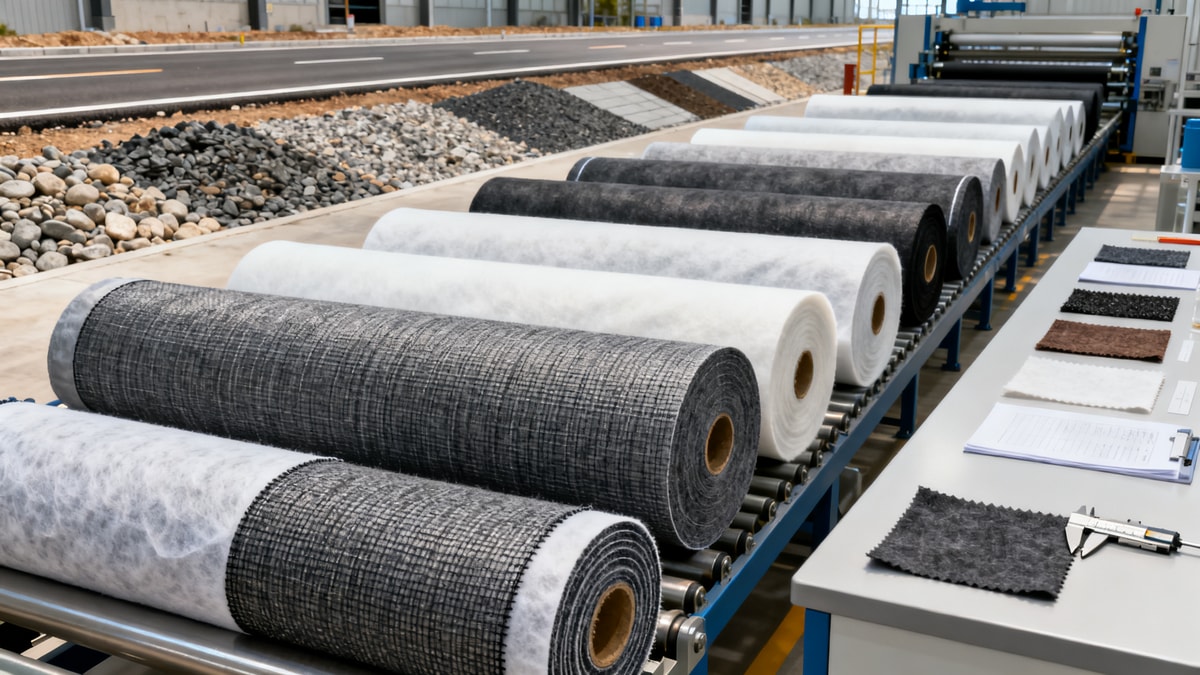
Bulk purchasing mistakes often start long before delivery—at the spec sheet. In geotextile fabric bulk orders, mismatched tensile strength, filtration, permeability, or certification requirements can trigger project delays, compliance risks, and costly rework. For procurement teams, understanding how spec matching fails is the first step to securing consistent quality, supplier accountability, and long-term performance in demanding industrial and civil applications.
Why geotextile fabric bulk orders fail before the material ships
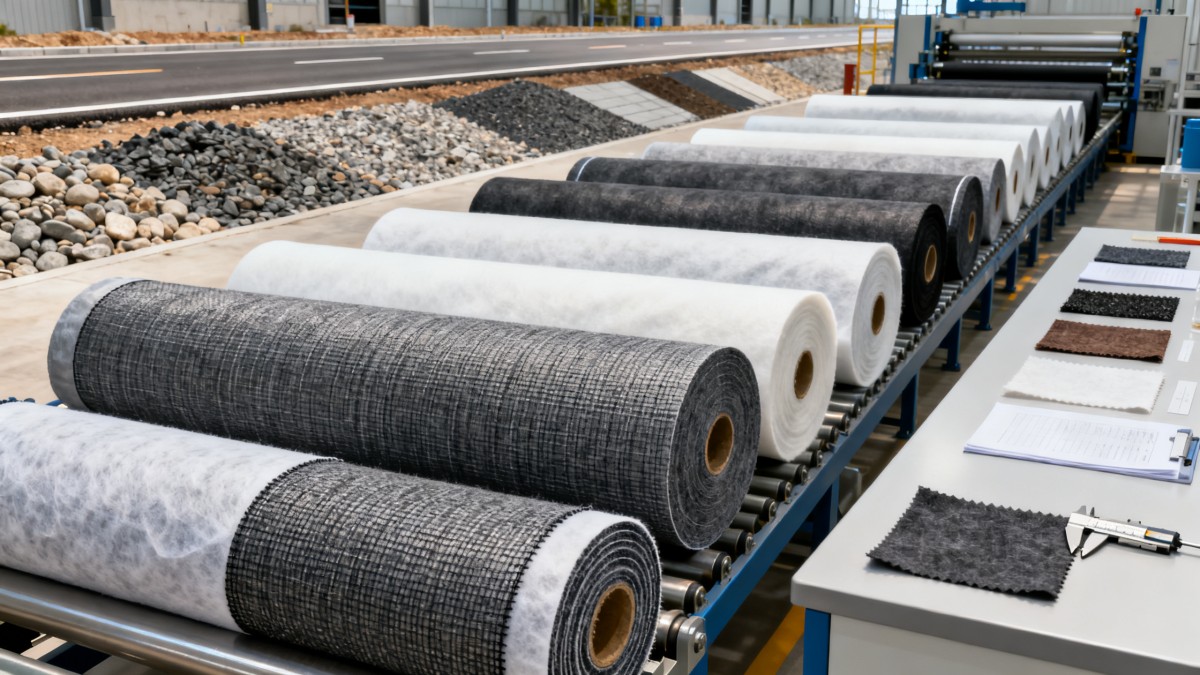
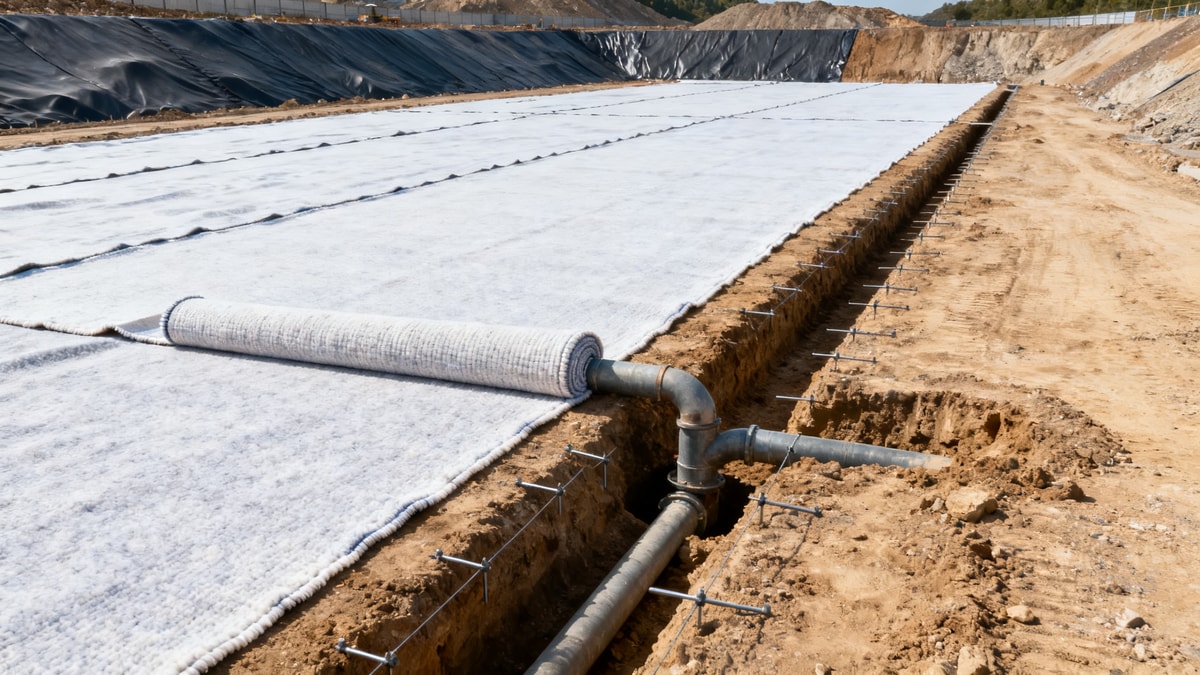
In industrial procurement, the most expensive geotextile mistake is often not late delivery or freight damage. It is ordering the wrong specification under the assumption that one geotextile roll is functionally interchangeable with another. In reality, geotextile fabric bulk purchasing depends on precise alignment between project design intent, site conditions, installation methods, and test standards.
This problem appears across road construction, drainage systems, landfill lining support, embankment stabilization, erosion control, railway subgrade separation, and coastal works. Procurement teams may receive a bill of materials that says only “nonwoven geotextile” or “woven separator fabric,” but that label alone does not define survivability, puncture resistance, apparent opening size, mass per unit area, or hydraulic behavior.
For EPC contractors and industrial buyers, the commercial risk is significant. If the installed fabric clogs, tears, stretches excessively, or fails inspection, the cost impact goes beyond replacement material. It can affect labor, equipment standby, contractual penalties, and downstream asset reliability. That is why Global Industrial Core focuses on source verification, spec interpretation, and procurement risk control rather than treating technical textiles as commodity line items.
- The design drawing references one test method, while the supplier quotes values based on another method that is not directly comparable.
- The required function is separation and filtration, but the buyer selects primarily by GSM or roll price.
- A value-engineered substitute is accepted without checking puncture performance, UV stability, or seam compatibility.
- Certificates are requested after order placement rather than during technical evaluation.
Which specifications matter most in geotextile fabric bulk procurement?
The right specification depends on the function of the fabric. A separator between aggregate and soft subgrade is not evaluated the same way as a drainage wrap or a filter layer around perforated pipe. Procurement teams need to translate application language into measurable properties before requesting quotations.
Core technical parameters buyers should verify
The table below highlights the most common parameters that cause confusion in geotextile fabric bulk orders and explains why each one matters during supplier comparison and contract review.
For procurement personnel, the key lesson is simple: a lower-priced fabric with similar GSM may still be the wrong material if its hydraulic opening, puncture resistance, or elongation profile differs from the design requirement. Technical equivalence must be proven, not assumed.
Woven vs nonwoven: the confusion that drives wrong buys
A frequent source of spec mismatch in geotextile fabric bulk sourcing is confusion between woven and nonwoven constructions. Woven materials often emphasize strength and separation. Nonwoven materials are often selected for filtration, cushioning, and drainage support. Yet neither category is automatically suitable. End use, soil profile, and installation conditions should determine the decision.
- Choose woven geotextiles carefully in road stabilization or subgrade separation where tensile performance is central.
- Choose nonwoven geotextiles carefully where filtration and water transmission are critical, such as trench drains and wrap systems.
- Request test data for the exact grade offered, not a generic family brochure.
How spec matching breaks down between design, procurement, and suppliers
Most failures in geotextile fabric bulk orders are not caused by one bad actor. They occur because design engineers, purchasing teams, and suppliers use different reference points. Engineering may focus on function. Procurement may focus on price, delivery, and approved vendor status. Suppliers may quote the nearest standard grade unless the inquiry package is exceptionally clear.
Where the handoff goes wrong
- The project specification lists performance thresholds but does not define acceptable test methods or tolerances.
- The RFQ is issued using a simplified trade description, causing suppliers to quote different constructions under the same item name.
- Commercial negotiations substitute one grade for another to reduce cost without rechecking application fit.
- Incoming inspection confirms roll count and labels, but not certified performance values or traceability lot information.
In cross-border sourcing, the risk becomes larger. A supplier may use one regional standard while the project consultant expects another. Even if the quoted values look similar, direct comparison may be misleading. GIC helps procurement teams resolve these gaps by converting generic requirements into auditable procurement language, especially where civil, environmental, and industrial infrastructure standards intersect.
A practical comparison framework for geotextile fabric bulk evaluation
Buyers need more than a data sheet. They need a comparison method that prevents false equivalence. The following table can be used during technical bid evaluation to compare geotextile fabric bulk offers across function, compliance, and supply risk.
This framework helps buyers move from “Which quote is cheapest?” to “Which quote is technically defendable?” That shift is especially important when geotextiles are being procured for infrastructure with long maintenance cycles or regulated environmental exposure.
What standards, documentation, and certifications should procurement request?
Not every project requires the same certification package, but every serious geotextile fabric bulk order should include document control. Procurement should request the standards basis for the quoted values, quality documentation tied to production lots, and any project-specific declarations required by the owner, consultant, or regulatory authority.
Minimum documentation checklist
- Technical data sheet showing the offered grade, not a generic catalog family.
- Test method references for tensile, puncture, permeability, opening size, and mass per unit area.
- Quality certificate or certificate of analysis linked to batch or roll identification.
- Packaging and labeling details, especially for containerized international supply.
- Any project-mandated declarations related to environmental or construction compliance.
Where international standards are referenced, buyers should confirm whether the supplier data is based on ASTM, ISO, EN, or another accepted framework. The issue is not which system is inherently better. The issue is whether the quoted performance can be compared honestly to the project requirement without hidden conversion assumptions.
How procurement teams can reduce total project cost, not just material price
A lower unit price in geotextile fabric bulk procurement can become a higher installed cost if it increases overlap waste, handling damage, rejection rates, or hydraulic failure risk. Smart buyers evaluate total project economics rather than landed roll cost alone.
Cost drivers that are often missed
- Roll dimensions that do not match the installation layout can increase field seams, labor time, and waste.
- Low survivability can cause tears during placement over coarse aggregate, leading to patching and delays.
- Inadequate filtration design can trigger clogging, undermining drainage performance and shortening service life.
- Weak document control can delay inspection release at site even when the material itself appears acceptable.
For large civil and industrial projects, this broader cost view is essential. Procurement teams that involve technical reviewers early usually avoid emergency substitutions later. GIC supports this process by helping buyers compare not only product attributes, but also supply chain consistency, standards interpretation, and commercial clarity.
FAQ: common questions about geotextile fabric bulk orders
How should buyers compare two geotextile quotes that look similar on paper?
Start with function, not price. Check whether both quotes use the same construction type, test methods, and directional values. Then compare puncture resistance, AOS, and permeability against the project requirement. If one supplier provides only summary figures without method references, the apparent equivalence may be unreliable.
Is GSM enough to select geotextile fabric bulk for drainage or filtration work?
No. GSM is useful, but it is not a substitute for hydraulic and soil retention parameters. In filtration work, opening size and water transmission are often more important than fabric weight alone. A heavier fabric may still be the wrong choice if it does not suit the soil gradation or flow condition.
What should be included in an RFQ to reduce spec mismatch?
Include application description, required function, target performance values, test method references, roll dimensions, installation conditions, certification needs, packaging expectations, and whether substitutes are allowed. The clearer the RFQ, the lower the risk of suppliers quoting non-equivalent grades under the same item name.
When should procurement ask for samples or pre-approval documents?
Ask before final award, especially for large-volume or compliance-sensitive orders. Samples, technical submittals, and batch traceability formats should be reviewed before the order is locked. This is particularly important when sourcing from a new supplier or approving an alternative grade.
Why work with GIC on geotextile fabric bulk sourcing decisions
Procurement teams do not need more generic catalogs. They need decision support that connects design intent, compliance language, and supplier capability. Global Industrial Core helps industrial buyers, EPC teams, and infrastructure procurement managers assess geotextile fabric bulk requirements with a sharper focus on technical fit, documentation quality, and commercial execution risk.
You can contact GIC for practical support on parameter confirmation, material selection, quote comparison, delivery planning, certification review, sample coordination, and custom sourcing scenarios where geotextile performance must align with drainage, stabilization, environmental, or heavy-duty civil applications.
- Need help matching a project spec to a real market-available grade? We can help clarify the critical parameters.
- Need to compare competing offers from different regions or test standards? We can help identify non-equivalent data points.
- Need support on lead time, sample review, packaging, or document expectations before award? We can help structure the procurement checklist.
If your next geotextile fabric bulk purchase carries schedule, compliance, or performance risk, bring the technical sheet, the RFQ, and the supplier offer into the same review process. That single step can prevent avoidable mismatch, protect project continuity, and improve long-term asset reliability.
Technical Specifications
- India BIS Draft IS 17832:2026 Sets Noise & Dust Limits for Waste CrushersAuthor :Environmental Engineering Director
- Korea MFDS Mandates Korean UI & KOSHA OEL Database for Industrial Water AnalyzersAuthor :Precision Metrology Expert
- Indonesia BPOM Mandates PM0.1 Efficiency & CADR Decay Labeling for Industrial Air PurifiersAuthor :Environmental Engineering Director
Expert Insights

Chief Security Architect
Dr. Thorne specializes in the intersection of structural engineering and digital resilience. He has advised three G7 governments on industrial infrastructure security.
Related Analysis
- May 03, 2026India BIS Draft IS 17832:2026 Sets Noise & Dust Limits for Waste CrushersAuthor :Environmental Engineering Director
- May 03, 2026Korea MFDS Mandates Korean UI & KOSHA OEL Database for Industrial Water AnalyzersAuthor :Precision Metrology Expert
- May 03, 2026Indonesia BPOM Mandates PM0.1 Efficiency & CADR Decay Labeling for Industrial Air PurifiersAuthor :Environmental Engineering Director
Core Sector // 01
Security & Safety
- Geosynthetic Clay Liner GCL: Where Installation Errors Usually HappenAuthor :Heavy Industry Strategist

- Wholesale Geomembrane HDPE: Thickness Claims vs Real Project NeedsAuthor :Heavy Industry Strategist

- How Geotextile Fabric Bulk Orders Go Wrong on Spec MatchingAuthor :Heavy Industry Strategist

- Plastic Geogrid Wholesale: What Changes Unit Cost Most?Author :Heavy Industry Strategist

- India BIS to Require Intergranular Corrosion Reports for Stainless Steel SectionsAuthor :Heavy Industry Strategist

- Binggang Group & AHUT Advance Steel Slag Valorization TechAuthor :Heavy Industry Strategist
![]()
- Alloy purity gaps in metallurgical engineeringAuthor :Heavy Industry Strategist

- How to Choose an Investment Casting ManufacturerAuthor :Heavy Industry Strategist