Plastic Geogrid Wholesale: What Changes Unit Cost Most?
Author
Date Published
Reading Time
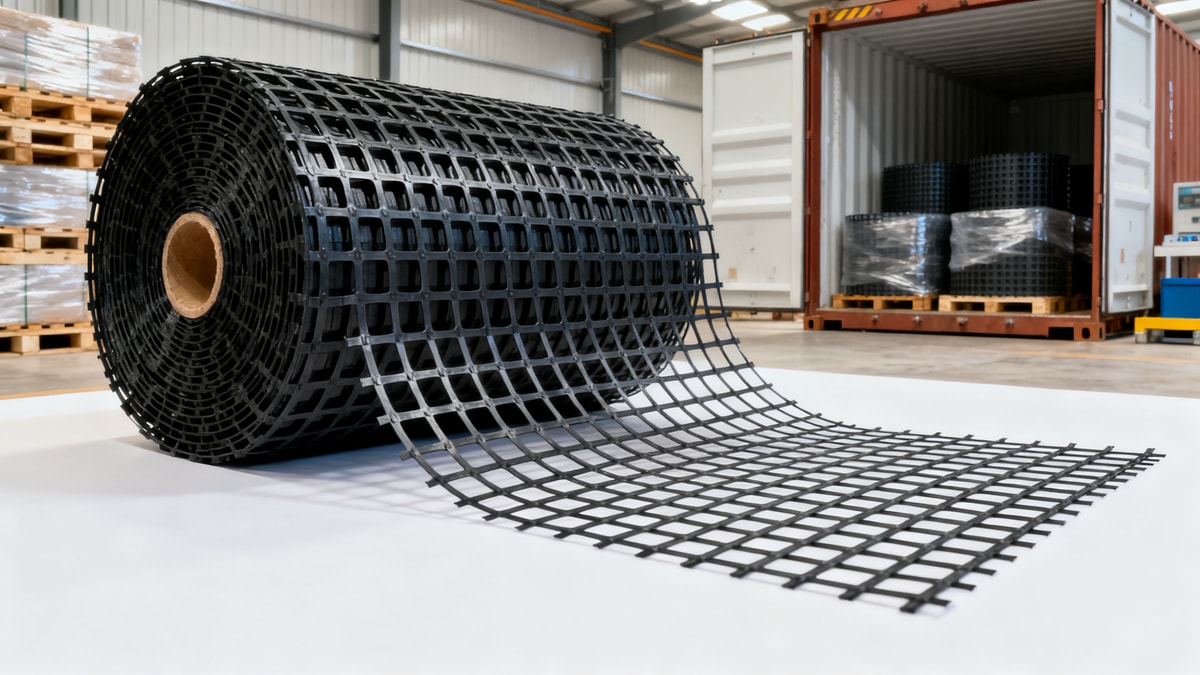
In plastic geogrid wholesale, unit cost can shift significantly based on more than order volume alone. For procurement teams, resin grade, tensile performance, aperture design, certification requirements, and shipping efficiency often have a greater impact on final pricing than expected. This article breaks down the key cost drivers to help buyers compare suppliers more accurately, reduce sourcing risk, and make better-value purchasing decisions.
For most buyers, the short answer is this: the biggest changes in plastic geogrid unit cost usually come from specification decisions, not from headline bulk discounts. A low quoted price can quickly lose its advantage if the product uses higher-cost polymer, tighter performance tolerances, project-specific dimensions, added testing, or inefficient loading. That is why procurement teams should evaluate plastic geogrid wholesale offers as a full technical-commercial package rather than a simple price-per-square-meter comparison.
If your role involves supplier selection, budget control, or bid-stage cost validation, the key question is not only “Which supplier is cheaper?” but also “What exactly is driving the difference?” Once you understand those drivers, you can negotiate more effectively, avoid hidden downstream cost, and buy to performance instead of marketing claims.
What Usually Changes Plastic Geogrid Unit Cost the Most?
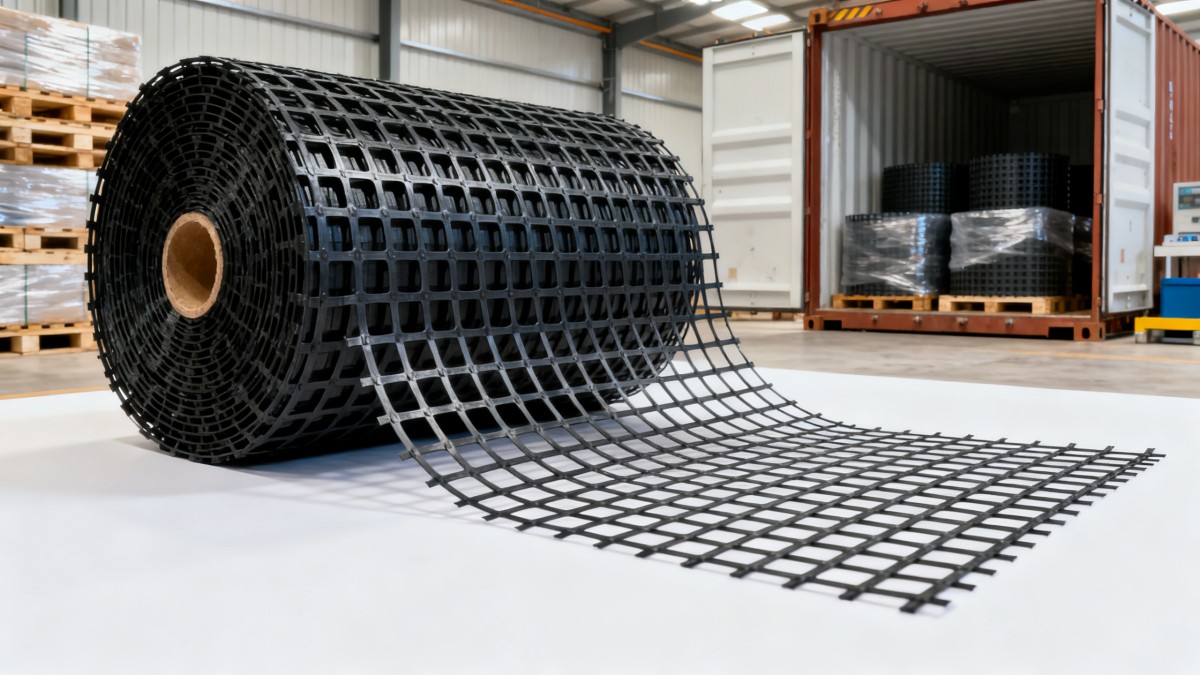
In wholesale sourcing, five factors tend to influence unit cost more than anything else: raw material type, mechanical performance requirements, product structure and dimensions, certification and quality assurance scope, and logistics efficiency. Order volume still matters, but often less than buyers expect once a supplier has already reached a workable production run size.
For example, two geogrids may look similar in photos and carry nearly identical dimensions on a quotation sheet, yet one may cost notably more because it uses a higher-grade polymer, has better creep resistance, or must pass stricter tensile testing. Likewise, a lower ex-works unit price may become less attractive when palletization is poor, container utilization is weak, or the lead time risk forces expedited shipping later.
For procurement professionals, the practical takeaway is clear: compare offers line by line against a normalized specification matrix. If you do not standardize the technical baseline first, unit price comparisons in plastic geogrid wholesale are often misleading.
How Much Does Raw Material Choice Affect Cost?
Raw material is often the first major cost lever. Plastic geogrids are commonly produced from polypropylene, high-density polyethylene, polyester-based structures in some applications, or modified polymer compounds designed for specific performance conditions. Resin type matters because it shapes mechanical strength, environmental resistance, processing behavior, and long-term durability.
Virgin resin generally costs more than recycled or heavily reprocessed material. However, lower raw material cost does not automatically mean lower total procurement cost. If recycled content causes inconsistency in tensile properties, dimensional stability, or service life, the apparent savings can disappear through installation issues, field rejection, or premature performance loss.
Buyers should also pay attention to resin grade, not just resin family. Two polypropylene geogrids can have very different cost structures if one uses a commodity-grade feedstock and the other uses a stabilized, higher-performance grade with better UV resistance or oxidation performance. Additives such as carbon black, antioxidants, and UV stabilizers may seem minor in percentage terms, but they can materially affect both product price and long-term value.
When reviewing plastic geogrid wholesale quotations, ask suppliers to clarify whether the offer is based on virgin resin, blended content, or recycled material. Also ask whether the formulation is optimized for road base reinforcement, retaining wall support, embankment stabilization, or soil separation. A transparent answer helps explain cost variation immediately.
Why Tensile Strength and Long-Term Performance Often Raise Price Faster Than Buyers Expect
Mechanical performance is one of the strongest price drivers because better performance usually requires better material, more controlled manufacturing, and stricter testing. In practice, higher tensile strength, junction strength, modulus, and long-term creep resistance all tend to increase unit cost.
This is especially important in projects where the geogrid is not just a separator but a reinforcement element with structural implications. In those cases, the buyer is not purchasing plastic sheet material alone. They are purchasing validated load-bearing behavior over time. That adds cost through design, material selection, and quality control.
Long-term design performance often matters more than short-term peak values. A geogrid that shows good initial tensile results but poor retention under sustained load, temperature variation, or chemical exposure may not be equivalent to a product engineered for long-term stability. Yet some low-cost offers are built around headline numbers rather than design-relevant performance.
Procurement teams should therefore ask for the exact basis of mechanical claims. Are values machine direction only, or biaxial? Are they nominal, minimum average roll values, or tested means? Are creep reduction factors and durability reduction factors supported by test data? These details often explain why one supplier’s unit price is higher than another’s.
Does Geogrid Type and Aperture Design Change Cost Significantly?
Yes. Uniaxial, biaxial, and triaxial or multi-directional geogrids can carry different cost profiles because their manufacturing routes and application values differ. A uniaxial product designed for high strength in one direction may be priced differently from a biaxial product used for base reinforcement, even if total weight per square meter appears similar.
Aperture geometry also affects cost. Opening size, rib thickness, node design, and stretch orientation influence both material consumption and engineering performance. If a project requires a specific aggregate interlock behavior or a precise interaction with fill material, the geogrid cannot simply be substituted by an approximate lookalike without consequences.
Custom aperture patterns or non-standard dimensions can increase cost further because they reduce manufacturing efficiency. Standardized products benefit from repeat runs, familiar tooling, and more stable quality control. Special dimensions may increase setup time, scrap rate, and inspection burden, all of which get reflected in the quote.
For buyers evaluating plastic geogrid wholesale options, the best approach is to separate “must-have engineering requirements” from “legacy preferences.” If the design genuinely requires a certain aperture structure, that cost is justified. If not, moving to a standard production specification may unlock savings without sacrificing performance.
How Much Do Roll Size, Width, and Packaging Influence the Final Price?
These factors are often underestimated. Large-format rolls, custom widths, and special packaging can materially change both manufacturing cost and delivered cost. A supplier may need to adjust winding, edge trimming, labeling, palletizing, or loading methods to meet project-specific handling requirements.
Custom roll lengths can reduce installation waste on site, which is beneficial. But they may also reduce production efficiency if they deviate from normal factory output. In some cases, a slightly higher unit material consumption can still be justified if it lowers field labor and overlap waste. That is why procurement should review landed installed cost, not just factory unit price.
Packaging matters especially in export transactions. Stronger wrapping, moisture protection, edge protection, and labeled palletization may increase unit cost slightly, but they can reduce damage risk during long-distance shipping and site storage. For institutional buyers, this tradeoff is often favorable.
If your supplier quote looks low, confirm whether packaging is included to the required standard. Missing details here can create either hidden add-on charges or preventable receiving issues at destination.
Why Certifications, Testing, and Documentation Add Real Cost
In industrial procurement, compliance is rarely optional. Depending on project location and end-use, buyers may need ISO-backed quality systems, CE-related documentation where applicable, third-party test reports, factory audit records, lot traceability, or application-specific conformance statements. These requirements increase supplier cost because they involve systems, people, laboratories, and repeatable controls.
The difference becomes more visible when comparing experienced export manufacturers with small low-cost suppliers. A supplier with robust documentation can usually respond faster to technical reviews, project submittals, and owner approvals. That administrative competence may not appear in the unit rate initially, but it can save significant time and risk later.
Third-party testing is another cost variable. If a buyer requests additional tests for tensile performance, creep, carbon black content, UV resistance, or dimensional stability, those costs may be built into the quote or charged separately. For high-stakes infrastructure work, that expense is often justified because it supports specification compliance and protects the procurement decision.
In plastic geogrid wholesale, one useful rule is this: if a supplier offers a very low price but cannot provide clear and recent documentation, the quote is probably not equivalent to the others. The missing cost is often hidden in weaker control, not better efficiency.
Is Order Volume Still Important, or Is It Overrated?
Order volume definitely matters, but it is not always the dominant pricing factor. Once a supplier reaches an efficient production batch size, additional volume may produce only marginal unit savings unless it improves raw material purchasing, line utilization, or container loading in a meaningful way.
Many buyers assume doubling the order should generate a major price reduction. In reality, if the specification is already demanding and the product requires the same expensive resin, the same test regime, and the same export packaging, the scope for discount may be limited. The supplier cannot discount away hard production costs.
Where volume helps most is in forecast stability. Blanket orders, call-off agreements, or scheduled repeat purchases can improve pricing more than one large spot order because they help the factory plan material procurement and production capacity. For procurement teams, this is a valuable negotiation point.
If you want better plastic geogrid wholesale pricing, ask not only for a one-time volume break but also for pricing under a rolling supply framework. Suppliers are often more flexible when they can see predictable future demand.
How Do Freight and Container Utilization Change True Unit Cost?
For cross-border sourcing, logistics can move the effective unit cost more than buyers expect. Plastic geogrids are relatively lightweight compared with some industrial materials, but roll dimensions can limit container efficiency. If product width, core size, or pallet arrangement wastes cubic capacity, the delivered price per square meter rises even when factory pricing looks attractive.
Incoterms also affect comparison quality. An ex-works price from one supplier should not be compared casually against an FOB or CIF offer from another. Inland transport, export handling, customs documentation, insurance, and ocean freight can all distort the real landed cost picture.
Procurement teams should ask each supplier for estimated loading quantity per 20-foot and 40-foot container, packaging method, and expected freight class impact. This simple request often reveals whether a slightly higher ex-factory unit price could become cheaper at destination due to better loading efficiency.
Lead time risk belongs in this calculation too. A low-cost supplier with unstable delivery performance may trigger costly project delays, split shipments, or emergency local purchases. In industrial buying, schedule reliability has monetary value and should be treated as part of the unit cost equation.
What Questions Should Procurement Teams Ask Before Comparing Quotes?
To evaluate plastic geogrid wholesale offers correctly, buyers should request answers to a structured set of questions. First, confirm the exact polymer type, resin grade, and recycled content. Second, ask for key mechanical properties with test standards clearly referenced. Third, confirm roll dimensions, tolerances, and packaging details.
Fourth, review what documentation is included: quality certificates, test reports, traceability, compliance statements, and inspection procedures. Fifth, ask whether the quoted product is a standard production item or a custom build. Sixth, verify lead time, batch consistency, and production capacity for repeat orders.
Seventh, request loading data and shipping assumptions. Eighth, ask what cost elements are excluded, such as tooling, special labels, pallets, testing, or destination documentation. Finally, ask how the supplier handles non-conformance, claims, and replacement obligations.
These questions do more than reduce risk. They also create a fair basis for negotiation. Once suppliers know that your team is comparing offers technically rather than only by unit price, pricing behavior often becomes more transparent.
How to Make a Better-Value Buying Decision Instead of Just Finding the Lowest Quote
The strongest procurement decisions balance price, performance, compliance, and supply reliability. In practical terms, that means building a weighted evaluation model rather than awarding solely on the cheapest rate. A slightly higher quote may deliver better long-term value if it reduces approval delays, installation waste, or performance uncertainty.
One useful method is to break total value into five categories: material quality, engineering suitability, compliance readiness, logistics efficiency, and commercial terms. Score each supplier against these categories before looking at the final commercial ranking. This approach is especially useful when project failure or rework would be expensive.
It also helps to involve technical stakeholders early. Procurement, engineering, and project management often view geogrid value differently. Procurement may focus on budget, engineering on design adequacy, and project teams on installation practicality. A coordinated review can prevent low-cost decisions that create higher downstream expense.
In many cases, the best wholesale outcome is not the absolute lowest unit cost, but the most dependable specification-to-price match. That is the offer most likely to protect schedule, quality, and total cost of ownership.
Conclusion: What Changes Unit Cost Most in Plastic Geogrid Wholesale?
The biggest unit cost changes in plastic geogrid wholesale usually come from raw material quality, required mechanical performance, product structure, certification scope, and logistics efficiency. Volume discounts matter, but they rarely tell the whole story. When buyers compare quotes without normalizing these variables, they risk choosing a lower price that is not truly equivalent.
For procurement teams, the best strategy is to treat geogrid purchasing as a technical-commercial evaluation. Clarify resin grade, verify performance data, understand whether dimensions are standard or custom, confirm testing and documentation scope, and calculate landed delivered cost rather than relying on factory price alone.
When that process is done well, supplier comparison becomes clearer, negotiation becomes smarter, and sourcing risk drops sharply. In other words, the most important question is not simply how cheap a geogrid can be, but what is actually causing the price to move—and whether that cost driver creates real project value.
Technical Specifications
- India BIS Draft IS 17832:2026 Sets Noise & Dust Limits for Waste CrushersAuthor :Environmental Engineering Director
- Korea MFDS Mandates Korean UI & KOSHA OEL Database for Industrial Water AnalyzersAuthor :Precision Metrology Expert
- Indonesia BPOM Mandates PM0.1 Efficiency & CADR Decay Labeling for Industrial Air PurifiersAuthor :Environmental Engineering Director
Expert Insights

Chief Security Architect
Dr. Thorne specializes in the intersection of structural engineering and digital resilience. He has advised three G7 governments on industrial infrastructure security.
Related Analysis
- May 03, 2026India BIS Draft IS 17832:2026 Sets Noise & Dust Limits for Waste CrushersAuthor :Environmental Engineering Director
- May 03, 2026Korea MFDS Mandates Korean UI & KOSHA OEL Database for Industrial Water AnalyzersAuthor :Precision Metrology Expert
- May 03, 2026Indonesia BPOM Mandates PM0.1 Efficiency & CADR Decay Labeling for Industrial Air PurifiersAuthor :Environmental Engineering Director
Core Sector // 01
Security & Safety
- Geosynthetic Clay Liner GCL: Where Installation Errors Usually HappenAuthor :Heavy Industry Strategist

- Wholesale Geomembrane HDPE: Thickness Claims vs Real Project NeedsAuthor :Heavy Industry Strategist

- How Geotextile Fabric Bulk Orders Go Wrong on Spec MatchingAuthor :Heavy Industry Strategist

- Plastic Geogrid Wholesale: What Changes Unit Cost Most?Author :Heavy Industry Strategist

- India BIS to Require Intergranular Corrosion Reports for Stainless Steel SectionsAuthor :Heavy Industry Strategist

- Binggang Group & AHUT Advance Steel Slag Valorization TechAuthor :Heavy Industry Strategist
![]()
- Alloy purity gaps in metallurgical engineeringAuthor :Heavy Industry Strategist

- How to Choose an Investment Casting ManufacturerAuthor :Heavy Industry Strategist