How to Choose an Investment Casting Manufacturer
Author
Date Published
Reading Time
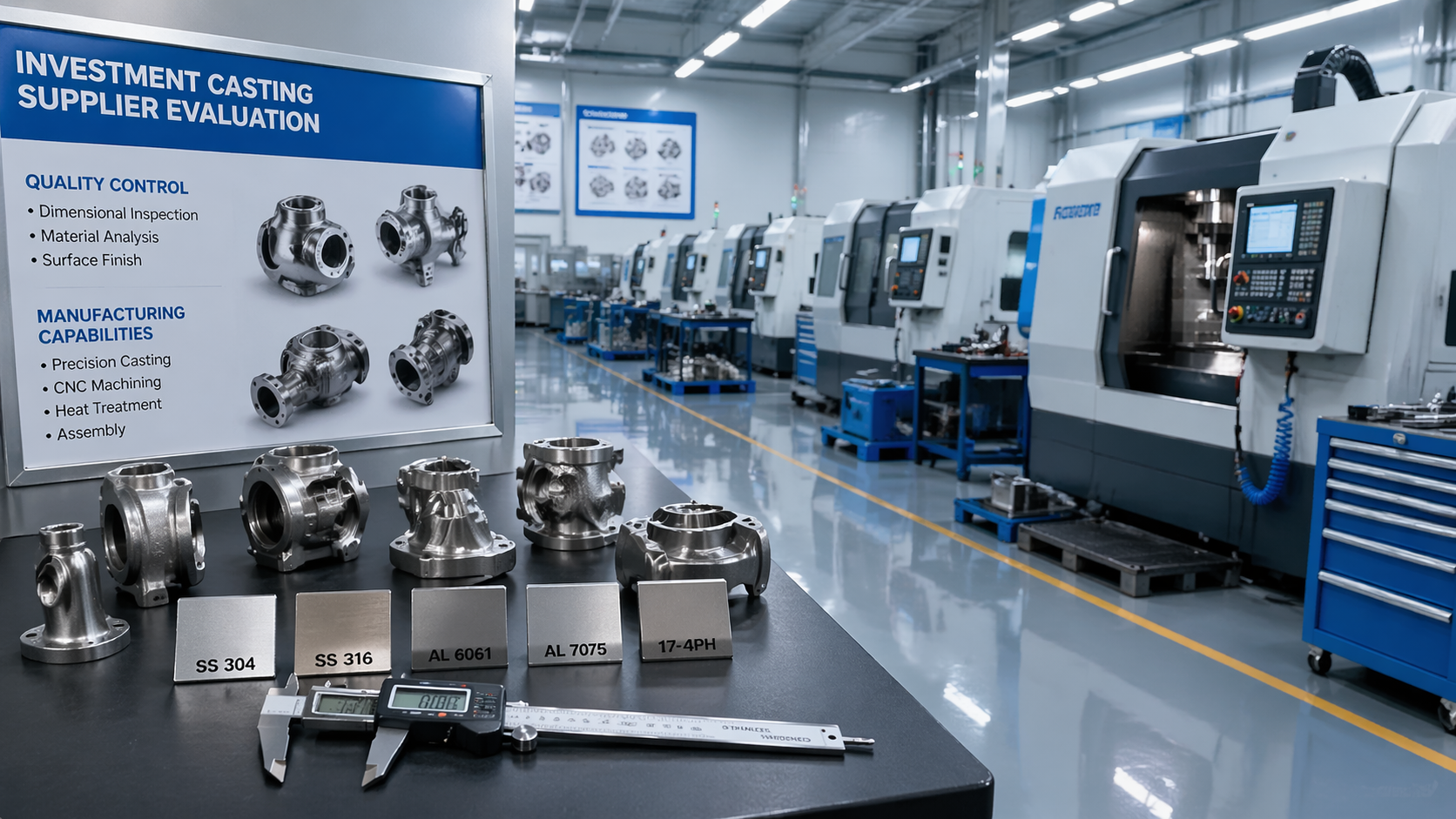
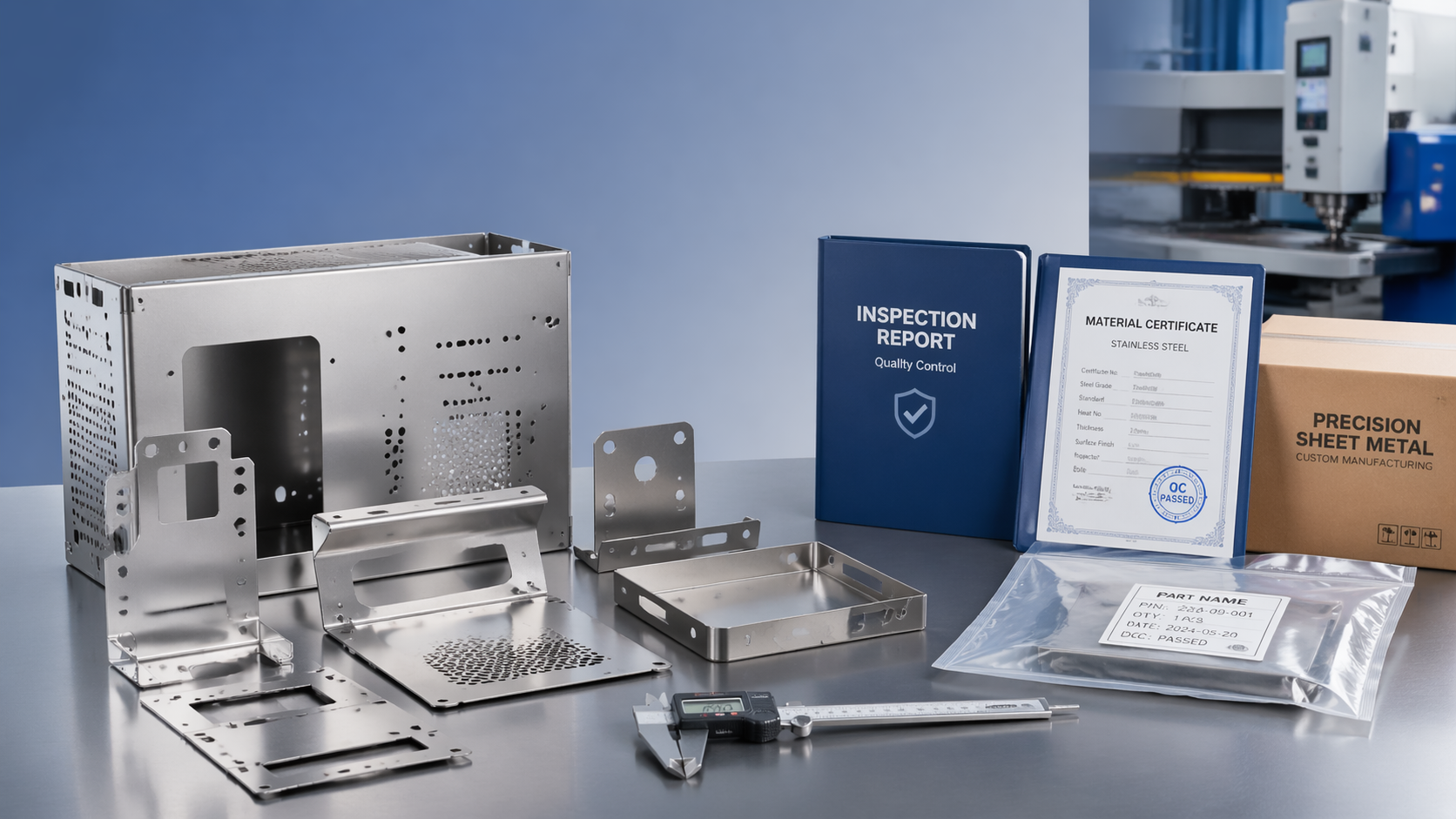
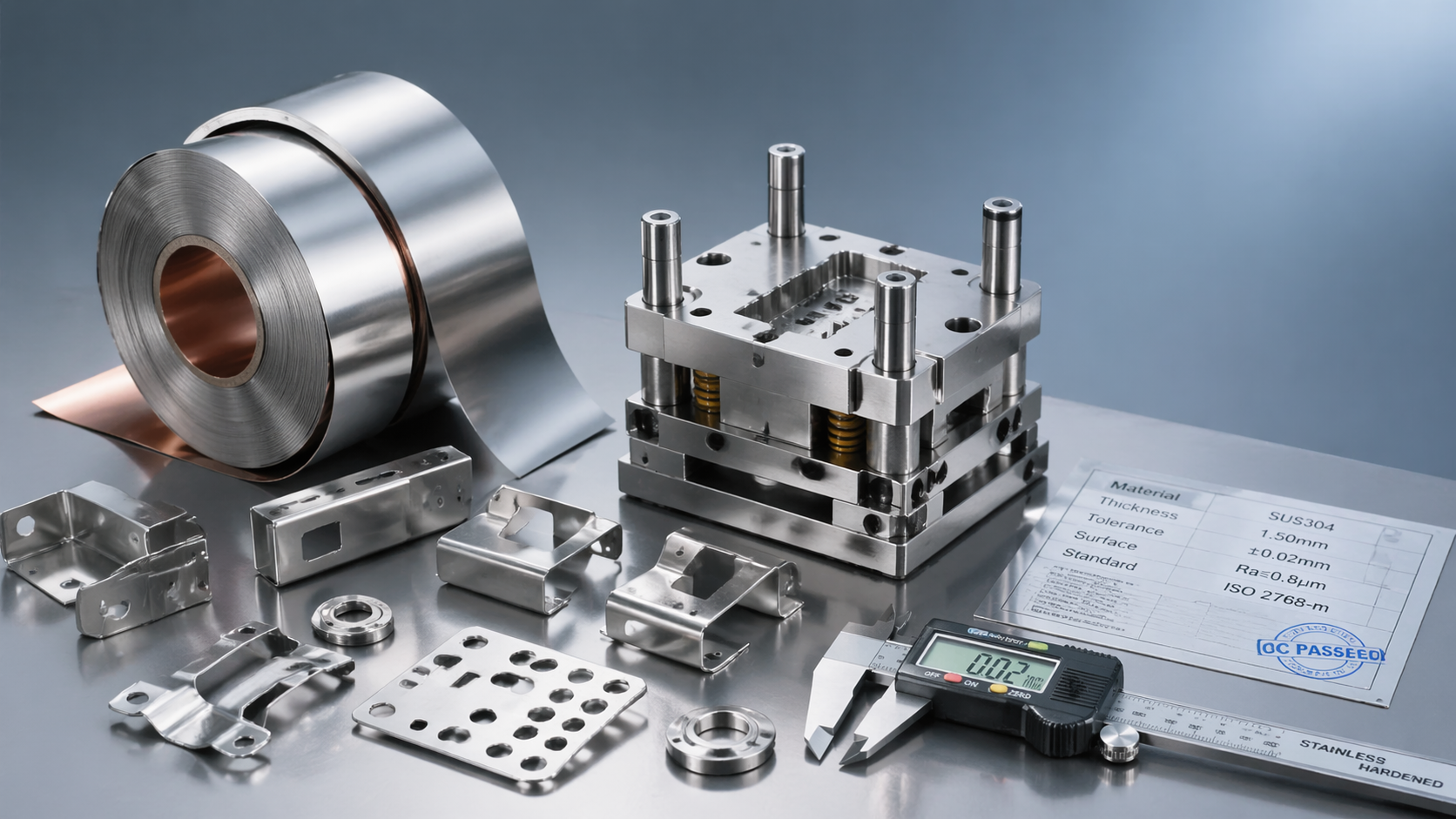
Choosing the right investment casting manufacturer can determine product quality, compliance, and long-term supply stability. Whether you source precision die casting parts, sheet metal fabrication services, custom metal stamping parts, or cnc machining parts oem, the ideal partner must deliver proven expertise, material consistency, and reliable production standards. This guide helps procurement teams and decision-makers evaluate suppliers with confidence.
When buyers search for how to choose an investment casting manufacturer, they are usually not looking for a basic definition of the process. They want to reduce sourcing risk, compare suppliers intelligently, and avoid quality, delivery, and compliance failures that become expensive after tooling is approved. For procurement teams, plant engineers, operators, and business leaders, the best manufacturer is not simply the one with the lowest quoted price. It is the one that can consistently meet dimensional requirements, material specifications, certification needs, production volumes, and communication expectations over the life of the program.
A strong evaluation should focus on technical capability, quality control, foundry process stability, machining and finishing support, traceability, responsiveness, and total cost of ownership. If a supplier looks competitive on price but cannot prove repeatability, inspection discipline, or export experience, the risk to your project may outweigh the savings.
What should you evaluate first when choosing an investment casting manufacturer?
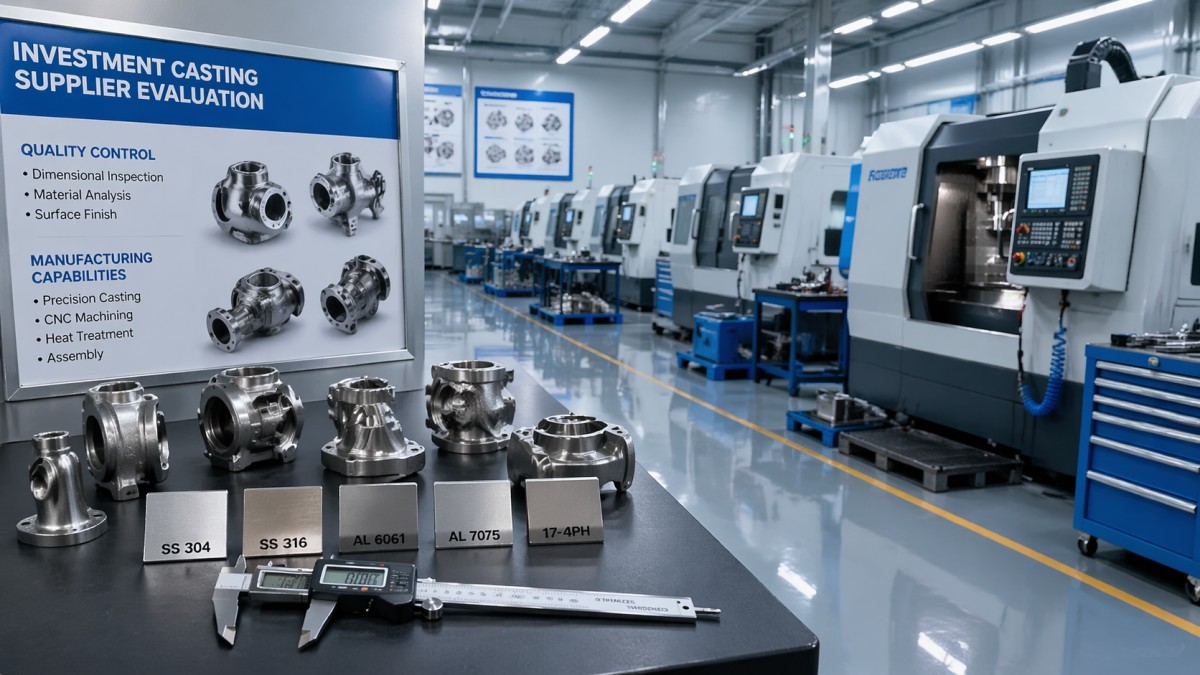
Start with the factors that directly affect whether the supplier can manufacture your part correctly and repeatedly. Before comparing quotes, confirm that the manufacturer is genuinely suited to your application.
The first screening questions should include:
- Do they specialize in investment casting, or is it only one of many secondary services?
- What materials do they cast regularly, such as stainless steel, carbon steel, alloy steel, aluminum, or specialty alloys?
- What part size, wall thickness, tolerance range, and annual volume can they support?
- Do they offer value-added operations such as cnc machining parts oem, heat treatment, surface finishing, and assembly?
- Can they meet required standards such as ISO 9001, PPAP, material traceability, RoHS, REACH, or industry-specific compliance?
If the answers are vague, incomplete, or inconsistent, that is usually an early warning sign. A qualified investment casting manufacturer should be able to discuss process windows, defect prevention, tooling expectations, inspection plans, and historical performance with confidence.
How do you verify real manufacturing capability instead of relying on sales claims?
Capability verification is where many sourcing decisions either become reliable or risky. A polished website or fast quotation does not prove foundry discipline. You need evidence.
Look for the following proof points:
- Process documentation: Ask for examples of control plans, inspection records, first article reports, and material certificates.
- Equipment list: Review wax injection, shell building, melting, pouring, cutoff, heat treatment, machining, CMM inspection, and non-destructive testing capabilities.
- Part examples: Request case studies or representative castings similar to your geometry, alloy, and tolerance requirements.
- Scrap and rework control: Ask how they track porosity, shrinkage, shell cracking, dimensional drift, and surface defects.
- Engineering support: Confirm whether they can provide DFM feedback before tooling is finalized.
A capable supplier should be able to explain how they optimize gating, shrinkage allowance, wax pattern integrity, shell strength, and post-cast machining strategy. This matters because many part failures begin in design-for-manufacturing gaps, not in final inspection.
Which quality control questions matter most to procurement and engineering teams?
Quality systems should be evaluated as operational realities, not just certification badges. ISO certification is useful, but it should be supported by measurable quality behavior.
Ask these practical questions:
- How are incoming raw materials verified?
- How is heat lot and batch traceability maintained?
- What in-process inspection steps are performed before final inspection?
- Are CMM, spectrometer, hardness testing, tensile testing, X-ray, dye penetrant, or other methods available in-house or through approved partners?
- How are non-conforming parts identified, segregated, and root-caused?
- What is their corrective action response time?
For buyers in regulated or safety-sensitive sectors, traceability and documentation can be as important as the casting itself. If a manufacturer cannot provide consistent reports, certification records, and change control discipline, future audits and field issues may become difficult to manage.
How important are material expertise and process consistency?
Material expertise is one of the clearest separators between average and dependable suppliers. Investment casting results vary significantly based on alloy behavior, mold design, melting practice, and cooling control.
A manufacturer with real material knowledge can help you:
- Select the most suitable alloy for strength, corrosion resistance, wear resistance, or thermal performance
- Reduce unnecessary machining through near-net-shape optimization
- Identify geometries that may create hot spots, distortion, or filling problems
- Balance performance requirements with total manufacturing cost
This is especially valuable when your sourcing scope extends beyond castings into precision die casting parts, custom metal stamping parts, or sheet metal fabrication services. A supplier or sourcing partner that understands how different manufacturing methods affect tolerance, lead time, tooling investment, and unit economics can guide better decisions across multiple part families.
What commercial and supply chain risks should decision-makers check before approval?
Technical capability alone is not enough. A manufacturer may produce acceptable samples but still create long-term supply problems due to weak planning, unstable lead times, or poor account management.
Review the supplier’s commercial reliability in these areas:
- Lead time realism: Are tooling, sample approval, and production timelines clearly defined?
- Capacity planning: Can they support your forecast growth and seasonal demand shifts?
- Communication quality: Do engineering, sales, and quality teams respond accurately and promptly?
- Export experience: Are they familiar with international packaging, documentation, customs, and shipping coordination?
- Business continuity: Do they have backup plans for equipment failure, raw material shortages, or logistics disruption?
For enterprise buyers, the best sourcing outcome often comes from evaluating total supply resilience, not just initial production readiness. If your product line depends on single-source cast components, a late or inconsistent supplier can disrupt downstream assembly, customer delivery, and revenue.
How should you compare quotations from different investment casting manufacturers?
Do not compare quotes line by line without understanding what is included. Two suppliers may appear to offer the same part at different prices while using different assumptions on tooling, machining allowance, heat treatment, testing, yield loss, or packaging.
When comparing quotations, check:
- Tooling cost and ownership terms
- Unit price at different volume breaks
- Included machining and finishing operations
- Inspection and certification scope
- Sampling charges and lead times
- Incoterms and logistics responsibilities
- Payment terms and warranty expectations
The lowest quote can become the highest-cost option if it leads to poor yield, excessive incoming inspection, engineering change delays, or field failures. Procurement should align with engineering and operations to assess total cost of ownership, not only purchase price.
When should you request samples, audits, or trial orders?
If the part is critical, customized, or high volume, sampling and validation should be mandatory. A serious manufacturer should welcome structured qualification.
Use samples, audits, or trial orders when:
- The geometry is complex or tolerance-sensitive
- The alloy or application has safety implications
- You expect long-term repeat orders
- The supplier is new to your organization
- You need to validate machining, finishing, or assembly integration
A factory audit should examine more than housekeeping and equipment count. It should confirm process flow, inspection discipline, operator training, material control, calibration management, and issue escalation methods. If an on-site audit is not feasible, a detailed video audit with documented records is still better than making a decision based only on a quotation package.
What are the most common warning signs of a poor-fit supplier?
Some problems are visible early if you know what to look for. Common red flags include:
- Unclear answers about tolerances, alloys, or defect rates
- Refusal or delay in sharing quality records and certifications
- Pricing that is unusually low without explanation
- Weak engineering feedback during DFM review
- Frequent changes in lead time or scope during quotation
- Limited traceability or inconsistent documentation
- No clear ownership of quality issues or corrective actions
A supplier does not need to be the largest foundry to be the right partner. But they do need to be transparent, technically credible, and operationally disciplined.
Final checklist: how to choose an investment casting manufacturer with confidence
The best investment casting manufacturer is the one that can meet your technical requirements and business expectations consistently over time. For most buyers, that means evaluating six core areas:
- Proven experience with similar parts, alloys, and tolerances
- Reliable quality systems with traceability and documented control
- Engineering support for DFM, tooling, and process optimization
- Integrated secondary services such as machining, finishing, or assembly
- Stable lead times, responsive communication, and export readiness
- Transparent pricing based on total cost of ownership
If you apply these criteria carefully, you will make a better sourcing decision than by comparing unit price alone. The right supplier helps reduce rejection risk, improve part performance, shorten launch timelines, and strengthen long-term supply security.
In short, choosing an investment casting manufacturer is a risk-management decision as much as a purchasing decision. Buyers who verify capability, quality discipline, and supply reliability upfront are far more likely to secure consistent production, dependable compliance, and stronger business outcomes.
Expert Insights

Chief Security Architect
Dr. Thorne specializes in the intersection of structural engineering and digital resilience. He has advised three G7 governments on industrial infrastructure security.
Related Analysis
Core Sector // 01
Security & Safety
- How to Choose an Investment Casting ManufacturerAuthor :Heavy Industry Strategist

- Are Precision Die Casting Parts Worth the CostAuthor :Heavy Industry Strategist
![]()
- Sheet Metal Fabrication Services: What to CheckAuthor :Heavy Industry Strategist

- Custom Metal Stamping Parts: Common Buying MistakesAuthor :Heavy Industry Strategist

- Magnesium Alloy Ingots: What Affects QualityAuthor :Heavy Industry Strategist

- How to Compare Lead Ingots ManufacturersAuthor :Heavy Industry Strategist
![]()
- 2026 Shanghai Fastener Show Launches Zero-Carbon Process ZoneAuthor :Heavy Industry Strategist
![]()
- Shanghai Fastener Show 2026: 1400+ Suppliers, Global B2B MatchingAuthor :Heavy Industry Strategist
![]()