Geosynthetic Clay Liner GCL: Where Installation Errors Usually Happen
Author
Date Published
Reading Time
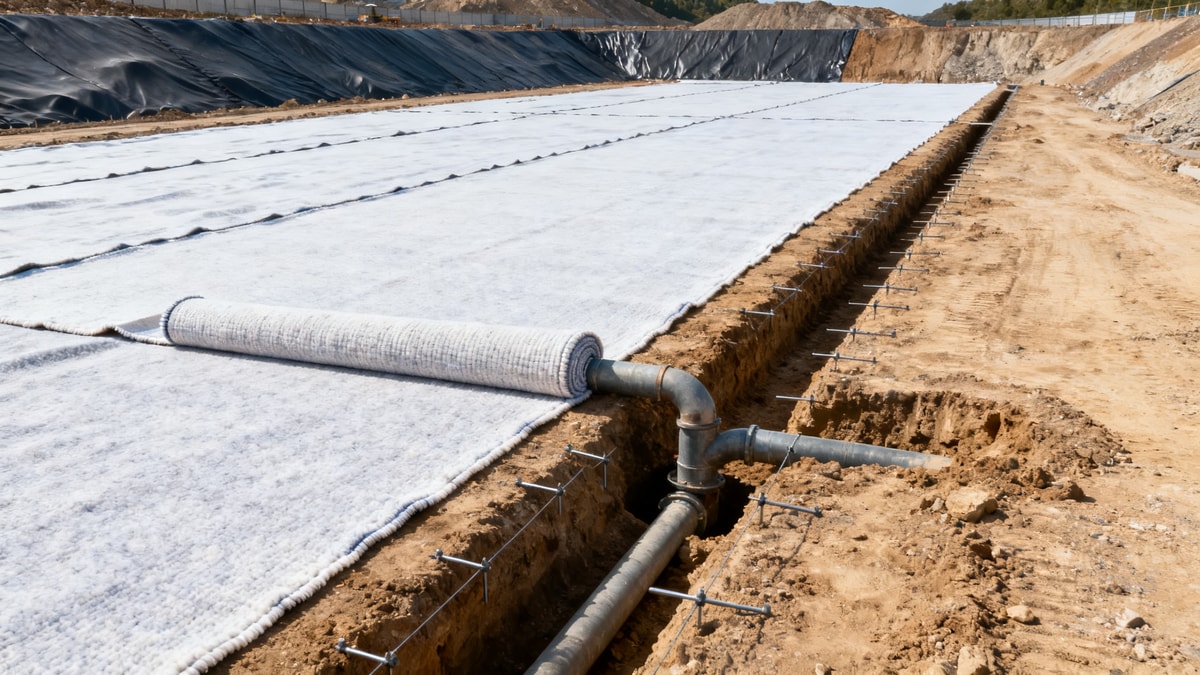
Even the best geosynthetic clay liner GCL can fail if installation mistakes go unnoticed at critical stages. For project managers and engineering leads, understanding where these errors usually happen is essential to preventing leakage risks, rework, delays, and compliance issues. This article highlights the most common failure points in GCL installation and what to watch for before they turn into costly site problems.
Why installation quality is becoming a bigger risk signal in current GCL projects
Across containment, landfill, mining, water infrastructure, and industrial environmental protection projects, the conversation around geosynthetic clay liner GCL is changing. A few years ago, many teams treated GCL selection as the main technical decision. Today, more project owners and EPC contractors recognize that the larger risk often lies in execution on site. In other words, material certification still matters, but installation discipline now carries equal weight in project performance.
Several industry signals explain this shift. Projects are moving faster, subcontracting chains are becoming more fragmented, and compliance expectations are tightening. At the same time, many sites are being developed in harsher climates, on more difficult subgrades, or under stricter environmental scrutiny. Under these conditions, a geosynthetic clay liner GCL may meet specification on paper but still underperform if panel overlap, anchorage, moisture exposure, or cover placement is mishandled.
For project managers, this means installation errors are no longer a narrow field concern. They affect schedule reliability, change order exposure, quality acceptance, long-term liability, and the credibility of the entire containment system. The key trend is clear: the market is moving from product-focused evaluation toward system-focused risk control.
What is driving this shift in attention
The rising focus on geosynthetic clay liner GCL installation quality is being shaped by multiple forces rather than one single technical issue. Environmental compliance is one driver, especially where seepage control and secondary containment performance are critical. Another driver is project complexity. Multi-layer liner systems, steep slopes, penetrations, interface friction requirements, and hybrid designs with geomembranes demand tighter coordination than basic flat-area installations.
A further change is the growing expectation that quality records must be auditable. Owners increasingly want documented field verification, not just verbal confirmation from installers. This has elevated the importance of installation checklists, hold points, photographic records, weather monitoring, and pre-cover inspection routines. As a result, recurring field mistakes that once stayed local are now more visible in project reviews and supplier evaluations.
Where installation errors usually happen in a geosynthetic clay liner GCL system
The most important trend insight is that errors do not occur evenly across the work. They cluster around predictable transition points, handoffs, and time-pressure moments. This makes them manageable if teams know where to look.
1. Before deployment: subgrade readiness is still underestimated
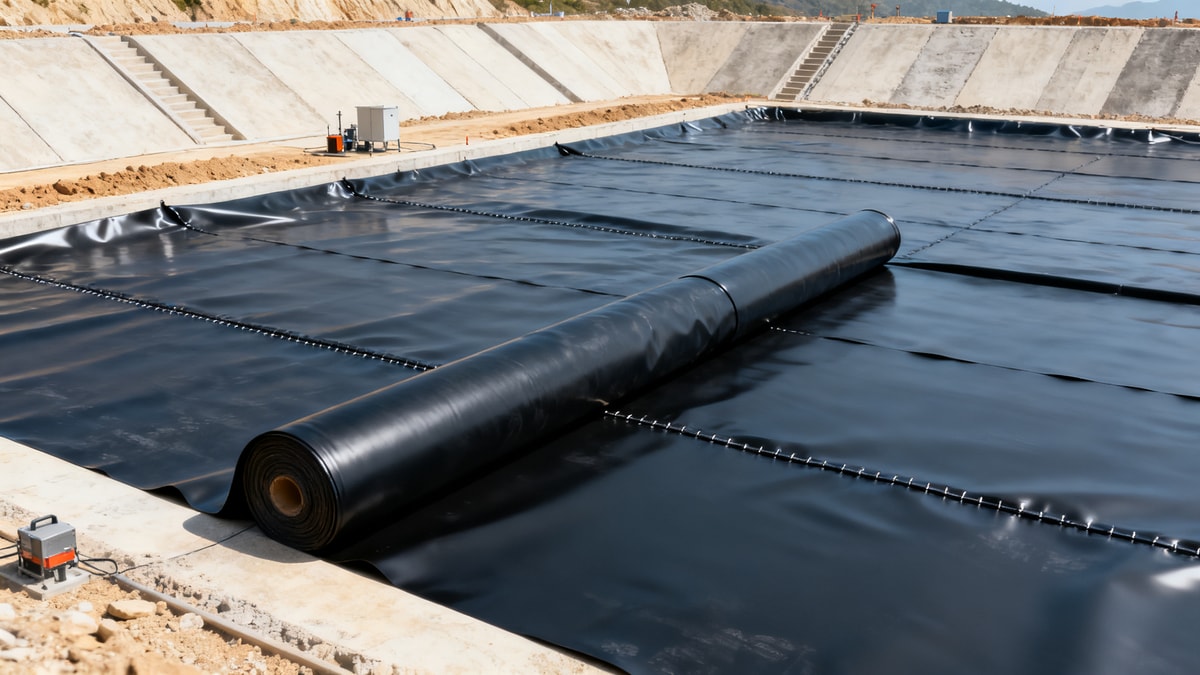
A common failure point appears before the geosynthetic clay liner GCL is even unrolled. If the subgrade contains standing water, sharp protrusions, loose zones, rutting, or abrupt grade changes, the liner may bridge, tear, or fail to maintain uniform contact. On compressed schedules, teams sometimes treat subgrade approval as a formality. That is a costly mistake. In current practice, subgrade acceptance should be treated as a hold point with clear responsibility, signoff, and immediate corrective action if conditions change.
2. During panel layout: orientation and overlap errors happen under speed pressure
Panel deployment is another high-risk stage. Installers may reverse panel orientation, reduce overlap below specification, or place seams in unfavorable directions relative to slope and runoff. These issues become more common when crews are trying to cover large areas quickly ahead of weather events. For project leads, the warning sign is simple: if deployment productivity becomes the main discussion on site, overlap integrity may already be at risk.
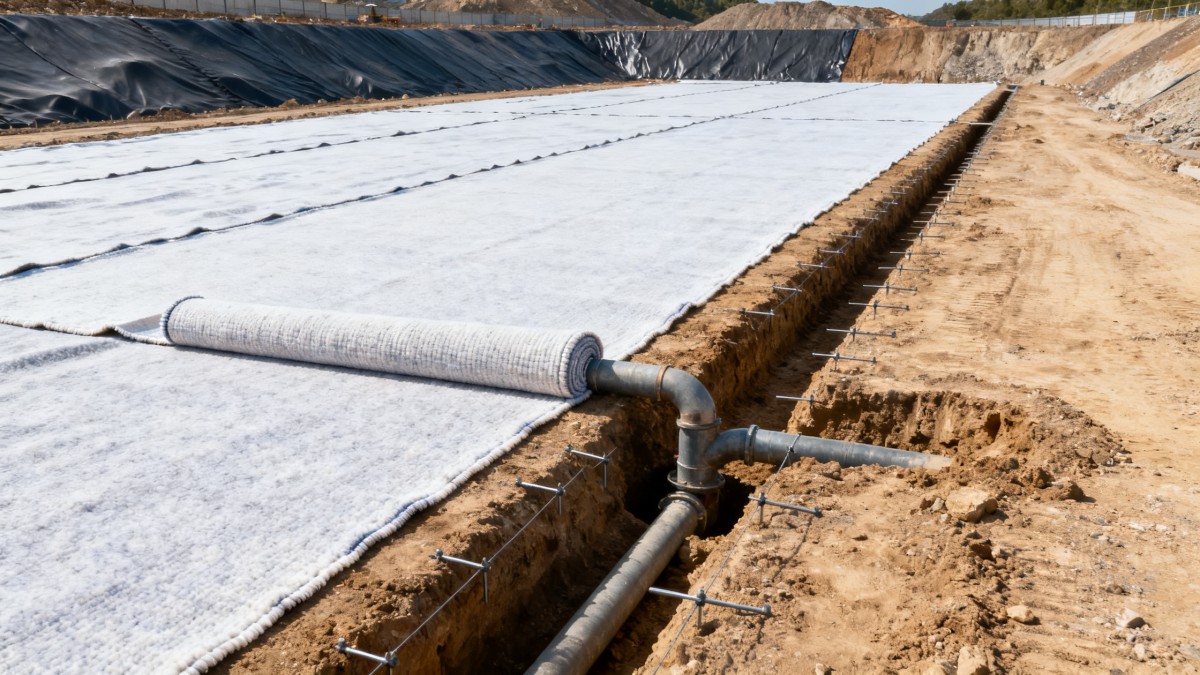
3. At penetrations and terminations: detailing is often the weakest link
Pipe penetrations, anchor trenches, corners, and transitions to structures regularly create the highest error concentration in a geosynthetic clay liner GCL installation. These are the areas where standard roll deployment gives way to hand cutting, shaping, and coordination with civil or mechanical elements. If workmanship standards are vague, crews may leave gaps, tension the material improperly, or improvise details that compromise continuity. These locations deserve more inspection time than open-field areas, not less.
4. During weather exposure: moisture management remains a decisive variable
Exposure management is increasingly important as projects move into variable climate zones. Premature hydration, rain exposure before cover placement, repeated wet-dry cycles, or prolonged UV exposure can affect handling and performance. Not every site condition creates the same level of risk, but the pattern is consistent: the longer a geosynthetic clay liner GCL stays exposed without controlled protection, the narrower the margin for error becomes.
5. During cover placement: damage often occurs after “installation is finished”
One of the most overlooked trends in field failure reviews is that damage often happens after the liner appears complete. Aggressive equipment movement, unsuitable cover material, excessive drop height, or unplanned trafficking can disturb overlaps or puncture the system. For managers, this is a process issue, not just a labor issue. If cover placement crews are not aligned with liner protection requirements, the project can lose quality in the final handoff stage.
How these errors affect different project stakeholders
The consequences of poor geosynthetic clay liner GCL installation are not limited to technical performance. They spread across budget control, site coordination, compliance, and long-term asset reputation.
The strongest field signals that a GCL installation is drifting off standard
For trend-aware managers, the goal is not to react after failure but to recognize drift early. Several signals deserve close attention. Frequent on-site improvisation is one. If crews are making repeated judgment calls without documented direction, risk is rising. Another signal is misalignment between weather conditions and daily work planning. A third is inspection compression, where hold points are skipped to recover time. In many projects, the real warning is not a visible defect but a breakdown in sequencing discipline.
It is also worth watching how teams talk about defects. If issues are described as “minor” before root cause is understood, the project may be normalizing quality drift. A robust geosynthetic clay liner GCL program requires language discipline as well as technical discipline: deviation, exposure, overlap variance, cover damage, and subgrade nonconformance should all trigger defined responses.
What project teams should change now in response to these trends
The most effective response is not simply adding more inspection at the end. It is redesigning field control around the stages where errors usually happen. For current and upcoming projects, several adjustments have high value.
- Treat subgrade acceptance as a formal release gate, not a verbal confirmation.
- Pre-brief crews on overlap direction, panel orientation, and weather-triggered stop criteria.
- Assign dedicated review attention to penetrations, corners, terminations, and slope transitions.
- Limit exposure time between deployment and protective cover placement.
- Coordinate earthworks and liner protection so post-installation damage is actively prevented.
- Maintain auditable records that distinguish material quality from installation quality.
These are not merely best practices. They reflect a broader market direction in which owners and industrial buyers increasingly favor contractors and suppliers that can prove process reliability, not just claim experience.
How to judge future readiness when specifying a geosynthetic clay liner GCL
Looking ahead, the strongest organizations will evaluate geosynthetic clay liner GCL systems through a lifecycle lens. That means asking whether the chosen material, installer capability, detailing method, weather plan, and cover placement sequence fit the actual site reality. Future-ready procurement and project planning will likely place more emphasis on constructability reviews, interface risk mapping, and traceable QA evidence.
This is especially relevant for EPC environments where schedule certainty and compliance defensibility carry equal importance. When installation mistakes occur, they rarely stem from one isolated action. More often, they emerge from a chain of small decisions made under pressure. Breaking that chain requires earlier judgment, clearer ownership, and better alignment between design, procurement, installation, and inspection teams.
Key questions to confirm before site execution
If your team wants to understand how these trends affect a specific project, focus on a short set of decision questions. Has the subgrade acceptance standard been translated into a practical field checklist? Are overlap and seam details unambiguous for the actual slope geometry? What weather conditions will stop work, and who makes that call? Which party owns penetration detailing? How quickly can cover be placed after deployment? What records will prove that the geosynthetic clay liner GCL was installed in accordance with design intent?
Projects that can answer those questions early are usually better positioned to avoid leakage risks, reduce rework, and protect schedule performance. In today’s industrial environment, that is not only a quality advantage. It is a strategic one.
Technical Specifications
- India BIS Draft IS 17832:2026 Sets Noise & Dust Limits for Waste CrushersAuthor :Environmental Engineering Director
- Korea MFDS Mandates Korean UI & KOSHA OEL Database for Industrial Water AnalyzersAuthor :Precision Metrology Expert
- Indonesia BPOM Mandates PM0.1 Efficiency & CADR Decay Labeling for Industrial Air PurifiersAuthor :Environmental Engineering Director
Expert Insights

Chief Security Architect
Dr. Thorne specializes in the intersection of structural engineering and digital resilience. He has advised three G7 governments on industrial infrastructure security.
Related Analysis
- May 03, 2026India BIS Draft IS 17832:2026 Sets Noise & Dust Limits for Waste CrushersAuthor :Environmental Engineering Director
- May 03, 2026Korea MFDS Mandates Korean UI & KOSHA OEL Database for Industrial Water AnalyzersAuthor :Precision Metrology Expert
- May 03, 2026Indonesia BPOM Mandates PM0.1 Efficiency & CADR Decay Labeling for Industrial Air PurifiersAuthor :Environmental Engineering Director
Core Sector // 01
Security & Safety
- Geosynthetic Clay Liner GCL: Where Installation Errors Usually HappenAuthor :Heavy Industry Strategist

- Wholesale Geomembrane HDPE: Thickness Claims vs Real Project NeedsAuthor :Heavy Industry Strategist

- How Geotextile Fabric Bulk Orders Go Wrong on Spec MatchingAuthor :Heavy Industry Strategist

- Plastic Geogrid Wholesale: What Changes Unit Cost Most?Author :Heavy Industry Strategist

- India BIS to Require Intergranular Corrosion Reports for Stainless Steel SectionsAuthor :Heavy Industry Strategist

- Binggang Group & AHUT Advance Steel Slag Valorization TechAuthor :Heavy Industry Strategist
![]()
- Alloy purity gaps in metallurgical engineeringAuthor :Heavy Industry Strategist

- How to Choose an Investment Casting ManufacturerAuthor :Heavy Industry Strategist