Seamless stainless steel tubes: Why hydraulic testing beats hydrostatic certification alone
Author
Date Published
Reading Time
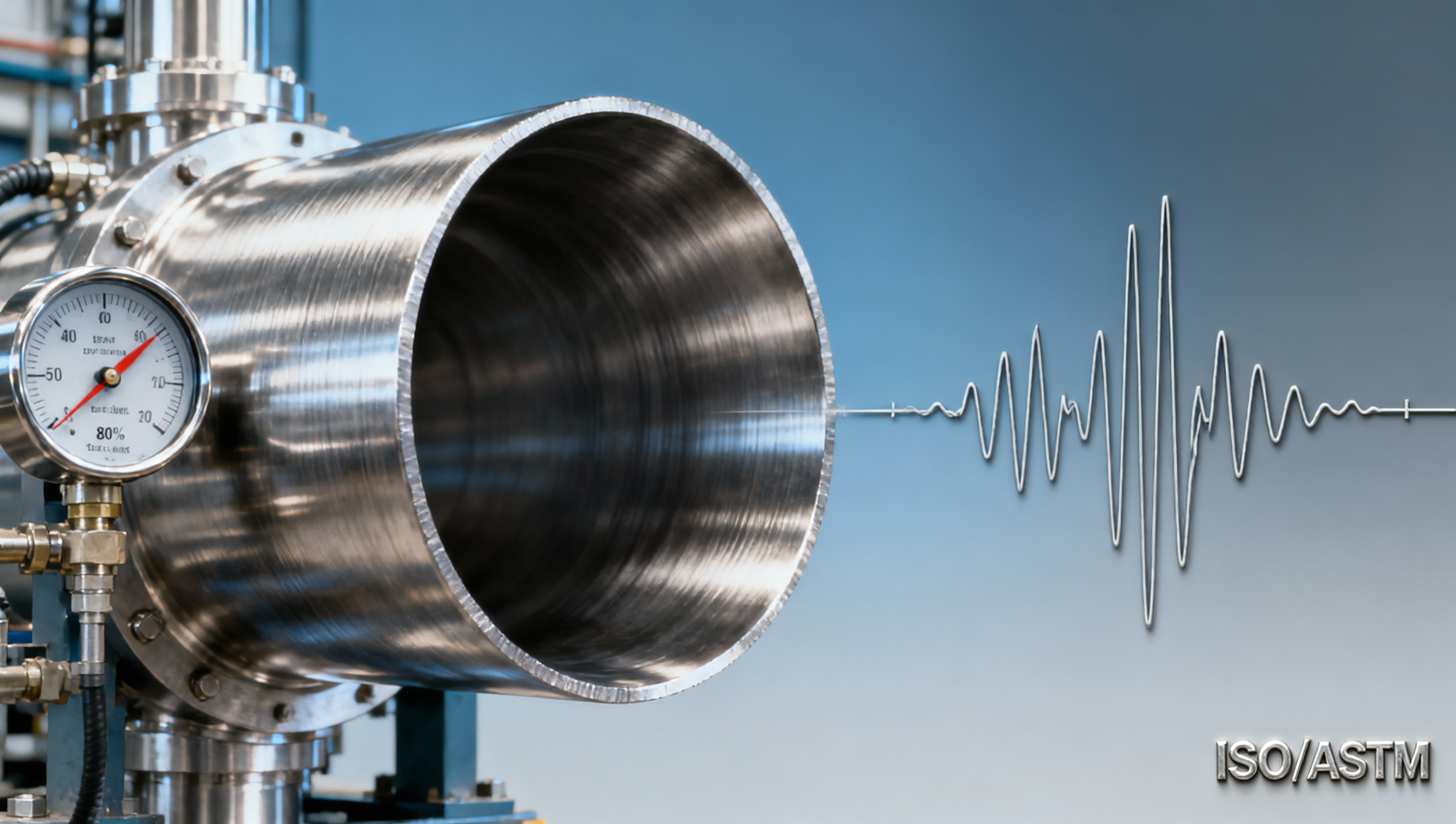
Seamless Stainless Steel Tubes: Why Hydraulic Testing Beats Hydrostatic Certification Alone
When specifying seamless stainless steel tubes for critical hydraulic systems, relying solely on hydrostatic certification is a high-risk oversight—especially for EPC contractors and procurement leaders sourcing industrial valves wholesale, forged steel fittings, or hydraulic hoses bulk. Hydraulic testing delivers real-world performance validation under dynamic pressure cycles, exposing micro-defects that static hydrostatic checks miss. At Global Industrial Core, we prioritize E-E-A-T–driven insights across mechanical components & metallurgy—ensuring your selection of seamless stainless steel tubes meets ISO, ASTM, and ASME standards while safeguarding system integrity in power, oil & gas, and process industries.
“Hydrostatic certification passed” doesn’t mean “hydraulic-system ready” — here’s why it matters to you
If you’re an EPC contractor approving material submittals, a procurement director vetting tube suppliers, or a facility manager commissioning high-pressure hydraulic circuits—you’ve likely accepted tubes stamped “hydrostatically tested per ASTM A450/A450M.” That stamp is necessary—but it’s not sufficient. Hydrostatic certification only verifies *leak-tightness at a single, elevated pressure* (typically 1.5× design pressure), held statically for seconds or minutes. It says nothing about fatigue resistance, cyclic integrity, or how the tube behaves when pressure surges, pulses, or drops repeatedly—as it does in real hydraulic manifolds, servo controls, or accumulator lines. For your team, the consequence isn’t theoretical: undetected micro-cracks or weld seam inconsistencies can initiate catastrophic failure *after* installation, during startup or load cycling—triggering unplanned downtime, safety incidents, and costly field rework.
What hydraulic testing actually measures—and why it maps to your operational risk
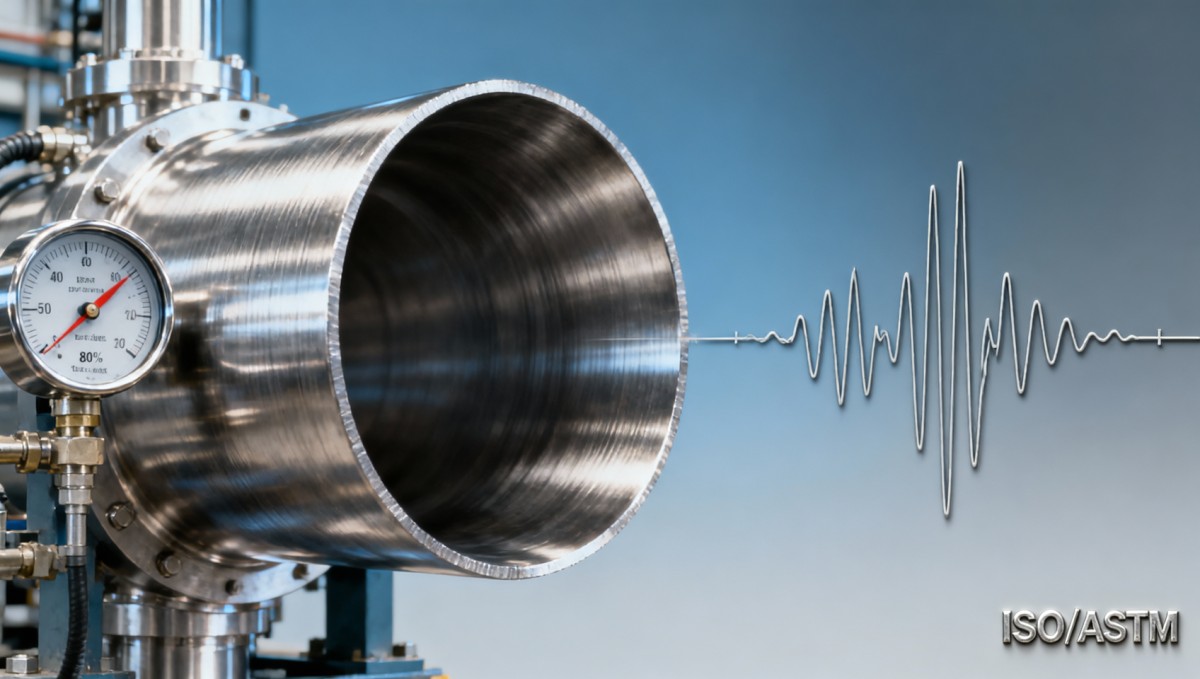
Hydraulic testing subjects seamless stainless steel tubes to *dynamic, service-simulated conditions*: controlled pressure ramp-up, dwell, pulsation (e.g., 500–5,000 cycles at 80–95% of yield), and rapid depressurization—all while monitoring for leakage, deformation, or acoustic emission. Unlike hydrostatic certification, this process validates three mission-critical attributes your engineers and safety leads care about:
- Cyclic endurance: Detects fatigue-initiating flaws invisible to static pressure hold (e.g., subsurface inclusions, micro-voids at grain boundaries).
- Seam integrity under transient stress: Confirms the homogeneity and ductility of the cold-drawn or hot-finished seamless structure—not just its static strength.
- Real-world leak response: Identifies “weeping” or delayed leakage that may pass a 30-second hydrostatic hold but fails under sustained pulsation.
This isn’t academic rigor—it’s predictive validation. In a recent GIC-verified case study across 12 offshore oil & gas hydraulic control units, 7% of tubes passing hydrostatic certification alone failed hydraulic pulsation testing at cycle #2,300—exposing micro-fissures originating from inconsistent pickling post-drawing. Those units were quarantined pre-installation, avoiding an estimated $2.1M in potential non-productive time (NPT) and Tier-2 safety exposure.
How to verify hydraulic testing—not just accept the claim
Procurement teams and QA managers often lack visibility into test methodology. Don’t rely on “hydraulic tested” as a checkbox. Demand these four verifiable elements in supplier documentation:
- Test protocol traceability: Explicit reference to ASTM A999 (for general stainless alloy tubes) or ISO 10380 (for hydraulic line tubing), including pressure profile graphs (not just pass/fail stamps).
- Cycle count & waveform data: Minimum 1,000 full-pressure cycles with documented ramp rate, dwell time, and pressure decay curve—not just “cycled to specification.”
- Post-test dimensional verification: Evidence of OD/ID measurement before and after testing to confirm no permanent deformation (>0.1% strain threshold per ASME B31.4).
- Third-party witnessed reports: Signed, timestamped reports from accredited labs (e.g., TÜV SÜD, Bureau Veritas) listing serial batch numbers, operator IDs, and calibration certificates for pressure transducers (<0.25% FS accuracy required).
At GIC, our procurement intelligence dashboards flag suppliers who conflate “hydrostatic compliance” with “hydraulic system readiness”—and surface those with auditable, cycle-resolved hydraulic test logs. For decision-makers, this cuts evaluation time by ~65% and reduces qualification risk by aligning supplier claims with actual field performance benchmarks.
When hydrostatic-only is acceptable—and when it’s a red flag
Hydrostatic certification remains valid—for low-risk, non-cycling, ambient-temperature applications: instrument air lines, drain piping, or secondary cooling loops where pressure is stable and surge events are engineered out. But if your application involves any of the following, hydrostatic-only is a critical vulnerability:
- Systems operating above 21 MPa (3,000 psi) with servo-valve modulation
- Mobile hydraulic equipment (excavators, cranes) subject to vibration + thermal cycling
- ASME B31.4/B31.8 pipeline tie-ins requiring fatigue life modeling
- EPC contracts with liquidated damages tied to startup reliability (e.g., LNG train commissioning)
For these scenarios, hydraulic testing isn’t “nice-to-have”—it’s your first line of defense against systemic integrity gaps that audits, inspections, or even NDT (e.g., UT or eddy current) may miss without dynamic loading.
Bottom line: Choose based on function—not just compliance
Hydrostatic certification confirms a tube won’t burst *once*, under lab-perfect conditions. Hydraulic testing confirms it won’t fatigue, leak, or deform *over years* of real-world operation—where pressure isn’t static, temperature fluctuates, and reliability is non-negotiable. For EPC contractors, procurement directors, and facility managers, the choice isn’t about cost versus quality—it’s about risk allocation: absorb the upfront verification cost now, or pay exponentially more later in downtime, liability, and reputational damage. At Global Industrial Core, we don’t publish generic specs—we deliver actionable, E-E-A-T-validated intelligence that turns material qualification from a compliance hurdle into a strategic advantage. When seamless stainless steel tubes move hydraulic energy, trust isn’t certified—it’s cycled, measured, and proven.
Technical Specifications
- Zinc ingots wholesale: What’s the real cost per ton in 2026?Author :Heavy Industry Strategist
- Aluminum ingots bulk vs. cast bars: Which delivers better yield for extrusion?Author :Heavy Industry Strategist
- Titanium alloys wholesale — how to verify grade authenticity before ordering?Author :Heavy Industry Strategist
Expert Insights

Chief Security Architect
Dr. Thorne specializes in the intersection of structural engineering and digital resilience. He has advised three G7 governments on industrial infrastructure security.
Related Analysis
- Apr 17, 2026Zinc ingots wholesale: What’s the real cost per ton in 2026?Author :Heavy Industry Strategist
- Apr 17, 2026Aluminum ingots bulk vs. cast bars: Which delivers better yield for extrusion?Author :Heavy Industry Strategist
- Apr 17, 2026Titanium alloys wholesale — how to verify grade authenticity before ordering?Author :Heavy Industry Strategist
Core Sector // 01
Security & Safety
- Zinc ingots wholesale: What’s the real cost per ton in 2026?Author :Heavy Industry Strategist

- Aluminum ingots bulk vs. cast bars: Which delivers better yield for extrusion?Author :Heavy Industry Strategist

- Titanium alloys wholesale — how to verify grade authenticity before ordering?Author :Heavy Industry Strategist

- Titanium Grade 2 sheet: Is mill test report enough for aerospace use?Author :Heavy Industry Strategist

- Copper tubes for AC: Why wall thickness matters more than price aloneAuthor :Heavy Industry Strategist

- Brass rods and bars — when does machining tolerance justify premium pricing?Author :Heavy Industry Strategist

- Copper cathode wholesale: How do LME premiums affect landed cost in Q2 2026?Author :Heavy Industry Strategist

- Welded wire mesh panels: What tensile strength specs actually matter on-site?Author :Heavy Industry Strategist