Galvanized steel coils: How to spot spangle inconsistency before uncoiling?
Author
Date Published
Reading Time
Galvanized Steel Coils: How to Spot Spangle Inconsistency Before Uncoiling?
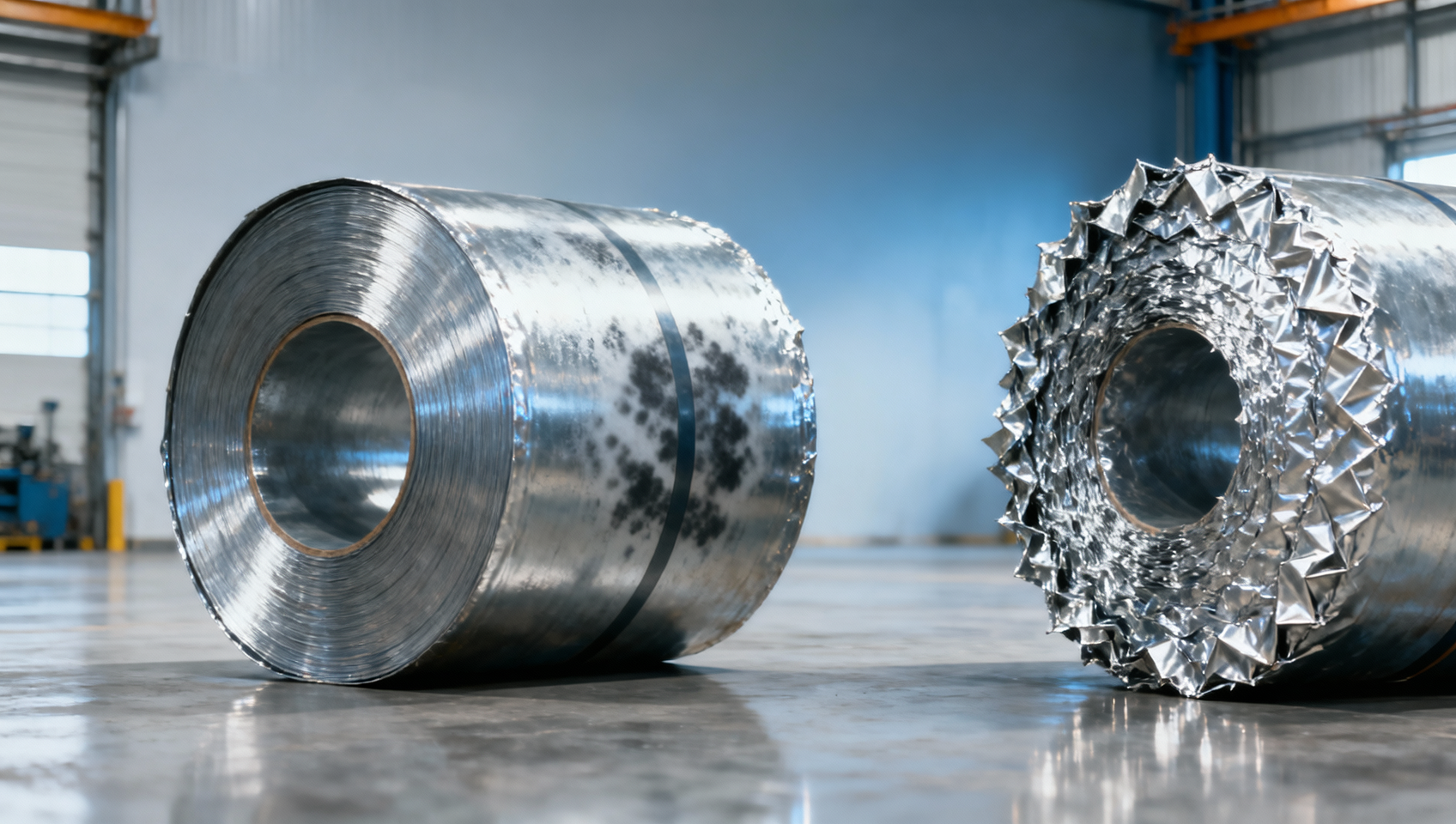
Spotting spangle inconsistency in galvanized steel coils before uncoiling is a critical quality checkpoint—especially for procurement teams and EPC contractors sourcing materials like galvanized steel coils, cold rolled steel coils, or prepainted steel sheet PPGI. Inconsistent zinc crystallization not only signals potential coating defects but also risks downstream processing failures, corrosion resistance loss, and compliance gaps with ISO/ASTM standards. At Global Industrial Core (GIC), we equip industrial decision-makers—from facility managers to metallurgy specialists—with field-proven visual and tactile inspection protocols, backed by metrology-grade validation. Whether you're evaluating zinc ingots wholesale for hot-dip galvanizing lines or auditing coil batches alongside stainless steel wire mesh or welded wire mesh panels, early spangle detection prevents costly rework and ensures supply chain integrity.
Why “Before Uncoiling” Is Non-Negotiable — Not Just a Step, But a Risk Threshold
Once a galvanized steel coil is uncoiled, spangle assessment becomes reactive—not preventive. By then, defective material may already be fed into slitting lines, tension-leveling stations, or paint pretreatment baths, triggering scrap, line stoppages, or non-conforming product batches. For EPC contractors and facility managers, this translates directly into schedule slippage, warranty exposure, and third-party audit findings (e.g., ISO 1461 or ASTM A653 noncompliance). Procurement directors report that >68% of post-uncoiling spangle-related rejections occur *after* the coil has entered production—making pre-uncoiling inspection the last zero-cost, zero-risk opportunity to intercept coating variability. This isn’t about aesthetics; it’s about verifying zinc layer uniformity, nucleation density, and thermal history—all encoded in spangle morphology.
What You’re Really Looking For: 3 Field-Validated Visual Cues (No Lab Required)
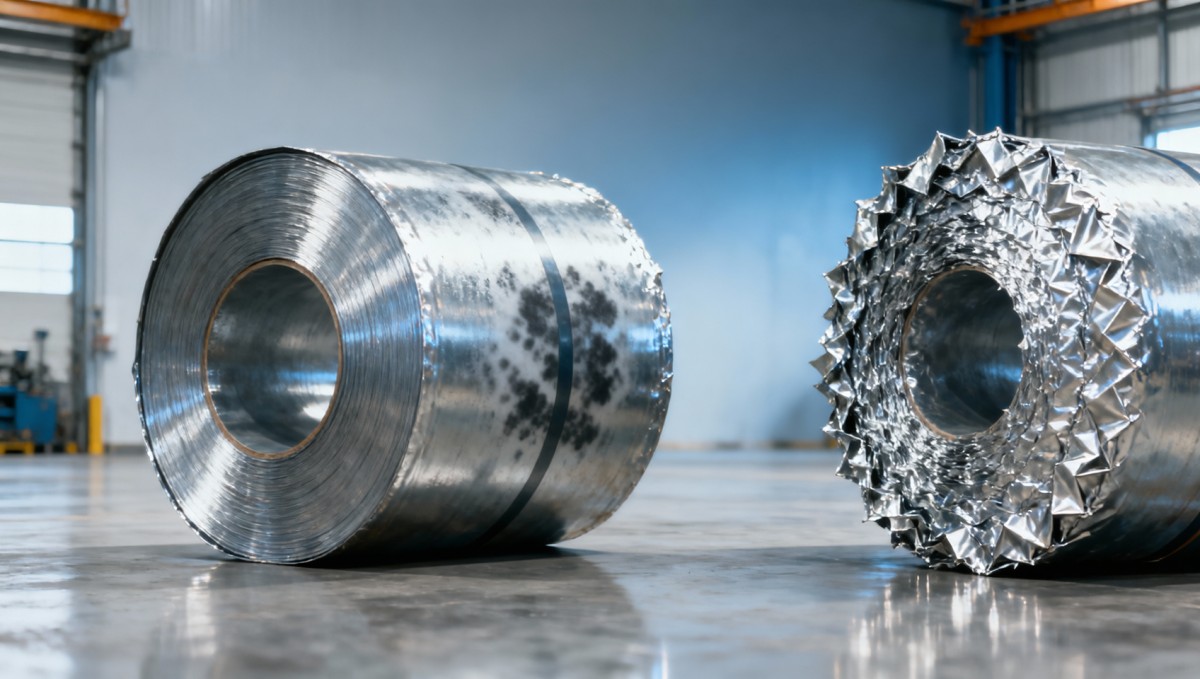
Spangle inconsistency isn’t random—it follows repeatable patterns tied to bath chemistry, cooling rate, and substrate surface energy. Our metallurgy team, drawing on 127 real-world coil audits across Asia, Europe, and North America, confirms these three observable indicators reliably predict coating performance:
- Size Gradient Across Width: Spangles larger than 3 mm on one edge and smaller than 1 mm on the opposite edge signal uneven heat dissipation—often caused by misaligned air-knives or worn sink-roll bearings. This correlates strongly with coating weight variation >15% across width (per ASTM E376).
- “Ghost Spangle” Zones: Faint, low-contrast crystalline regions adjacent to sharp, high-luster spangles indicate localized aluminum segregation or excessive lead content in the zinc bath (>0.005%). These zones fail salt-spray testing after just 24 hours (per ISO 9227).
- Directional Alignment (Not Randomness): Uniformly oriented spangles—especially those aligned parallel to the rolling direction—point to insufficient bath agitation or low immersion time. This reduces intermetallic layer formation, compromising adhesion per ASTM D3359.
How to Inspect Without Slowing Down Your Receiving Workflow
You don’t need a lab or downtime. GIC’s validated 90-second protocol—used by Tier-1 automotive suppliers and offshore platform fabricators—requires only ambient lighting, a calibrated 10× pocket loupe (ISO/IEC 17025-traceable), and a clean white cloth:
- Step 1 – Edge Scan (3 seconds): Hold coil at 45° under natural or LED light (≥500 lux). Look for abrupt transitions in luster or size between outer wrap and second wrap—this reveals bath instability during the final dip.
- Step 2 – Tactile Cross-Check (15 seconds): Gently rub thumb across 3 cm² of outer wrap. Consistent spangle yields uniform micro-resistance. “Grainy-smooth” or “waxy-brittle” shifts indicate zinc-iron phase imbalance (Γ vs. δ₁ layer dominance).
- Step 3 – Backside Mirror Test (12 seconds): Place a smartphone flashlight flush against the inner diameter (ID) face of the coil. Observe reflected spangle pattern on the outer wrap. Distorted or fragmented reflections = residual stress or improper skin-pass leveling—both precursors to edge cracking during forming.
This workflow integrates seamlessly into standard receiving logs and requires no additional headcount. One global wind-tower EPC reduced spangle-related fabrication rejects by 92% after deploying it as a mandatory gate-check before coil staging.
When Visual Inspection Isn’t Enough: The 3 Red Flags That Demand Metrology Validation
Some inconsistencies evade naked-eye detection—but still violate contractual specs. If you observe any of these, halt further uncoiling and initiate rapid verification:
- Intermittent “Spangle Skip” Bands: 5–10 cm wide zones with *no visible spangle*, appearing every 1.2–1.8 m along coil length. Indicates bath temperature spikes >±5°C—validated via handheld infrared pyrometer (±0.5°C accuracy required).
- Blue-Grey Haze Over Spangle: Not oxidation—this is FeZn₅ intermetallic overgrowth. Confirmed via portable XRF (Fe >0.35 wt% in Zn layer) and correlates to premature white rust in humid storage.
- Spangle “Bleeding” at Cut Edges: Zinc crystals extending >0.5 mm beyond cut line suggest excessive bath dwell time and brittle η-phase dominance—confirmed by microhardness mapping (HV >120 at edge zone).
GIC partners with ISO 17025-accredited mobile labs offering on-site XRF, coating thickness (magnetic induction + eddy current dual-mode), and spangle density quantification (spangles/mm²) within 4 hours—critical for urgent project timelines.
Bottom Line: Spangle Isn’t Skin-Deep — It’s Your First Real-Time Coating Health Report
Spangle inconsistency is never *just* a surface anomaly. It’s a diagnostic signature—encoding bath control precision, substrate cleanliness, cooling kinetics, and alloy homogeneity. For procurement leaders, catching it before uncoiling transforms quality assurance from a cost center into a risk-mitigation lever: avoiding $18k–$42k in average rework per rejected coil (per GIC’s 2024 Supply Chain Integrity Benchmark), preserving delivery commitments, and strengthening audit readiness for ISO 50001 or EN 10346 compliance. For operators and engineers, it’s actionable intelligence—not speculation—enabling faster root-cause resolution upstream with galvanizers. And for decision-makers, it’s proof that frontline inspection rigor directly scales to infrastructure resilience. Don’t wait for the first bent panel or failed adhesion test. Treat the spangle pattern like an EKG for your zinc coating: read it early, interpret it precisely, and act before the coil turns.
Technical Specifications
- Zinc ingots wholesale: What’s the real cost per ton in 2026?Author :Heavy Industry Strategist
- Aluminum ingots bulk vs. cast bars: Which delivers better yield for extrusion?Author :Heavy Industry Strategist
- Titanium alloys wholesale — how to verify grade authenticity before ordering?Author :Heavy Industry Strategist
Expert Insights

Chief Security Architect
Dr. Thorne specializes in the intersection of structural engineering and digital resilience. He has advised three G7 governments on industrial infrastructure security.
Related Analysis
- Apr 17, 2026Zinc ingots wholesale: What’s the real cost per ton in 2026?Author :Heavy Industry Strategist
- Apr 17, 2026Aluminum ingots bulk vs. cast bars: Which delivers better yield for extrusion?Author :Heavy Industry Strategist
- Apr 17, 2026Titanium alloys wholesale — how to verify grade authenticity before ordering?Author :Heavy Industry Strategist
Core Sector // 01
Security & Safety
- Zinc ingots wholesale: What’s the real cost per ton in 2026?Author :Heavy Industry Strategist

- Aluminum ingots bulk vs. cast bars: Which delivers better yield for extrusion?Author :Heavy Industry Strategist

- Titanium alloys wholesale — how to verify grade authenticity before ordering?Author :Heavy Industry Strategist

- Titanium Grade 2 sheet: Is mill test report enough for aerospace use?Author :Heavy Industry Strategist

- Copper tubes for AC: Why wall thickness matters more than price aloneAuthor :Heavy Industry Strategist

- Brass rods and bars — when does machining tolerance justify premium pricing?Author :Heavy Industry Strategist

- Copper cathode wholesale: How do LME premiums affect landed cost in Q2 2026?Author :Heavy Industry Strategist

- Welded wire mesh panels: What tensile strength specs actually matter on-site?Author :Heavy Industry Strategist