Custom Metal Stamping Parts: Common Buying Mistakes
Author
Date Published
Reading Time
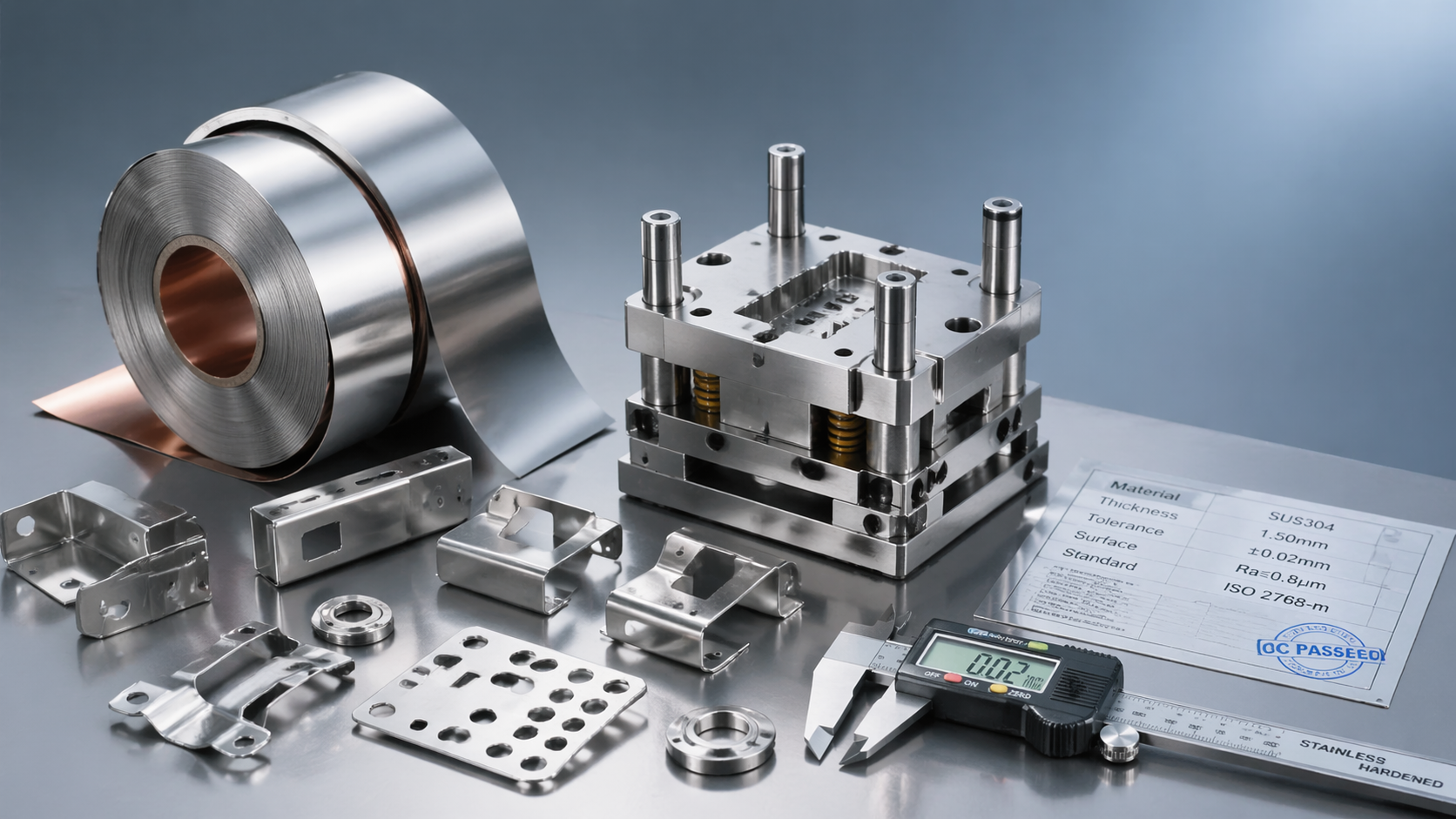
Buying custom metal stamping parts seems straightforward, but costly mistakes often start with unclear tolerances, incomplete material specs, or choosing suppliers on price alone. For buyers comparing an investment casting manufacturer, precision die casting parts, sheet metal fabrication services, or cnc machining parts oem options, understanding quality controls, tooling limits, and compliance requirements is essential. This guide highlights the most common purchasing errors and how to avoid them before they affect cost, lead time, and performance.
In industrial procurement, a stamped part is rarely just a simple bracket, clip, shield, terminal, washer, or enclosure component. It often sits inside a larger assembly where dimensional drift of even ±0.05 mm to ±0.20 mm can affect fit, conductivity, sealing, vibration resistance, or downstream automation. That is why researchers, operators, buyers, and decision-makers need a more disciplined buying process than simply requesting a quote from three suppliers and comparing unit price.
For EPC contractors, plant maintenance teams, and industrial sourcing managers, the real question is not only “Who can make this part?” but also “Who can make it repeatedly, at volume, with traceable quality, realistic tooling assumptions, and stable delivery?” The sections below explain where metal stamping purchases often go wrong and how to reduce risk before purchase orders are released.
Why Buyers Misjudge Custom Metal Stamping Requirements
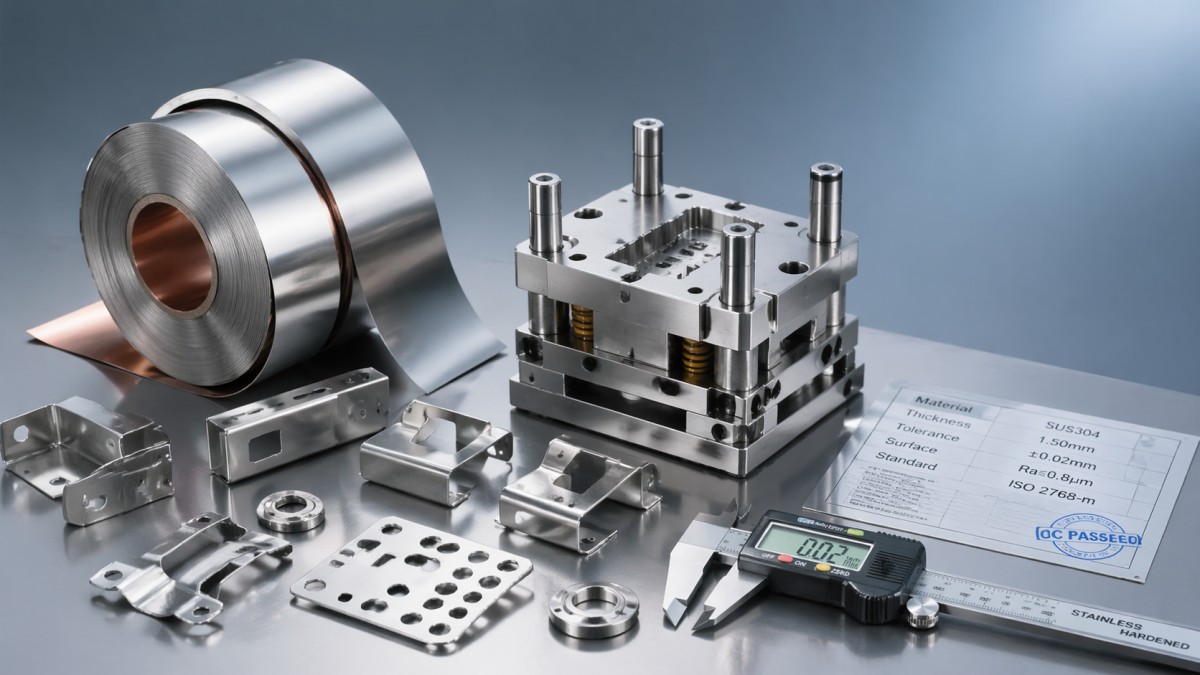
One of the most common buying mistakes is assuming that a 2D drawing alone is enough. In reality, custom metal stamping parts depend on at least 4 linked variables: material grade, thickness tolerance, tooling method, and post-processing. If one of these is undefined, suppliers may quote on different assumptions, making price comparisons unreliable from the start.
A part stamped from 0.8 mm stainless steel behaves very differently from one made in 1.0 mm low-carbon steel, even if the geometry looks similar. Springback, burr formation, forming force, and die wear all change. Buyers who fail to specify hardness range, temper, coating, or grain direction may receive parts that pass visual inspection but fail in assembly after 500 to 5,000 cycles.
Another mistake is treating metal stamping as interchangeable with cnc machining parts oem or sheet metal fabrication services. These processes overlap in function, but they do not share the same economics or design limits. Stamping is usually cost-effective at medium to high volume, often from 5,000 pieces upward, because tooling costs are front-loaded. Low-volume prototypes may be better served by laser cutting, machining, or brake forming before final die investment.
In heavy industry and infrastructure supply chains, the part’s end-use environment matters as much as geometry. A stamped electrical contact, safety enclosure bracket, grounding clip, or instrument shield may need corrosion resistance for outdoor exposure, conductivity stability, or compliance with RoHS, REACH, CE-related documentation, or internal plant standards. Omitting these details at RFQ stage often leads to rework, delayed approvals, or supplier disputes.
Typical information gaps in RFQs
- Missing tolerance zones for critical dimensions such as hole-to-edge distance, flatness, and bend angle.
- Unclear material callouts, for example specifying “stainless steel” instead of grade, temper, finish, and thickness range.
- No clarification on annual demand, batch size, or forecast horizon, even though these directly affect tooling choice and lead time.
- Absent requirements for plating thickness, deburring standard, packaging method, or first article inspection.
How process mismatch creates buying errors
When buyers compare stamping with an investment casting manufacturer or precision die casting parts supplier, they sometimes prioritize shape complexity but ignore functional load and wall thickness. Stamping performs best for thinner sections, often 0.2 mm to 6.0 mm depending on material and tonnage, while casting is more suitable for complex three-dimensional shapes or thicker walls. Forcing the wrong process can raise scrap rates and extend delivery by 2 to 6 weeks.
The table below shows how common sourcing assumptions can distort process selection and pricing.
The key takeaway is simple: many buying mistakes happen before manufacturing starts. Poor RFQ discipline creates confusion in quoting, process planning, quality control, and delivery expectations. Clear specifications reduce ambiguity and make supplier comparisons far more meaningful.
The Most Expensive Buying Mistakes in Stamped Part Procurement
The first major mistake is choosing a supplier based only on piece price. In custom metal stamping, a quote that is 8% lower can become 20% to 35% more expensive if it leads to added sorting, line stoppage, emergency air freight, or shortened tool life. Industrial buyers should evaluate total cost across tooling, quality escape risk, logistics, and service responsiveness.
The second costly error is underestimating tooling constraints. Progressive dies, compound dies, and transfer dies each have different cost structures and output capabilities. If the design includes deep draws, narrow webs, tight bends, or small piercings near edges, tooling complexity rises quickly. Buyers who request unrealistic tolerances without discussing manufacturability may face engineering changes after PO placement.
The third error is failing to identify critical-to-function dimensions. Not every feature needs the same control level. If all dimensions are marked as tight tolerance, suppliers may increase inspection time, tooling expense, and rejection rates. If no dimensions are prioritized, critical interfaces may drift. A practical approach is to define 5 to 8 key characteristics tied to fit, conductivity, alignment, sealing, or safety performance.
The fourth mistake is ignoring secondary operations. Many stamped parts still require tapping, welding, heat treatment, tumbling, plating, passivation, or assembly. Lead times often change from 2 to 3 weeks for raw stamped parts to 4 to 8 weeks for finished parts with controlled surface treatment. Buyers who do not verify subcontractor management may face inconsistent coating thickness or packaging damage in transit.
Four high-impact risk areas
- Tooling ownership and maintenance terms are undefined, creating disputes after 6 to 12 months of production.
- Sampling requirements are vague, so first article approval does not reflect serial production conditions.
- Material substitution is not controlled, increasing corrosion or fatigue risk in service.
- Packaging and labeling are overlooked, leading to bent parts, mixed lots, or traceability loss.
What buyers should verify before awarding business
Before awarding a contract, ask for process flow, inspection plan, raw material control method, and expected production rate per hour. A supplier making 8,000 to 20,000 strokes per shift on a stable line will manage scheduling differently from one relying on mixed low-volume jobs. These details influence delivery reliability as much as the quoted lead time.
The table below outlines common mistakes and the operational consequences that industrial buyers frequently overlook.
This comparison shows why mature procurement teams treat custom metal stamping parts as a controlled sourcing project, not a commodity buy. Small specification omissions can generate disproportionate cost across the production lifecycle.
How to Evaluate Suppliers Beyond Quote Price
A reliable supplier evaluation model should cover at least 6 dimensions: engineering response, tooling capability, material traceability, in-process inspection, secondary process control, and logistics discipline. Buyers sourcing for electrical cabinets, measurement devices, safety systems, environmental equipment, or mechanical assemblies should adapt weighting according to application risk.
For example, a bracket used in a non-visible enclosure may tolerate cosmetic variation but not hole-position error. A stamped contact used in a power or instrument system may need tight conductivity control, burr management, and plating uniformity. A supplier that understands the application can often suggest design adjustments that save 5% to 15% in tooling or reduce production scrap without weakening function.
Capacity should also be evaluated carefully. A supplier that performs well at 3,000 pieces per month may struggle at 100,000 pieces per month if press tonnage, die maintenance staffing, or inspection throughput are limited. Ask about available press range, such as 25-ton to 200-ton equipment, tool maintenance intervals, and backup plans for critical jobs.
Documentation matters just as much as machinery. Industrial buyers should confirm whether the supplier can provide material certificates, dimensional reports, coating records, first article samples, and lot traceability. In sectors tied to safety and infrastructure, incomplete records can delay approvals even when parts themselves are usable.
A practical supplier scorecard
The scorecard below can be used during supplier qualification or annual vendor review. It helps procurement, engineering, and operations teams align around consistent buying criteria.
When buyers use a scorecard like this, quote price remains important, but it sits inside a broader sourcing framework. That is especially useful when comparing suppliers that also offer sheet metal fabrication services, cnc machining parts oem, or casting solutions, because it prevents direct comparisons between fundamentally different production models.
Questions worth asking during technical review
- What dimensions are controlled in-process, and at what frequency: every 30 minutes, every coil change, or every lot?
- Which secondary operations are in-house, and which are managed through approved subcontractors?
- How are burr height, flatness, plating thickness, and springback verified?
- What is the standard lead time for tooling, pilot run, and mass production under normal load?
These questions quickly reveal whether a supplier is merely a broker or a technically competent manufacturing partner. For industrial buyers, that distinction has long-term impact on cost control and supply continuity.
Specification, Compliance, and Quality Controls That Prevent Rework
The most effective way to prevent rework is to define the part in layers instead of relying on a single print. A complete package should include drawing, material specification, finish requirement, inspection method, packaging standard, revision control, and forecasted annual demand. This approach is especially important when stamped parts support safety hardware, measurement devices, power systems, or environmental equipment.
Tolerance strategy deserves particular attention. General tolerances may be sufficient for noncritical edges, but hole patterns, tab positions, mating surfaces, and formed features often need tighter control. In many industrial applications, practical stamping tolerances fall in the ±0.10 mm to ±0.25 mm range for routine dimensions, while highly critical features may need further study for tooling feasibility and gauge method alignment.
Compliance should not be added at the end of the buying process. If a part is used in equipment sold into regulated markets, buyers may need declarations related to material content, coating restrictions, or safety documentation. Even when the stamped component itself is simple, missing paperwork can block final equipment shipment and create avoidable schedule pressure.
Quality control should be tied to failure mode, not only tradition. For a decorative cover, appearance and scratch prevention may dominate. For an electrical terminal, burr height, conductivity, and plating adhesion may be more important. For a mounting bracket, flatness, bend angle, and hole location often determine field performance. Aligning inspection effort with real risk improves both quality and cost efficiency.
Recommended specification checklist
- Define material by grade, thickness, hardness or temper, and approved substitution policy.
- Separate critical dimensions from general dimensions and note the intended gauge method.
- State finish requirements such as zinc plating, passivation, powder coating, or oil-free condition.
- Clarify acceptance criteria for burrs, edge condition, cosmetic defects, and packaging damage.
- Include lot traceability, sample approval, and revision control requirements.
Common quality documents buyers should request
Depending on application risk, ask for first article inspection, material test certificate, plating report, dimensional report, and packing specification. For recurring production, a control plan and reaction plan are valuable because they show what the supplier does when measurements drift out of range during a run.
The discipline of defining these controls early can shorten approval cycles by several days and reduce back-and-forth with engineering, operations, and quality teams. It also helps buyers compare suppliers on technical completeness instead of relying on assumptions hidden inside quotations.
A Safer Buying Workflow for Industrial Teams
A structured sourcing workflow lowers risk across design, procurement, and operations. For custom metal stamping parts, a practical process usually includes 5 stages: requirement definition, DFM review, quotation alignment, sample approval, and production release. Skipping any of these stages may save a few days early on but often adds weeks later in corrective action.
At stage one, gather complete technical and commercial inputs: drawing revision, annual usage, expected order lot size, target Incoterms, packaging needs, and compliance requirements. At stage two, review manufacturability with shortlisted suppliers. This is where press tonnage, die design, strip layout, and likely scrap rate should be discussed before tooling is approved.
At stage three, align quotations line by line. Buyers should verify what is included in tooling price, sample quantity, testing, finish, and recurring maintenance. At stage four, approve samples produced by the intended serial process whenever possible. A hand-made prototype may verify form, but it does not always validate production capability.
At stage five, release production with agreed checkpoints: first lot approval, incoming inspection rules, lot labeling, and communication path for deviations. For stable industrial programs, quarterly reviews of defect rate, on-time delivery, and cost improvement opportunities can strengthen long-term supply performance.
Five-step procurement workflow
- Define: lock drawing, material, finish, and critical-to-function features before RFQ release.
- Validate: request DFM feedback and confirm whether stamping is better than machining, fabrication, or casting for the application.
- Compare: evaluate total cost, capability, lead time, and documentation support using a common scorecard.
- Approve: inspect pilot samples, packaging, and records before mass production authorization.
- Monitor: track rejects, delivery, and change control over the first 3 to 6 months of supply.
FAQ for buyers and decision-makers
How do I know if a part should be stamped instead of machined?
If the part is made from sheet or coil, has relatively uniform thickness, and annual demand is high enough to justify tooling, stamping is usually stronger on unit economics. For very low volume, highly complex geometry, or thick-section features, machining or fabrication may be more practical in the early phase.
What lead time should I expect for custom metal stamping parts?
Typical sample timing can range from 2 to 6 weeks depending on tool complexity, while production delivery may run 2 to 8 weeks based on material availability, finishing steps, and order volume. Secondary operations and compliance paperwork often add time, so buyers should build this into project plans.
Which quality metrics matter most at receiving inspection?
Focus on the few features that directly affect assembly or function: key dimensions, flatness, burr level, finish condition, and count accuracy. For electrical or safety-related parts, plating and traceability may also be critical. A concise receiving checklist is often more effective than trying to measure every dimension on every lot.
Can one supplier handle stamping plus other processes?
Yes, some suppliers integrate stamping with sheet metal fabrication services, light machining, welding, and assembly. This can simplify sourcing, but buyers should confirm which operations are truly in-house and how quality is controlled across the full chain.
Custom metal stamping parts can deliver excellent cost efficiency and repeatability, but only when buyers manage specifications, tooling assumptions, quality controls, and supplier evaluation with discipline. The most expensive mistakes usually begin with incomplete RFQs, process mismatch, unclear critical dimensions, or supplier selection based only on price.
For industrial teams sourcing components for safety systems, instrumentation, power equipment, environmental applications, or mechanical assemblies, a structured buying workflow reduces risk and improves long-term supply performance. If you need support comparing stamping with casting, machining, or fabrication routes, or want a clearer supplier evaluation framework, contact us to discuss your application, request a custom sourcing plan, or learn more about practical procurement solutions.
Expert Insights

Chief Security Architect
Dr. Thorne specializes in the intersection of structural engineering and digital resilience. He has advised three G7 governments on industrial infrastructure security.
Related Analysis
Core Sector // 01
Security & Safety
- How to Choose an Investment Casting ManufacturerAuthor :Heavy Industry Strategist

- Are Precision Die Casting Parts Worth the CostAuthor :Heavy Industry Strategist
![]()
- Sheet Metal Fabrication Services: What to CheckAuthor :Heavy Industry Strategist

- Custom Metal Stamping Parts: Common Buying MistakesAuthor :Heavy Industry Strategist

- Magnesium Alloy Ingots: What Affects QualityAuthor :Heavy Industry Strategist

- How to Compare Lead Ingots ManufacturersAuthor :Heavy Industry Strategist
![]()
- 2026 Shanghai Fastener Show Launches Zero-Carbon Process ZoneAuthor :Heavy Industry Strategist
![]()
- Shanghai Fastener Show 2026: 1400+ Suppliers, Global B2B MatchingAuthor :Heavy Industry Strategist
![]()