Magnesium Alloy Ingots: What Affects Quality
Author
Date Published
Reading Time
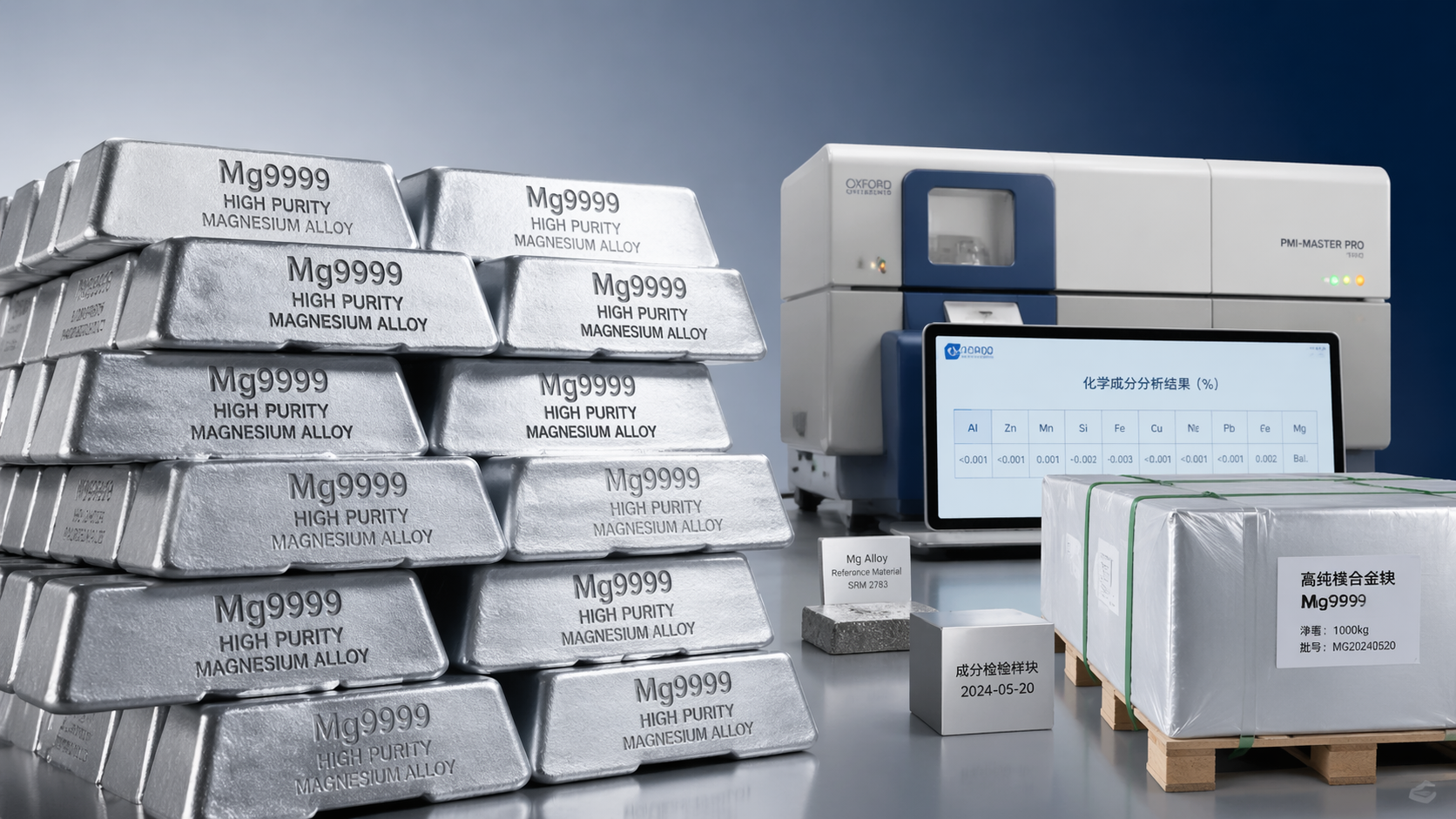
From aerospace casting to industrial sourcing, the quality of magnesium alloy ingots directly shapes performance, safety, and downstream cost. For buyers comparing magnesium alloy ingots, lead ingots manufacturer capabilities, or cnc machining parts oem supply chains, understanding what affects purity, composition, and consistency is essential. This guide explains the key factors that influence ingot quality and smarter procurement decisions.
In B2B procurement, ingot quality is not judged by appearance alone. A batch that looks clean on the outside may still contain harmful inclusions, unstable chemistry, or casting defects that affect machining yield, corrosion resistance, and final part reliability. For operators, these issues show up as poor melt behavior and higher scrap rates. For purchasing teams and decision-makers, they show up as delayed delivery, hidden costs, and avoidable quality claims.
Magnesium alloys are highly valued for their low density, good specific strength, and strong damping performance, but they are also more sensitive than many common metals to oxidation, contamination, and process variation. That means the difference between a stable supplier and a risky one often comes down to process control at every stage, from raw material selection to packaging and shipment.
For industrial buyers sourcing across regions, the challenge is even broader. The same procurement review often involves comparing magnesium alloy ingots for casting applications, evaluating a lead ingots manufacturer for other metallurgical needs, and coordinating with cnc machining parts oem partners that depend on consistent upstream material. A disciplined understanding of ingot quality helps align all three decisions around performance, traceability, and supply continuity.
Raw Materials and Chemical Composition Control
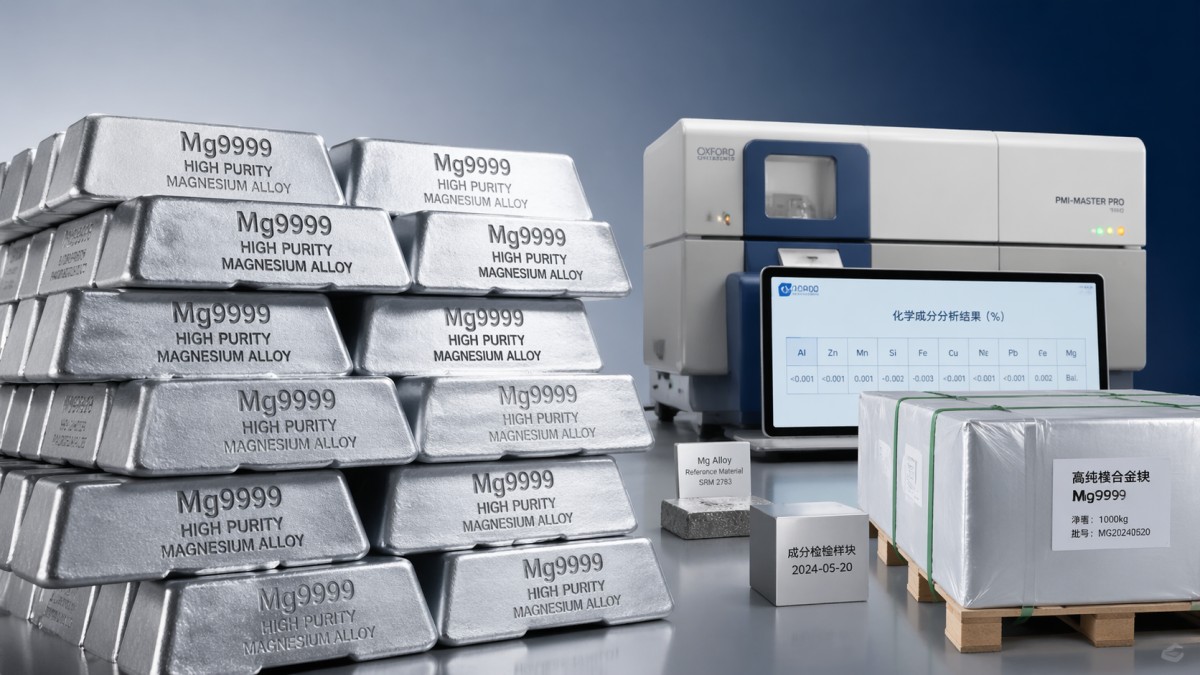
The first factor that affects magnesium alloy ingot quality is the quality of the raw feedstock. Primary magnesium, recycled returns, master alloys, and alloying elements such as aluminum, zinc, manganese, or rare earth additions must be controlled within a defined composition window. Even a small drift of 0.1% to 0.3% in key elements can change fluidity, strength, corrosion behavior, and casting performance.
For many common grades, buyers should ask not only for target chemistry but also for upper and lower control limits, heat analysis records, and batch traceability. A supplier that only provides a nominal grade name without a melt-by-melt record may not be managing the process tightly enough for high-spec industrial use. In sectors such as automotive housings, electronics frames, and aerospace support components, repeatability is often more important than one-time conformity.
Impurity control is equally important. Iron, nickel, and copper are especially critical because they can sharply reduce corrosion resistance in magnesium alloys, even when present in low ppm or low fractional percentages. Silicon, calcium, and nonmetallic residues may also affect melt cleanliness and downstream casting stability. For procurement teams, the issue is simple: a lower quotation can become expensive if the impurity profile increases rejection or surface treatment failures.
The table below shows how common composition-related variables influence quality risk in practical sourcing decisions.
The key takeaway is that chemistry control is both a technical and purchasing issue. If the application requires stable die casting, structural use, or multi-stage machining, buyers should request certificates for each melt lot, not just one annual statement. A useful benchmark is to review at least 3 recent production lots before approving a supplier for volume orders.
What procurement teams should verify
- Whether the supplier uses primarily virgin metal, recycled metal, or a blended input stream.
- Whether spectrometric analysis is performed for every heat, every shift, or only periodically.
- Whether impurity limits are stated in the technical agreement instead of informal email promises.
- Whether retained samples are stored for 6 to 12 months for dispute resolution and traceability.
A common sourcing mistake
One frequent mistake is comparing magnesium alloy ingots only by grade code and unit price. Two suppliers may both claim the same alloy family, yet one may run a tighter chemistry window and lower impurity ceiling. In high-volume production, that difference can affect 2% to 8% of downstream yield, which is often far more important than a small price gap per metric ton.
Melting, Refining, and Protection During Production
Once raw materials are selected, process discipline during melting becomes the next major quality driver. Magnesium is reactive, so temperature control, atmosphere protection, slag management, and transfer timing all influence final ingot cleanliness. If the melt is overheated, held too long, or exposed to poor protective conditions, oxidation increases and inclusions can enter the ingot structure.
In practical terms, many plants operate within controlled melt temperature ranges that vary by alloy and furnace design, often within a band of roughly 650°C to 760°C. What matters most is not the exact number alone, but whether the supplier can keep temperature variation narrow, avoid excessive holding time, and document corrective action when parameters drift. A well-managed furnace log tells buyers much more than a generic brochure.
Refining and flux practice also deserve attention. Excessive flux residue, poor dross removal, or uncontrolled furnace contamination can create inclusions that later show up as porosity, poor surface finish, or machining defects. For users who send ingots into die casting or gravity casting, these defects can increase tool wear and disrupt cycle stability. For a cnc machining parts oem network, inconsistent cast feedstock often leads to variation in tool life and dimensional yield.
The following process checklist helps separate routine suppliers from disciplined industrial producers.
- Use calibrated temperature measurement and maintain documented inspection frequency, often once per heat or once per shift.
- Control holding time to reduce oxidation and alloy loss, especially during production interruptions longer than 30 to 60 minutes.
- Apply stable protective gas or equivalent melt protection practice suitable for the alloy and furnace system.
- Clean transfer tools, launders, and molds at defined intervals to reduce carryover contamination.
- Record melt treatment, dross removal, and any composition correction before casting ingots.
Why process variation matters downstream
A magnesium alloy ingot with stable chemistry but poor melt protection can still underperform in production. This is why experienced buyers often audit both laboratory records and shop-floor control. If internal oxide films, entrapped slag, or moisture-related contamination enter the melt, the resulting ingot may pass a simple chemical check while still failing practical production requirements.
Comparing metallurgy suppliers across categories
The same logic applies when buyers compare a lead ingots manufacturer or other metal suppliers. While alloy systems differ, the core sourcing principle stays the same: raw material quality must be matched by process control. A supplier with lower process discipline often creates more variability in density, contamination risk, and castability, regardless of metal type.
Solidification Quality, Ingot Defects, and Inspection Methods
The casting and solidification stage determines whether the ingot is merely compliant on paper or genuinely suitable for industrial production. Cooling rate, mold condition, pouring stability, and ingot geometry all affect internal soundness. Defects such as shrinkage cavities, cold shuts, segregation, cracks, and entrapped oxides may not be obvious during a basic visual inspection, but they create serious problems in remelting and secondary processing.
Inspection therefore needs to go beyond appearance. Many buyers request a combination of visual checks, dimensional checks, weight verification, and periodic chemical confirmation. In more demanding supply chains, random macro-etch inspection, fracture checks, or inclusion assessment may be used. Even if not every lot requires advanced testing, a supplier should be able to explain what is checked, how often it is checked, and what triggers lot segregation.
A practical rule for procurement is to align inspection depth with application criticality. If the ingot is used for general industrial castings with moderate tolerance, routine lot inspection may be enough. If it feeds thin-wall die casting, safety-related housings, or export-grade components with strict cosmetic or corrosion requirements, buyers should ask for a tighter quality plan with more frequent sampling and clearer acceptance criteria.
The table below summarizes common ingot defects and their operational impact.
For buyers, the conclusion is straightforward: visual cleanliness is necessary but not sufficient. A robust incoming quality plan should cover at least 4 checkpoints—certificate review, packaging condition, random weight or dimension verification, and periodic chemistry confirmation. On strategic programs, supplier audits every 6 to 12 months can reduce quality drift before it reaches production lines.
Minimum acceptance items for incoming inspection
- Lot number, heat number, and production date must be readable and consistent with documentation.
- Surface should be free from heavy oxidation, excessive dross adhesion, and obvious structural cracks.
- Chemical certificate should match the purchase specification and show the tested elements clearly.
- Packaging should protect against moisture and impact during transport and warehouse handling.
Storage, Packaging, and Logistics Risks That Buyers Often Miss
Even well-produced magnesium alloy ingots can lose practical value if storage and logistics are poorly managed. Moisture exposure, damaged strapping, mixed lots, and rough handling can affect safety, traceability, and usability. In regional or cross-border supply, transport time may range from 7 days to more than 30 days, so packaging design matters far more than many buyers assume during the quotation stage.
The best suppliers usually define packaging around 3 priorities: physical protection, lot identification, and safe forklift or crane handling. Pallets, steel straps, protective wrapping, and clear labels should be matched to route length and warehouse conditions. If a buyer plans to store ingots for 2 to 6 months before use, then humidity control and stock rotation become part of the quality plan, not just warehouse housekeeping.
Lot mixing is another overlooked risk. When batches from different heats or production dates are combined without control, root-cause analysis becomes difficult if casting defects appear later. Procurement teams should ask whether each pallet or bundle carries unique lot identification, whether shipping documents map to those lots, and whether the supplier can isolate affected quantities within 24 to 48 hours if a complaint occurs.
For industrial sourcing teams managing several metal categories at once, including magnesium alloy ingots and products from a lead ingots manufacturer, standardized logistics review can reduce errors across the board. The same checklist framework works well when integrated into supplier qualification.
Warehouse and transport control points
- Store in a dry, covered area with controlled exposure to water, condensation, and corrosive chemicals.
- Maintain first-in, first-out rotation when practical, especially if storage exceeds 90 days.
- Inspect damaged bundles immediately and quarantine unidentified or mixed material.
- Keep receiving records, photos, and lot maps for at least one purchasing cycle or contract term.
A purchasing warning sign
If a supplier cannot clearly explain packaging unit weight, labeling method, pallet configuration, or export protection measures, there is a higher chance that quality control ends at the furnace door. In practice, reliable industrial suppliers treat handling and transport as part of the quality system, not as an afterthought managed only by freight agents.
How to Evaluate Suppliers and Build a Smarter Procurement Process
For buyers, the final question is not only what affects magnesium alloy ingot quality, but how to convert that knowledge into a better sourcing decision. A practical procurement process should assess technical capability, consistency, documentation, and service response together. The cheapest supplier can become the most expensive if the failure cost includes rejected castings, extra machining, delayed production, and customer claims.
A robust supplier review often uses 4 core dimensions: product conformity, process control, commercial reliability, and response speed. Product conformity covers chemistry, defects, and lot consistency. Process control covers melting, inspection, and traceability. Commercial reliability covers MOQ, lead time, and contract clarity. Response speed covers how quickly the supplier can answer technical questions, release corrective action, or replace a disputed lot.
For new supplier onboarding, many industrial buyers use a 3-stage path: document review, sample or trial order, and then controlled volume release. Trial orders may range from 1 to 5 tons depending on the program, while full production contracts typically require agreement on specifications, acceptance criteria, and complaint handling windows. This phased approach is useful not only for magnesium alloy ingots but also when evaluating a lead ingots manufacturer or coordinating inputs for cnc machining parts oem production chains.
The table below offers a practical procurement scorecard that can be adapted across metallurgy and industrial component sourcing.
The most effective procurement teams do not rely on one certificate or one successful shipment. They track lot performance over time, compare yield data, and look for patterns in response quality. If a supplier improves chemistry control but still struggles with logistics or complaint closure, the risk remains. A balanced scorecard gives decision-makers a more realistic basis for supplier selection.
FAQ for technical buyers and decision-makers
How can buyers quickly screen a magnesium alloy ingot supplier?
Start with 5 checks: recent chemistry certificates, impurity limits, process control description, packaging standard, and complaint handling time. If any of these items are vague, request clarification before placing even a trial order.
What lead time is typical for industrial orders?
For standard grades and regular packaging, lead time is often around 2 to 4 weeks, but export routes, alloy customization, and audit requirements can extend this. Buyers should separate production lead time from shipping lead time during negotiation.
Is lower impurity always worth paying more for?
For low-risk applications, standard industrial ranges may be sufficient. For thin-wall castings, corrosion-sensitive products, or multi-stage machining, tighter impurity control often reduces total cost by improving yield and reducing defects.
Magnesium alloy ingot quality is shaped by a chain of factors rather than one isolated parameter: raw material purity, chemistry control, melting discipline, defect prevention, inspection rigor, and logistics protection all matter. For industrial users, operators, purchasers, and enterprise leaders, the strongest sourcing strategy is to evaluate the full chain with documented evidence, not price alone.
If your team is comparing magnesium alloy ingots, reviewing a lead ingots manufacturer, or aligning upstream materials with cnc machining parts oem requirements, a structured technical and commercial review can reduce risk and improve long-term supply performance. Contact us to discuss your application, request a tailored sourcing assessment, or explore more industrial material solutions built for reliable procurement decisions.
Expert Insights

Chief Security Architect
Dr. Thorne specializes in the intersection of structural engineering and digital resilience. He has advised three G7 governments on industrial infrastructure security.
Related Analysis
Core Sector // 01
Security & Safety
- How to Choose an Investment Casting ManufacturerAuthor :Heavy Industry Strategist

- Are Precision Die Casting Parts Worth the CostAuthor :Heavy Industry Strategist
![]()
- Sheet Metal Fabrication Services: What to CheckAuthor :Heavy Industry Strategist

- Custom Metal Stamping Parts: Common Buying MistakesAuthor :Heavy Industry Strategist

- Magnesium Alloy Ingots: What Affects QualityAuthor :Heavy Industry Strategist

- How to Compare Lead Ingots ManufacturersAuthor :Heavy Industry Strategist
![]()
- 2026 Shanghai Fastener Show Launches Zero-Carbon Process ZoneAuthor :Heavy Industry Strategist
![]()
- Shanghai Fastener Show 2026: 1400+ Suppliers, Global B2B MatchingAuthor :Heavy Industry Strategist
![]()