Sheet Metal Fabrication Services: What to Check
Author
Date Published
Reading Time
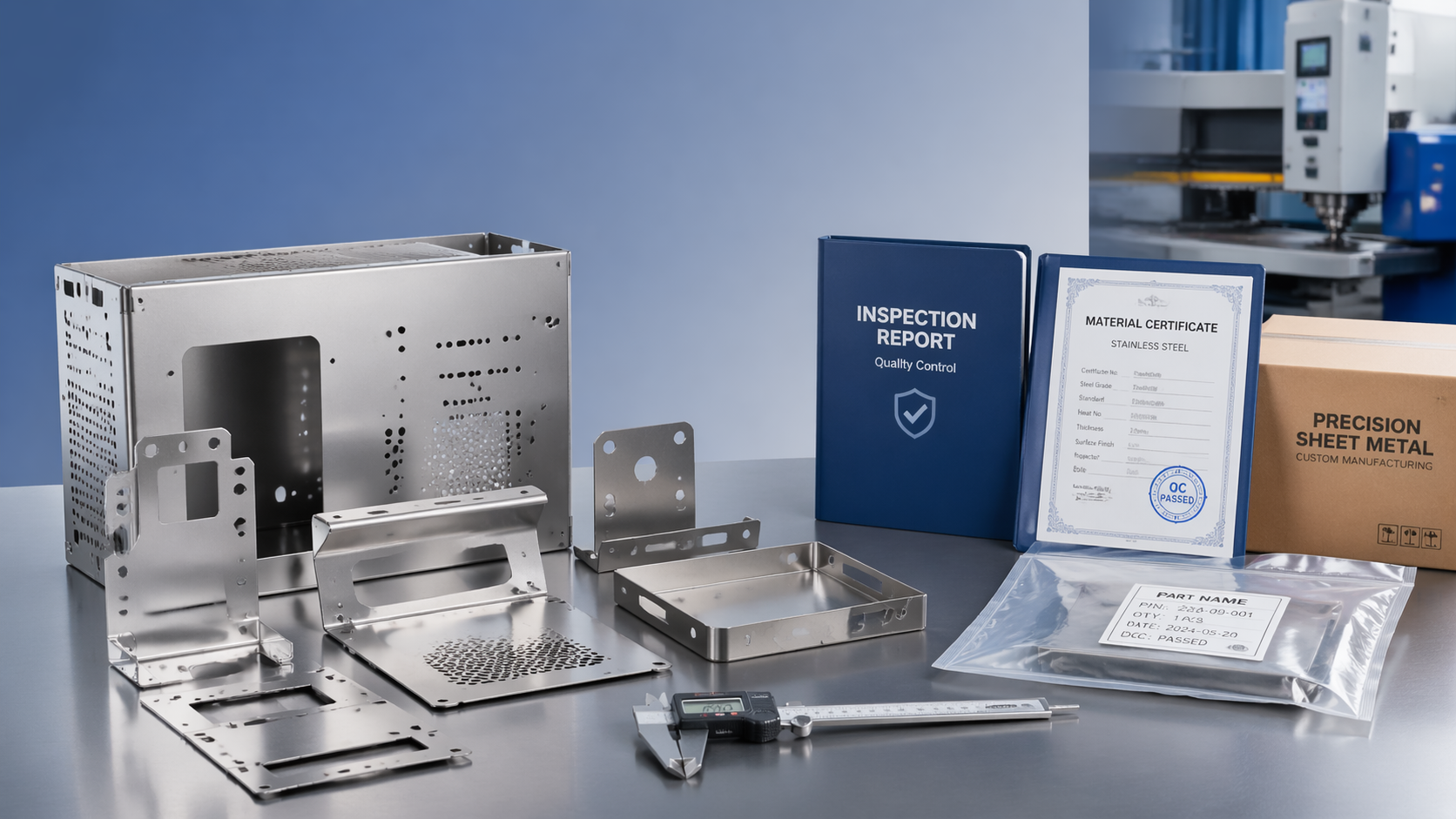
Choosing the right sheet metal fabrication services is not just about comparing quotes. For industrial buyers, operators, and decision-makers, the real question is whether a supplier can consistently deliver compliant parts, repeatable quality, and dependable lead times across complex programs. That means checking more than cutting and bending capacity. You also need to evaluate tolerances, material traceability, finishing control, documentation, and whether the supplier can support related requirements such as precision die casting parts, custom metal stamping parts, and cnc machining parts oem. The points below will help you assess fabrication partners more confidently and reduce sourcing risk over the full lifecycle of a project.
What should you check first in sheet metal fabrication services?
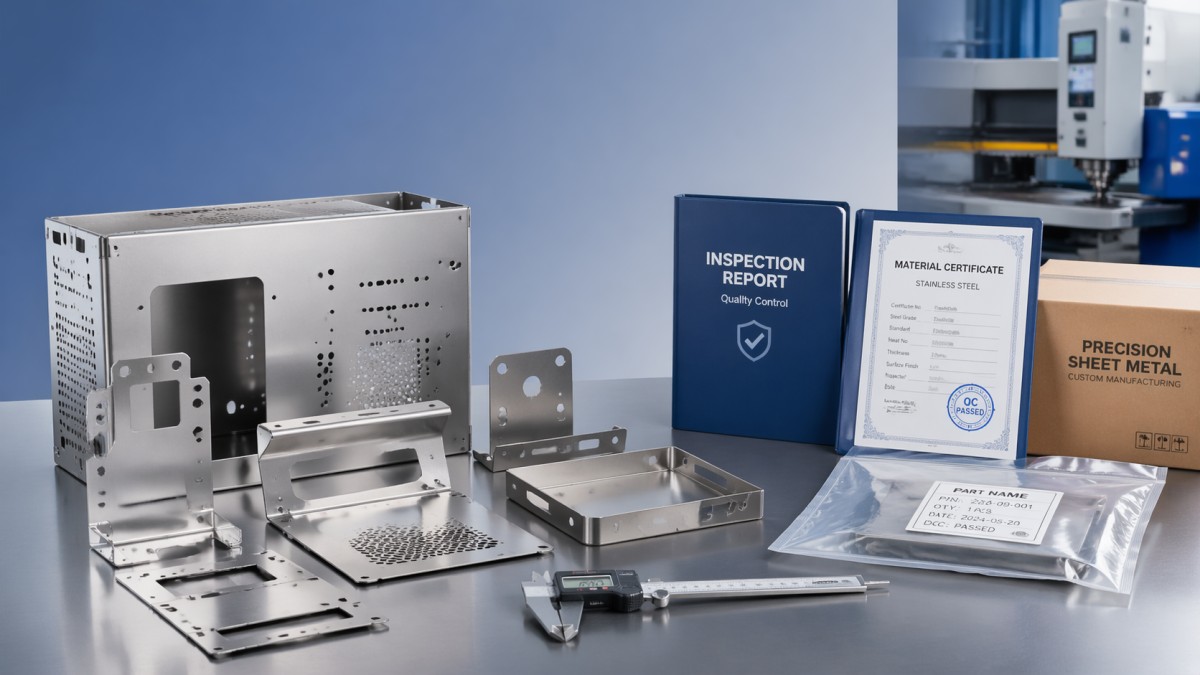
The first check is simple: can the supplier reliably make the part you actually need, at the quality level your application demands, and prove it with documentation? Many sourcing problems happen because buyers focus on unit price before confirming process fit.
For most industrial projects, the best supplier is not the one with the lowest quote. It is the one that can demonstrate:
- Fit-for-purpose manufacturing processes for your geometry and volume
- Stable quality control and inspection capability
- Material certification and traceability
- Relevant compliance with ISO, CE, UL, or customer-specific requirements where applicable
- Predictable lead times and change control
- The ability to support secondary operations, assembly, and related component sourcing
If a supplier cannot answer these points clearly during early discussions, that is already a risk signal.
Can the supplier handle your material, thickness, and tolerance requirements?
Not all sheet metal fabrication services are equally capable across different metals and part profiles. Buyers should confirm what materials the supplier works with most often, such as stainless steel, carbon steel, aluminum, galvanized sheet, copper, or specialty alloys. A shop may produce acceptable brackets in mild steel but struggle with cosmetic stainless panels or tight-tolerance aluminum enclosures.
Key questions to ask include:
- What is the typical thickness range they process?
- What cutting methods do they use: laser, plasma, waterjet, turret punching, or shearing?
- What bending tolerances can they hold repeatedly?
- How do they manage springback, flatness, burrs, and edge quality?
- Can they control cosmetic requirements for visible parts?
If your part interfaces with seals, electronics, moving assemblies, or other precision components, tolerance stack-up matters. In those cases, ask for sample inspection reports, first article records, or capability data rather than accepting broad verbal claims.
How important are certifications, traceability, and quality systems?
They are critical, especially in industrial, infrastructure, energy, environmental, and safety-related applications. A supplier without a mature quality system may still produce good parts occasionally, but the risk of inconsistency rises sharply when order volume increases or designs change.
Look for evidence of structured quality management, including:
- ISO 9001 or other relevant quality certifications
- Incoming material verification procedures
- Mill test certificates or material certificates
- Lot traceability through production and finishing
- In-process and final inspection records
- Nonconformance handling and corrective action workflows
For procurement teams, traceability is not just a compliance topic. It directly affects warranty exposure, field failure investigations, and customer confidence. If a supplier cannot trace material batches or process history, root-cause analysis becomes difficult and expensive.
What manufacturing capabilities should a serious supplier offer beyond basic fabrication?
Many buyers benefit from working with a supplier that can support more than cutting and bending. Real-world assemblies often require tapped holes, inserts, welding, surface finishing, subassembly, packaging, and dimensional verification. Managing these steps through multiple vendors creates extra coordination cost and more failure points.
A stronger fabrication partner may offer:
- Laser cutting, punching, bending, rolling, and welding
- Hardware insertion, PEM fasteners, riveting, and tapping
- Powder coating, plating, anodizing, galvanizing, or passivation
- Assembly support and packaging to customer specification
- Inspection tools such as CMM, calipers, gauges, and documented quality plans
This also matters when your sourcing program extends beyond fabricated sheet components. Some industrial buyers prefer suppliers or sourcing partners that can coordinate precision die casting parts, custom metal stamping parts, and cnc machining parts oem alongside fabricated parts. That can simplify vendor management, reduce mismatches across components, and improve schedule control for complete assemblies.
How do you evaluate quote quality, not just quote price?
A low quote can be misleading if it excludes necessary processes, uses substitute materials, assumes loose tolerances, or overlooks packaging and inspection needs. To compare suppliers properly, review what each quotation actually covers.
Check whether the quote clearly defines:
- Material grade and thickness
- Tolerance assumptions
- Surface finish requirements
- Tooling or setup charges
- Minimum order quantities
- Lead time for prototypes and production
- Inspection and documentation included
- Packaging method and shipping terms
For enterprise buyers and decision-makers, total cost of ownership matters more than piece price alone. A supplier with fewer defects, better engineering communication, and more stable delivery can often create better commercial outcomes even if the quoted part cost is slightly higher.
What red flags suggest future quality or delivery problems?
Some warning signs appear early if you know where to look. Common red flags include vague technical answers, slow response to drawing questions, unwillingness to share inspection examples, and repeated promises without evidence.
Pay close attention if a supplier:
- Cannot explain process controls for your critical dimensions
- Offers pricing unusually below market without a clear reason
- Has no documented corrective action process
- Cannot provide material certificates or sample reports
- Changes lead times frequently during discussion
- Pushes for drawing changes before understanding function
- Relies heavily on subcontractors but lacks oversight transparency
These issues do not always mean the supplier is unsuitable, but they do justify deeper qualification before placing critical orders.
How can buyers and engineers reduce risk before awarding production?
The most practical approach is to qualify the supplier in stages. Start with a technical review, then move to samples or prototype runs before larger production commitments.
A sound qualification process often includes:
- Reviewing drawings, tolerances, materials, and end-use conditions
- Confirming process capability for critical features
- Requesting a sample, prototype, or pilot batch
- Verifying inspection records and dimensional reports
- Checking finish quality, assembly fit, and packaging
- Assessing communication speed and engineering support
- Auditing certifications, traceability, and production controls if needed
For strategic sourcing teams, it is also worth checking whether the supplier can scale. A vendor that performs well at prototype level may still struggle with repeatability, fixture control, or lead-time discipline at volume.
When does a broader sourcing partner create more value?
In many industrial projects, the fabricated sheet metal part is only one element in a larger system. If your product also requires cast housings, stamped connectors, machined interfaces, or mixed-material assemblies, working with a broader industrial sourcing partner can add real value.
This is particularly useful when you need coordination across sheet metal fabrication services, precision die casting parts, custom metal stamping parts, and cnc machining parts oem. Instead of managing separate technical reviews, quality standards, and delivery schedules across multiple disconnected suppliers, buyers can centralize evaluation criteria and streamline procurement decisions.
That approach can improve:
- Cross-part dimensional compatibility
- Documentation consistency
- Supplier accountability
- Procurement efficiency
- Timeline visibility for multi-part assemblies
Final checklist: what should you confirm before choosing a supplier?
Before selecting a sheet metal fabrication supplier, make sure you can answer yes to the following:
- They have proven experience with your material and part type
- They can meet your tolerance and finish requirements consistently
- They provide material certification and process traceability
- They operate under a credible quality system
- Their quotation clearly defines scope, assumptions, and lead time
- They can support required secondary operations and inspections
- They communicate clearly and respond technically, not just commercially
- They can support future scale or related sourcing needs if your project expands
In short, the right sheet metal fabrication services provider should reduce uncertainty, not add to it. Buyers, operators, procurement teams, and business leaders should evaluate capability, control, and long-term reliability before focusing on price alone. When you verify quality systems, traceability, process fit, and broader sourcing support early, you make better decisions and protect project performance over time.
Expert Insights

Chief Security Architect
Dr. Thorne specializes in the intersection of structural engineering and digital resilience. He has advised three G7 governments on industrial infrastructure security.
Related Analysis
Core Sector // 01
Security & Safety
- How to Choose an Investment Casting ManufacturerAuthor :Heavy Industry Strategist

- Are Precision Die Casting Parts Worth the CostAuthor :Heavy Industry Strategist
![]()
- Sheet Metal Fabrication Services: What to CheckAuthor :Heavy Industry Strategist

- Custom Metal Stamping Parts: Common Buying MistakesAuthor :Heavy Industry Strategist

- Magnesium Alloy Ingots: What Affects QualityAuthor :Heavy Industry Strategist

- How to Compare Lead Ingots ManufacturersAuthor :Heavy Industry Strategist
![]()
- 2026 Shanghai Fastener Show Launches Zero-Carbon Process ZoneAuthor :Heavy Industry Strategist
![]()
- Shanghai Fastener Show 2026: 1400+ Suppliers, Global B2B MatchingAuthor :Heavy Industry Strategist
![]()