Why Polyurethane O Rings Wear Faster in Dynamic Sealing
Author
Date Published
Reading Time
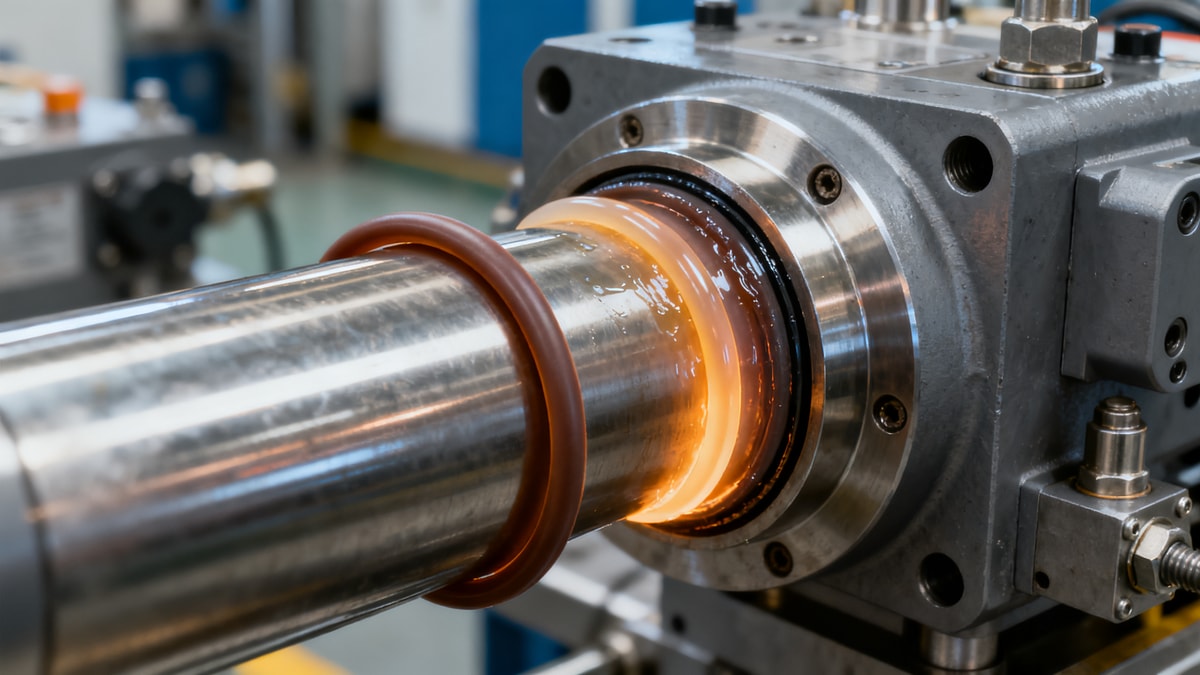
In dynamic sealing applications, polyurethane o rings are often selected for their toughness and abrasion resistance, yet they can wear faster than expected under continuous motion. For technical evaluators, understanding the real causes—such as friction, heat buildup, lubrication limits, and material deformation—is essential to making reliable sealing decisions and preventing premature failure in demanding industrial systems.
Understanding the Wear Behavior of Polyurethane O Rings
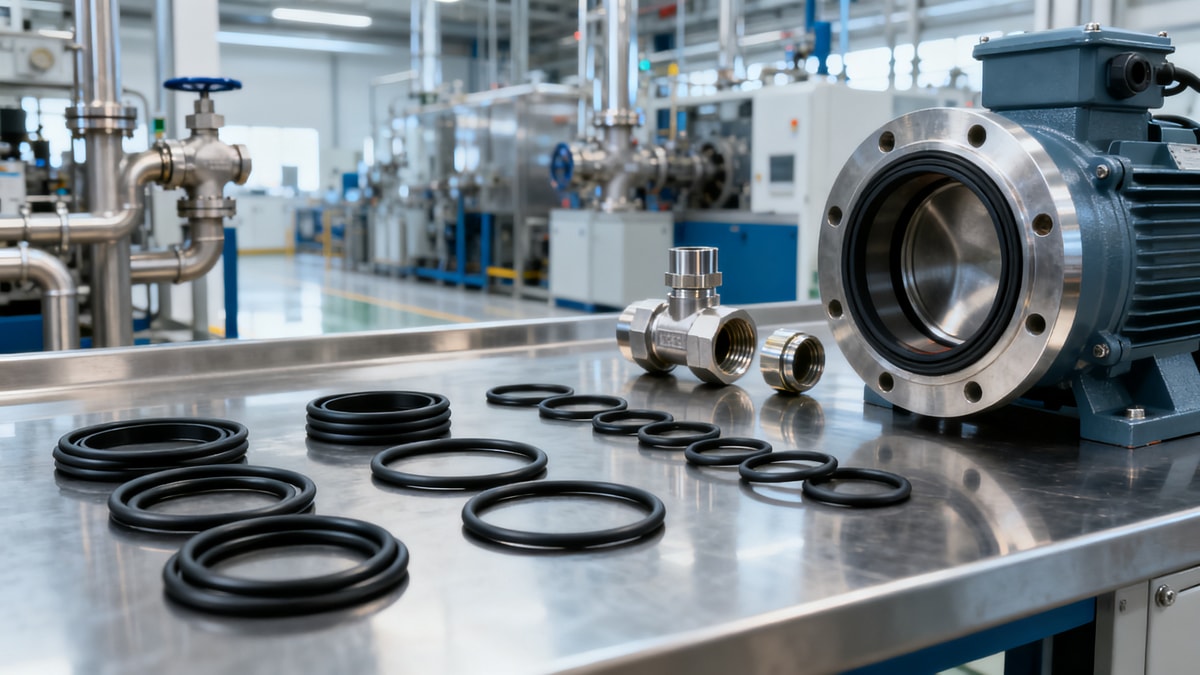
Polyurethane o rings are widely used in industrial equipment because they combine elasticity, tear resistance, and good load-bearing capacity. In static sealing, these properties often translate into long service life. In dynamic sealing, however, the operating conditions change the failure mechanism. Instead of simply holding pressure between stationary parts, the seal must tolerate repeated movement, sliding contact, pressure cycling, and changing temperature. Under these conditions, the same material that appears highly durable in theory may wear more quickly in practice.
For technical assessment teams, this issue matters because dynamic sealing reliability affects uptime, maintenance intervals, contamination risk, and total lifecycle cost. A seal that degrades early in a hydraulic cylinder, pneumatic actuator, pump shaft, or industrial valve can trigger leakage, rising friction, component scoring, and unplanned shutdowns. In sectors tied to heavy industry, infrastructure, and process continuity, even a small sealing failure can become a safety or compliance concern.
The key point is that polyurethane o rings do not wear faster simply because the material is weak. In many cases, they wear faster because the application imposes stresses that exceed what a standard O-ring geometry and compound can manage over long dynamic cycles. Material strength alone is not enough; tribology, groove design, speed, media compatibility, and lubrication conditions are equally decisive.
Why Industry Pays Attention to This Issue
Across industrial systems, seals are small components with outsized operational importance. Engineering, procurement, and maintenance teams increasingly evaluate sealing performance not only by initial leak prevention, but also by resistance to wear under realistic operating loads. This is especially relevant in high-duty systems connected to power generation, fluid handling, environmental equipment, heavy machinery, and safety-critical infrastructure.
Polyurethane o rings are often chosen when designers need higher abrasion resistance than conventional nitrile or better toughness than some standard elastomers. Yet this reputation can create unrealistic expectations. In reciprocating and rotary motion, polyurethane may experience frictional drag, compression set, micro-tearing, and thermal degradation if the design envelope is not tightly controlled. As a result, technical evaluators must look beyond the general claim of “wear resistance” and ask a more useful question: wear resistance against what kind of motion, pressure, surface condition, and fluid environment?
The Main Reasons Polyurethane O Rings Wear Faster in Motion
1. Friction Is Continuous, Not Occasional
In a static joint, the O-ring seals primarily through elastic compression. In a dynamic joint, the seal face is repeatedly dragged against a mating surface. Even when the coefficient of friction seems moderate, continuous movement converts that friction into material loss over time. Polyurethane o rings can resist abrasion well, but they are still subject to wear when sliding contact remains constant and localized.
2. Heat Buildup Changes Material Performance
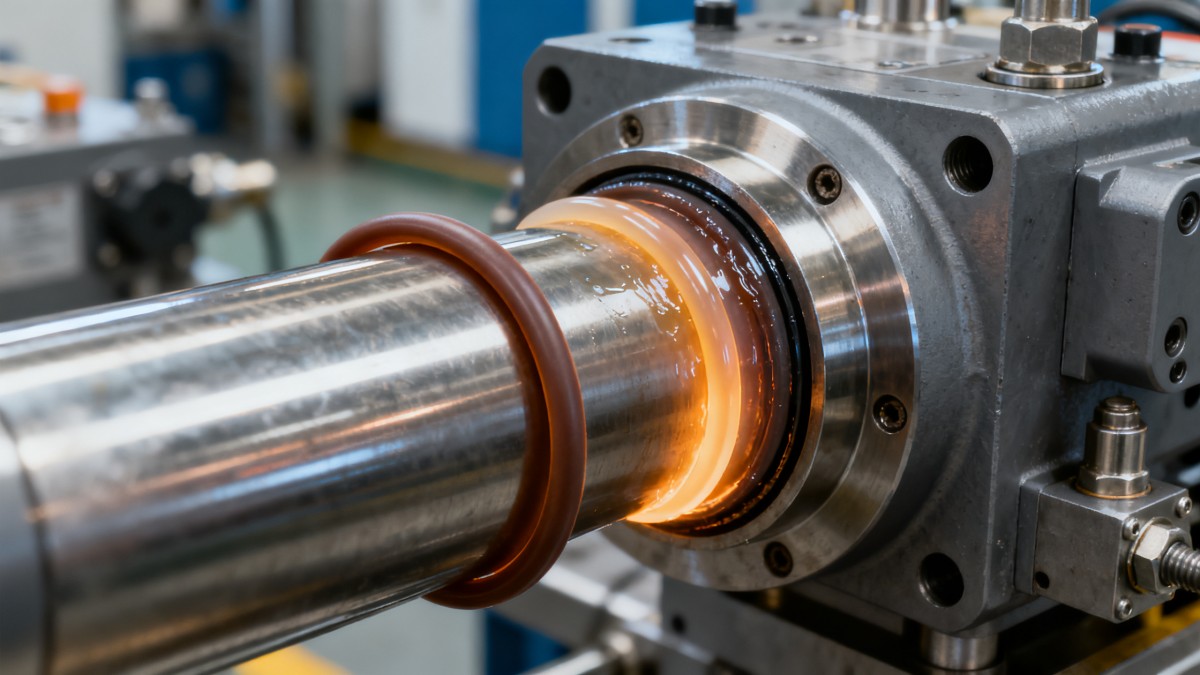
Friction generates heat, and heat changes seal behavior. As temperature rises, the material can soften, lose dimensional stability, or become more vulnerable to surface damage. In dynamic sealing, this process may happen gradually and go unnoticed until leakage appears. A polyurethane seal operating near its thermal limit can show polished wear tracks, permanent deformation, or reduced rebound, especially in high-cycle equipment.
3. Lubrication Is Often Inadequate or Inconsistent
Many failures blamed on seal material are actually lubrication failures. Polyurethane o rings generally perform better when a stable lubricating film separates the seal from the moving surface. If the system runs dry, starts frequently under boundary lubrication, or uses media with weak lubricity, surface contact becomes harsher. This increases drag, raises temperature, and shortens service life. In reciprocating systems, the reversal point is often the most critical location because lubrication film can collapse there.
4. Standard O-Ring Geometry Is Not Ideal for Every Dynamic Duty
An O-ring is a simple and versatile sealing profile, but not always the best choice for high-speed or long-stroke motion. Compared with purpose-designed dynamic seals, the round cross-section can roll, twist, or experience uneven pressure distribution. This can produce spiral failure, localized flattening, or edge damage. In other words, polyurethane o rings may be durable as a material but limited by geometry when motion becomes severe.
5. Compression and Deformation Accumulate Over Time
Dynamic sealing repeatedly compresses and relaxes the seal body. If squeeze levels are too high, friction increases. If too low, sealing force becomes unstable. Over many cycles, polyurethane can develop compression set, reducing its ability to maintain contact pressure. Once deformation becomes permanent, the seal may leak even if visible wear seems limited. This is especially important in systems with pressure pulsation, vibration, or side loading.
6. Extrusion and Nibbling Occur at Clearance Gaps
Under pressure, part of the seal may be forced into the clearance gap between hardware components. Repeated movement then shears or nibbles away that material. Polyurethane is tougher than many elastomers, but at high pressure or with poor gland tolerances, even tough compounds can suffer progressive edge damage. The problem becomes worse when thermal expansion, pressure spikes, or worn metal parts enlarge the effective gap.
Where This Matters Most in Industrial Applications
Technical evaluators should not assess polyurethane o rings in isolation. Wear risk depends strongly on the application category, motion pattern, and service environment. Some systems tolerate moderate wear for long periods, while others cannot accept even slight leakage or friction increase.
How Technical Evaluators Should Assess Suitability
A sound evaluation starts by distinguishing between static success and dynamic suitability. A polyurethane compound that performs well in a pressure test may still fail early in moving service. For this reason, technical reviewers should examine the full operating envelope: pressure range, stroke frequency, surface finish, running speed, temperature variation, fluid chemistry, and hardware tolerances.
It is also important to verify whether the proposed polyurethane o rings are based on cast or thermoplastic formulations, what hardness range is used, and whether anti-extrusion support is required. In severe dynamic service, alternative seal profiles such as U-cups, energized seals, or composite sealing systems may provide better life than a conventional O-ring, even if the polyurethane material itself remains attractive.
From an industrial sourcing perspective, evaluation should include manufacturing consistency, dimensional tolerance control, and documented performance data under realistic motion conditions. Suppliers that only provide generic abrasion claims without cycle-based testing, media compatibility evidence, or tolerance documentation may not support reliable decision-making in critical infrastructure applications.
Practical Measures to Reduce Premature Wear
Reducing wear is rarely about changing one variable. In most cases, longer seal life comes from improving system balance rather than relying on a harder material alone. The following measures are especially effective for polyurethane o rings in dynamic sealing:
- Match the compound hardness to pressure and clearance conditions.
- Control gland dimensions to avoid excessive squeeze or rolling.
- Improve surface finish without making the counterface too smooth to retain lubrication.
- Use compatible lubricants or ensure the process media offers adequate lubricity.
- Add back-up rings when pressure and gap conditions create extrusion risk.
- Consider alternative seal profiles for high-speed, long-life, or high-cycle motion.
These actions align with a broader industrial reliability strategy: selecting components based on application physics, not just material reputation. For organizations managing safety, uptime, and compliance, this approach lowers failure risk and supports better lifecycle economics.
A More Reliable Way to Interpret Seal Performance
When polyurethane o rings wear faster in dynamic sealing, the underlying cause is usually not a contradiction in the material’s advertised strengths. Rather, it reflects the gap between general material properties and actual operating demands. Friction, thermal buildup, insufficient lubrication, deformation, and hardware conditions all work together to determine seal life. Technical evaluators who recognize this interaction can make better material selections, specify more suitable geometries, and reduce avoidable maintenance events.
For industrial teams working in mission-critical environments, the best decision is rarely based on one performance claim. It comes from verified testing, application-specific analysis, and supplier data that address real dynamic loads. If your organization is reviewing polyurethane o rings for moving equipment, use wear behavior as a system-level assessment point—not just a material checkbox—to improve sealing reliability over the full service cycle.
Technical Specifications
- India BIS Draft IS 17832:2026 Sets Noise & Dust Limits for Waste CrushersAuthor :Environmental Engineering Director
- Korea MFDS Mandates Korean UI & KOSHA OEL Database for Industrial Water AnalyzersAuthor :Precision Metrology Expert
- Indonesia BPOM Mandates PM0.1 Efficiency & CADR Decay Labeling for Industrial Air PurifiersAuthor :Environmental Engineering Director
Expert Insights

Chief Security Architect
Dr. Thorne specializes in the intersection of structural engineering and digital resilience. He has advised three G7 governments on industrial infrastructure security.
Related Analysis
- May 03, 2026India BIS Draft IS 17832:2026 Sets Noise & Dust Limits for Waste CrushersAuthor :Environmental Engineering Director
- May 03, 2026Korea MFDS Mandates Korean UI & KOSHA OEL Database for Industrial Water AnalyzersAuthor :Precision Metrology Expert
- May 03, 2026Indonesia BPOM Mandates PM0.1 Efficiency & CADR Decay Labeling for Industrial Air PurifiersAuthor :Environmental Engineering Director
Core Sector // 01
Security & Safety
- TÜV Rheinland Launches China Bearing NVH Pre-Certification ChannelAuthor :Heavy Industry Strategist

- Viton FKM O Rings Bulk: When Premium Material Is Actually NecessaryAuthor :Heavy Industry Strategist

- Pump Shaft Seals: The Small Material Choice With Big Downtime ImpactAuthor :Heavy Industry Strategist

- Oil Seals TC TB: Which Structure Fits Dusty Equipment Better?Author :Heavy Industry Strategist

- Why Polyurethane O Rings Wear Faster in Dynamic SealingAuthor :Heavy Industry Strategist

- Where Non Asbestos Gaskets Fail Earlier Than ExpectedAuthor :Heavy Industry Strategist

- Indonesia Opens Bearing & Seal Manufacturing to 100% FDIAuthor :Heavy Industry Strategist

- Vietnam’s MOIT Mandates VILAS-Certified Heat Treatment Reports for Bearing ImportsAuthor :Heavy Industry Strategist