Oil Seals TC TB: Which Structure Fits Dusty Equipment Better?
Author
Date Published
Reading Time
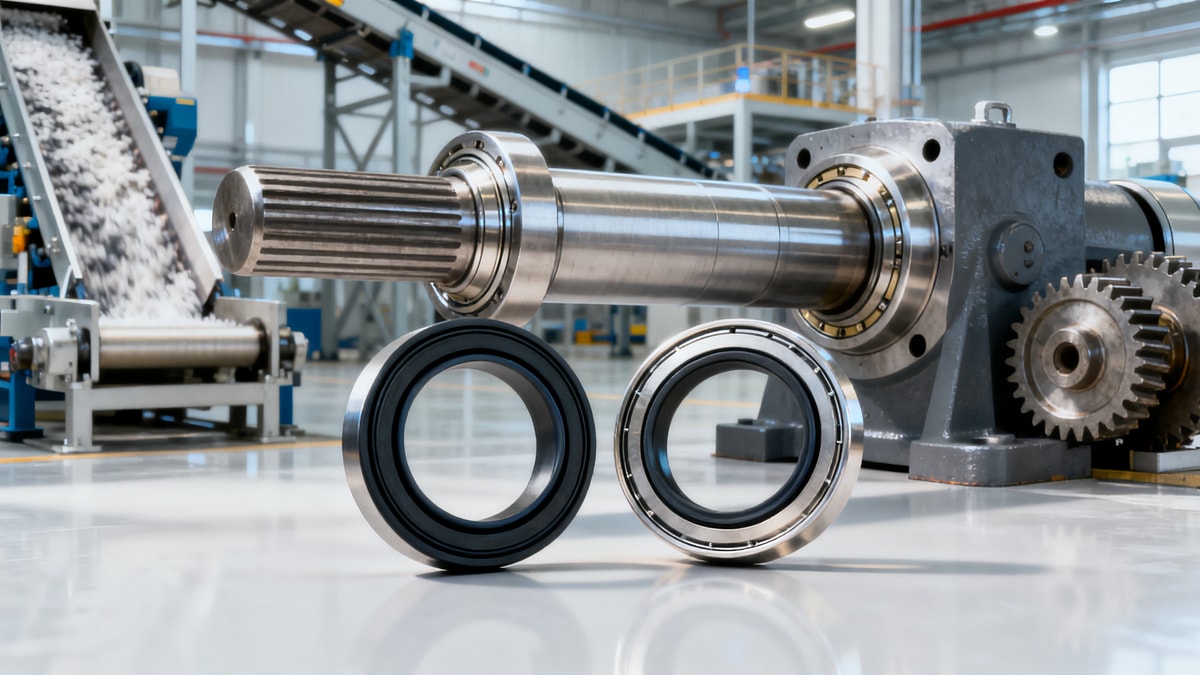
In dusty operating environments, choosing between oil seals tc tb can directly affect equipment uptime, leakage control, and maintenance frequency. For operators and maintenance teams, understanding how each seal structure handles dust exclusion and shaft protection is essential to preventing premature wear. This article breaks down the practical differences between TC and TB designs to help you match the right seal to real-world industrial conditions.
What do oil seals TC TB actually mean in daily maintenance work?
For many operators, the terms oil seals tc tb appear in catalogs, spare-parts lists, and supplier quotations, but the practical meaning is not always clear. Both are rotary shaft seals designed to retain lubricant and reduce the entry of contaminants. The key structural difference is usually found in the outer covering and lip arrangement, which influences how the seal fits into the housing, resists contamination, and behaves under vibration or thermal variation.
A common TC oil seal typically has a rubber-covered outside diameter and a double-lip design: one primary lip for oil retention and one auxiliary lip for dust exclusion. A TB oil seal is often understood as a metal-cased or partially metal-reinforced version, also available in double-lip configurations depending on manufacturer standards. In practice, naming conventions can vary slightly by brand, so maintenance teams should never rely on letters alone without checking the cross-section drawing.
Why does this matter? Because in dusty equipment, the seal is not just preventing oil leakage. It is also acting as the first barrier against abrasive particles that can score the shaft, contaminate grease or oil, and shorten bearing life. When operators compare oil seals tc tb, they are really asking which structure gives better sealing stability in the actual housing condition, shaft finish, and contamination level of the machine.
Which structure usually performs better in dusty equipment: TC or TB?
In many dusty applications, TC designs are often preferred because the rubber-covered outside diameter can improve sealing against minor housing imperfections. This helps reduce dust ingress through the outer fit area, not only through the sealing lip. If the bore surface is slightly rough, worn, or subject to small dimensional variation, a TC seal may seat more forgivingly and create a more reliable static seal.
TB designs can still perform very well, especially when the housing bore is accurately machined and dimensionally stable. The metal outer structure can offer stronger rigidity and easier installation control in some industrial assemblies. However, in heavily contaminated environments, any mismatch between the metal outside diameter and the housing condition may create a path for fine dust unless installation quality is very high.
That said, it is too simplistic to say TC is always better. Dusty equipment performance depends on at least five factors: the presence of a dust lip, the shaft surface quality, bore tolerance, lip material, and whether there is pressure, splash, or dry-running risk. When comparing oil seals tc tb, operators should focus on the full sealing system rather than the code alone.
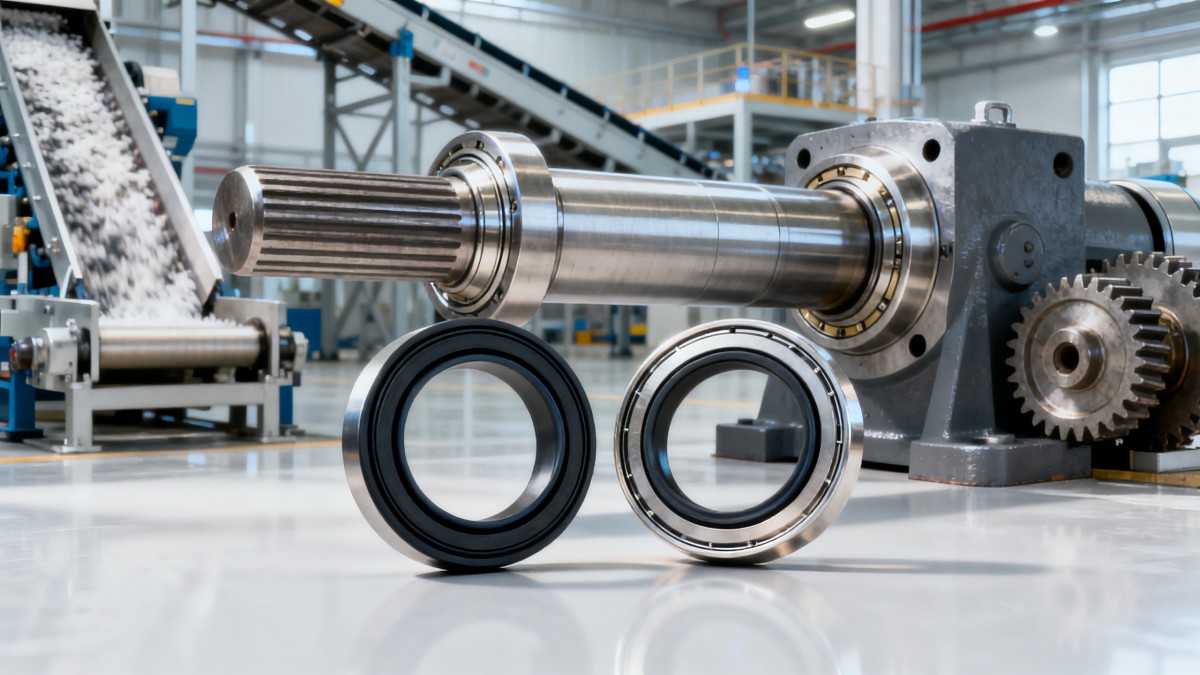
Quick comparison for field decisions
Why does dust exclusion depend on more than just the TC or TB label?
This is one of the most important questions for users. A seal can have the right code and still fail early if the surrounding conditions are wrong. In dusty service, the auxiliary dust lip is critical, but so are the shaft hardness and surface roughness. If the shaft has grooves, corrosion, or runout, dust can pass the contact line and act like grinding paste between the lip and shaft.
Material choice also matters. NBR is widely used and cost-effective for general industrial temperatures and oil exposure. FKM may be better where heat, chemical exposure, or extended service intervals are severe. If operators are choosing between oil seals tc tb for conveyors, pumps, mixers, fans, or gearboxes in dusty plants, the elastomer may have as much impact on service life as the casing style.
Another overlooked factor is pressure. Standard radial oil seals are mainly designed for low-pressure environments. If internal pressure rises because of blocked breathers, thermal expansion, or grease overfilling, the lip may distort and leakage will increase. Some crews replace one failed seal after another without correcting venting, and then wrongly conclude that the TC or TB structure was the root cause.
For dusty installations, a complete protection strategy often includes shields, labyrinth elements, shaft sleeves, or regular cleaning of the seal area. In other words, oil seals tc tb should be selected as part of a reliability plan, not as an isolated spare part.
In which industrial scenarios is TC usually the safer choice?
TC is often the safer option when equipment operates in open, dirty, or inconsistent field conditions. Examples include agricultural machinery, quarry equipment, bulk material conveyors, cement plant auxiliaries, woodworking systems, and outdoor power transmission units. In these cases, dust is not only present in the air; it also settles around the housing and can attack the seal from the outside diameter area if fit quality is poor.
Because the rubber-coated outer diameter adapts better to small bore imperfections, a TC seal may lower the risk of bypass leakage around the shell. This can be valuable in older machinery where the housing has seen repeated maintenance. Operators responsible for uptime often prefer designs that are more forgiving during field installation, especially when work is done during short shutdown windows.
TC can also be more practical when vibration is moderate and the equipment experiences frequent starts and stops. Those conditions can expose minor fitting weaknesses. While no seal can compensate for severe misalignment, TC may give more installation tolerance in real maintenance situations than a harder outer structure.
When can TB be the better option even in dusty environments?
TB should not be dismissed. In machines with accurately machined housings, controlled assembly procedures, and stable operating geometry, a TB structure can perform very reliably. Industrial gear units, enclosed drive systems, and certain OEM assemblies may favor TB because the rigid case supports dimensional stability and repeatable mounting.
If the equipment runs at higher shaft speeds and the housing bore is in excellent condition, TB may provide a firm seating profile that matches the design intent of the original equipment manufacturer. In some cases, procurement teams also choose TB because it aligns with existing bill-of-material standards or approved replacement lists. For users, the key is to confirm that the bore finish, shaft runout, and contamination level support that choice.
So the comparison of oil seals tc tb is not a simple ranking. TC often wins where maintenance conditions are imperfect. TB can win where machine geometry and assembly discipline are excellent. The best structure is the one that fits the actual operating environment, not the one that sounds more robust on paper.
What mistakes cause premature seal failure when selecting oil seals tc tb?
The first common mistake is selecting by dimensions only. A 40×62×10 seal may fit physically, but the wrong lip design, wrong outer case style, or wrong material can still cause rapid failure. Operators should confirm shaft rotation speed, medium, temperature, contamination level, and whether the seal must resist only oil retention or also external dust and splash.
The second mistake is ignoring shaft condition. Even the best choice between oil seals tc tb will underperform if the shaft has a wear groove. In that case, replacing the seal without using a repair sleeve or shifting the contact position is often a temporary fix.
The third mistake is poor installation practice. Seal lips should be lubricated before startup unless the application specifically requires dry assembly. The lip must not be cut by sharp shaft edges or keyways. The seal should be pressed squarely, not hammered unevenly. A damaged spring or flipped lip may not be visible after installation, but leakage will appear quickly in operation.
The fourth mistake is overlooking system contamination. If abrasive dust is severe, one oil seal may not be enough. A slinger, deflector, or secondary exclusion element can significantly improve reliability. Selecting a better seal while leaving the contamination path unchanged often produces disappointing results.
Common field checks before replacement
How should operators choose between oil seals tc tb before ordering parts?
Start with the machine, not the catalog. Ask where the dust comes from, how often the shaft area is cleaned, whether the machine runs continuously or intermittently, and whether previous failures were caused by leakage, wear, or contamination. This practical history will often point toward the better option faster than product codes alone.
Next, inspect the housing. If the bore is worn, corroded, or repaired in the field, TC may be the safer and more forgiving direction. If the housing is precisely machined and the OEM originally specified a rigid-cased seal, TB may remain the right choice. Also verify whether the existing seal includes a dust lip. For dusty service, that feature is often non-negotiable.
Then review shaft speed, lubricant, and temperature. A well-selected TC or TB seal in the wrong material may still fail early. Finally, confirm supplier documentation. Because manufacturer terminology can differ, ask for the section profile, material specification, spring type, and recommended application notes. This step reduces the risk of ordering a seal that shares the same code but not the same performance profile.
What is the simplest recommendation for dusty equipment users?
If you need a practical rule, choose TC first when the equipment works in heavy dust, the housing condition is not perfect, and installation happens during routine maintenance rather than factory assembly. Choose TB when the machine has a precise bore, stable geometry, and a known OEM preference that has proven reliable in service. In both cases, prioritize a true dust-lip design, correct material, and proper shaft inspection.
For most users comparing oil seals tc tb, the winner in dusty environments is not determined by theory alone. It is determined by how well the seal structure matches the real machine condition, contamination pattern, and maintenance discipline. A slightly more suitable seal can reduce leakage events, extend bearing life, and cut unplanned downtime more effectively than repeated replacement of a poorly matched part.
If you need to confirm a specific solution, parameters, lead time, quotation, or replacement direction, it is best to discuss these points first: actual seal dimensions, shaft and bore condition, dust severity, operating temperature, lubricant type, speed, pressure exposure, and whether the current failure is from oil leakage or external contamination. Those answers will make the choice between oil seals tc tb far more accurate and commercially efficient.
Technical Specifications
- India BIS Draft IS 17832:2026 Sets Noise & Dust Limits for Waste CrushersAuthor :Environmental Engineering Director
- Korea MFDS Mandates Korean UI & KOSHA OEL Database for Industrial Water AnalyzersAuthor :Precision Metrology Expert
- Indonesia BPOM Mandates PM0.1 Efficiency & CADR Decay Labeling for Industrial Air PurifiersAuthor :Environmental Engineering Director
Expert Insights

Chief Security Architect
Dr. Thorne specializes in the intersection of structural engineering and digital resilience. He has advised three G7 governments on industrial infrastructure security.
Related Analysis
- May 03, 2026India BIS Draft IS 17832:2026 Sets Noise & Dust Limits for Waste CrushersAuthor :Environmental Engineering Director
- May 03, 2026Korea MFDS Mandates Korean UI & KOSHA OEL Database for Industrial Water AnalyzersAuthor :Precision Metrology Expert
- May 03, 2026Indonesia BPOM Mandates PM0.1 Efficiency & CADR Decay Labeling for Industrial Air PurifiersAuthor :Environmental Engineering Director
Core Sector // 01
Security & Safety
- TÜV Rheinland Launches China Bearing NVH Pre-Certification ChannelAuthor :Heavy Industry Strategist

- Viton FKM O Rings Bulk: When Premium Material Is Actually NecessaryAuthor :Heavy Industry Strategist

- Pump Shaft Seals: The Small Material Choice With Big Downtime ImpactAuthor :Heavy Industry Strategist

- Oil Seals TC TB: Which Structure Fits Dusty Equipment Better?Author :Heavy Industry Strategist

- Why Polyurethane O Rings Wear Faster in Dynamic SealingAuthor :Heavy Industry Strategist

- Where Non Asbestos Gaskets Fail Earlier Than ExpectedAuthor :Heavy Industry Strategist

- Indonesia Opens Bearing & Seal Manufacturing to 100% FDIAuthor :Heavy Industry Strategist

- Vietnam’s MOIT Mandates VILAS-Certified Heat Treatment Reports for Bearing ImportsAuthor :Heavy Industry Strategist