Viton FKM O Rings Bulk: When Premium Material Is Actually Necessary
Author
Date Published
Reading Time
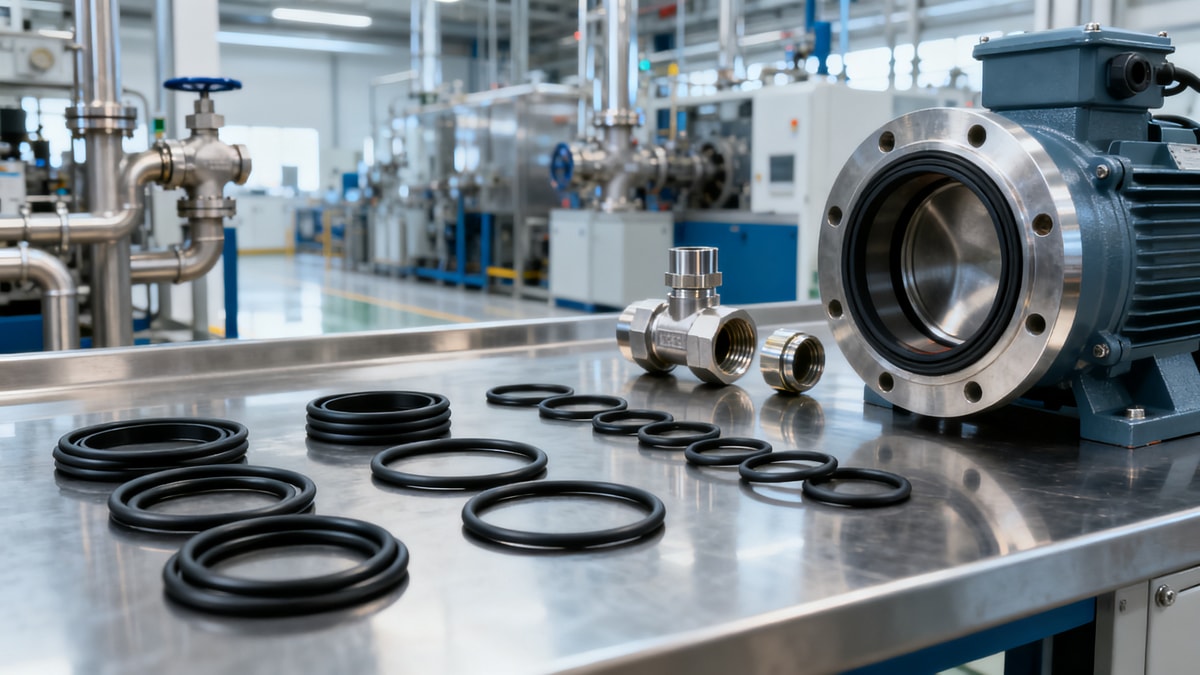
Sourcing viton fkm o rings bulk can look like a simple upgrade, but premium fluoroelastomer is not always the most cost-effective choice. For commercial evaluators balancing compliance, chemical resistance, temperature demands, and lifecycle value, the real question is where Viton delivers measurable risk reduction—and where standard alternatives may perform just as well.
In industrial procurement, sealing material decisions often sit at the intersection of engineering risk, maintenance cost, and supply continuity. A low-cost O-ring that fails 6 months early can trigger downtime, rework, leakage events, or compliance exposure. On the other hand, specifying viton fkm o rings bulk for every application can inflate spend by 20% to 200% compared with common elastomers, without creating proportional value.
For business evaluators, the goal is not to buy the “best” material in the abstract. It is to identify the threshold conditions where FKM becomes operationally justified: aggressive hydrocarbons, high continuous temperatures, ozone exposure, low maintenance access, or systems where seal failure carries high secondary cost. In less demanding service, NBR, EPDM, or silicone may satisfy the requirement at lower total acquisition cost.
Where Viton FKM O Rings Bulk Creates Real Commercial Value
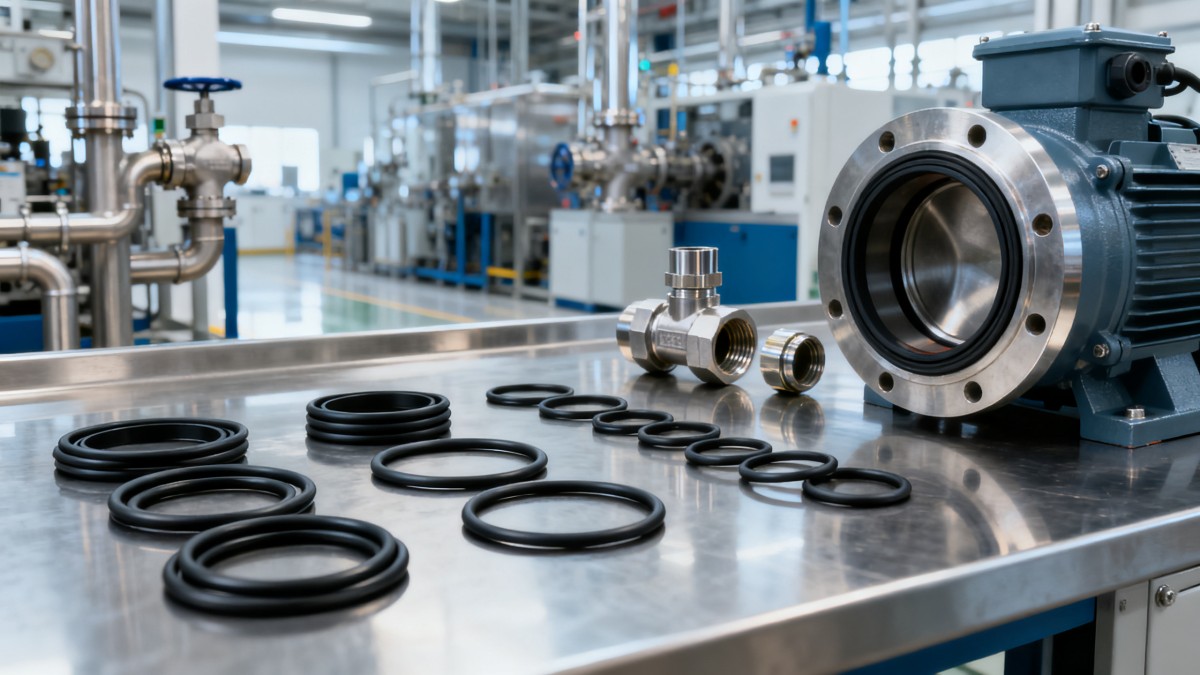
Viton, commonly used as a market term for FKM fluoroelastomer grades, is valued for chemical resistance, thermal stability, and long-term durability in harsh process conditions. In bulk purchasing, that premium only makes sense when the seal is solving a specific operational problem, not when it is selected by default across every line item.
Typical FKM service windows are often considered suitable for continuous exposure around -20°C to 200°C, with some compounds performing higher in intermittent cycles. By comparison, standard NBR commonly performs well in the -30°C to 100°C range, while EPDM is frequently chosen for hot water, steam-light service, and weather resistance. Those ranges alone show why material selection should start with actual service conditions, not habit.
High-risk applications where FKM often earns its premium
Commercially, viton fkm o rings bulk purchasing is most defensible in systems with 1 of 4 conditions: elevated temperature, aggressive media, low access for replacement, or high consequence of leakage. Examples include fuel handling skids, solvent-exposed instrumentation, industrial pumps near heat sources, and process equipment where shutdowns involve multi-team intervention over 4 to 12 hours.
- Hydrocarbon, oil, and fuel exposure over long cycles
- Service temperatures regularly above 120°C
- Outdoor or ozone-exposed equipment requiring longer replacement intervals
- Critical assets where a small seal failure can halt production or trigger contamination review
Why the financial logic changes in critical systems
An O-ring may represent less than 1% of assembly cost, yet failure can drive 30% to 70% of the maintenance event cost once labor, isolation, cleaning, and restart are included. In those scenarios, a higher initial material spend can be justified if it extends replacement intervals from 12 months to 24 or 36 months, or reduces unplanned maintenance risk in inaccessible installations.
The table below provides a practical framework for evaluating where viton fkm o rings bulk sourcing is commercially justified versus where standard elastomers may remain sufficient.
The key takeaway is that FKM tends to pay back best when the environment is chemically demanding or replacement is operationally expensive. In moderate service, bulk FKM buying can become a specification habit rather than a risk-based decision.
How to Evaluate Bulk O-Ring Material Selection Without Overbuying
For commercial assessment teams, material selection should be organized around 5 inputs: media compatibility, temperature range, pressure profile, maintenance access, and compliance requirements. If any one of these is unclear, the procurement decision should remain conditional until technical validation is completed. Bulk buying before this stage can lock in avoidable cost or misaligned inventory.
A 5-point screening model for business evaluators
- Define the actual media: oil, aromatic solvent, refrigerant, water-glycol, steam-light, or mixed process fluid.
- Confirm operating and peak temperature, such as 80°C continuous with 110°C peaks, or 150°C continuous service.
- Check dynamic versus static duty, because movement increases wear and material sensitivity.
- Estimate replacement cost in labor hours, shutdown exposure, and access complexity.
- Review whether CE, UL, ISO-based process control, or customer specifications require documented material consistency.
Bulk sourcing errors that often distort the decision
Three recurring mistakes appear in industrial sourcing. First, buyers compare only unit price rather than installed cost. Second, teams assume one premium material should standardize all applications, even when 40% to 60% of seals operate in mild conditions. Third, purchasing requests omit hardness, tolerance, or application details, creating mismatch risk even when the base material is correct.
For example, a 70 Shore A FKM O-ring may perform very differently from a harder grade in the same gland under pressure cycling. Likewise, specifying only “Viton” without confirming media, color control, packaging, or traceability can result in inconsistent supply quality. In bulk procurement, the cost of ambiguity usually appears later as inspection delays or fitment disputes.
The comparison below can help evaluators distinguish between premium necessity and unnecessary overspecification when reviewing viton fkm o rings bulk options.
This table reinforces a simple procurement principle: material choice should track exposure severity and failure consequence. If both are low, premium bulk FKM buying is often difficult to justify. If either factor is high, lifecycle value becomes more favorable.
Specification Details That Matter More Than the Material Name
Many purchasing teams ask for viton fkm o rings bulk and stop at the base polymer. That is only the first layer of the specification. Seal performance in production also depends on hardness, dimensional tolerance, compression set behavior, gland design, and packaging control. A correctly selected lower-cost material can outperform a vaguely specified premium option.
The minimum data set to request from suppliers
- Material family and compound consistency
- Hardness range, often 70 Shore A, 75 Shore A, or 90 Shore A depending on application
- Operating temperature range and peak exposure conditions
- Media compatibility statement for the actual process fluid
- Dimensional standard, tolerance expectation, and batch traceability
- Packaging quantity, MOQ, and lead time, such as 7 to 21 days for standard items or 3 to 6 weeks for custom runs
Why lead time and MOQ affect the material decision
Commercially, an FKM seal may be technically ideal but operationally weak if it has a 6-week replenishment cycle while the plant consumes stock every 3 weeks. Likewise, a custom-compound MOQ of 5,000 pieces can tie up working capital if the annual demand is only 1,200 units. In these cases, buyers may prefer a widely available standard grade with slightly lower performance but better continuity.
This is particularly relevant for EPC projects and distributed maintenance networks. A project team might approve FKM for startup-critical systems, while service teams standardize NBR or EPDM for non-critical replacements to maintain fill rates above 95% across regional inventory points.
A Practical Procurement Strategy for Viton FKM O Rings Bulk
The most effective sourcing approach is usually not full conversion, but tiered standardization. That means segmenting seals into critical, moderate, and routine categories. In many industrial environments, only 15% to 30% of applications truly require premium FKM, while the remaining 70% can be managed with lower-cost materials under a controlled specification matrix.
Recommended 3-tier buying model
Tier 1 should cover safety-critical, chemically exposed, or high-temperature assets where failure cost is disproportionate. Tier 2 can include mixed-duty systems that need selective FKM use after validation. Tier 3 should contain routine maintenance items where price, availability, and turnover speed are the dominant factors.
- Map current O-ring usage by equipment type and failure consequence.
- Separate static and dynamic applications across 12-month consumption history.
- Run a material review on the top 20% highest-risk SKUs first.
- Request sample validation and dimensional checks before annual bulk release.
- Set supplier KPIs for lead time, lot consistency, and technical responsiveness.
What business evaluators should ask before approving a bulk contract
Before signing a supply agreement, confirm 6 items: exact service media, temperature profile, annual volume, reorder point, acceptable substitution policy, and documentation level required for quality review. These questions reduce the chance of buying premium stock that later gets reclassified, sits in storage, or fails internal approval due to missing technical data.
For organizations managing multiple plants, a cross-functional review between procurement, maintenance, and engineering often produces the best result. Procurement controls cost, maintenance clarifies replacement burden, and engineering confirms application fit. That 3-way process is slower at the start, but it typically reduces material confusion and emergency buying later.
Common scenarios where premium material is not necessary
There are many cases where viton fkm o rings bulk is not the most efficient choice. Low-temperature pneumatic systems, general water service, lightly loaded utility equipment, and components with easy monthly inspection often do not generate enough risk reduction to justify premium spend. If replacement takes under 15 minutes and exposure conditions are stable, lifecycle savings may be marginal.
By contrast, systems exposed to fuel blends, outdoor heat cycling, or solvent cleaning often produce a clearer case for FKM. The practical objective is not to maximize premium material usage, but to align the seal category with the actual operational burden of failure.
Final Buying Perspective for Industrial Decision-Makers
Viton FKM becomes commercially necessary when it lowers total risk more than it raises acquisition cost. That usually happens in chemically aggressive service, elevated temperatures, difficult maintenance environments, or systems with expensive downtime consequences. In routine duty, standard elastomers can often meet the requirement with better budget efficiency and stronger supply flexibility.
For business evaluators, the strongest buying position comes from a documented material matrix, clear operating thresholds, and supplier discussions grounded in application data rather than brand shorthand. If you are reviewing viton fkm o rings bulk for EPC projects, industrial maintenance programs, or multinational sourcing plans, a segmented strategy will usually outperform blanket premium standardization.
Global Industrial Core supports procurement and industrial decision teams with practical sourcing intelligence built around compliance, reliability, and long-term asset performance. To refine your seal material strategy, compare risk tiers, or review bulk supply criteria, contact us to get a tailored solution, discuss product details, or explore broader industrial sourcing options.
Technical Specifications
- India BIS Draft IS 17832:2026 Sets Noise & Dust Limits for Waste CrushersAuthor :Environmental Engineering Director
- Korea MFDS Mandates Korean UI & KOSHA OEL Database for Industrial Water AnalyzersAuthor :Precision Metrology Expert
- Indonesia BPOM Mandates PM0.1 Efficiency & CADR Decay Labeling for Industrial Air PurifiersAuthor :Environmental Engineering Director
Expert Insights

Chief Security Architect
Dr. Thorne specializes in the intersection of structural engineering and digital resilience. He has advised three G7 governments on industrial infrastructure security.
Related Analysis
- May 03, 2026India BIS Draft IS 17832:2026 Sets Noise & Dust Limits for Waste CrushersAuthor :Environmental Engineering Director
- May 03, 2026Korea MFDS Mandates Korean UI & KOSHA OEL Database for Industrial Water AnalyzersAuthor :Precision Metrology Expert
- May 03, 2026Indonesia BPOM Mandates PM0.1 Efficiency & CADR Decay Labeling for Industrial Air PurifiersAuthor :Environmental Engineering Director
Core Sector // 01
Security & Safety
- TÜV Rheinland Launches China Bearing NVH Pre-Certification ChannelAuthor :Heavy Industry Strategist

- Viton FKM O Rings Bulk: When Premium Material Is Actually NecessaryAuthor :Heavy Industry Strategist

- Pump Shaft Seals: The Small Material Choice With Big Downtime ImpactAuthor :Heavy Industry Strategist

- Oil Seals TC TB: Which Structure Fits Dusty Equipment Better?Author :Heavy Industry Strategist

- Why Polyurethane O Rings Wear Faster in Dynamic SealingAuthor :Heavy Industry Strategist

- Where Non Asbestos Gaskets Fail Earlier Than ExpectedAuthor :Heavy Industry Strategist

- Indonesia Opens Bearing & Seal Manufacturing to 100% FDIAuthor :Heavy Industry Strategist

- Vietnam’s MOIT Mandates VILAS-Certified Heat Treatment Reports for Bearing ImportsAuthor :Heavy Industry Strategist