Vietnam’s MOIT Mandates VILAS-Certified Heat Treatment Reports for Bearing Imports
Author
Date Published
Reading Time
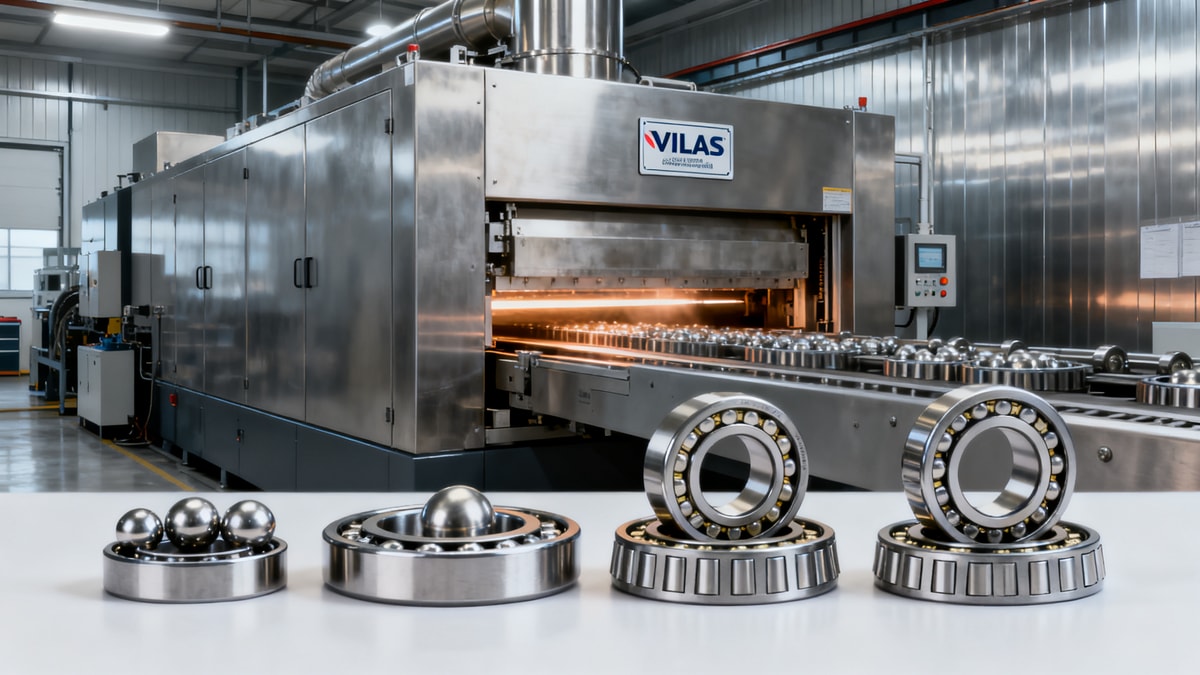
Starting May 1, 2026, Vietnam’s Ministry of Industry and Trade (MOIT) requires all imported industrial bearings—including deep groove ball, tapered roller, and spherical roller bearings—to be accompanied by a heat treatment process report issued exclusively by laboratories accredited by the Vietnam National Accreditation Service (VILAS). This regulatory update directly affects exporters, importers, and supply chain operators engaged in bearing trade with Vietnam, particularly those based in China and other major manufacturing economies. Its significance lies not only in procedural compliance but also in its potential to reshape documentation workflows, customs clearance timelines, and laboratory coordination across the global bearing supply chain.
Event Overview
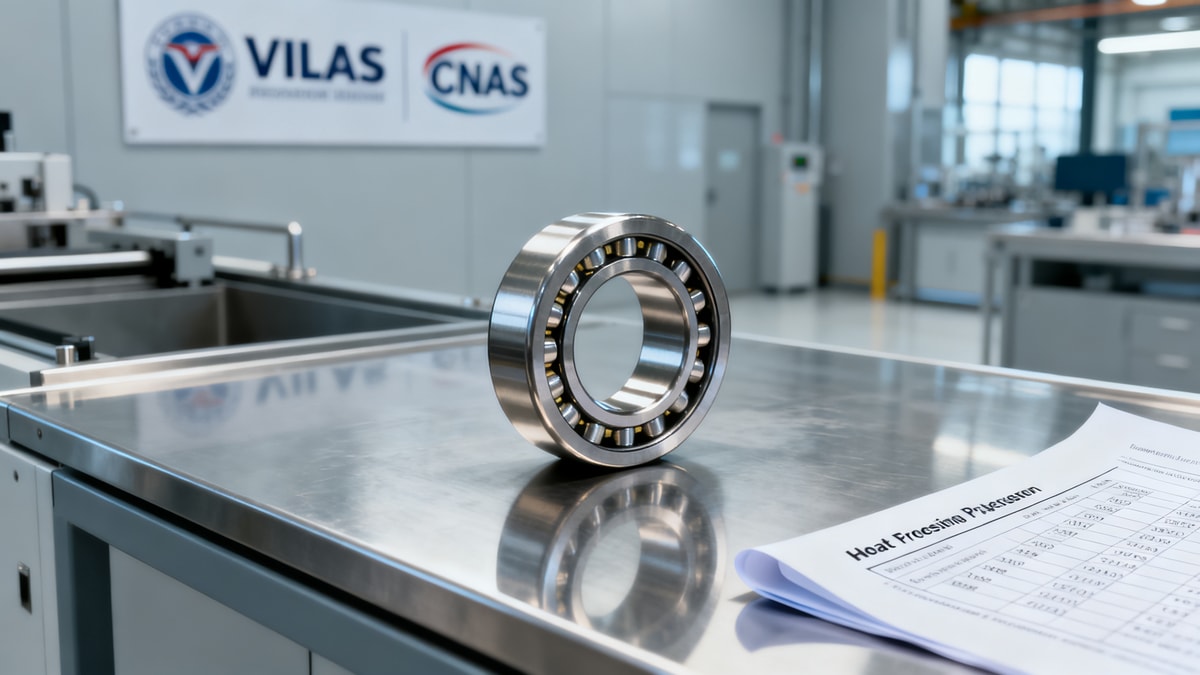
On April 30, 2026, Vietnam’s Ministry of Industry and Trade (MOIT) issued Circular No. 18/2026/TT-BCT, effective May 1, 2026. The circular mandates that all imported industrial bearings must include a heat treatment process report. Crucially, the report must be issued by a laboratory accredited by VILAS—the national accreditation body of Vietnam. For Chinese exporters relying on CNAS-accredited laboratories, the circular specifies that data may only be accepted if the relevant CNAS lab has completed pre-approval under the VILAS Mutual Recognition Arrangement (MRA); otherwise, customs clearance delays are expected to increase significantly.
Industries Affected
Direct Exporters and Importers
Exporters—especially those in China shipping bearings to Vietnam—are directly impacted because their shipment documentation now hinges on VILAS-aligned certification. Non-compliant reports will trigger verification requests or holds at Vietnamese ports, increasing dwell time and demurrage exposure.
Manufacturers and OEM Suppliers
Bearing manufacturers supplying original equipment or aftermarket channels must ensure traceability and test reporting align with VILAS requirements—not just internal or customer-specific standards. This may necessitate revising quality control protocols or engaging new testing partners for export-bound batches.
Supply Chain and Logistics Service Providers
Cargo agents, customs brokers, and freight forwarders handling bearing imports into Vietnam must now verify report authenticity and accreditation status prior to filing declarations. Their operational risk rises if documentation is rejected post-submission, potentially affecting service-level agreements and liability clauses.
What Enterprises and Practitioners Should Monitor and Do Now
Verify VILAS MRA Pre-Approval Status for Existing Testing Labs
Chinese exporters using CNAS labs should confirm whether their current testing partner is listed in the active VILAS MRA pre-approved registry. If not, initiate application or identify an alternative VILAS-accredited lab—preferably one with experience in metallurgical process reporting for rolling bearings.
Review and Update Export Documentation Templates
Ensure heat treatment reports explicitly state the laboratory’s VILAS accreditation number and scope of accreditation (e.g., ISO/IEC 17025:2017 for metallographic analysis and hardness testing). Generic or non-accredited reports—even if technically accurate—will not satisfy the requirement.
Map High-Risk SKUs and Prioritize Compliance for Key Shipments
Identify high-volume or high-value bearing types (e.g., tapered roller bearings for automotive or wind energy applications) where documentation gaps could cause cascading delays. Allocate internal resources to validate reports for these SKUs first ahead of the May 1, 2026 deadline.
Engage Local Customs Agents Early for Pre-Clearance Validation
Work with Vietnamese customs brokers to conduct mock submissions using sample reports. This helps surface interpretation differences or system-level validation issues before actual cargo arrives—reducing reliance on reactive corrections during clearance.
Editorial Perspective / Industry Observation
Observably, this requirement signals Vietnam’s broader shift toward aligning technical conformity assessment with domestic accreditation infrastructure—not merely accepting foreign test data on reciprocity alone. Analysis shows it is less a sudden barrier and more a formalization of existing de facto expectations; several Vietnamese importers have informally requested VILAS-aligned reports since early 2025. From an industry perspective, it reflects tightening scrutiny over material integrity in critical rotating components, especially amid growing local industrial capacity and import substitution goals. Current developments suggest this is a policy signal with immediate operational consequences—not a distant regulatory proposal—and warrants continuous monitoring as VILAS publishes updated MRA participant lists and guidance notes.
Conclusion
This regulation marks a procedural inflection point for bearing trade with Vietnam: compliance no longer hinges solely on product specifications or origin documentation, but on verifiable, jurisdictionally anchored test reporting. It does not ban imports or impose new technical limits—but elevates documentation integrity to the same level of priority as physical quality. Enterprises are better served treating it as a fixed operational prerequisite rather than a temporary administrative hurdle.
Information Sources
Main source: Vietnam Ministry of Industry and Trade (MOIT), Circular No. 18/2026/TT-BCT, dated April 30, 2026.
Note: VILAS’s official MRA participant list and implementation guidance remain subject to update; ongoing verification is recommended beyond the initial publication date.
Technical Specifications
- Indonesia Opens Bearing & Seal Manufacturing to 100% FDIAuthor :Heavy Industry Strategist
- SASO Extends AI Water Module Cybersecurity Deadline to Oct 2026Author :Environmental Engineering Director
- Copper Price Surges 4.1% to Record High in 2026; Impacts BOM Costs for Cable & Transformer MakersAuthor :Grid Infrastructure Analyst
Expert Insights

Chief Security Architect
Dr. Thorne specializes in the intersection of structural engineering and digital resilience. He has advised three G7 governments on industrial infrastructure security.
Related Analysis
- May 02, 2026Indonesia Opens Bearing & Seal Manufacturing to 100% FDIAuthor :Heavy Industry Strategist
- May 02, 2026SASO Extends AI Water Module Cybersecurity Deadline to Oct 2026Author :Environmental Engineering Director
- May 02, 2026Copper Price Surges 4.1% to Record High in 2026; Impacts BOM Costs for Cable & Transformer MakersAuthor :Grid Infrastructure Analyst
Core Sector // 01
Security & Safety
- Indonesia Opens Bearing & Seal Manufacturing to 100% FDIAuthor :Heavy Industry Strategist

- Vietnam’s MOIT Mandates VILAS-Certified Heat Treatment Reports for Bearing ImportsAuthor :Heavy Industry Strategist

- ILAC Recognizes CNAS Bearing Vibration ReportsAuthor :Heavy Industry Strategist

- Indonesia Opens Bearings & Seals Sector to 100% Foreign OwnershipAuthor :Heavy Industry Strategist

- Vietnam Requires VILAS-Certified Heat Treatment Reports for Imported BearingsAuthor :Heavy Industry Strategist

- 2026 China Bike Expo Opens in Shanghai: Lightweight Bearings, Smart Locks, Carbon Frames Drive Export GrowthAuthor :Heavy Industry Strategist

- LME Nickel Surges 5.2% on April 29, 2026: Impact on Stainless Bearings & SealsAuthor :Heavy Industry Strategist

- ILAC Recognizes CNAS Bearing Vibration ReportsAuthor :Heavy Industry Strategist