Where Non Asbestos Gaskets Fail Earlier Than Expected
Author
Date Published
Reading Time
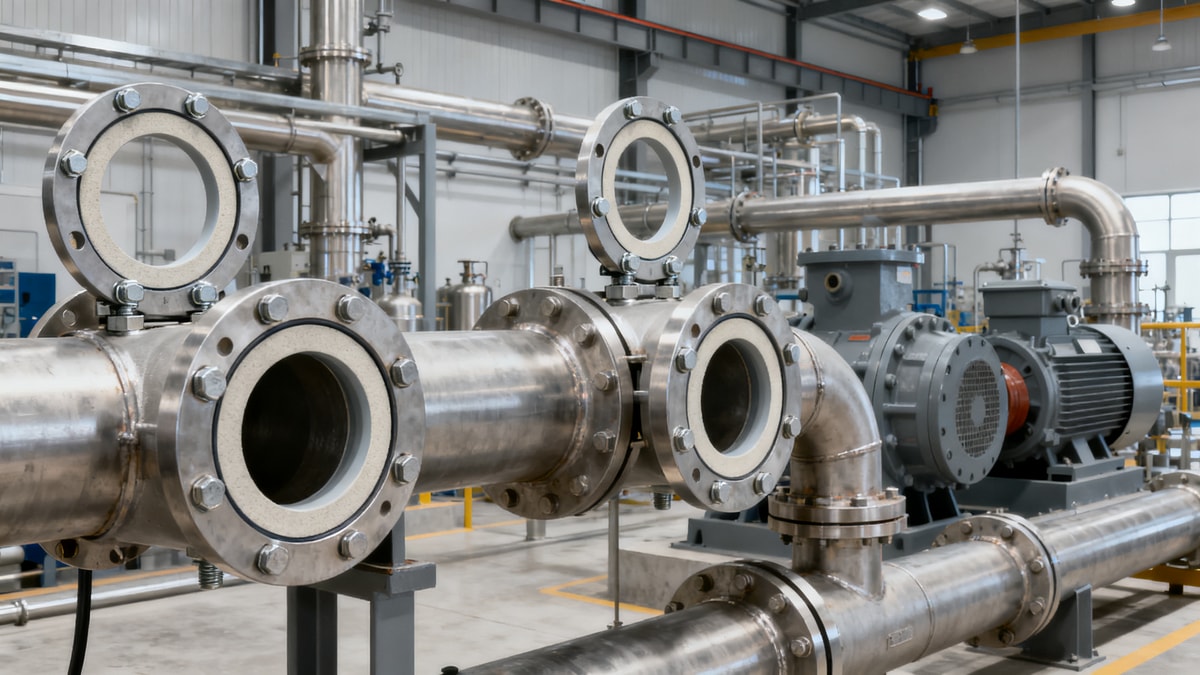
Non asbestos gaskets are widely chosen for safety and compliance, yet many fail far earlier than expected under real operating conditions. For quality control and safety managers, understanding the hidden causes behind premature leakage, compression loss, and sealing breakdown is essential to preventing downtime, audit risks, and costly equipment damage.
Why early failure looks different from one application to another
In industrial environments, non asbestos gaskets rarely fail for a single reason. The same gasket sheet material may perform well in a low-pressure water line, then fail unexpectedly in a steam service, a chemical dosing skid, or a cycling pump connection. For quality teams, this is where many investigations go wrong: the material gets blamed first, while the true issue is often a mismatch between service conditions, bolt load, flange finish, media compatibility, and maintenance practice.
That is why scenario-based evaluation matters. A plant handling hot oil, compressed air, alkali cleaning agents, and frequent shutdowns cannot apply one sealing rule across every flange. Safety managers also face a different reality from buyers. Procurement may see a compliant product with the correct certificate, but site conditions may expose weaknesses not visible in catalog data. When non asbestos gaskets fail earlier than expected, the practical question is not only “what material was used,” but “in which operating scenario was it expected to survive?”
Typical industrial scenarios where non asbestos gaskets underperform
Premature failure is most common when standard compressed fiber non asbestos gaskets are placed into duties that combine more than one stress factor. The following scenarios deserve closer inspection during quality review and risk assessment.
Steam and thermal cycling systems
Steam lines, heat exchangers, and jacketed process equipment create repeated expansion and contraction. In these cases, non asbestos gaskets may lose residual stress after several heating and cooling cycles. Even if initial sealing is acceptable, relaxation can allow leakage paths to form. This is especially common when installation torque is inconsistent or when flange distortion is not checked during shutdown maintenance.
Chemical processing and media variability
Some non asbestos gaskets perform well with water, mild oils, and neutral services but degrade faster in solvents, strong acids, oxidizers, or mixed cleaning chemicals. A frequent issue is assuming that “chemical resistant” on a datasheet covers every concentration and temperature combination. In reality, binder systems and filler composition may react differently once temperature spikes, process contamination, or cleaning-in-place cycles are introduced.
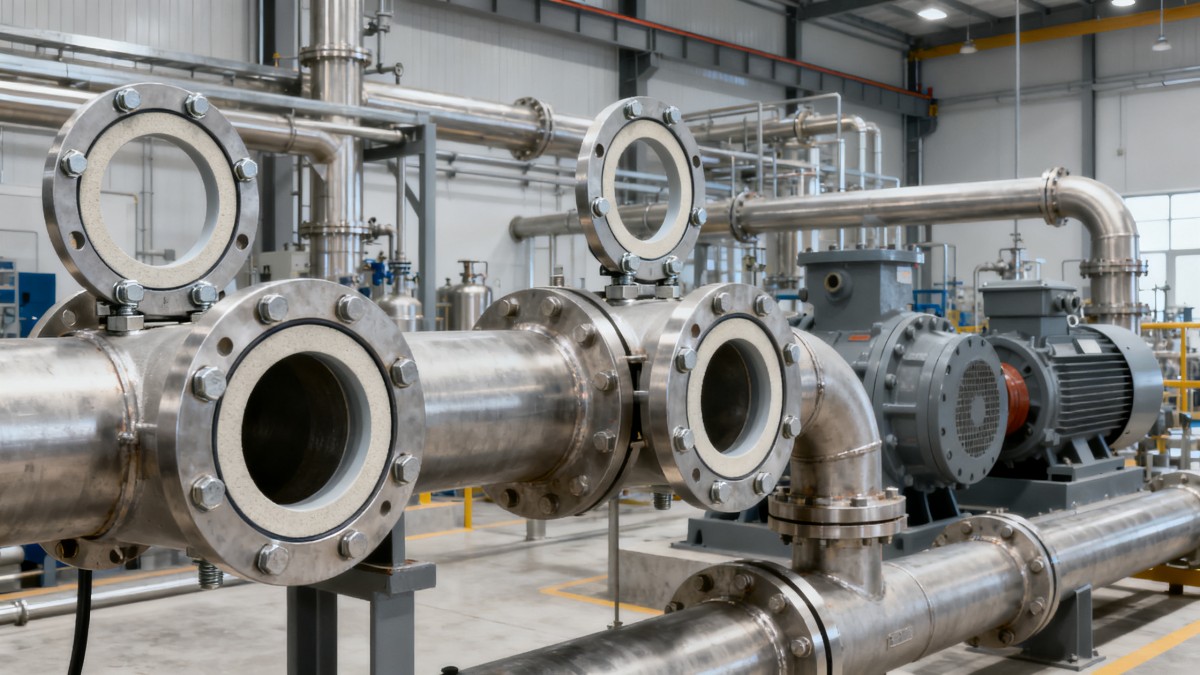
High-vibration rotating equipment connections
At pumps, compressors, blowers, and engine-related pipework, vibration can accelerate creep and edge fretting. Here, non asbestos gaskets may not fail because of temperature or pressure alone, but because dynamic movement gradually reduces sealing integrity. Where bolt loosening and flange movement exist, even a correctly selected gasket can age rapidly.
Utility systems with frequent low-cost replacement culture
Cooling water, general air, and low-risk utility lines are often treated as low-priority sealing points. Yet these systems are where uncontrolled substitution happens most often. Low-grade non asbestos gaskets, mixed thicknesses, reused stock, or hand-cut parts from unverified sheets can all create early leakage. The problem is not harsh duty; it is weak process control.
A practical comparison of failure risk by application scenario
For inspection planning, it helps to compare where non asbestos gaskets are most vulnerable and what the control priority should be.
What quality and safety teams should check in each scenario
The best way to reduce premature failure is to move from generic acceptance to scenario-specific verification. Non asbestos gaskets should not be approved only by dimensional conformity and paperwork. They should be evaluated against how the equipment actually operates.
For high-temperature process lines
Confirm maximum continuous temperature rather than headline peak temperature. Many failures happen because a gasket is technically within pressure class but not stable enough for sustained heat. Review torque procedures, bolt lubrication assumptions, and flange surface finish records. If shutdown intervals are long, creep resistance matters more than initial sealability.
For aggressive or changing chemical services
Build a media matrix that includes process fluid, upset condition, flush media, and cleaning agents. Non asbestos gaskets can appear suitable for the main service but fail because of intermittent exposure to stronger chemicals during sanitation or line clearing. Ask suppliers for compatibility data tied to concentration and temperature, not generic “resistant to chemicals” statements.
For maintenance-intensive equipment
Where flanges are frequently opened, human factors become critical. Cutting damage, improper storage, over-compression, and reuse of compressed gaskets all shorten life. QC personnel should audit how gaskets are handled on site, whether part numbers match the bill of materials, and whether installation teams use calibrated tools. In many cases, premature leakage is procedural rather than material-based.
Common misjudgments that make non asbestos gaskets fail sooner
Several repeatable errors appear across industries, from manufacturing plants to utilities and EPC projects. These errors are especially relevant for organizations scaling across multiple sites where standards are documented but not uniformly enforced.
- Treating all non asbestos gaskets as interchangeable despite major differences in filler, binder, density, and compressibility.
- Selecting by pressure and temperature only, without considering cycling, vibration, flange condition, and media variation.
- Using certificate presence as a substitute for application-specific validation.
- Ignoring storage age, humidity exposure, and sheet handling before fabrication or installation.
- Assuming leakage is caused by bad gasket material when flange warpage, uneven bolt stress, or pipe strain is the true root cause.
How application differences change sourcing decisions
For procurement directors and project teams, the sourcing decision for non asbestos gaskets should change with the operational scenario. A low-cost standardized grade may be acceptable in stable utility service, but not in heat cycling or mixed-chemical environments. In high-consequence systems, the lowest purchase price often creates the highest total cost once leak response, lost production, safety reporting, and repeated maintenance are included.
This is where a more disciplined sourcing model helps. Organizations such as Global Industrial Core support buyers and engineering stakeholders by focusing on the full industrial decision chain: standards compliance, material verification, application risk, and reliability under real operating stress. For quality control teams, that means the gasket approval process should connect supplier documentation with field evidence, not treat them as separate workflows.
Scenario-based selection checklist for non asbestos gaskets
Before approving non asbestos gaskets for any critical service, use a short scenario filter. This can prevent avoidable failures and create better audit defensibility.
- Define the real service profile, including startup, shutdown, upset, cleaning, and standby conditions.
- Match the gasket not only to media, pressure, and temperature, but also to cycling frequency and mechanical movement.
- Verify flange condition, bolt loading method, and installer capability.
- Demand traceable material data and test records from approved suppliers.
- Review failure history by asset type so repeat leaks are linked to scenario patterns, not isolated incidents.
FAQ for QC and safety managers
Are non asbestos gaskets less reliable than other gasket types?
Not inherently. Non asbestos gaskets can perform very well when selected for the correct service. Early failure usually points to poor application matching, installation error, or uncontrolled sourcing rather than the category itself.
Which scenario causes the most unexpected failures?
Thermal cycling and mixed chemical exposure are two of the most underestimated scenarios. Both can make a gasket look acceptable during commissioning but degrade it rapidly during actual operation.
What is the fastest way to improve control?
Create application categories and approve non asbestos gaskets by scenario, not by generic stock code alone. Then tie each category to torque rules, media limits, and supplier traceability requirements.
Final takeaway: judge the application before judging the gasket
When non asbestos gaskets fail earlier than expected, the root cause is often hidden in the operating context. Steam service, chemical variability, vibration, poor flange condition, and uncontrolled maintenance practices all create different failure paths. For quality control and safety managers, the most effective response is a scenario-based review that links service conditions, installation quality, material traceability, and supplier evidence.
If your organization is seeing repeated leakage, inconsistent service life, or rising audit concern around sealing integrity, the next step is to classify where non asbestos gaskets are used, identify which applications carry the highest consequence of failure, and confirm whether the current material grade truly fits those conditions. Better decisions begin when gasket selection is treated as an operational risk control, not a routine consumable purchase.
Technical Specifications
- India BIS Draft IS 17832:2026 Sets Noise & Dust Limits for Waste CrushersAuthor :Environmental Engineering Director
- Korea MFDS Mandates Korean UI & KOSHA OEL Database for Industrial Water AnalyzersAuthor :Precision Metrology Expert
- Indonesia BPOM Mandates PM0.1 Efficiency & CADR Decay Labeling for Industrial Air PurifiersAuthor :Environmental Engineering Director
Expert Insights

Chief Security Architect
Dr. Thorne specializes in the intersection of structural engineering and digital resilience. He has advised three G7 governments on industrial infrastructure security.
Related Analysis
- May 03, 2026India BIS Draft IS 17832:2026 Sets Noise & Dust Limits for Waste CrushersAuthor :Environmental Engineering Director
- May 03, 2026Korea MFDS Mandates Korean UI & KOSHA OEL Database for Industrial Water AnalyzersAuthor :Precision Metrology Expert
- May 03, 2026Indonesia BPOM Mandates PM0.1 Efficiency & CADR Decay Labeling for Industrial Air PurifiersAuthor :Environmental Engineering Director
Core Sector // 01
Security & Safety
- TÜV Rheinland Launches China Bearing NVH Pre-Certification ChannelAuthor :Heavy Industry Strategist

- Viton FKM O Rings Bulk: When Premium Material Is Actually NecessaryAuthor :Heavy Industry Strategist

- Pump Shaft Seals: The Small Material Choice With Big Downtime ImpactAuthor :Heavy Industry Strategist

- Oil Seals TC TB: Which Structure Fits Dusty Equipment Better?Author :Heavy Industry Strategist

- Why Polyurethane O Rings Wear Faster in Dynamic SealingAuthor :Heavy Industry Strategist

- Where Non Asbestos Gaskets Fail Earlier Than ExpectedAuthor :Heavy Industry Strategist

- Indonesia Opens Bearing & Seal Manufacturing to 100% FDIAuthor :Heavy Industry Strategist

- Vietnam’s MOIT Mandates VILAS-Certified Heat Treatment Reports for Bearing ImportsAuthor :Heavy Industry Strategist