ILAC Recognizes CNAS Bearing Vibration Reports
Author
Date Published
Reading Time
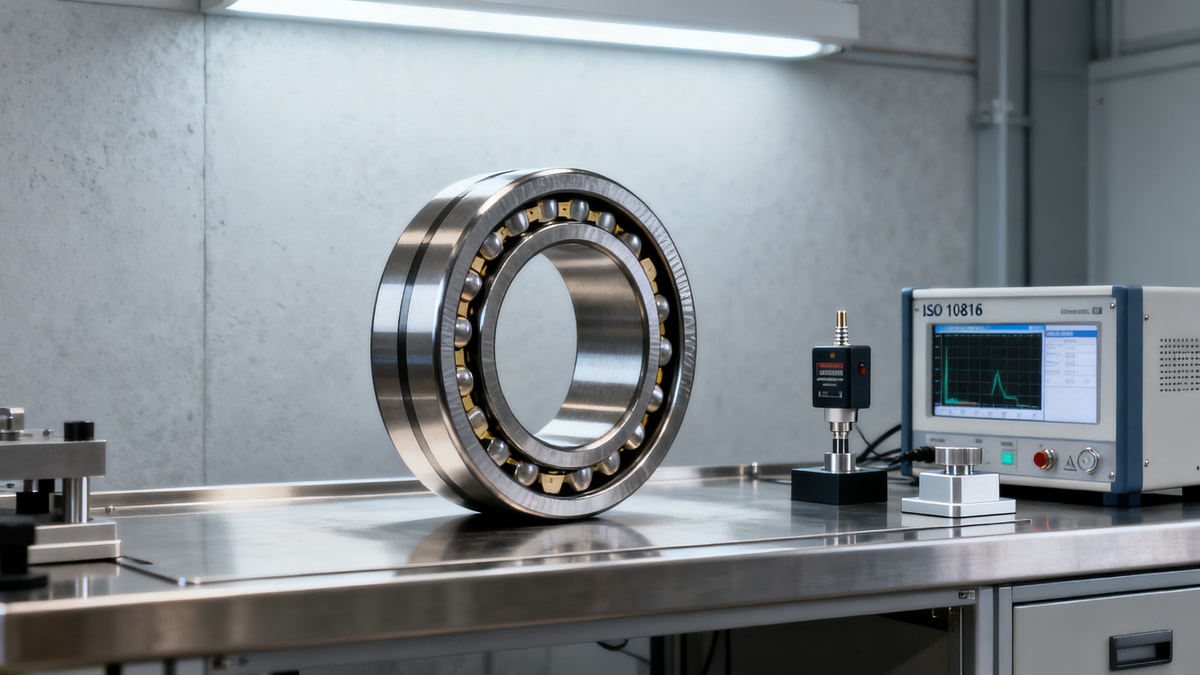
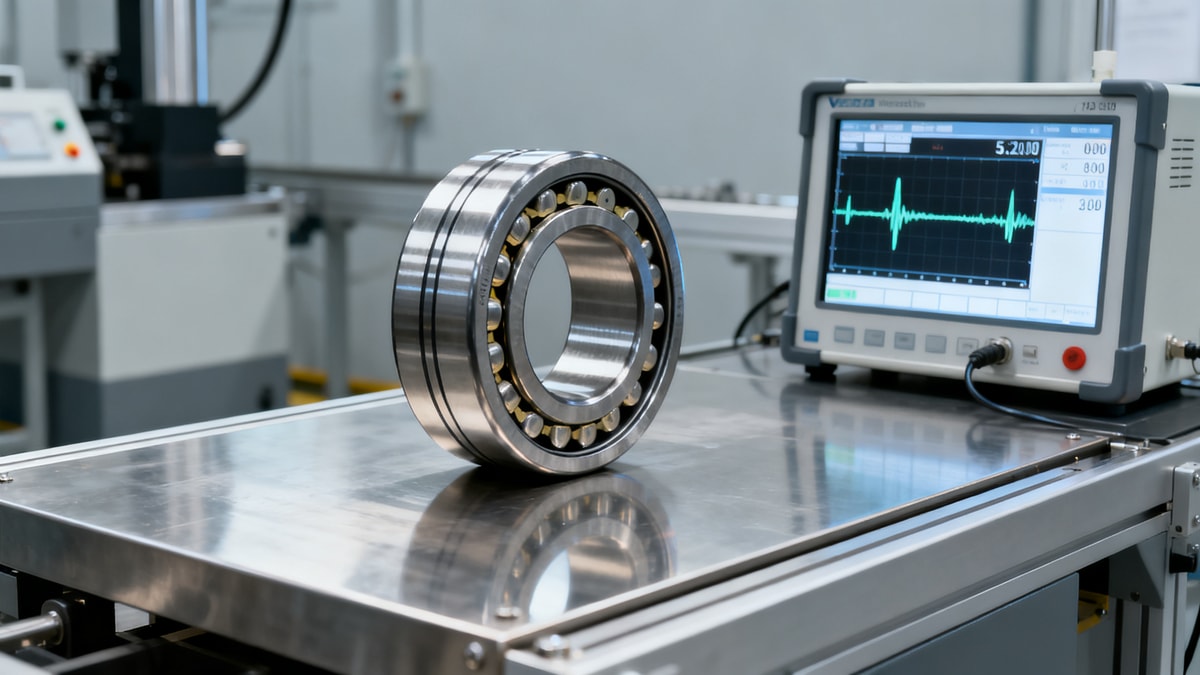
On April 28, 2026, the International Laboratory Accreditation Cooperation (ILAC) issued a formal statement recognizing vibration and noise test reports for industrial bearings issued by the China National Accreditation Service for Conformity Assessment (CNAS) under ISO 10816 series standards. This recognition directly impacts manufacturers, exporters, and supply chain stakeholders serving markets in Australia, New Zealand, Southeast Asia, and the Middle East — where ILAC mutual recognition arrangements apply.
Event Overview
On April 28, 2026, ILAC published an official statement acknowledging that test reports on industrial bearing vibration and noise, issued by CNAS-accredited laboratories operating in accordance with ISO 10816-1, ISO 10816-3, and related parts of the standard series, are recognized as equivalent to reports issued by laboratories accredited by other ILAC Mutual Recognition Arrangement (MRA) signatories.
Industries Affected by This Recognition
Industrial Bearing Exporters and OEM Suppliers
Exporters of industrial bearings to ILAC MRA jurisdictions — particularly Australia, New Zealand, Southeast Asia, and the Middle East — will experience reduced technical barriers. Previously, some importers or regulators in those regions may have required retesting or third-party verification by locally accredited labs. With ILAC’s recognition, CNAS-issued reports now carry equivalent standing, potentially shortening time-to-market and lowering conformity assessment costs.
Testing Laboratories and Certification Bodies in China
Laboratories accredited by CNAS for vibration and noise testing of industrial bearings under ISO 10816 may see increased demand from domestic manufacturers seeking export-ready reports. However, this recognition does not automatically extend to other test scopes (e.g., fatigue life, material composition, or dimensional inspection), nor does it confer accreditation status on non-CNAS-accredited labs.
Importers and End-User Equipment Manufacturers in Target Markets
Equipment integrators and maintenance providers in Australia, New Zealand, Southeast Asia, and the Middle East who source bearings from Chinese suppliers may now accept CNAS-issued vibration/noise reports without requiring supplementary validation — provided the reports meet applicable ISO 10816 parts and are issued by CNAS-accredited labs. This may streamline procurement reviews and reduce supplier qualification overhead.
What Relevant Enterprises or Practitioners Should Monitor and Do Now
Track official implementation guidance from CNAS and target-market regulators
While ILAC’s statement is binding among MRA signatories, national regulators retain discretion in how they apply it. Enterprises should monitor updates from national accreditation bodies (e.g., NATA in Australia, SIRIM QAS in Malaysia, ESMA in the UAE) regarding acceptance criteria, report format requirements, and any transitional provisions.
Verify scope and validity of existing CNAS-accredited lab reports
Not all CNAS-accredited labs hold authorization for every part of ISO 10816. Exporters must confirm that their chosen lab’s CNAS scope explicitly covers the relevant subclauses (e.g., ISO 10816-3 for industrial machines) and that the report includes mandatory elements such as measurement uncertainty statements, calibration traceability, and environmental conditions — as required by ILAC P10:2022.
Distinguish between policy recognition and operational adoption
ILAC’s statement establishes equivalence in principle, but actual acceptance depends on importer policies and contractual terms. Companies should proactively align reporting formats and test protocols with buyer expectations — especially where specifications reference national standards (e.g., AS 2782 in Australia) alongside ISO 10816 — rather than assuming automatic acceptance.
Prepare documentation for cross-border technical dialogue
Supply chain teams should compile supporting evidence — including CNAS accreditation certificates, scope documents, and ILAC’s original statement — to facilitate technical discussions with overseas buyers, customs authorities, or certification intermediaries. Early documentation readiness helps avoid delays during pre-shipment verification.
Editorial Perspective / Industry Observation
Observably, this development is best understood as a procedural signal — not an immediate market access guarantee. It reflects progress in international harmonization of mechanical component testing infrastructure, but its real-world impact remains contingent on national regulator interpretation and commercial practice. From an industry perspective, the recognition strengthens the technical credibility of China’s bearing testing ecosystem, yet it does not alter fundamental requirements for product compliance (e.g., performance thresholds, safety certifications, or local registration). Current attention should focus less on broad claims of ‘market opening’ and more on precise alignment with reporting conventions and regulatory expectations in specific destination countries.
Analysis shows that this step primarily benefits companies already operating within established quality frameworks — i.e., those using CNAS-accredited labs and adhering to ISO 10816-compliant test methodologies. It does not lower entry barriers for new entrants lacking traceable metrology or documented process control.
Current more appropriate understanding is that ILAC’s statement reinforces existing pathways for compliant exporters — rather than creating new ones. Its value lies in reducing friction, not eliminating technical due diligence.
Conclusion
This recognition marks a milestone in the international acceptance of China’s laboratory accreditation infrastructure for mechanical components. Its practical significance lies in streamlining technical documentation workflows for industrial bearing exports to key growth markets. However, it remains a narrow, scope-specific acknowledgment — limited to vibration and noise testing per ISO 10816 — and should be interpreted as one element of broader conformity assurance, not a substitute for full regulatory compliance.
Information Sources
Main source: Official ILAC Statement dated April 28, 2026.
Note: Ongoing implementation details — including national-level adoption timelines and exceptions — remain subject to observation and are not yet publicly confirmed by individual ILAC MRA signatories.
Technical Specifications
- ILAC Recognizes CNAS Bearing Vibration ReportsAuthor :Heavy Industry Strategist
- ESMA Mandates EN 14181 QA/QC Level 3 for Industrial Water Sensors in UAEAuthor :Environmental Engineering Director
- JIS T 8201-2026 Enforces New Low-Temp Impact Test for Fire Respirator MasksAuthor :Safety Compliance Lead
Expert Insights

Chief Security Architect
Dr. Thorne specializes in the intersection of structural engineering and digital resilience. He has advised three G7 governments on industrial infrastructure security.
Related Analysis
- May 01, 2026ILAC Recognizes CNAS Bearing Vibration ReportsAuthor :Heavy Industry Strategist
- May 01, 2026ESMA Mandates EN 14181 QA/QC Level 3 for Industrial Water Sensors in UAEAuthor :Environmental Engineering Director
- May 01, 2026JIS T 8201-2026 Enforces New Low-Temp Impact Test for Fire Respirator MasksAuthor :Safety Compliance Lead
Core Sector // 01
Security & Safety
- ILAC Recognizes CNAS Bearing Vibration ReportsAuthor :Heavy Industry Strategist

- Indonesia Opens Bearings & Seals Sector to 100% Foreign OwnershipAuthor :Heavy Industry Strategist

- Vietnam Requires VILAS-Certified Heat Treatment Reports for Imported BearingsAuthor :Heavy Industry Strategist

- 2026 China Bike Expo Opens in Shanghai: Lightweight Bearings, Smart Locks, Carbon Frames Drive Export GrowthAuthor :Heavy Industry Strategist

- LME Nickel Surges 5.2% on April 29, 2026: Impact on Stainless Bearings & SealsAuthor :Heavy Industry Strategist

- ILAC Recognizes CNAS Bearing Vibration ReportsAuthor :Heavy Industry Strategist

- Indonesia Opens Bearings & Seals Sector to 100% Foreign OwnershipAuthor :Heavy Industry Strategist

- Vietnam MOIT Mandates VILAS-Certified Heat Treatment Reports for Bearing ImportsAuthor :Heavy Industry Strategist