ILAC Recognizes CNAS Bearing Vibration Reports
Author
Date Published
Reading Time
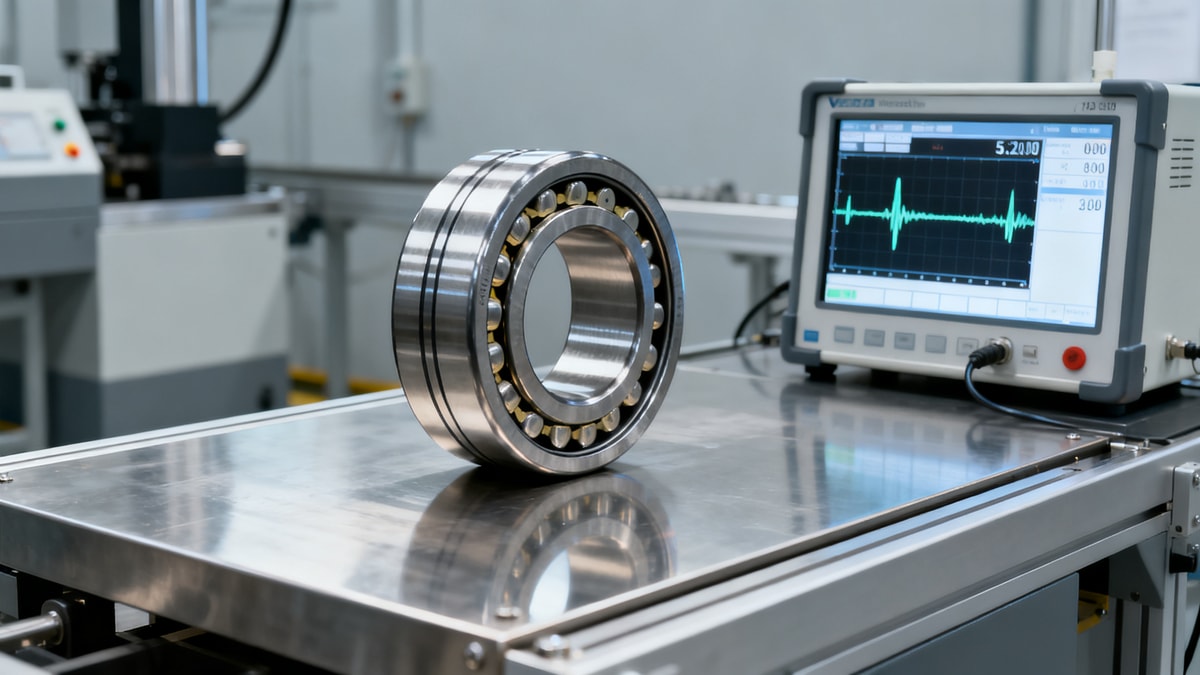
On 29 April 2026, the International Laboratory Accreditation Cooperation (ILAC) issued an addendum to its mutual recognition arrangement (MRA), formally recognizing vibration and noise test reports for industrial rolling bearings issued by the China National Accreditation Service for Conformity Assessment (CNAS) under GB/T 24611–2021. This development directly affects manufacturers, exporters, and distributors of precision mechanical components—particularly those supplying to regulated markets including the EU, US, Australia, New Zealand, and the Middle East.
Event Overview
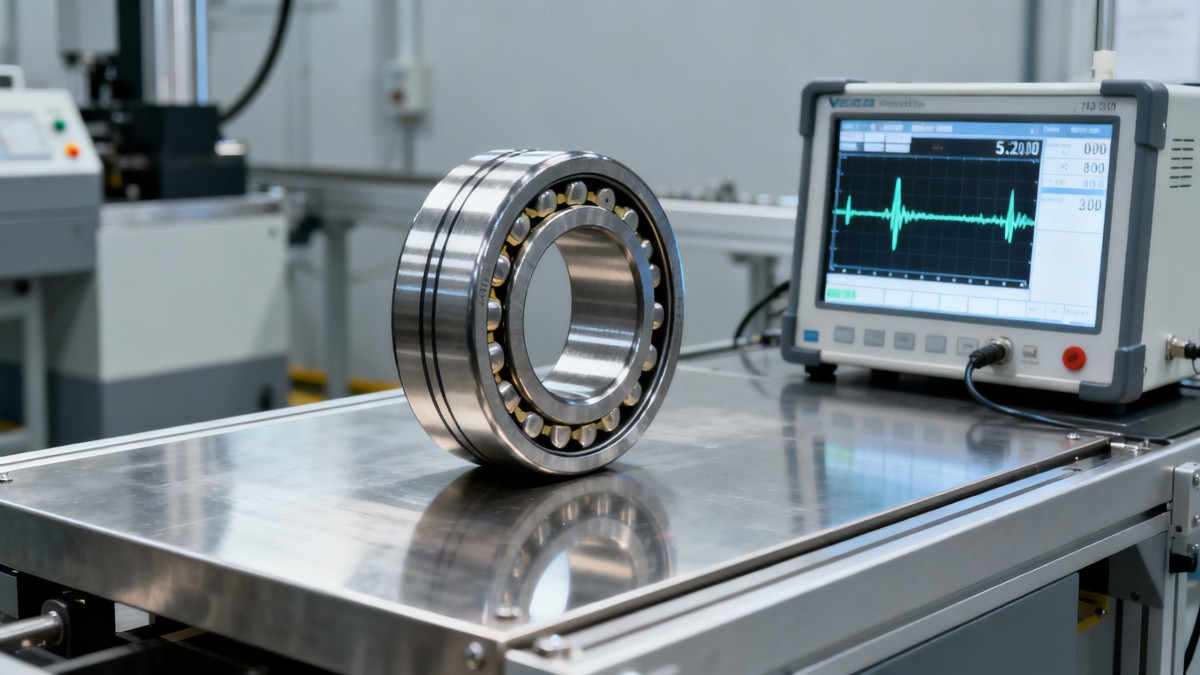
On 29 April 2026, ILAC published ILAC P10:2026 Addendum, adding CNAS-issued test reports compliant with GB/T 24611–2021 ("Rolling Bearings — Vibration and Noise Measurement") to the ILAC Mutual Recognition Arrangement (MRA) scope. As confirmed in the publicly released document, these reports are now accepted by national accreditation bodies in ILAC MRA signatory economies without requiring retesting.
Industries Affected by This Change
Export-Oriented Bearing Manufacturers
These companies produce and test bearings to GB/T 24611–2021 and rely on CNAS-accredited laboratories for certification. The ILAC MRA inclusion means their test reports can be used directly for market access applications in ILAC signatory jurisdictions—reducing time-to-market and third-party validation costs.
Global Industrial Equipment Suppliers
Suppliers integrating bearings into machinery (e.g., HVAC systems, machine tools, wind turbines) often face component-level conformity requirements from overseas buyers or regulators. With CNAS-issued vibration/noise reports now recognized internationally, such suppliers may streamline technical documentation packages for export compliance.
Testing Laboratories Accredited by CNAS
Laboratories operating under CNAS accreditation and performing GB/T 24611–2021 testing gain enhanced credibility when serving clients targeting export markets. Their reports now carry formal weight under ILAC’s multilateral framework—potentially increasing demand for their services among exporters.
Distribution and Certification Support Firms
Firms offering regulatory advisory, conformity assessment support, or technical documentation services for bearing-related exports may see shifts in client needs—particularly reduced demand for duplicate local testing coordination, and increased interest in report validation, traceability assurance, and MRA alignment guidance.
What Relevant Enterprises or Practitioners Should Focus On Now
Monitor official implementation timelines in key target markets
While ILAC’s addendum is effective as of 29 April 2026, national accreditation bodies (e.g., UKAS, DAkkS, NATA) must formally adopt the change into their domestic MRA implementation policies. Enterprises should track updates from each country’s designated authority—not just ILAC—to confirm operational acceptance.
Verify report scope and laboratory eligibility
Only reports issued by CNAS-accredited laboratories *specifically* for GB/T 24611–2021—and bearing types covered by that standard—are included. Enterprises must ensure their test reports explicitly reference this standard, include valid CNAS accreditation numbers, and fall within the laboratory’s approved scope of accreditation.
Distinguish between regulatory acceptance and buyer requirements
ILAC MRA recognition enables regulatory authorities to accept reports—but individual importers, OEMs, or notified bodies may still impose additional technical or procedural conditions (e.g., report language, data format, uncertainty statements). Businesses should review procurement contracts and technical specifications before assuming full equivalency.
Update internal quality and export documentation protocols
Companies should revise internal checklists for export-ready test reports, train QA and regulatory staff on the new MRA status, and confirm that CNAS-accredited labs in their supply chain have updated their reporting templates to reflect ILAC MRA eligibility where applicable.
Editorial Perspective / Industry Observation
Observably, this update reflects a step toward greater harmonization of mechanical component testing frameworks across major trading economies—but it remains narrow in scope: limited to one standard (GB/T 24611–2021), one product category (industrial rolling bearings), and one measurement domain (vibration and noise). Analysis shows it is best understood not as a broad regulatory breakthrough, but as a targeted, technically specific expansion of existing MRA coverage. From an industry perspective, its significance lies less in immediate transformation and more in signaling continued progress in aligning Chinese metrological practices with international expectations—particularly in high-precision mechanical engineering sectors. Continued attention is warranted as further standards or product categories may follow in future ILAC addenda.
Conclusion
This development marks a concrete advancement in international recognition of China’s accredited testing infrastructure for industrial bearings. However, it does not eliminate all conformity barriers—nor does it apply beyond the precise parameters defined in ILAC P10:2026 Addendum. It is more accurately understood as a validated, incremental enabler for specific export workflows—not a wholesale simplification of global market access.
Information Sources
Main source: ILAC P10:2026 Addendum (published 29 April 2026, publicly available via ilac.org).
Note: Implementation status at national accreditation body level remains subject to ongoing verification and is not yet uniformly confirmed across all ILAC signatories.
Technical Specifications
Expert Insights

Chief Security Architect
Dr. Thorne specializes in the intersection of structural engineering and digital resilience. He has advised three G7 governments on industrial infrastructure security.
Related Analysis
- Apr 30, 2026Egypt SMIIC Mandates Arabic Energy Labels for Industrial PumpsAuthor :Heavy Industry Strategist
- Apr 30, 2026TÜV SÜD Launches China Industrial Optics Fast TrackAuthor :Precision Metrology Expert
- Apr 30, 2026LME Nickel Surges 5.2% on April 29, 2026: Impact on Stainless Bearings & SealsAuthor :Heavy Industry Strategist
Core Sector // 01
Security & Safety
- LME Nickel Surges 5.2% on April 29, 2026: Impact on Stainless Bearings & SealsAuthor :Heavy Industry Strategist

- ILAC Recognizes CNAS Bearing Vibration ReportsAuthor :Heavy Industry Strategist

- Indonesia Opens Bearings & Seals Sector to 100% Foreign OwnershipAuthor :Heavy Industry Strategist

- Vietnam MOIT Mandates VILAS-Certified Heat Treatment Reports for Bearing ImportsAuthor :Heavy Industry Strategist

- Vietnam Requires VILAS-Certified Reports for Industrial Bearing ImportsAuthor :Heavy Industry Strategist

- Vietnam Requires VILAS Reports for Imported Industrial BearingsAuthor :Heavy Industry Strategist
![]()
- 2026 Shanghai International Bearing Expo ConfirmedAuthor :Heavy Industry Strategist
![]()
- Fastener Expo Shanghai 2026: 1400+ Suppliers, B2B Matching for Int'l BuyersAuthor :Heavy Industry Strategist
![]()