Indonesia Opens Bearings & Seals Sector to 100% Foreign Ownership
Author
Date Published
Reading Time
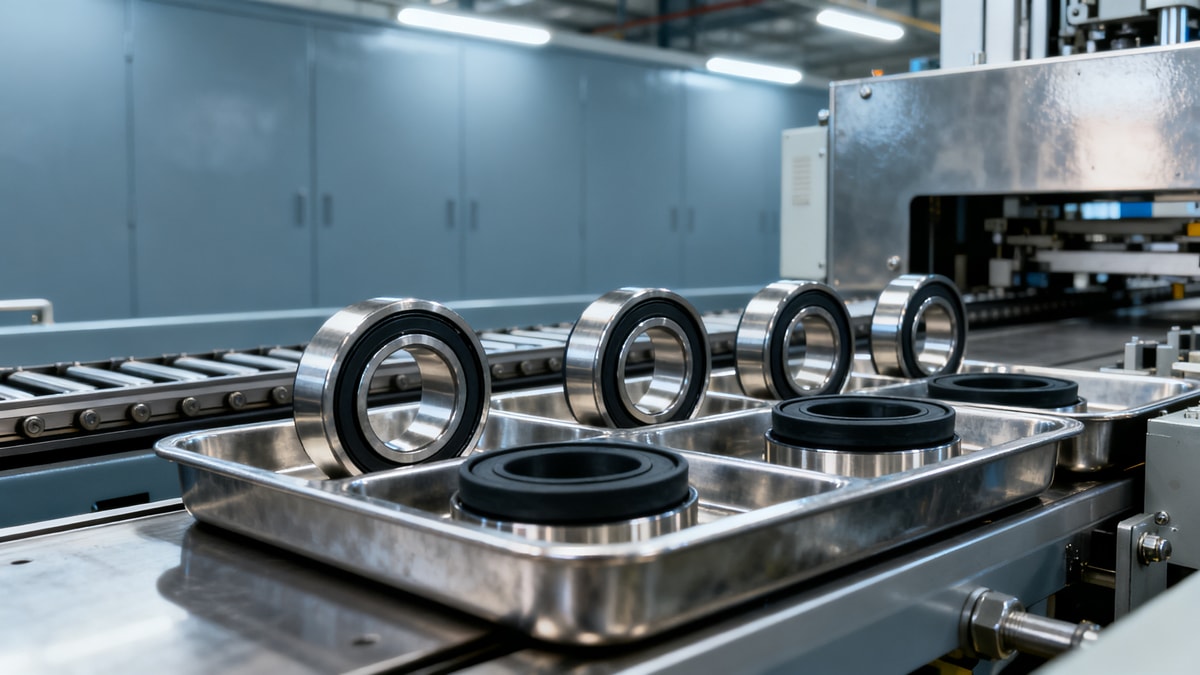
On April 29, 2026, Indonesia’s Investment Coordinating Board (BKPM) removed industrial bearings and seals from its negative investment list, allowing full foreign ownership in local manufacturing operations. This development directly impacts precision mechanical component suppliers, automotive Tier-1 integrators, and electronics assembly service providers operating across ASEAN — particularly those engaged in regional supply chains for automotive and electronics manufacturing.
Event Overview
Indonesia’s Investment Coordinating Board (BKPM) announced on April 29, 2026, that the industrial bearings and seals sector is no longer subject to foreign equity restrictions. Effective immediately, foreign investors may establish wholly owned manufacturing entities in Indonesia without local partnership requirements.
Which Subsectors Are Affected
Manufacturers of Precision Mechanical Components
Companies producing high-precision bearings and sealing solutions — especially those currently exporting to ASEAN from China, Japan, or Germany — face revised market entry conditions. The removal of equity caps lowers structural barriers to local production, shifting cost-benefit calculations for nearshoring decisions.
Automotive Tier-1 Suppliers and Assembly Integrators
Original Equipment Suppliers (OES) and contract manufacturers serving ASEAN-based automotive plants may now source bearings and seals from Indonesian-based foreign-owned facilities. This could reduce logistics lead times and import duties for components integrated into locally assembled vehicles.
Electronics Contract Manufacturers (EMS/ODM)
Firms operating electronics assembly hubs in Indonesia or neighboring countries may benefit from shorter procurement cycles and localized quality assurance for rotating or sealed subsystems (e.g., cooling fans, motor housings, actuator assemblies), provided upstream bearing/seal producers localize production.
Industrial Distribution and Channel Partners
Import-dependent distributors of bearings and seals in Indonesia may see margin pressure as direct manufacturer-to-OEM sales increase. Their role could shift toward technical support, after-sales service, or niche application engineering — rather than core component supply.
What Relevant Companies or Practitioners Should Monitor and Do Now
Track BKPM’s official implementation guidance and licensing procedures
The policy change is effective as of April 29, 2026, but operational details — including facility zoning eligibility, import rules for raw materials, and certification pathways for exported output — remain pending formal issuance. Companies considering investment should monitor BKPM’s official portal and consult with licensed investment facilitators before initiating registration.
Assess feasibility of localizing specific high-demand SKUs, not full portfolios
Analysis shows that demand is concentrated around automotive-grade deep-groove ball bearings, tapered roller bearings, and elastomeric radial shaft seals used in EV powertrains and consumer electronics. Prioritizing these categories — rather than broad product-line relocation — aligns better with initial ASEAN cluster needs.
Distinguish between policy signal and near-term operational readiness
Observably, this decision reflects a broader push to anchor upstream mechanical component capacity within ASEAN’s manufacturing ecosystem. However, it does not guarantee immediate infrastructure readiness, skilled labor availability, or harmonized standards alignment with major export markets (e.g., EU or U.S. ISO/ABEC/DIN compliance). Companies should treat this as a medium-term enabler — not an instant go-to-market lever.
Prepare preliminary cross-functional alignment on localization prerequisites
Current more suitable preparation includes internal coordination across procurement (for steel, ceramic, polymer feedstock sourcing), quality (for local calibration lab access or third-party audit pathways), and regulatory affairs (for BPOM-equivalent mechanical device classification, if applicable). Early engagement with Indonesian industrial park operators (e.g., KIIC, Jababeka) is advisable.
Editorial Perspective / Industry Observation
This move is best understood as a targeted regulatory signal — not yet a matured investment environment. From an industry perspective, BKPM’s action responds to observed gaps in ASEAN’s mechanical component supply chain, particularly for automotive and electronics OEMs seeking resilient, tariff-advantaged inputs. It signals intent to attract vertically integrated foreign manufacturers, not just assembly-only players. However, actual capital deployment will depend on complementary factors: stable electricity supply, customs efficiency for imported tooling, and clarity on environmental permitting timelines. Continuous observation is warranted — especially for updates on BKPM’s forthcoming technical annexes or sector-specific incentive packages.
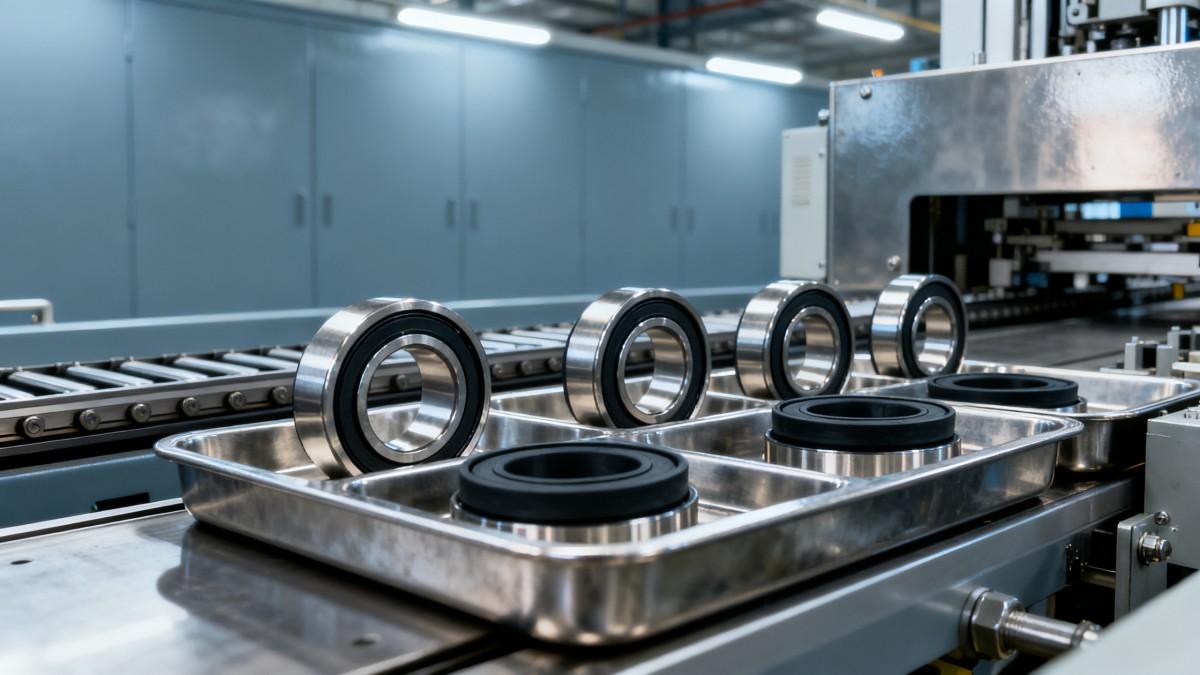
In summary, Indonesia’s removal of foreign ownership limits for bearings and seals marks a calibrated step toward strengthening domestic mechanical component capacity within ASEAN’s industrial corridor. It does not represent an immediate market-opening event, but rather a foundational policy adjustment that redefines long-term location strategy options for precision component manufacturers and their downstream partners. Current interpretation should emphasize strategic optionality — not operational urgency.
Source: Indonesia Investment Coordinating Board (BKPM) official announcement, April 29, 2026.
Note: Implementation guidelines, facility licensing protocols, and sector-specific incentives remain under observation and are not yet publicly available.
Technical Specifications
- ILAC Recognizes CNAS Bearing Vibration ReportsAuthor :Heavy Industry Strategist
- ESMA Mandates EN 14181 QA/QC Level 3 for Industrial Water Sensors in UAEAuthor :Environmental Engineering Director
- JIS T 8201-2026 Enforces New Low-Temp Impact Test for Fire Respirator MasksAuthor :Safety Compliance Lead
Expert Insights

Chief Security Architect
Dr. Thorne specializes in the intersection of structural engineering and digital resilience. He has advised three G7 governments on industrial infrastructure security.
Related Analysis
- May 01, 2026ILAC Recognizes CNAS Bearing Vibration ReportsAuthor :Heavy Industry Strategist
- May 01, 2026ESMA Mandates EN 14181 QA/QC Level 3 for Industrial Water Sensors in UAEAuthor :Environmental Engineering Director
- May 01, 2026JIS T 8201-2026 Enforces New Low-Temp Impact Test for Fire Respirator MasksAuthor :Safety Compliance Lead
Core Sector // 01
Security & Safety
- ILAC Recognizes CNAS Bearing Vibration ReportsAuthor :Heavy Industry Strategist

- Indonesia Opens Bearings & Seals Sector to 100% Foreign OwnershipAuthor :Heavy Industry Strategist

- Vietnam Requires VILAS-Certified Heat Treatment Reports for Imported BearingsAuthor :Heavy Industry Strategist

- 2026 China Bike Expo Opens in Shanghai: Lightweight Bearings, Smart Locks, Carbon Frames Drive Export GrowthAuthor :Heavy Industry Strategist

- LME Nickel Surges 5.2% on April 29, 2026: Impact on Stainless Bearings & SealsAuthor :Heavy Industry Strategist

- ILAC Recognizes CNAS Bearing Vibration ReportsAuthor :Heavy Industry Strategist

- Indonesia Opens Bearings & Seals Sector to 100% Foreign OwnershipAuthor :Heavy Industry Strategist

- Vietnam MOIT Mandates VILAS-Certified Heat Treatment Reports for Bearing ImportsAuthor :Heavy Industry Strategist