Vietnam Requires VILAS-Certified Heat Treatment Reports for Imported Bearings
Author
Date Published
Reading Time
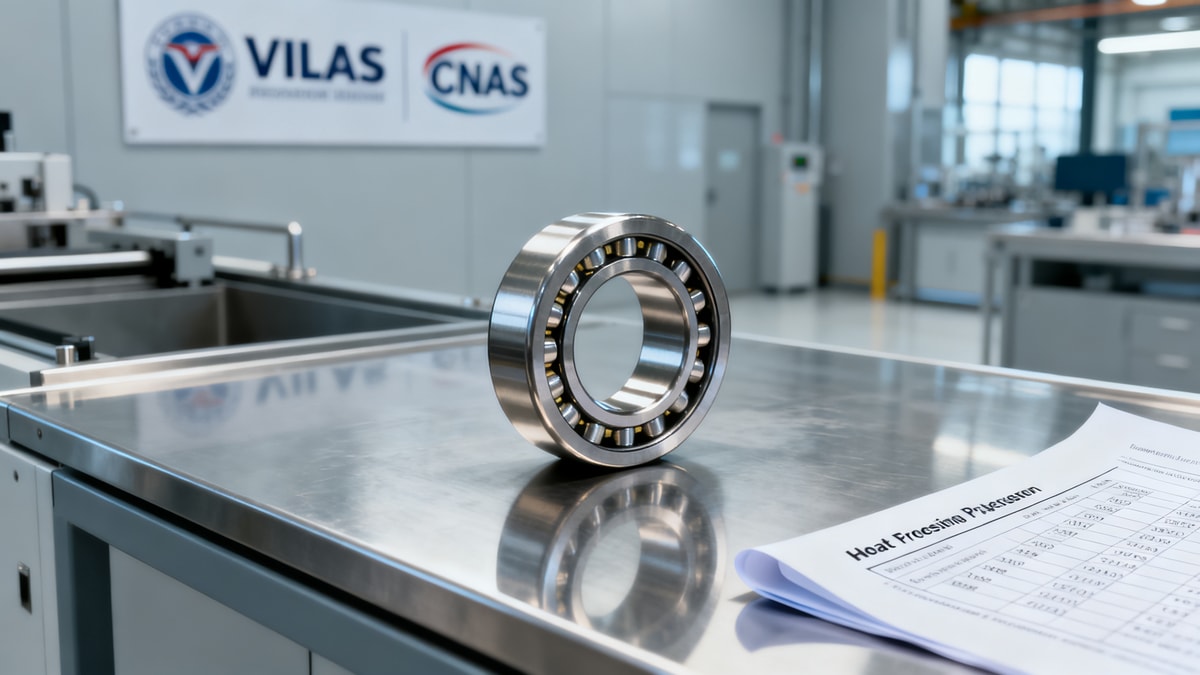
Vietnam’s Ministry of Industry and Trade (MOIT) has introduced new import requirements for bearings, effective 1 June 2026. The updated Technical Guidelines for Import of Industrial Machinery, issued on 30 April 2026, mandates that all imported bearings must be accompanied by a heat treatment process report — issued exclusively by laboratories accredited by Vietnam’s National Accreditation Body (VILAS), or by China’s CNAS-accredited labs that are signatories to the ILAC-MRA mutual recognition arrangement. This change directly affects exporters, importers, and supply chain stakeholders in the global bearing industry — particularly those engaged in China–Vietnam trade.
Event Overview
On 30 April 2026, Vietnam’s Ministry of Industry and Trade published an update to its Technical Guidelines for Import of Industrial Machinery. The revision stipulates that, starting 1 June 2026, all imported bearings must include a certified heat treatment process report. Such reports must originate from laboratories accredited by VILAS (Vietnam Laboratory Accreditation Scheme) or from CNAS-accredited laboratories in China that participate in the ILAC-MRA (International Laboratory Accreditation Cooperation – Mutual Recognition Arrangement). No further implementation details, transitional provisions, or exemption clauses have been publicly released.
Industries Affected by Segment
Direct Exporters (e.g., Chinese Bearing Manufacturers)
Exporters supplying bearings to Vietnam will face new pre-shipment compliance obligations. The requirement introduces a mandatory third-party verification step not previously enforced at the national level for this product category. Impact includes potential delays in customs clearance, added documentation workload, and increased reliance on accredited testing partners.
Importers and Distributors in Vietnam
Vietnamese importers must now verify the accreditation status of the issuing laboratory before accepting shipments. Non-compliant documentation may lead to rejection at customs or requests for re-submission, affecting inventory planning and delivery timelines. This also increases due diligence responsibilities during supplier onboarding and contract negotiation.
Supply Chain Service Providers (e.g., Customs Brokers, Testing Coordination Agencies)
Service providers supporting cross-border bearing trade will need to update internal checklists and client advisories. They may see increased demand for assistance in identifying ILAC-MRA–compliant labs, verifying report authenticity, and aligning documentation with MOIT’s expectations — especially for shipments originating outside China.
What Relevant Enterprises or Practitioners Should Focus On and How to Respond
Confirm Lab Accreditation Status Before Shipment
Verify in advance whether the testing lab issuing the heat treatment report holds current VILAS accreditation or is listed as an ILAC-MRA signatory via CNAS. Do not rely solely on lab self-declaration; cross-check against official VILAS and CNAS public registers.
Review and Update Export Documentation Templates
Integrate the heat treatment report as a required document in standard export packages for Vietnam-bound bearings. Ensure internal SOPs and commercial invoices reference this requirement explicitly to avoid last-minute omissions during customs submission.
Engage Early with Vietnamese Import Partners
Coordinate with local importers to clarify reporting expectations — including format, language (Vietnamese or English), and whether digital or original hard copies are accepted. Proactive alignment helps prevent disputes post-arrival.
Monitor for Official Clarifications or Transitional Measures
No transitional period or grace period has been announced. However, MOIT may issue supplementary notices ahead of 1 June 2026. Subscribing to official MOIT updates or engaging local trade associations is advisable for timely awareness.
Editorial Perspective / Industry Observation
Observably, this requirement signals a tightening of technical conformity enforcement in Vietnam’s industrial imports — particularly for components where material integrity is critical to downstream performance. Analysis shows the focus on heat treatment reporting reflects growing emphasis on traceability and process validation, rather than just end-product testing. It is currently more appropriately understood as a regulatory signal than an immediate operational bottleneck — given that VILAS- and ILAC-MRA–accredited labs already exist and are accessible. However, the practical impact hinges on consistency of enforcement and clarity of acceptance criteria at Vietnamese ports.
From an industry perspective, this development underscores a broader trend: ASEAN markets are increasingly adopting process-oriented compliance benchmarks aligned with international standards frameworks. While not unprecedented globally, its introduction in Vietnam marks a notable shift in expectations for mechanical component suppliers.
Current attention should center less on whether the rule is enforceable — and more on how consistently it will be applied across entry points, and whether MOIT will publish a recognized list of approved labs or acceptance protocols prior to implementation.
Conclusion
This regulatory update represents a procedural tightening rather than a market access barrier — provided exporters and importers adjust documentation workflows and verification practices ahead of the 1 June 2026 effective date. Its significance lies not in novelty, but in its role as an early indicator of Vietnam’s evolving approach to technical regulation in industrial goods: one that prioritizes verifiable manufacturing process data over standalone product certification. For stakeholders, the most constructive interpretation is that this is a predictable step toward harmonized regional compliance — requiring operational readiness, not strategic redirection.
Information Sources
Main source: Vietnam Ministry of Industry and Trade (MOIT), Technical Guidelines for Import of Industrial Machinery, updated 30 April 2026. No additional policy documents, FAQs, or implementation guidelines have been published as of the date of this article. Continued observation is recommended for any MOIT-issued clarifications or lists of accepted laboratories prior to 1 June 2026.
Technical Specifications
- ILAC Recognizes CNAS Bearing Vibration ReportsAuthor :Heavy Industry Strategist
- ESMA Mandates EN 14181 QA/QC Level 3 for Industrial Water Sensors in UAEAuthor :Environmental Engineering Director
- JIS T 8201-2026 Enforces New Low-Temp Impact Test for Fire Respirator MasksAuthor :Safety Compliance Lead
Expert Insights

Chief Security Architect
Dr. Thorne specializes in the intersection of structural engineering and digital resilience. He has advised three G7 governments on industrial infrastructure security.
Related Analysis
- May 01, 2026ILAC Recognizes CNAS Bearing Vibration ReportsAuthor :Heavy Industry Strategist
- May 01, 2026ESMA Mandates EN 14181 QA/QC Level 3 for Industrial Water Sensors in UAEAuthor :Environmental Engineering Director
- May 01, 2026JIS T 8201-2026 Enforces New Low-Temp Impact Test for Fire Respirator MasksAuthor :Safety Compliance Lead
Core Sector // 01
Security & Safety
- ILAC Recognizes CNAS Bearing Vibration ReportsAuthor :Heavy Industry Strategist

- Indonesia Opens Bearings & Seals Sector to 100% Foreign OwnershipAuthor :Heavy Industry Strategist

- Vietnam Requires VILAS-Certified Heat Treatment Reports for Imported BearingsAuthor :Heavy Industry Strategist

- 2026 China Bike Expo Opens in Shanghai: Lightweight Bearings, Smart Locks, Carbon Frames Drive Export GrowthAuthor :Heavy Industry Strategist

- LME Nickel Surges 5.2% on April 29, 2026: Impact on Stainless Bearings & SealsAuthor :Heavy Industry Strategist

- ILAC Recognizes CNAS Bearing Vibration ReportsAuthor :Heavy Industry Strategist

- Indonesia Opens Bearings & Seals Sector to 100% Foreign OwnershipAuthor :Heavy Industry Strategist

- Vietnam MOIT Mandates VILAS-Certified Heat Treatment Reports for Bearing ImportsAuthor :Heavy Industry Strategist