Indonesia Opens Bearings & Seals Sector to 100% Foreign Ownership
Author
Date Published
Reading Time
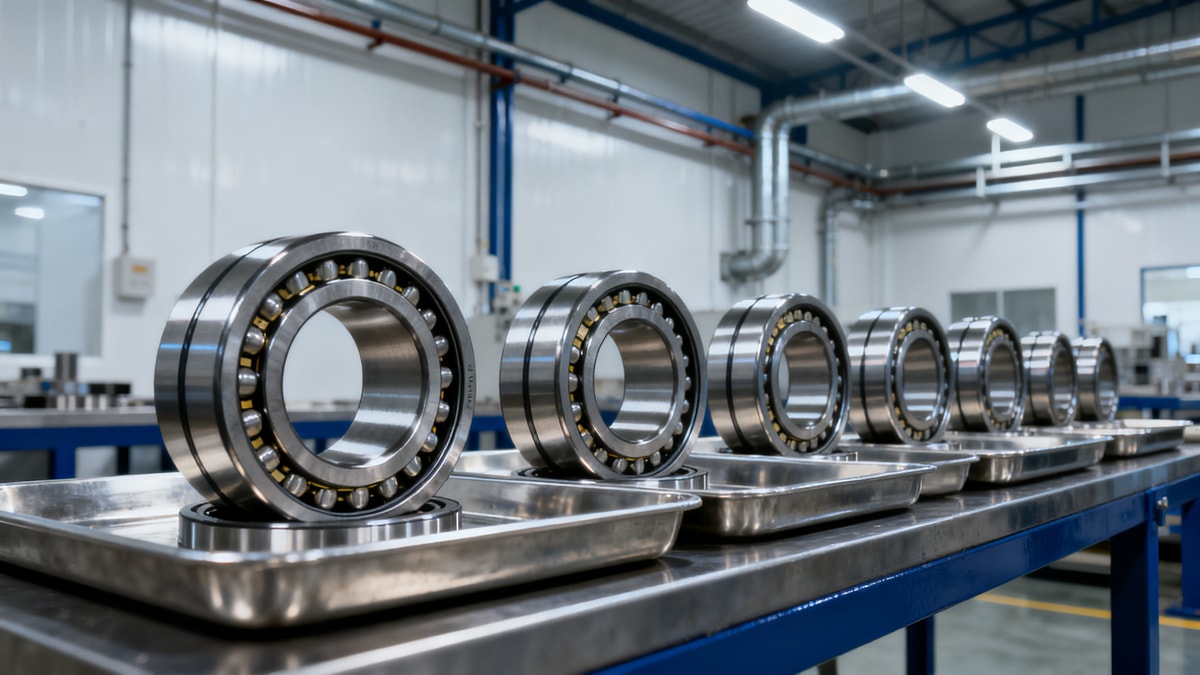
On April 29, 2026, Indonesia’s Investment Coordinating Board (BKPM) issued Regulation No. 18 of 2026, removing foreign equity caps for industrial bearings and mechanical seals manufacturing and distribution. This development directly impacts precision mechanical components suppliers, global OEMs sourcing in Southeast Asia, and cross-border industrial trade operators — marking a targeted shift in Indonesia’s industrial investment policy.
Event Overview
On April 29, 2026, BKPM published Regulation No. 18 of 2026, formally eliminating foreign ownership restrictions in the industrial bearings and mechanical seals sector. Under this regulation, foreign investors may now establish wholly owned manufacturing and distribution entities in Indonesia. The regulation entered into force immediately upon publication.
Which Subsectors Are Affected
Manufacturing enterprises (OEMs and Tier-1 suppliers)
Industrial bearing and seal manufacturers — especially those producing high-precision, application-specific components for automotive, power generation, or industrial machinery — are directly affected. Removal of equity limits enables full operational control, including technology transfer, quality governance, and IP management, without mandatory local partnership structures.
Distribution and channel partners
Foreign-owned distributors previously restricted to joint ventures or limited market access can now operate independently. This affects logistics planning, after-sales service infrastructure, and regional inventory strategy — particularly for multinationals serving ASEAN markets from an Indonesian base.
Supply chain enablers (tooling, heat treatment, precision machining services)
Local subcontractors supporting bearing/seal production may face increased demand for certified capabilities (e.g., ISO/TS 16949, cleanroom assembly), but also heightened competition as foreign-owned plants bring in integrated captive capacity.
What Relevant Companies or Practitioners Should Focus On
Monitor official implementation guidance from BKPM and the Ministry of Industry
The regulation is effective immediately, but subsidiary requirements — such as licensing procedures for foreign-owned manufacturing facilities, import/export permits for raw materials (e.g., specialty steels, ceramic seals), and conformity assessment protocols — remain subject to administrative clarification. Track BKPM’s official notices and sectoral FAQs.
Assess feasibility of establishing local manufacturing vs. expanding distribution infrastructure
While 100% ownership is now permitted, capital expenditure, lead time for facility setup, and local workforce readiness must be weighed against faster-entry options like bonded warehousing or authorized distributor models. Prioritize evaluation of high-demand product categories — e.g., tapered roller bearings for EV drivetrains or non-contact seals for renewable energy equipment.
Distinguish between policy signal and operational readiness
This change reflects Indonesia’s strategic intent to attract advanced manufacturing investment, but does not automatically guarantee streamlined permitting, land acquisition, or utility interconnection timelines. Verify site-specific regulatory conditions before committing to greenfield plans.
Prepare supply chain documentation for local entity registration
Foreign investors setting up new entities will need technical specifications, product compliance certifications (e.g., ISO 9001, DIN/ISO standards), and evidence of manufacturing capability. Begin aligning documentation with Indonesian Industrial Standard (SNI) referencing where applicable — even if SNI certification is not yet mandatory for these items.
Editorial Perspective / Industry Observation
Observably, this move is less about immediate market liberalization and more about signaling Indonesia’s commitment to becoming a regional hub for precision mechanical components. Analysis shows BKPM is targeting upstream industrial capabilities — not just assembly — by lowering structural barriers for capital-intensive, R&D-linked manufacturing. From an industry perspective, it is best understood as a policy enabler rather than a near-term volume catalyst: actual investment decisions will depend on complementary factors such as tax incentives, skilled labor availability, and port-to-factory logistics efficiency. Continued monitoring of BKPM’s upcoming sectoral roadmaps — particularly for related areas like precision machining and bearing-grade steel processing — is warranted.
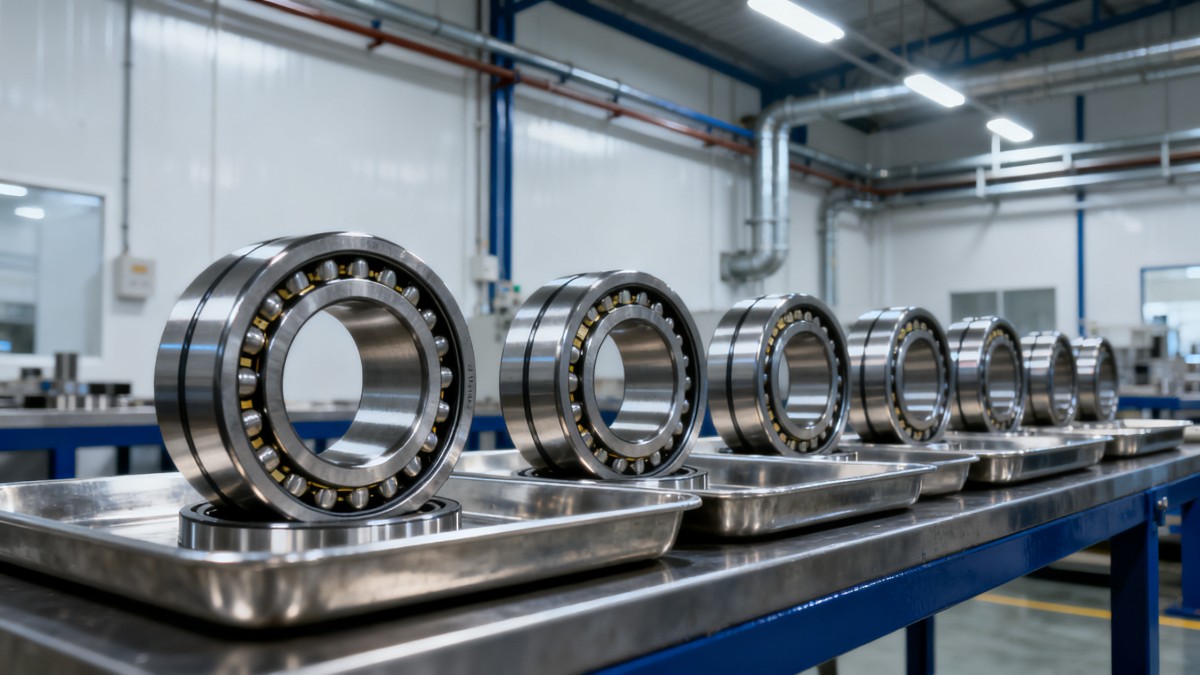
Indonesia’s decision to open the bearings and seals sector to full foreign ownership represents a calibrated step toward deepening its industrial value chain. It does not eliminate operational complexities, nor does it guarantee accelerated market entry — but it does remove one longstanding structural constraint for companies with long-horizon manufacturing strategies in ASEAN. For stakeholders, the regulation is best interpreted as a procedural permission, not a commercial trigger.
Source: Indonesia Investment Coordinating Board (BKPM), Regulation No. 18 of 2026, published April 29, 2026.
Note: Implementation details — including licensing pathways, SNI alignment status, and provincial-level enforcement — remain under observation.
Technical Specifications
Expert Insights

Chief Security Architect
Dr. Thorne specializes in the intersection of structural engineering and digital resilience. He has advised three G7 governments on industrial infrastructure security.
Related Analysis
- Apr 30, 2026Egypt SMIIC Mandates Arabic Energy Labels for Industrial PumpsAuthor :Heavy Industry Strategist
- Apr 30, 2026TÜV SÜD Launches China Industrial Optics Fast TrackAuthor :Precision Metrology Expert
- Apr 30, 2026LME Nickel Surges 5.2% on April 29, 2026: Impact on Stainless Bearings & SealsAuthor :Heavy Industry Strategist
Core Sector // 01
Security & Safety
- LME Nickel Surges 5.2% on April 29, 2026: Impact on Stainless Bearings & SealsAuthor :Heavy Industry Strategist

- ILAC Recognizes CNAS Bearing Vibration ReportsAuthor :Heavy Industry Strategist

- Indonesia Opens Bearings & Seals Sector to 100% Foreign OwnershipAuthor :Heavy Industry Strategist

- Vietnam MOIT Mandates VILAS-Certified Heat Treatment Reports for Bearing ImportsAuthor :Heavy Industry Strategist

- Vietnam Requires VILAS-Certified Reports for Industrial Bearing ImportsAuthor :Heavy Industry Strategist

- Vietnam Requires VILAS Reports for Imported Industrial BearingsAuthor :Heavy Industry Strategist
![]()
- 2026 Shanghai International Bearing Expo ConfirmedAuthor :Heavy Industry Strategist
![]()
- Fastener Expo Shanghai 2026: 1400+ Suppliers, B2B Matching for Int'l BuyersAuthor :Heavy Industry Strategist
![]()