Vietnam MOIT Mandates VILAS-Certified Heat Treatment Reports for Bearing Imports
Author
Date Published
Reading Time
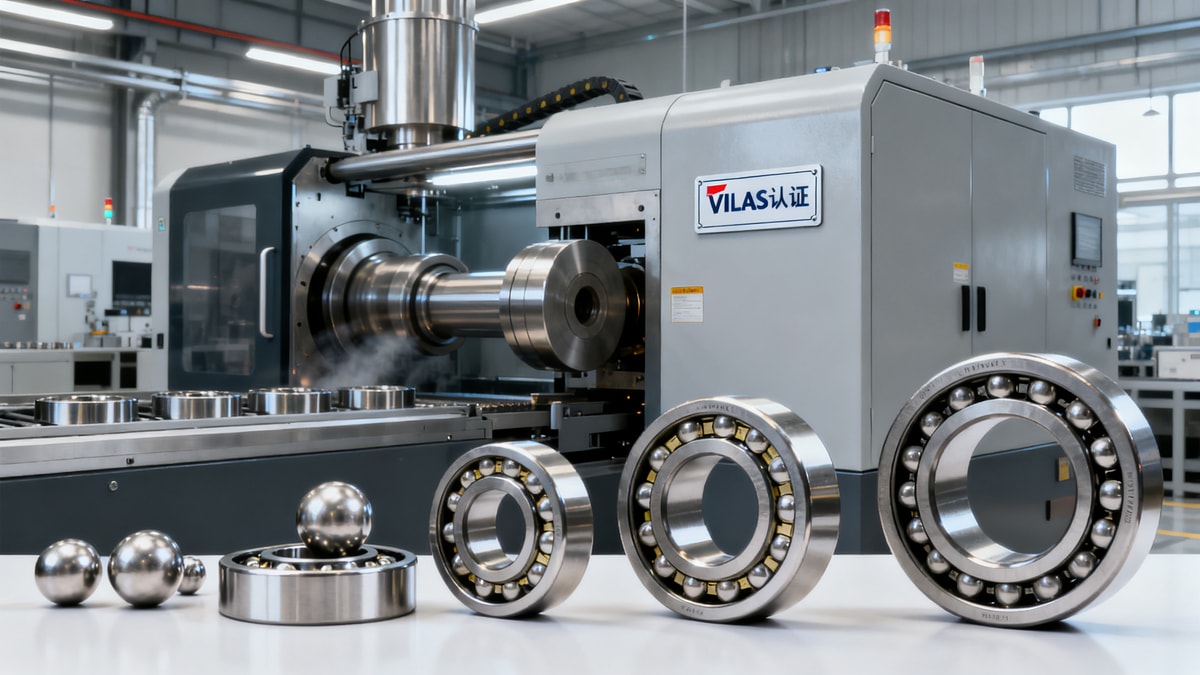
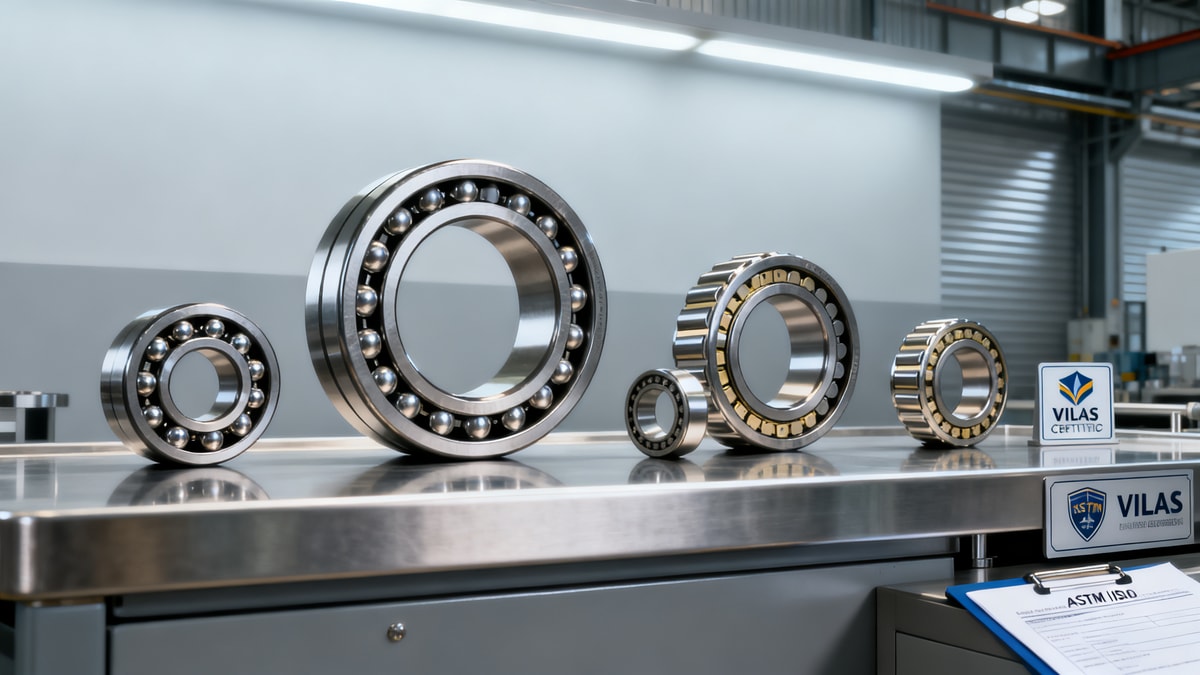
Effective 15 June 2026, Vietnam’s Ministry of Industry and Trade (MOIT) has introduced a new technical import requirement for industrial bearings—mandating heat treatment verification reports issued exclusively by VILAS-accredited laboratories. This update directly affects exporters, importers, and manufacturers supplying deep-groove ball, tapered roller, and spherical roller bearings to the Vietnamese market.
Event Overview
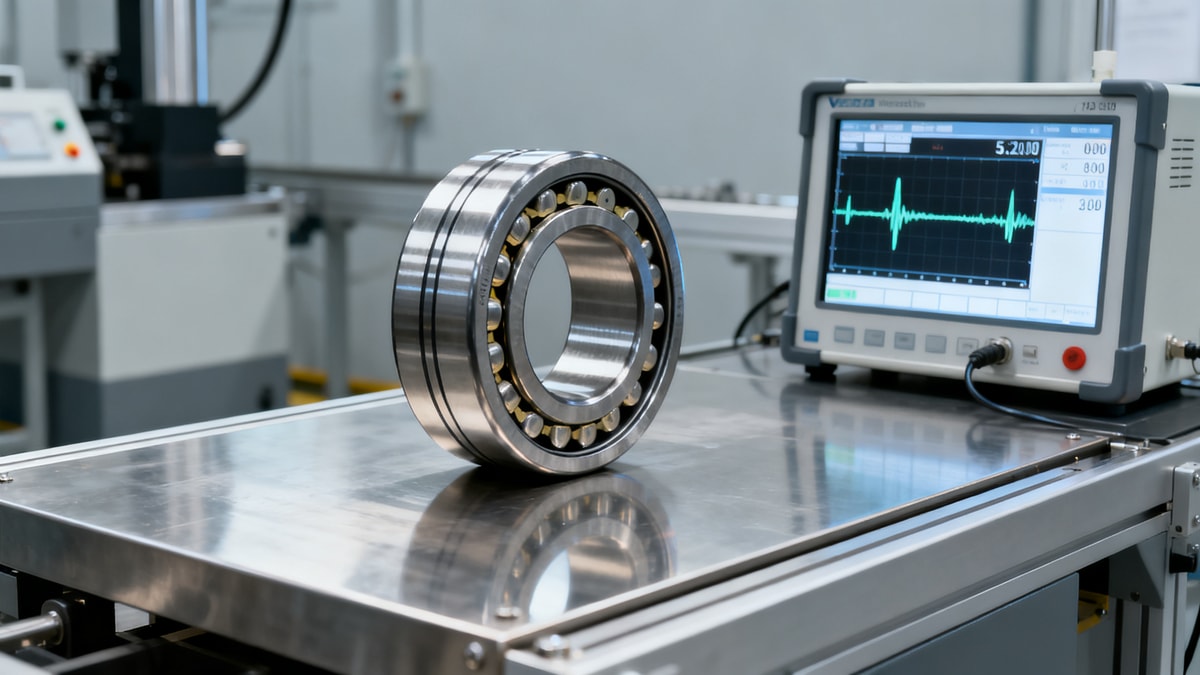
On 29 April 2026, the Ministry of Industry and Trade (MOIT) updated its Industrial Bearings Import Technical Requirements, adding Clause 4.2.3. The clause stipulates that all imported industrial bearings—including deep-groove ball, tapered roller, and spherical roller types—must be accompanied by a heat treatment process validation report. Such reports must be issued by laboratories accredited by the Vietnam National Accreditation Service (VILAS) and include metallographic microstructure images, hardness gradient curves, and residual stress measurements. Previously, only material composition reports were required. The amendment enters into mandatory force on 15 June 2026.
Which Subsectors Are Affected
Direct Trading Enterprises
Importers and export-oriented trading companies handling industrial bearings for Vietnam face immediate compliance pressure. Under the new rule, customs clearance will require submission of VILAS-issued reports—not just supplier-provided test data. Delays or rejections may occur if reports lack full alignment with Clause 4.2.3’s scope (e.g., missing residual stress data or non-VILAS lab origin).
Manufacturing & Processing Enterprises
Bearing producers—especially those outsourcing heat treatment or relying on third-party labs—must verify whether their current testing partners hold valid VILAS accreditation. Non-accredited internal labs cannot issue compliant reports, even if technically competent. This may necessitate revised quality documentation workflows and potential lab engagement shifts ahead of 15 June 2026.
Supply Chain & Logistics Service Providers
Cargo agents, customs brokers, and freight forwarders supporting bearing imports into Vietnam now need to screen documentation pre-submission. They must confirm report origin (VILAS lab), content completeness (all three required elements), and traceability to specific shipment batches—adding verification steps beyond standard HS code or COO checks.
What Relevant Enterprises or Practitioners Should Focus On and How to Respond
Verify current laboratory accreditation status
Confirm whether your testing lab is listed in the official VILAS database (https://www.vilas.org.vn) under the relevant technical scope (ISO/IEC 17025 for mechanical testing and metallurgical analysis). Do not rely on supplier claims or historical accreditation—recheck as of May 2026, since VILAS periodically updates its accredited body list.
Map affected product lines against MOIT’s defined scope
Focus verification efforts strictly on the three bearing types explicitly named: deep-groove ball, tapered roller, and spherical roller bearings. Other bearing types (e.g., needle roller or thrust bearings) are not covered under Clause 4.2.3 at this time—unless future MOIT amendments extend the scope.
Update commercial documentation protocols before 15 June 2026
Integrate VILAS report requirements into proforma invoices, packing lists, and certificate of origin templates. Assign responsibility internally (e.g., QA or export compliance team) to validate report authenticity and completeness prior to bill-of-lading issuance—not after shipment.
Distinguish between policy issuance and operational enforcement
While the regulation takes effect on 15 June 2026, initial customs implementation may involve phased guidance or tolerance windows. Monitor announcements from Vietnam Customs and MOIT’s Department of Import-Export for any transitional notices—but do not delay preparation assuming leniency.
Editorial Perspective / Industry Observation
Observably, this amendment signals Vietnam’s broader shift toward aligning industrial import controls with internationally recognized conformity assessment frameworks—not merely harmonizing with ASEAN standards, but reinforcing domestic technical sovereignty through accredited infrastructure. Analysis shows it functions less as an isolated trade barrier and more as a structural calibration: tightening traceability in critical mechanical components where heat treatment directly impacts service life and safety-critical performance. From an industry perspective, it reflects growing emphasis on verifiable process control—not just final product compliance. Current enforcement capacity and lab capacity bottlenecks remain unconfirmed; therefore, sustained observation is warranted on actual clearance timelines and VILAS lab throughput post-15 June.
Conclusion
This requirement marks a procedural inflection point for bearing supply chains targeting Vietnam—not a blanket restriction, but a targeted elevation of evidentiary standards for thermal processing. It is best understood not as a sudden disruption, but as a formalized expectation reflecting increasing regulatory maturity in Vietnam’s industrial import regime. Enterprises should treat it as a fixed operational prerequisite, not a temporary compliance hurdle.
Source Information
Main source: Official amendment notice published by Vietnam Ministry of Industry and Trade (MOIT), dated 29 April 2026, updating the Industrial Bearings Import Technical Requirements.
Noted for ongoing observation: Actual enforcement practices by local customs offices, availability of VILAS-accredited labs outside Vietnam offering remote testing/reporting services, and possible MOIT clarifications on report validity periods or batch-level granularity requirements.
Technical Specifications
Expert Insights

Chief Security Architect
Dr. Thorne specializes in the intersection of structural engineering and digital resilience. He has advised three G7 governments on industrial infrastructure security.
Related Analysis
- Apr 30, 2026Egypt SMIIC Mandates Arabic Energy Labels for Industrial PumpsAuthor :Heavy Industry Strategist
- Apr 30, 2026TÜV SÜD Launches China Industrial Optics Fast TrackAuthor :Precision Metrology Expert
- Apr 30, 2026LME Nickel Surges 5.2% on April 29, 2026: Impact on Stainless Bearings & SealsAuthor :Heavy Industry Strategist
Core Sector // 01
Security & Safety
- LME Nickel Surges 5.2% on April 29, 2026: Impact on Stainless Bearings & SealsAuthor :Heavy Industry Strategist

- ILAC Recognizes CNAS Bearing Vibration ReportsAuthor :Heavy Industry Strategist

- Indonesia Opens Bearings & Seals Sector to 100% Foreign OwnershipAuthor :Heavy Industry Strategist

- Vietnam MOIT Mandates VILAS-Certified Heat Treatment Reports for Bearing ImportsAuthor :Heavy Industry Strategist

- Vietnam Requires VILAS-Certified Reports for Industrial Bearing ImportsAuthor :Heavy Industry Strategist

- Vietnam Requires VILAS Reports for Imported Industrial BearingsAuthor :Heavy Industry Strategist
![]()
- 2026 Shanghai International Bearing Expo ConfirmedAuthor :Heavy Industry Strategist
![]()
- Fastener Expo Shanghai 2026: 1400+ Suppliers, B2B Matching for Int'l BuyersAuthor :Heavy Industry Strategist
![]()