Why Security & Safety price gaps are often misunderstood
Author
Date Published
Reading Time
Security & Safety price differences are often judged too quickly, especially in industrial procurement where compliance, durability, and risk exposure shape the true cost. For business evaluators, understanding why one solution costs more than another is essential to avoiding false savings and long-term operational setbacks. This article explains the hidden factors behind pricing gaps and how to assess value with greater confidence.
In industrial buying, a lower Security & Safety price rarely tells the full story. What appears expensive on paper may reduce downtime, liability, maintenance, and compliance risk.
For business evaluators, the practical question is not simply why two products are priced differently. The real question is whether the price gap reflects measurable value, avoidable risk, or hidden lifecycle cost.
Why the Security & Safety price gap is often misread in procurement reviews
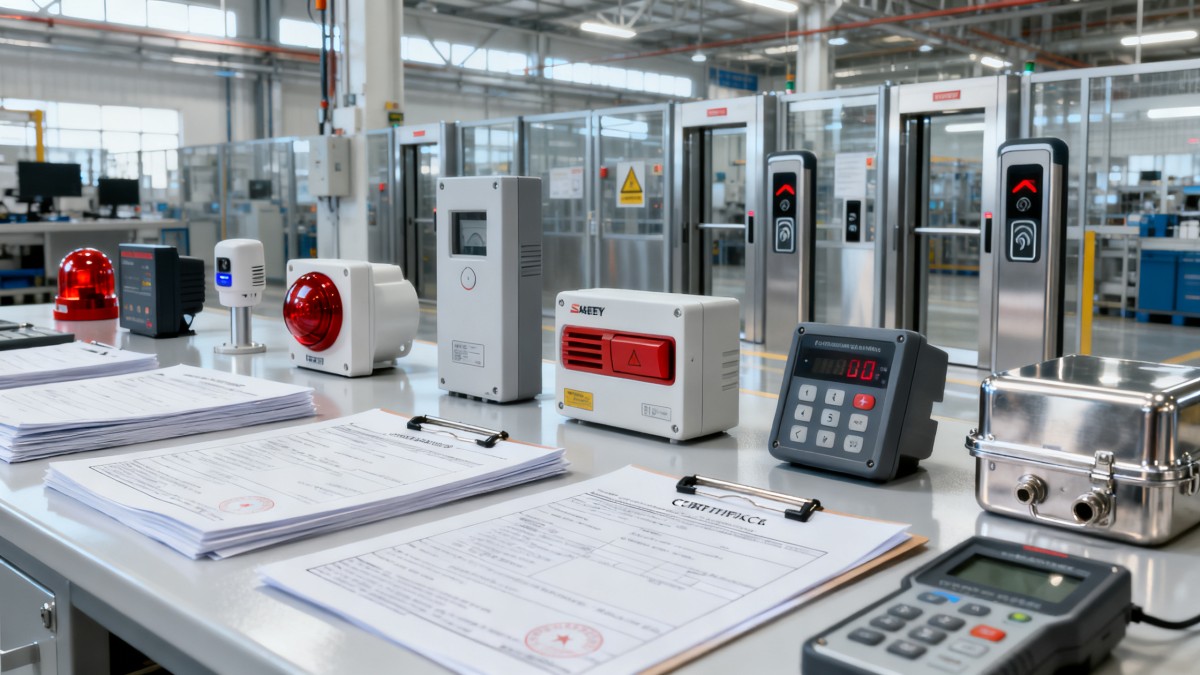
Most price comparisons begin with unit cost, supplier quotation, and delivery time. That is understandable, but in Security & Safety categories, those variables capture only a fraction of total procurement reality.
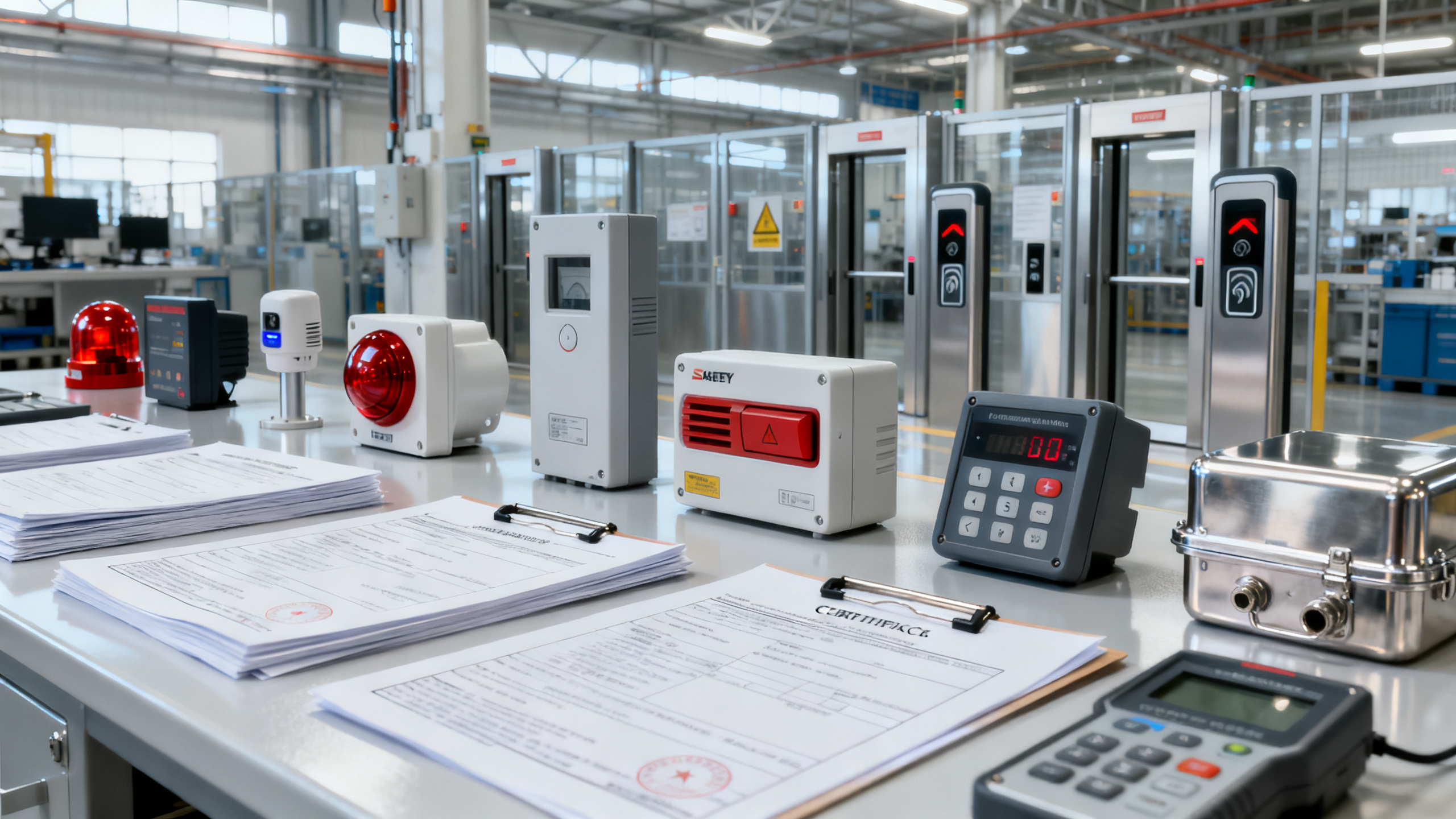
Industrial safety systems, protective devices, access controls, alarms, detection equipment, and certified components operate inside environments where failure creates operational, legal, and reputational consequences far beyond purchase price.
As a result, two offers that appear similar in function may be fundamentally different in certification depth, material quality, testing rigor, service life, integration capability, and failure tolerance.
This is why Security & Safety price gaps are often misunderstood. Buyers compare visible specifications while missing the invisible cost drivers that determine whether a solution performs reliably under actual operating conditions.
For commercial evaluators, the takeaway is clear: if the assessment model values only upfront cost, it will likely undervalue resilience and overestimate savings.
What business evaluators are really trying to understand
When evaluators search for explanations behind Security & Safety price differences, they are usually not looking for abstract theory. They want a defensible basis for commercial judgment.
In practice, they need to know whether a premium product is genuinely better, whether a low-cost option is unsafe or merely leaner, and which cost elements will surface later.
They are also concerned with accountability. If a cheaper solution later fails an audit, causes downtime, or requires replacement, the original savings can become difficult to justify internally.
That is why strong evaluation requires more than supplier messaging. It requires structured comparison across compliance, operational fit, lifecycle economics, support, and exposure to business interruption.
In other words, evaluators are not just buying equipment. They are buying risk position, continuity, and confidence in decision quality.
Compliance and certification often explain more of the price than buyers expect
One of the biggest reasons for Security & Safety price variation is certification. Products that comply with CE, UL, ISO-related requirements, or sector-specific standards usually cost more for valid reasons.
That premium is not limited to paperwork. It includes product design discipline, material traceability, third-party testing, factory audits, quality systems, and the cost of maintaining certification over time.
In many industrial settings, certified equipment also reduces approval delays during project execution. It can simplify site acceptance, insurance review, client validation, and future regulatory inspections.
By contrast, a low-price item may claim functional similarity while lacking full documentation, verified testing history, or recognized conformity marks in the target market.
For a business evaluator, this matters because certification has economic value. It lowers friction in deployment and reduces the probability of rework, rejection, legal exposure, and interrupted commissioning.
Materials, engineering margins, and durability create hidden cost differences
Another reason the Security & Safety price differs is that many products are built for entirely different stress environments, even when outward specifications seem close.
Industrial-grade housings, corrosion-resistant alloys, flame-retardant materials, ingress protection, sealing integrity, and temperature tolerance all raise manufacturing cost but also extend usable life.
Products designed with tighter engineering margins are usually more reliable under vibration, humidity, dust, chemical exposure, electrical fluctuation, or continuous duty cycles.
Lower-cost alternatives may still work adequately in light-duty applications. The misunderstanding happens when buyers assume the lower-priced unit is equal simply because both products meet minimum functional descriptions.
From an evaluation standpoint, durability is not a technical side note. It directly affects replacement frequency, maintenance labor, spare inventory, and the chance of unplanned shutdown.
Testing quality and quality assurance are major but often invisible price drivers
Many price gaps come from how rigorously a supplier validates its products before shipment. This is one of the least visible but most important factors in Security & Safety procurement.
Suppliers with mature quality systems invest in batch testing, calibration checks, failure analysis, process control, and documented corrective action. Those costs are real and reflected in the final quote.
They also reduce variability between units. For safety-related equipment, consistency across production lots matters because one weak component can compromise the reliability of the entire system.
A lower Security & Safety price may indicate a thinner quality program rather than a more efficient operation. Without verification, buyers may be accepting more performance uncertainty than they realize.
This is especially relevant in projects where field replacement is expensive, site access is difficult, or contractor timelines leave little room for component failure.
Integration, interoperability, and installation complexity also shape price
Some solutions cost more because they integrate more easily with broader plant infrastructure. That may include control systems, monitoring software, existing alarm architecture, or access management platforms.
Products with open protocols, stronger documentation, cleaner interfaces, and better commissioning support often reduce engineering time during installation and handover.
Cheaper options can look attractive in procurement spreadsheets but create hidden costs when installers need adapters, custom programming, redesign work, or repeated troubleshooting to achieve compatibility.
For business evaluators, this means price should be reviewed at the system level, not only at the component level. A modestly higher item cost can lower total implementation cost.
This is particularly true in retrofit environments, where legacy infrastructure makes interoperability and installation efficiency far more valuable than a narrow unit-price discount.
Supplier support, lead-time reliability, and documentation have commercial value
In industrial settings, the supplier relationship itself can be part of the price difference. A higher quote may include stronger pre-sales engineering, after-sales support, training, and document readiness.
These services matter because Safety and Security products often require technical files, declarations of conformity, maintenance guidance, and traceable records for audits or customer review.
Reliable lead times also deserve commercial weight. A low price loses its appeal quickly if the supplier cannot deliver consistently or support urgent replacements during a shutdown window.
Evaluators should therefore ask whether the quoted price includes transactional supply only, or a broader risk-reduction service model that supports the asset throughout its working life.
Support quality is difficult to quantify upfront, but its absence becomes very expensive when systems fail, audits tighten, or projects run behind schedule.
Why the cheapest option can become the most expensive outcome
False savings are common in Security & Safety procurement because downstream costs often emerge after installation, when reversing the decision is harder and more expensive.
A low upfront Security & Safety price can lead to repeated maintenance visits, higher spare consumption, production interruption, failed inspections, shortened asset life, or accelerated replacement cycles.
In regulated or high-risk industries, the consequences may also include incident investigations, contractual disputes, insurance complications, and reputational damage with clients or operating partners.
That does not mean the highest-priced offer is always best. It means the cheapest offer should never be treated as lowest cost without examining the operational scenario in which it will be used.
For evaluators, the central discipline is to separate apparent savings from durable savings. Only the second category improves procurement performance over time.
How to evaluate Security & Safety price with a value-based framework
A better review process starts by comparing offers across five dimensions: compliance, performance in actual conditions, lifecycle cost, implementation burden, and supplier reliability.
First, confirm whether both products meet the same standards, certifications, and documentation requirements in the intended market. If they do not, the price comparison is incomplete from the start.
Second, test application fit. Review environmental exposure, duty cycle, installation context, maintenance accessibility, and criticality of failure. A lower-cost product may be suitable in less demanding conditions.
Third, estimate lifecycle economics rather than purchase cost alone. Include maintenance labor, expected service life, failure rates, training, calibration, replacement timing, and downtime exposure.
Fourth, assess implementation effort. Consider engineering support, compatibility, installation time, commissioning complexity, and the cost of custom integration or field adjustments.
Fifth, rate supplier resilience. Review technical responsiveness, spare-part availability, regional support, traceability, warranty handling, and evidence from similar industrial deployments.
Questions evaluators should ask before accepting or rejecting a price premium
To make sound decisions, business evaluators should ask targeted questions rather than broad ones. Specific questions reveal whether a price gap is justified or inflated.
Ask which certifications are included, whether they are current, and whether test reports come from recognized bodies. Ask what documentation is available for audit and commissioning purposes.
Ask about expected life in the actual operating environment, not under ideal laboratory conditions. Request failure-rate history, maintenance intervals, and evidence from comparable installations.
Ask what support is included after delivery, how quickly replacements ship, and whether the supplier maintains local or regional technical assistance.
Finally, ask what the business consequence would be if the product underperformed. That single question often clarifies whether a price premium is a cost burden or a risk-control investment.
When a higher Security & Safety price is justified—and when it is not
A higher Security & Safety price is usually justified when the product materially lowers operational risk, satisfies compliance demands, improves uptime, or reduces total cost across the asset lifecycle.
It is also justified when installation conditions are harsh, failure consequences are severe, or project stakeholders require robust technical documentation and dependable support.
However, a higher price is not automatically evidence of superior value. Some premiums come from branding, over-specification, channel inefficiency, or features irrelevant to the actual application.
That is why disciplined scoping matters. If the operating environment is moderate and the lower-cost option meets all technical, compliance, and lifecycle requirements, paying more may not improve outcomes.
The goal is not to defend expensive products by default. The goal is to understand whether the quoted difference buys meaningful protection, performance, or efficiency.
Conclusion: price only becomes clear when risk, compliance, and lifecycle value are included
Security & Safety price gaps are often misunderstood because buyers naturally see the quote first and the consequences later. In industrial procurement, that sequence can distort decision quality.
For business evaluators, the smartest approach is to treat price as one layer of value, not the whole story. Compliance depth, engineering quality, durability, support, and implementation impact all matter.
When these factors are compared carefully, many pricing differences stop looking arbitrary. They start to reflect the real cost of reliability, documentation, and controlled operational risk.
The best procurement decisions are not the cheapest or the most expensive. They are the ones that align spend with business exposure, technical need, and long-term asset performance.
If you evaluate Security & Safety price through that wider lens, you will make stronger commercial decisions and avoid the false economy that so often undermines industrial projects.
Technical Specifications
- How to Select Electronic Hotel Key Card Locks for Guest Rooms and Staff AreasAuthor :Safety Compliance Lead
- How to Select Lab Instruments for Reliable Chemical Analysis WorkflowsAuthor :Precision Metrology Expert
- How to Size a UPS for Server Rooms: Load, Runtime, and Redundancy FactorsAuthor :Grid Infrastructure Analyst
Expert Insights

Chief Security Architect
Dr. Thorne specializes in the intersection of structural engineering and digital resilience. He has advised three G7 governments on industrial infrastructure security.
Related Analysis
- Sep 17, 2026How to Select Electronic Hotel Key Card Locks for Guest Rooms and Staff AreasAuthor :Safety Compliance Lead
- Sep 16, 2026How to Select Lab Instruments for Reliable Chemical Analysis WorkflowsAuthor :Precision Metrology Expert
- Sep 15, 2026How to Size a UPS for Server Rooms: Load, Runtime, and Redundancy FactorsAuthor :Grid Infrastructure Analyst
Core Sector // 01
Security & Safety
- Can One Supplier Provide Both IEC- and ATEX-Certified Safety Equipment?Author :Safety Compliance Lead

- Are Dual IEC and NEC Safety Certifications Worth the Cost?Author :Safety Compliance Lead

- What Is the Difference Between Class I and Class II PPE?Author :Safety Compliance Lead

- Which Oil and Gas Safety Standards Should Contractors Meet Before Site Mobilization?Author :Safety Compliance Lead

- EU REACH Adds PFAS Cap for PPE WorkwearAuthor :Safety Compliance Lead

- How to Evaluate a Chemical Resistant Suit Supplier for Industrial Safety ProcurementAuthor :Safety Compliance Lead

- EU REACH Sets 50 ppb PFAS Cap for PPE WorkwearAuthor :Safety Compliance Lead

- EU Tightens PFOA Limit for PPE and Industrial Filter MediaAuthor :Safety Compliance Lead