MOT Pilots 'Mobile + ETC' Cardless Tolling in Jiangsu and Chongqing
Author
Date Published
Reading Time
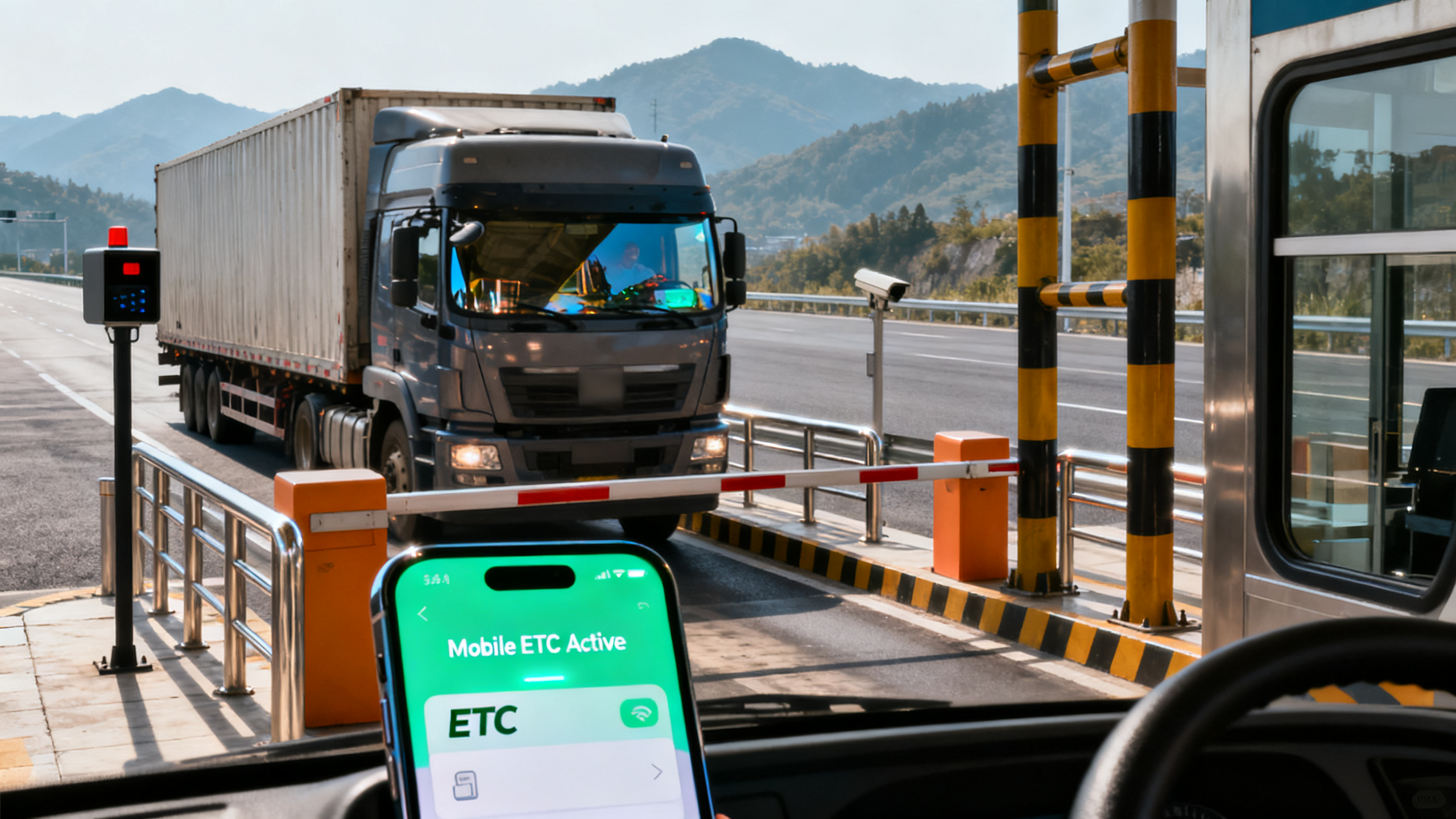
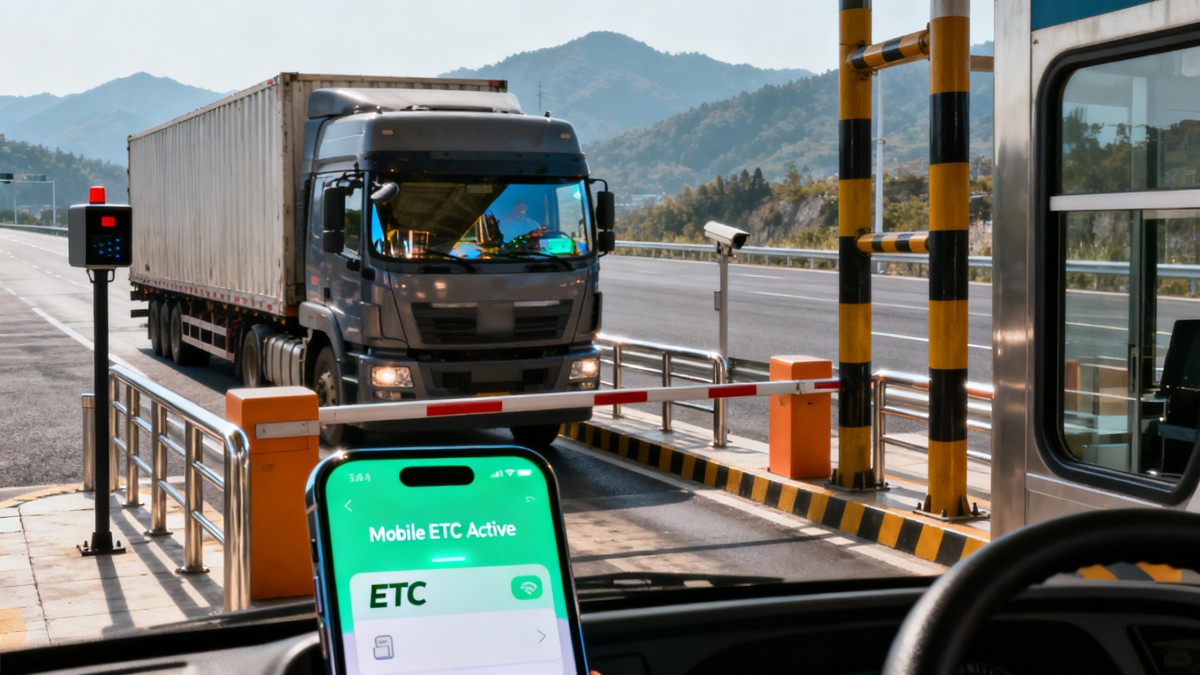
China’s Ministry of Transport has launched a pilot program for cardless toll payment on manual expressway toll lanes—using mobile devices integrated with existing ETC infrastructure—in Jiangsu and Chongqing provinces. Though the exact start date is not publicly specified, the initiative is now operationally active in these regions. Exporters of time-sensitive safety equipment—including Fire & Rescue Equipment, PPE & Workwear—should take note, as this digital upgrade directly affects cross-border logistics reliability, particularly for land-based handover windows and customs coordination with overseas buyers.
Event Overview
The Ministry of Transport is conducting a pilot implementation of ‘mobile + ETC’ cardless tolling at manually operated expressway toll gates in Jiangsu and Chongqing. The system is designed to be compatible with the existing national ETC network. No further rollout scope, timeline, or technical specifications have been officially disclosed beyond these two pilot locations.
Industries Affected by Segment
Direct Exporters (e.g., Fire & Rescue Equipment, PPE & Workwear)
These enterprises rely on predictable overland transit times between inland manufacturing hubs and border checkpoints or ports. The pilot reduces reliance on physical ETC cards—potentially cutting delays caused by card malfunction, misplacement, or driver unfamiliarity—thereby tightening control over shipment departure timing and supporting more synchronized customs clearance planning with overseas partners.
Domestic Logistics & Cross-Border Trucking Service Providers
As frontline operators handling China-internal leg transfers for export cargo, these firms face operational friction when drivers must manage multiple access credentials. Compatibility with mobile-based authentication simplifies crew training and vehicle provisioning—especially for fleets serving multiple clients across varying regional toll policies.
Supply Chain Coordination Units (e.g., Export-Oriented OEMs, Contract Manufacturers)
For manufacturers fulfilling just-in-time delivery commitments to international buyers, variability in domestic transit duration introduces scheduling risk. A more stable tolling experience—even at manual lanes—contributes marginally but measurably to end-to-end lead time predictability, especially where automated lanes are unavailable or congested.
What Relevant Enterprises or Practitioners Should Monitor and Do Now
Track official updates on interoperability scope and rollout criteria
Current pilot status does not confirm nationwide applicability or integration with non-ETC-linked logistics platforms. Enterprises should monitor announcements from the Ministry of Transport and provincial transport authorities for clarity on whether mobile authentication will extend to mixed-vehicle fleets (e.g., foreign-registered trucks) or require specific app versions or telecom partnerships.
Assess exposure in key outbound corridors tied to Jiangsu and Chongqing
Since the pilot is location-specific, companies shipping via expressways originating in or transiting through these provinces—such as the Shanghai–Nanjing corridor (Jiangsu) or the Chongqing–Guangxi land corridor toward ASEAN—should prioritize internal testing of mobile ETC functionality with their transport partners.
Distinguish between policy signal and operational readiness
This pilot reflects a directional shift toward credential digitization—not an immediate mandate. Firms should avoid premature system overhauls; instead, verify whether their current ETC service providers (e.g., banks, third-party issuers) already support mobile binding, and document any observed latency or failure rates during actual lane use.
Update internal logistics SOPs for driver-facing documentation checks
Where mobile ETC is adopted, drivers may no longer carry physical cards. Operations teams should revise pre-departure checklists to include verification of mobile app login status, QR code readiness, and battery/coverage contingencies—particularly for long-haul runs crossing provincial boundaries.
Editorial Perspective / Industry Observation
Observably, this initiative is best understood as a low-risk infrastructure compatibility test—not yet a scalable operational standard. Analysis shows it prioritizes backward compatibility (leveraging existing ETC accounts and backend systems) over technological novelty. From an industry perspective, its significance lies less in immediate throughput gains and more in signaling institutional willingness to decouple physical credentialing from toll access—a prerequisite for future integration with electronic cargo manifests or blockchain-based customs workflows. Continued monitoring is warranted because expansion beyond pilot zones would indicate growing confidence in mobile-first validation for regulated transport environments.
In summary, the ‘mobile + ETC’ pilot does not overhaul cross-border logistics—but incrementally lowers one source of variability in domestic truck movement. Its current value is procedural, not transformational. It is more accurately interpreted as a calibration step in China’s broader freight digitization roadmap, rather than evidence of imminent nationwide infrastructure change.
Source: Official announcements from China’s Ministry of Transport; confirmed pilot deployment in Jiangsu and Chongqing provinces. Note: Expansion timeline, technical standards, and eligibility criteria beyond the two pilot regions remain unconfirmed and subject to ongoing observation.
Technical Specifications
- How to Select Electronic Hotel Key Card Locks for Guest Rooms and Staff AreasAuthor :Safety Compliance Lead
- How to Select Lab Instruments for Reliable Chemical Analysis WorkflowsAuthor :Precision Metrology Expert
- How to Size a UPS for Server Rooms: Load, Runtime, and Redundancy FactorsAuthor :Grid Infrastructure Analyst
Expert Insights

Chief Security Architect
Dr. Thorne specializes in the intersection of structural engineering and digital resilience. He has advised three G7 governments on industrial infrastructure security.
Related Analysis
- Sep 17, 2026How to Select Electronic Hotel Key Card Locks for Guest Rooms and Staff AreasAuthor :Safety Compliance Lead
- Sep 16, 2026How to Select Lab Instruments for Reliable Chemical Analysis WorkflowsAuthor :Precision Metrology Expert
- Sep 15, 2026How to Size a UPS for Server Rooms: Load, Runtime, and Redundancy FactorsAuthor :Grid Infrastructure Analyst
Core Sector // 01
Security & Safety
- Can One Supplier Provide Both IEC- and ATEX-Certified Safety Equipment?Author :Safety Compliance Lead

- Are Dual IEC and NEC Safety Certifications Worth the Cost?Author :Safety Compliance Lead

- What Is the Difference Between Class I and Class II PPE?Author :Safety Compliance Lead

- Which Oil and Gas Safety Standards Should Contractors Meet Before Site Mobilization?Author :Safety Compliance Lead

- EU REACH Adds PFAS Cap for PPE WorkwearAuthor :Safety Compliance Lead

- How to Evaluate a Chemical Resistant Suit Supplier for Industrial Safety ProcurementAuthor :Safety Compliance Lead

- EU REACH Sets 50 ppb PFAS Cap for PPE WorkwearAuthor :Safety Compliance Lead

- EU Tightens PFOA Limit for PPE and Industrial Filter MediaAuthor :Safety Compliance Lead