Why Security & Safety price gaps are often misunderstood
Author
Date Published
Reading Time
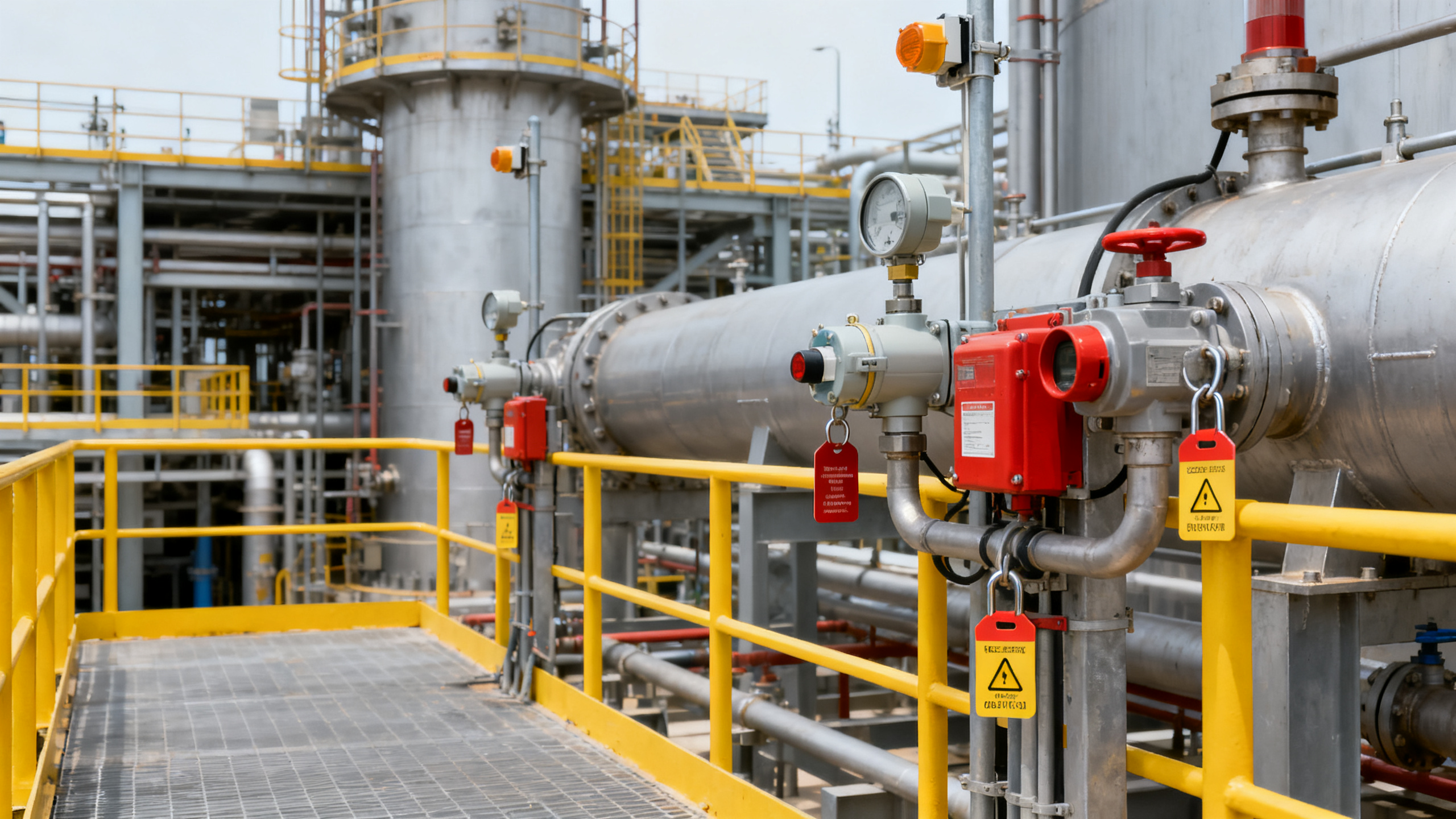
Security & Safety price differences are often judged at face value, yet the true gap rarely starts with the quote itself.
In industrial environments, cost is shaped by certification, endurance, failure tolerance, maintenance burden, and liability exposure.
That is why Security & Safety price comparisons are frequently misunderstood across comprehensive industry sourcing decisions.
A lower upfront number can increase shutdown risk, inspection pressure, and replacement frequency.
A higher Security & Safety price may instead reflect verified compliance, stronger materials, longer service life, and traceable performance.
Clear evaluation requires reading price through the lens of application scenario, not through unit cost alone.
Why Security & Safety price looks different across real operating scenarios
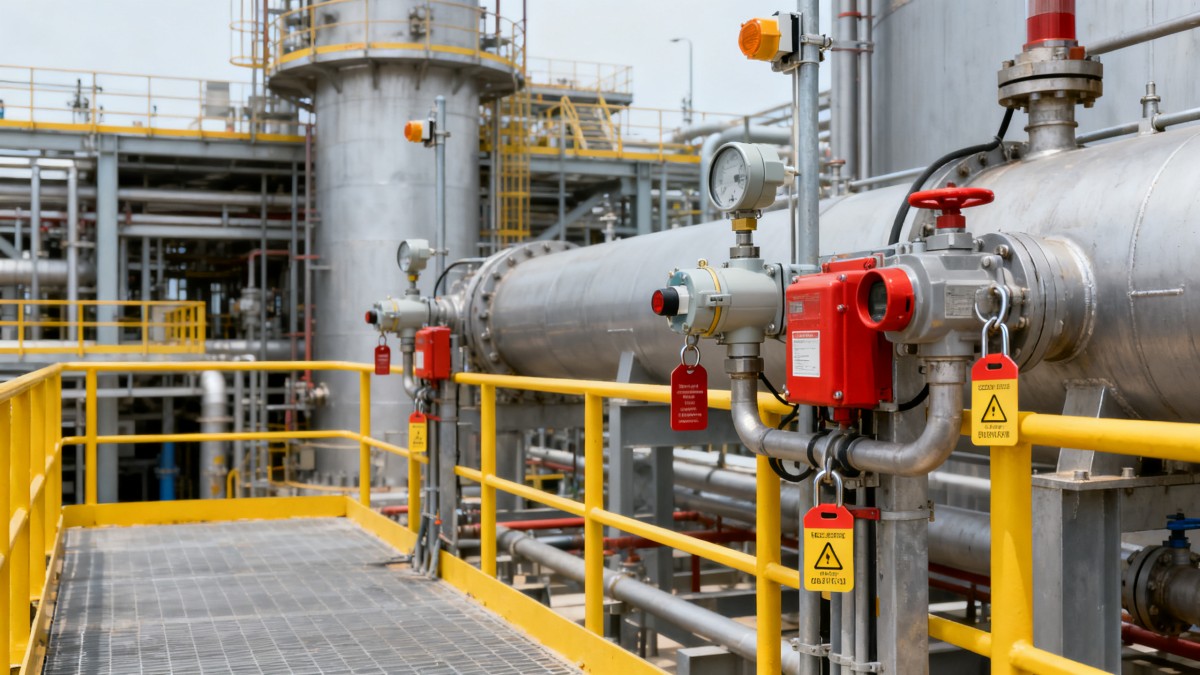
Security & Safety price is rarely universal because industrial risk conditions are never universal.
A guardrail, detector, lockout device, PPE system, or fire protection component performs differently in each setting.
Temperature extremes, chemical exposure, vibration, moisture, explosive atmospheres, and human traffic all change the value equation.
When evaluators compare prices without aligning the use case, the comparison becomes distorted from the start.
This is one reason Security & Safety price gaps are often misunderstood in broad industry procurement reviews.
Scenario one: harsh industrial sites make low Security & Safety price less meaningful
In mining, heavy fabrication, marine terminals, and energy facilities, physical stress changes purchasing logic.
Here, a lower Security & Safety price may exclude corrosion resistance, ingress protection, reinforced housings, or tested impact performance.
Those missing features do not always appear on the first quote sheet.
They appear later as downtime, failed inspections, damaged assets, and faster replacement cycles.
In such environments, premium pricing often reflects survivability rather than brand positioning.
The right question is not “Why is this Security & Safety price higher?”
The better question is “What operating stress has this option already been engineered to absorb?”
Scenario two: regulated facilities shift Security & Safety price toward compliance value
Pharmaceutical sites, food processing plants, clean utilities, and public infrastructure face stronger regulatory scrutiny.
In these contexts, Security & Safety price is heavily influenced by documented compliance.
CE, UL, ISO alignment, audit trails, material traceability, and test records can meaningfully raise the visible quote.
Yet these elements also reduce approval delays and legal uncertainty.
A cheaper item without recognized certification may trigger revalidation, project hold points, or forced substitution later.
That hidden friction explains why Security & Safety price must be measured against compliance readiness, not just purchase value.
Scenario three: high-occupancy environments reward reliability over the lowest Security & Safety price
Airports, transit hubs, hospitals, campuses, and mixed-use industrial parks carry dense human exposure.
In these settings, false alarms, sensor drift, access failures, or emergency response delays carry wider consequences.
The visible Security & Safety price may include calibration stability, software integrity, redundant fail-safe logic, or service support.
Those features improve continuity and reduce disruption across crowded, sensitive environments.
A lower quote may look attractive until nuisance failures start affecting operations and public confidence.
How scenario differences change Security & Safety price expectations
The same category can carry very different price logic depending on exposure, regulation, and service expectations.
Practical signals that a Security & Safety price gap may be justified
A higher Security & Safety price is not automatically better.
However, several signals often show that the premium has operational logic.
- Third-party certification is current and clearly documented.
- Performance claims are tied to test conditions, not marketing language.
- Materials are suited to corrosion, heat, abrasion, or chemical exposure.
- Maintenance intervals are longer or easier to execute safely.
- Replacement parts, calibration support, or technical service are available.
- Warranty terms reflect real industrial usage rather than light-duty assumptions.
If these factors are present, the Security & Safety price may represent lifecycle protection rather than simple markup.
Scenario-based recommendations for evaluating Security & Safety price
A sound evaluation framework should match the purchase to the environment before comparing quotes.
- Define the operating hazard clearly, including heat, dust, moisture, chemicals, and impact risk.
- List mandatory standards, certifications, and documentation requirements before requesting pricing.
- Calculate expected service life, inspection frequency, and maintenance access costs.
- Review failure consequences, including shutdowns, rework, injury exposure, and audit findings.
- Compare support scope, spare parts path, and technical responsiveness across suppliers.
- Use total installed and lifecycle cost, not unit price alone, as the decision baseline.
This process makes Security & Safety price comparisons fairer and more defensible.
Common mistakes that cause Security & Safety price misunderstanding
Several recurring errors make price gaps appear irrational when they are actually scenario-driven.
- Comparing general-duty products with industrial-duty alternatives.
- Ignoring certification scope and expiry status.
- Assuming identical dimensions mean identical performance.
- Excluding maintenance labor from the cost model.
- Overlooking environmental degradation over time.
- Treating support, documentation, and traceability as secondary extras.
Each mistake compresses a complex risk profile into a simple number.
That compression is exactly why Security & Safety price is so often misunderstood.
A better next step for reading Security & Safety price accurately
The most reliable next step is to map every quote to the actual application scenario.
Check whether the quoted specification matches environmental severity, compliance obligations, and service expectations.
Then separate visible cost from hidden exposure.
When Security & Safety price is assessed through lifecycle risk, price gaps become easier to explain and easier to justify.
For complex industrial decisions, a disciplined scenario review creates stronger technical alignment and more resilient sourcing outcomes.
That is the foundation for understanding Security & Safety price with clarity instead of assumption.
Technical Specifications
- How to Select Electronic Hotel Key Card Locks for Guest Rooms and Staff AreasAuthor :Safety Compliance Lead
- How to Select Lab Instruments for Reliable Chemical Analysis WorkflowsAuthor :Precision Metrology Expert
- How to Size a UPS for Server Rooms: Load, Runtime, and Redundancy FactorsAuthor :Grid Infrastructure Analyst
Expert Insights

Chief Security Architect
Dr. Thorne specializes in the intersection of structural engineering and digital resilience. He has advised three G7 governments on industrial infrastructure security.
Related Analysis
- Sep 17, 2026How to Select Electronic Hotel Key Card Locks for Guest Rooms and Staff AreasAuthor :Safety Compliance Lead
- Sep 16, 2026How to Select Lab Instruments for Reliable Chemical Analysis WorkflowsAuthor :Precision Metrology Expert
- Sep 15, 2026How to Size a UPS for Server Rooms: Load, Runtime, and Redundancy FactorsAuthor :Grid Infrastructure Analyst
Core Sector // 01
Security & Safety
- Can One Supplier Provide Both IEC- and ATEX-Certified Safety Equipment?Author :Safety Compliance Lead

- Are Dual IEC and NEC Safety Certifications Worth the Cost?Author :Safety Compliance Lead

- What Is the Difference Between Class I and Class II PPE?Author :Safety Compliance Lead

- Which Oil and Gas Safety Standards Should Contractors Meet Before Site Mobilization?Author :Safety Compliance Lead

- EU REACH Adds PFAS Cap for PPE WorkwearAuthor :Safety Compliance Lead

- How to Evaluate a Chemical Resistant Suit Supplier for Industrial Safety ProcurementAuthor :Safety Compliance Lead

- EU REACH Sets 50 ppb PFAS Cap for PPE WorkwearAuthor :Safety Compliance Lead

- EU Tightens PFOA Limit for PPE and Industrial Filter MediaAuthor :Safety Compliance Lead