US CPSC Tightens PPE Flame-Resistance Standards
Author
Date Published
Reading Time

On May 14, 2026, the U.S. Consumer Product Safety Commission (CPSC) issued an updated Flame-Resistant Workwear Compliance Guidance, significantly raising testing and documentation requirements for flame-resistant industrial protective clothing exported to the United States. The revision directly impacts global PPE supply chains—particularly manufacturers and exporters in China—and has triggered measurable shifts in lead times, compliance workflows, and market access strategies.
Event Overview
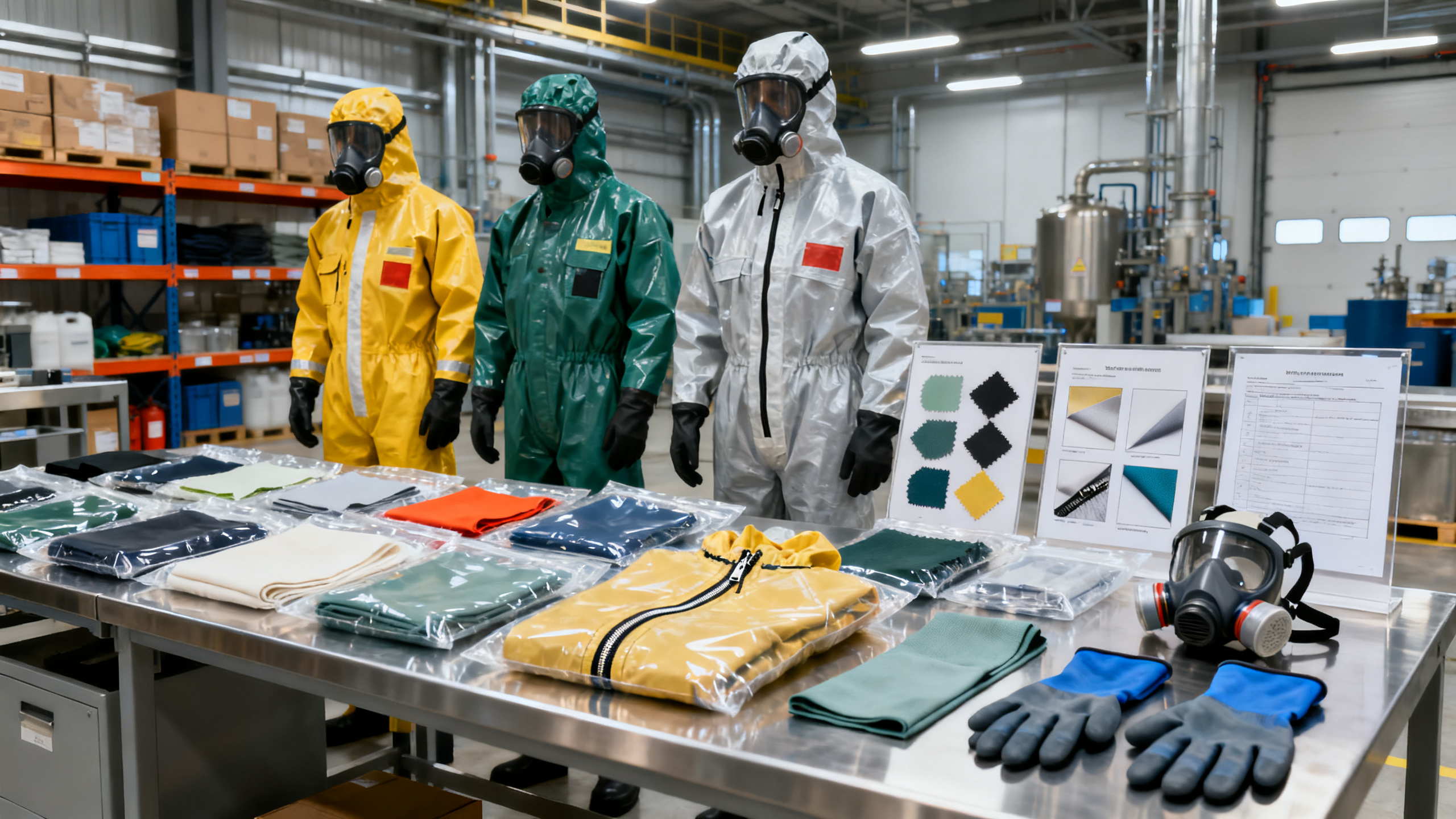
The CPSC updated its Flame-Resistant Workwear Compliance Guidance on May 14, 2026. The revision mandates that all industrial protective clothing exported to the U.S.—including arc-rated garments and those designed for molten metal splash protection—must pass ASTM F1506-26a Level 3 thermal protective performance retesting. In addition, importers must submit third-party destructive sampling test reports prior to customs clearance. As a result, average order delivery cycles among leading Chinese PPE manufacturers have extended from 8 weeks to 12 weeks; several small- and medium-sized manufacturers have temporarily suspended new order acceptance.

Industries Affected
Direct Trading Enterprises
Export-oriented trading companies face heightened pre-shipment compliance risk. Under the new guidance, they now bear full responsibility for verifying both test validity and report authenticity—not just supplier declarations. Delays in report issuance or lab capacity bottlenecks directly translate into shipment hold-ups and contractual penalties, especially under FOB or CIF terms where delivery timelines are binding.
Raw Material Procurement Enterprises
Fabric suppliers and fiber producers supplying to garment makers must now align upstream certifications with downstream ASTM F1506-26a Level 3 requirements—including batch-level traceability and documented flame-retardant finish stability across wash cycles. This increases technical validation lead time and raises minimum order quantities for certified base fabrics, compressing margins for smaller buyers.
Contract Manufacturing Enterprises
Garment assemblers—especially those operating under OEM/ODM models—must now integrate destructive testing into production planning. Each submitted batch requires physical samples withdrawn post-sewing, meaning finished goods inventory cannot be released until test results are confirmed. This disrupts just-in-time manufacturing logic and forces larger safety stock buffers, particularly for multi-size or multi-color variants.
Supply Chain Service Providers
Third-party testing labs, certification bodies, and logistics compliance consultants report surging demand for ASTM F1506-26a Level 3 verification services. Lab turnaround times have increased by 3–5 business days on average, and accredited facilities in Asia are prioritizing U.S.-bound shipments—creating scheduling imbalances for non-U.S. markets. Freight forwarders are also updating documentation checklists to include verified test report metadata (e.g., lab accreditation number, sample ID, test date).
Key Considerations and Recommended Actions
Validate Lab Accreditation Before Sample Submission
Only test reports issued by CPSC-recognized, ISO/IEC 17025-accredited laboratories using ASTM F1506-26a’s revised calibration and exposure protocols are accepted. Exporters should confirm lab scope inclusion of ‘Level 3 arc rating + molten metal performance’ before initiating testing.
Reassess Order Intake Timing and Buffer Inventory
Given the 4-week extension in average delivery cycle, trading and manufacturing firms should adjust sales forecasts, revise production scheduling windows, and allocate additional working capital for longer inventory holding periods—particularly for seasonal or project-based orders tied to U.S. infrastructure or utility contracts.
Review Technical Documentation Traceability
The guidance emphasizes chain-of-custody evidence: fabric lot numbers, dye-lot records, finish application logs, and final garment batch IDs must all be cross-referenced in the test report. Firms lacking digital quality management systems may need to implement basic traceability protocols to avoid rejection at port.
Editorial Perspective / Industry Observation
Analysis shows this update is not merely a technical tightening but reflects a broader regulatory pivot toward outcome-based accountability—shifting compliance burden from ‘certification at point of origin’ to ‘performance verification at point of entry’. Observably, the CPSC is synchronizing its enforcement posture with OSHA’s upcoming 2027 arc-flash hazard assessment revisions, suggesting future alignment between workplace safety enforcement and import controls. From an industry perspective, this signals growing convergence between occupational health regulation and trade compliance—a trend more likely to spread across EU and Canadian markets in coming years.
Conclusion
This policy shift underscores how evolving safety standards increasingly function as de facto trade barriers—not through tariffs, but through procedural friction and verification latency. For PPE exporters, resilience will depend less on cost competitiveness and more on embedded compliance agility: standardized test coordination, real-time documentation readiness, and diversified lab partnerships. A 4-week delivery extension is operationally manageable today—but without structural adaptation, it may become a permanent constraint on market responsiveness.
Source Attribution
U.S. Consumer Product Safety Commission (CPSC), Flame-Resistant Workwear Compliance Guidance, Final Update dated May 14, 2026 (Publication No. CPSC-GUIDE-2026-FRWW). Official notice accessible via CPSC.gov/FRWW. Note: ASTM F1506-26a standard text is maintained by ASTM International; CPSC recognition status of specific test methods remains subject to periodic review—stakeholders should monitor CPSC’s Federal Register notices for updates through Q4 2026.
Technical Specifications
- How to Select Electronic Hotel Key Card Locks for Guest Rooms and Staff AreasAuthor :Safety Compliance Lead
- How to Select Lab Instruments for Reliable Chemical Analysis WorkflowsAuthor :Precision Metrology Expert
- How to Size a UPS for Server Rooms: Load, Runtime, and Redundancy FactorsAuthor :Grid Infrastructure Analyst
Expert Insights

Chief Security Architect
Dr. Thorne specializes in the intersection of structural engineering and digital resilience. He has advised three G7 governments on industrial infrastructure security.
Related Analysis
- Sep 17, 2026How to Select Electronic Hotel Key Card Locks for Guest Rooms and Staff AreasAuthor :Safety Compliance Lead
- Sep 16, 2026How to Select Lab Instruments for Reliable Chemical Analysis WorkflowsAuthor :Precision Metrology Expert
- Sep 15, 2026How to Size a UPS for Server Rooms: Load, Runtime, and Redundancy FactorsAuthor :Grid Infrastructure Analyst
Core Sector // 01
Security & Safety
- Can One Supplier Provide Both IEC- and ATEX-Certified Safety Equipment?Author :Safety Compliance Lead

- Are Dual IEC and NEC Safety Certifications Worth the Cost?Author :Safety Compliance Lead

- What Is the Difference Between Class I and Class II PPE?Author :Safety Compliance Lead

- Which Oil and Gas Safety Standards Should Contractors Meet Before Site Mobilization?Author :Safety Compliance Lead

- EU REACH Adds PFAS Cap for PPE WorkwearAuthor :Safety Compliance Lead

- How to Evaluate a Chemical Resistant Suit Supplier for Industrial Safety ProcurementAuthor :Safety Compliance Lead

- EU REACH Sets 50 ppb PFAS Cap for PPE WorkwearAuthor :Safety Compliance Lead

- EU Tightens PFOA Limit for PPE and Industrial Filter MediaAuthor :Safety Compliance Lead