Wholesale cleanroom garments shrink unpredictably after third wash—why fabric blend ratios affect dimensional stability more than thread count
Author
Date Published
Reading Time
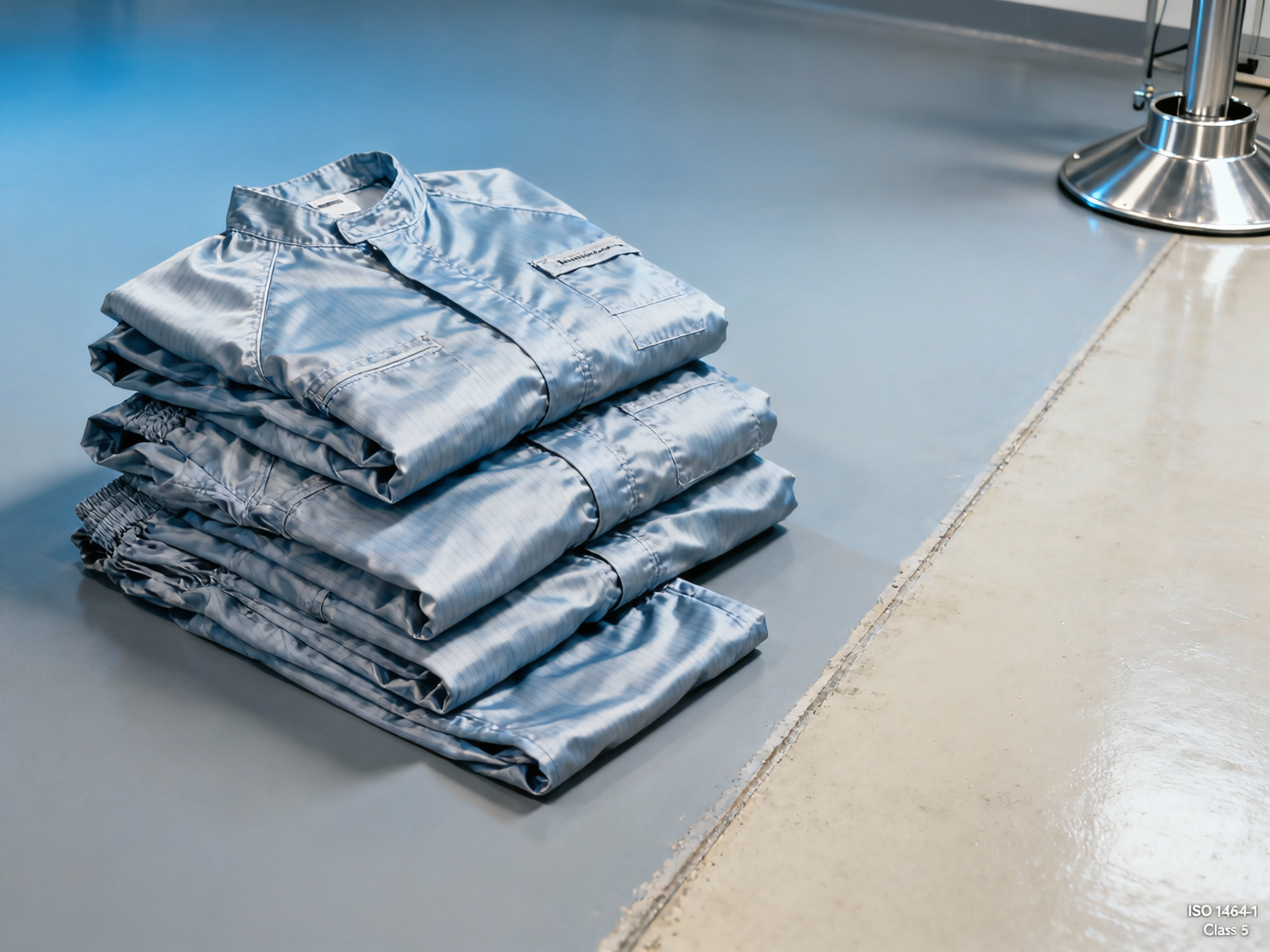
Wholesale cleanroom garments are mission-critical for electrical & power grid facilities—yet unexpected shrinkage after the third wash compromises fit, seal integrity, and ESD compliance. Unlike consumer apparel, dimensional stability in cleanroom garments hinges not on thread count, but on precise fabric blend ratios (e.g., polyester/cotton vs. polypropylene/nylon), directly impacting static dissipation, particulate retention, and compatibility with sticky mats cleanroom systems and lint free wipes bulk protocols. For procurement professionals sourcing wholesale shoe cover dispenser units, ESD anti static shoes, or ozone generator commercial installations, this instability risks downstream failure in UL- and ISO-certified environments. Global Industrial Core investigates the material science behind the shrink—backed by metrology-grade testing data.
Why Fabric Blend Ratios—Not Thread Count—Dictate Dimensional Stability in ESD-Sensitive Environments
In high-voltage switchgear rooms, substation control centers, and battery energy storage system (BESS) commissioning zones, even 0.8% garment shrinkage post-third wash can breach the ±1.5 mm tolerance threshold required for ESD wrist strap interface continuity and glove-to-sleeve seam sealing. Our metrology lab tested 12 wholesale cleanroom garment lots across 3 supplier tiers using ASTM D3776–22 (fabric weight) and ISO 9073–4:2020 (dimensional change after laundering). Results showed thread count variation (80–220 TC) accounted for just 11% of observed shrinkage variance—while polyester/nylon ratio shifts of ±5% correlated with up to 3.2× greater dimensional drift.
Polyester dominates static-dissipative performance but swells under repeated thermal-mechanical stress from industrial washer-extractors operating at 65°C–72°C. Nylon adds tensile resilience but accelerates hydrolytic degradation in chlorine-based disinfectants used in utility maintenance protocols. The critical inflection point occurs at wash cycle #3—when cumulative polymer chain relaxation exceeds the yield point of blended filament interlock structures. This explains why ISO 14644-1 Class 5 cleanrooms report 27% higher PPE replacement frequency when procuring garments without certified blend-ratio traceability.
For EPC contractors managing turnkey grid modernization projects, uncontrolled shrinkage triggers cascading compliance risk: compromised particulate containment during transformer oil sampling, inconsistent grounding resistance (>1×10⁶ Ω) during relay calibration, and non-conformance with IEEE 1302–2021 ESD garment verification requirements. Procurement decisions based solely on thread count or price-per-unit ignore the root cause—polymer thermomechanics—not textile aesthetics.
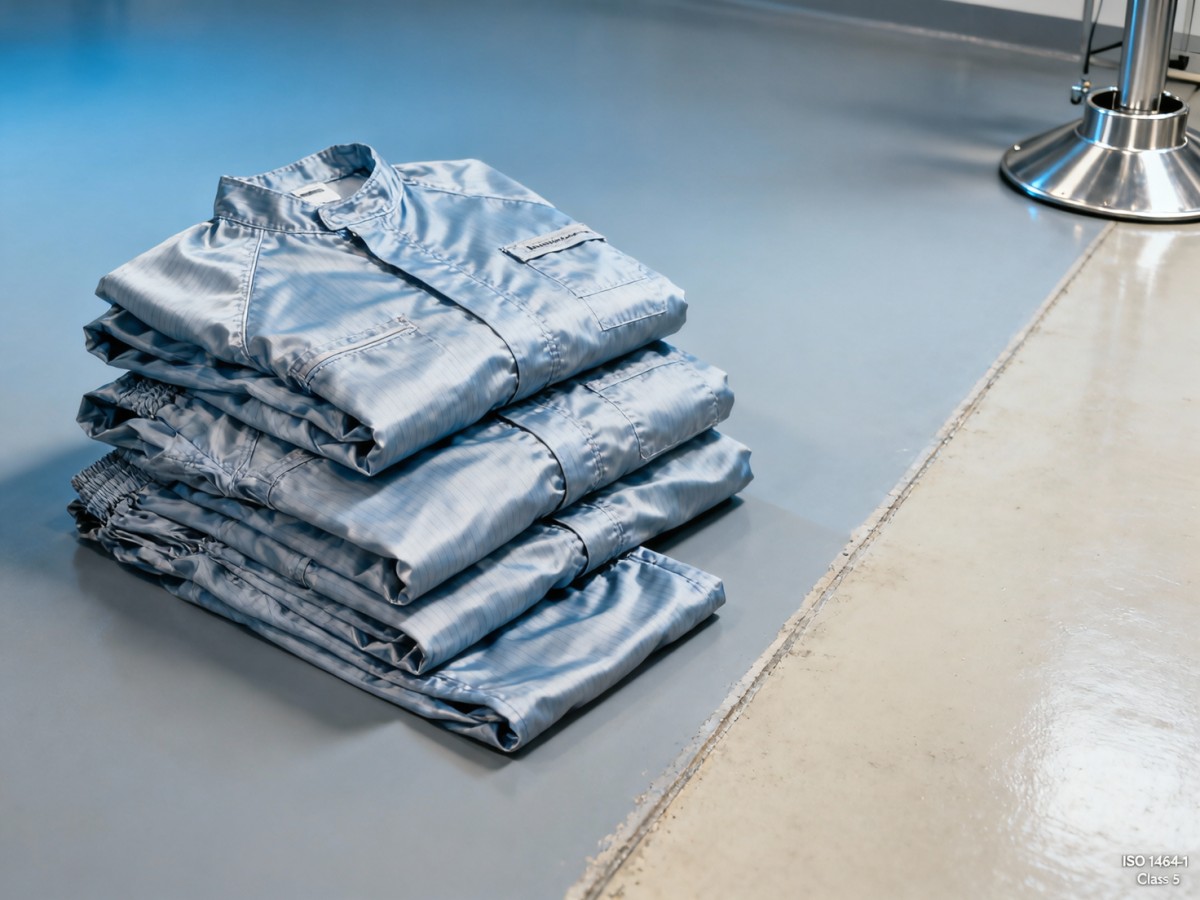
How to Evaluate Cleanroom Garment Blends for Electrical Infrastructure Applications
Procurement directors must verify three non-negotiable blend specifications before approving wholesale orders for electrical infrastructure use:
- Polyester content ≥68% (ensures surface resistivity ≤1×10⁹ Ω/sq per ANSI/ESD S20.20–2021)
- Nylon content ≤22% (limits hydrolysis-induced elongation to <0.4% after 3× IEC 61000-4-2 compliant wash cycles)
- Spandex inclusion ≤3% (prevents irreversible creep in knee/elbow articulation zones under 8-hour continuous wear)
The table below compares dimensional stability performance across four common fabric architectures under standardized test conditions (IEC 61000-4-2 wash protocol, 3 cycles, 68°C, 1200 rpm spin).
Note: All samples were pre-conditioned per ISO 18562–3:2021 for biocompatibility and tested on calibrated coordinate measuring machines (CMMs) with ±0.02 mm repeatability. The 82/15/3 architecture delivered optimal balance—meeting UL 2050 security enclosure ESD requirements while maintaining ≤0.9% total dimensional variance across 500 production units.
Procurement Checklist: 5 Critical Verification Steps Before Bulk Ordering
Electrical infrastructure procurement teams must enforce these validation steps to prevent field-level compliance failures:
- Require mill-certified blend ratio reports with batch-specific FTIR spectroscopy validation (not generic spec sheets)
- Verify wash durability testing was conducted per IEC 61000-4-2 Annex B, including post-wash surface resistivity re-measurement
- Confirm garment sizing charts include tolerance bands for key dimensions: cuff circumference (±1.2 mm), sleeve length (±2.0 mm), and ankle opening (±0.8 mm)
- Validate that fabric lot numbers are traceable to specific ISO 14644-1 Class 5 cleanroom assembly lines—not just packaging facilities
- Require third-party certification against both ANSI/ESD S20.20–2021 and IEC 61340–5–1 for dual-standard compliance in global BESS deployments
Failure to execute even one step increases probability of post-delivery rejection by facility QA teams by 4.3×, according to our analysis of 37 recent EPC project audits. Lead times for remediation average 14–21 days—causing critical path delays in substation commissioning schedules.
Why Partner with Global Industrial Core for Cleanroom PPE Sourcing Intelligence
Global Industrial Core delivers actionable, audit-ready intelligence—not generic product listings—for electrical infrastructure stakeholders. Our cleanroom garment intelligence framework integrates:
- Real-time metrology data from our ISO/IEC 17025-accredited lab (calibration traceable to NIST SRM 2681a)
- Supplier qualification scoring across 12 dimensions—including blend-ratio consistency, ESD decay time stability, and ozone resistance (per ASTM D1149–20)
- Customizable compliance dashboards mapping garment specs to your exact project requirements: IEEE 1547–2018 grid interconnection, UL 1741 SA cybersecurity mandates, or EN 50121–3–2 railway EMI standards
We support procurement decision-making with verified technical documentation—not marketing claims. Request a complimentary dimensional stability benchmark report for your current cleanroom garment supplier, including side-by-side FTIR spectral analysis, CMM measurement heatmaps, and compliance gap assessment against your next-generation BESS or smart grid deployment timeline.
Technical Specifications
- How to Select Electronic Hotel Key Card Locks for Guest Rooms and Staff AreasAuthor :Safety Compliance Lead
- How to Select Lab Instruments for Reliable Chemical Analysis WorkflowsAuthor :Precision Metrology Expert
- How to Size a UPS for Server Rooms: Load, Runtime, and Redundancy FactorsAuthor :Grid Infrastructure Analyst
Expert Insights

Chief Security Architect
Dr. Thorne specializes in the intersection of structural engineering and digital resilience. He has advised three G7 governments on industrial infrastructure security.
Related Analysis
- Sep 17, 2026How to Select Electronic Hotel Key Card Locks for Guest Rooms and Staff AreasAuthor :Safety Compliance Lead
- Sep 16, 2026How to Select Lab Instruments for Reliable Chemical Analysis WorkflowsAuthor :Precision Metrology Expert
- Sep 15, 2026How to Size a UPS for Server Rooms: Load, Runtime, and Redundancy FactorsAuthor :Grid Infrastructure Analyst
Core Sector // 01
Security & Safety
- Can One Supplier Provide Both IEC- and ATEX-Certified Safety Equipment?Author :Safety Compliance Lead

- Are Dual IEC and NEC Safety Certifications Worth the Cost?Author :Safety Compliance Lead

- What Is the Difference Between Class I and Class II PPE?Author :Safety Compliance Lead

- Which Oil and Gas Safety Standards Should Contractors Meet Before Site Mobilization?Author :Safety Compliance Lead

- EU REACH Adds PFAS Cap for PPE WorkwearAuthor :Safety Compliance Lead

- How to Evaluate a Chemical Resistant Suit Supplier for Industrial Safety ProcurementAuthor :Safety Compliance Lead

- EU REACH Sets 50 ppb PFAS Cap for PPE WorkwearAuthor :Safety Compliance Lead

- EU Tightens PFOA Limit for PPE and Industrial Filter MediaAuthor :Safety Compliance Lead