How to Choose a Wholesale Shoe Cover Dispenser for High-Traffic Facilities
Author
Date Published
Reading Time
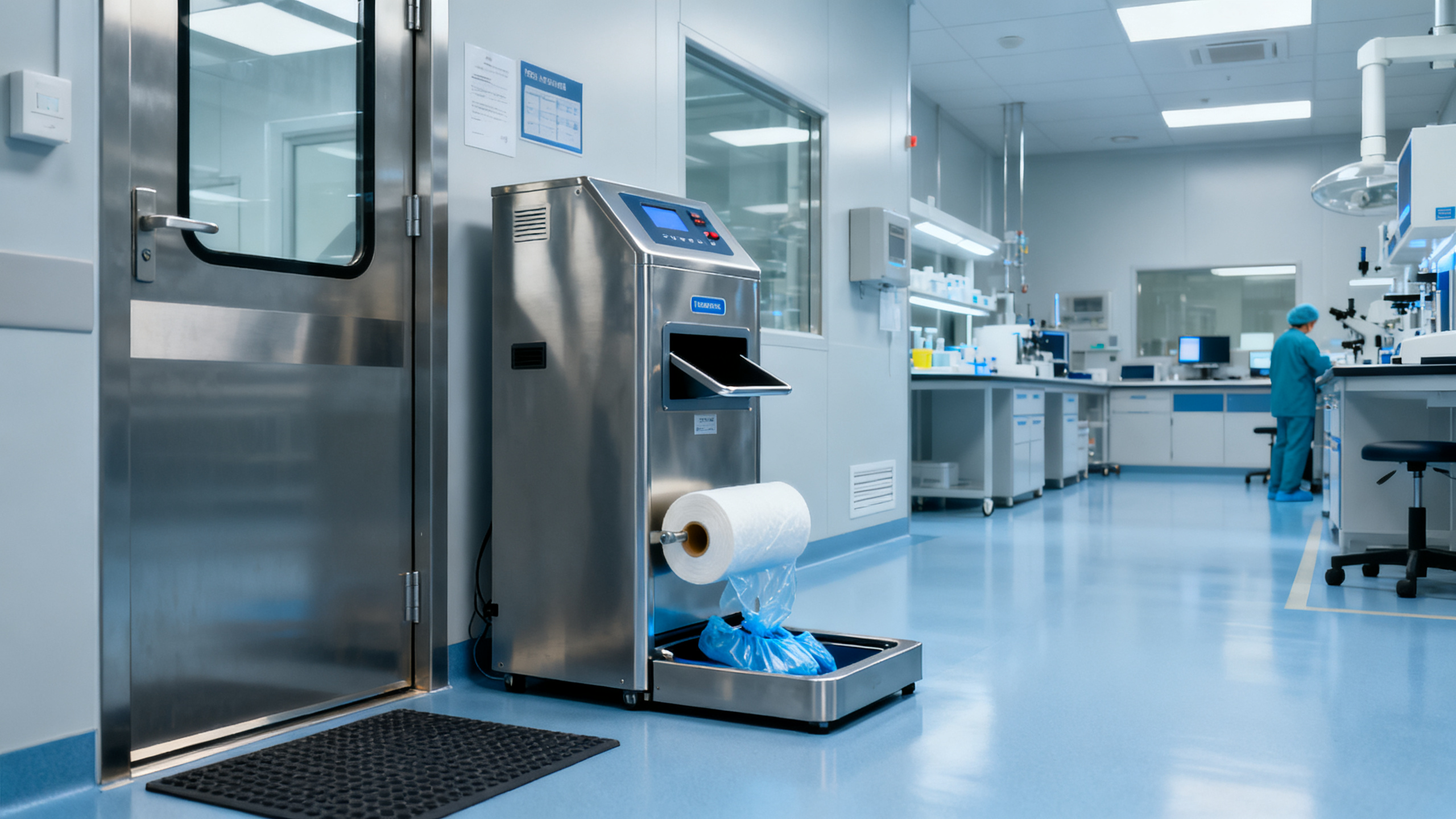
How to Choose a Wholesale Shoe Cover Dispenser for High-Traffic Facilities
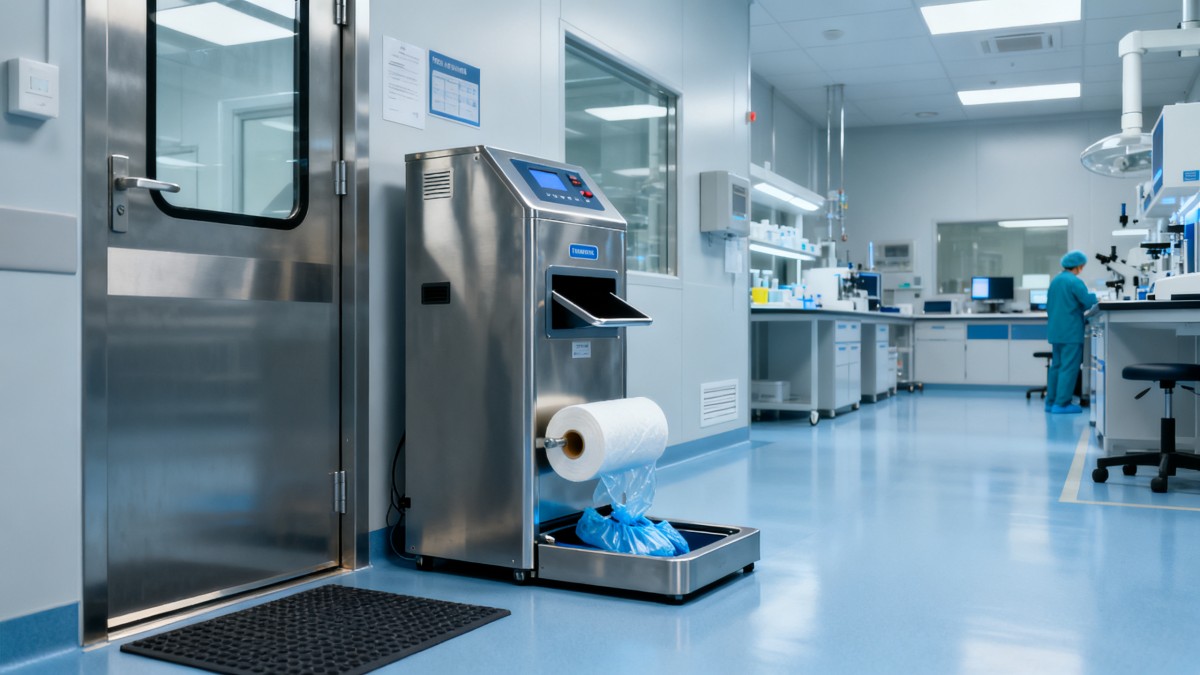
Choosing the right wholesale shoe cover dispenser for a high-traffic facility affects hygiene control, user flow, maintenance workload, and long-term procurement value.
For hospitals, labs, construction zones, and clean-sensitive sites, the wrong unit creates delays, waste, and avoidable service issues.
The better choice is not always the cheapest model.
It is the dispenser that fits traffic volume, floor conditions, compliance needs, and replacement cycles without slowing people down.
In real procurement work, this category looks simple at first.
Yet high-traffic use quickly exposes weak frames, poor film quality, low capacity, and awkward loading systems.
This guide breaks down how to evaluate a wholesale shoe cover dispenser with a practical buying lens.
Start with Traffic Volume and Entry Flow
The first question is simple.
How many people use the entrance during peak periods?
A wholesale shoe cover dispenser for a quiet testing room differs from one placed at a hospital wing entrance.
High-traffic facilities need faster application, larger capacity, and stable performance under repeated use.
If the device causes users to stop, balance, or retry, traffic stacks up immediately.
That slows operations and raises safety concerns near busy access points.
- Estimate hourly foot traffic at each entrance.
- Measure peak changeover times, not daily averages.
- Check whether users carry tools, samples, or medical items.
- Review whether the dispenser sits at one door or multiple checkpoints.
These details shape the right dispenser type.
Manual step-in models often suit medium traffic.
Automatic systems may justify the cost when throughput and consistency matter more.
Compare Manual and Automatic Dispensing
This is usually the biggest decision point.
A manual wholesale shoe cover dispenser is often lower in upfront cost, easier to deploy, and less complex to maintain.
It works well where power access is limited or operating conditions are rough.
Automatic dispensers reduce user effort and improve speed.
They can also support better hygiene because users avoid touching shared surfaces.
Still, they require power, more checks, and stronger vendor support.
If your site sees constant flow, an automatic wholesale shoe cover dispenser may deliver better long-term labor efficiency.
If entrances are distributed, simpler manual units may be easier to scale across locations.
Check Material Strength and Build Quality
High traffic is hard on equipment.
That is why material quality matters as much as dispenser design.
Look at the frame, spring mechanism, pedal response, hinges, and internal moving parts.
Thin plastic bodies may work in light-duty areas.
They usually fail faster in facilities with constant entry rotation.
For industrial and institutional use, reinforced plastic or metal construction often performs better.
- Ask for cycle testing data.
- Confirm resistance to cracking and deformation.
- Review weight capacity if users wear heavy work boots.
- Check whether replacement parts are available.
The shoe cover material matters too.
Low-grade film can tear during use, especially on safety footwear or textured soles.
A wholesale shoe cover dispenser is only as reliable as the covers it dispenses.
Evaluate Capacity, Reload Speed, and Consumable Fit
Capacity directly affects operating efficiency.
In a busy facility, frequent reloads create hidden labor costs and interrupt entry flow.
That is why buyers should calculate the real refill interval.
Do not rely only on the supplier’s maximum capacity claim.
Instead, compare capacity against actual entrance traffic and staffing schedules.
Also check whether the wholesale shoe cover dispenser uses proprietary refills or standard consumables.
Proprietary systems may lock you into one source.
That increases supply risk during demand spikes or shipping delays.
- Confirm refill count per cassette or load.
- Time the reload process during a live demo.
- Ask whether multiple cover sizes are supported.
- Check carton quantity and storage footprint.
These details often separate a practical bulk purchase from a frustrating one.
Review Hygiene, Safety, and Compliance Requirements
Different facilities define cleanliness differently.
A hospital isolation area, electronics workshop, and food processing entry point will not share the same risk profile.
So the right wholesale shoe cover dispenser must match the site’s hygiene and compliance standard.
This may include material safety, anti-slip performance, and compatibility with internal sanitation protocols.
In some projects, documented conformity matters as much as daily function.
- Check for CE, ISO, or other relevant documentation where applicable.
- Request anti-slip test information for the cover material.
- Confirm suitability for clean-sensitive or regulated environments.
- Review disposal and environmental handling requirements.
This is also where supplier transparency matters.
Reliable vendors provide clear product sheets, test reports, and consistent refill specifications.
That reduces approval delays and supports internal audit readiness.
Focus on User Experience and Accessibility
A wholesale shoe cover dispenser should be easy to use without instruction.
That sounds obvious, but it often gets missed during sourcing.
If visitors hesitate, bend awkwardly, or struggle with alignment, throughput drops fast.
Ease of use matters even more where users include contractors, patients, temporary staff, or external inspectors.
Look for a stable footprint, clear foot placement, and smooth cover release.
If possible, test the dispenser with different shoe sizes and tread patterns.
This gives a more realistic picture than a tabletop review.
Look Beyond Unit Price to Total Procurement Value
Price matters, but unit price alone rarely tells the full story.
A low-cost wholesale shoe cover dispenser may require more reload time, more replacements, and more support calls.
That changes the real cost quickly.
A better procurement review includes equipment life, consumable cost, shipping frequency, and warranty coverage.
From a sourcing perspective, predictable performance is often more valuable than a small upfront saving.
Ask Better Supplier Questions Before You Buy
Good selection depends on good questions.
When comparing suppliers, ask for evidence instead of broad promises.
This is especially important for a wholesale shoe cover dispenser intended for frequent, unsupervised use.
- What environments is this model designed for?
- What failure rate has the model shown in field use?
- How quickly can refills and spare parts ship?
- Can the supplier provide trial units or user feedback data?
- Are there certifications or test records for the covers?
A supplier that answers clearly is usually easier to work with after the purchase as well.
Make the Decision with a Site-Based Checklist
Before placing a bulk order, use a simple checklist tied to the actual site.
That keeps the decision practical and easier to defend internally.
- Match dispenser type to traffic intensity.
- Verify cover strength for real footwear conditions.
- Confirm refill logistics and supplier continuity.
- Review hygiene, safety, and compliance documents.
- Test user experience at the entrance point.
- Compare total ownership cost, not only device price.
The best wholesale shoe cover dispenser is the one that keeps movement smooth, supports hygiene goals, and stays dependable across repeat orders.
If you evaluate performance in the real setting, the final decision becomes much clearer.
That also puts your procurement choice on stronger operational ground.
Technical Specifications
- How to Select Electronic Hotel Key Card Locks for Guest Rooms and Staff AreasAuthor :Safety Compliance Lead
- How to Select Lab Instruments for Reliable Chemical Analysis WorkflowsAuthor :Precision Metrology Expert
- How to Size a UPS for Server Rooms: Load, Runtime, and Redundancy FactorsAuthor :Grid Infrastructure Analyst
Expert Insights

Chief Security Architect
Dr. Thorne specializes in the intersection of structural engineering and digital resilience. He has advised three G7 governments on industrial infrastructure security.
Related Analysis
- Sep 17, 2026How to Select Electronic Hotel Key Card Locks for Guest Rooms and Staff AreasAuthor :Safety Compliance Lead
- Sep 16, 2026How to Select Lab Instruments for Reliable Chemical Analysis WorkflowsAuthor :Precision Metrology Expert
- Sep 15, 2026How to Size a UPS for Server Rooms: Load, Runtime, and Redundancy FactorsAuthor :Grid Infrastructure Analyst
Core Sector // 01
Security & Safety
- Can One Supplier Provide Both IEC- and ATEX-Certified Safety Equipment?Author :Safety Compliance Lead

- Are Dual IEC and NEC Safety Certifications Worth the Cost?Author :Safety Compliance Lead

- What Is the Difference Between Class I and Class II PPE?Author :Safety Compliance Lead

- Which Oil and Gas Safety Standards Should Contractors Meet Before Site Mobilization?Author :Safety Compliance Lead

- EU REACH Adds PFAS Cap for PPE WorkwearAuthor :Safety Compliance Lead

- How to Evaluate a Chemical Resistant Suit Supplier for Industrial Safety ProcurementAuthor :Safety Compliance Lead

- EU REACH Sets 50 ppb PFAS Cap for PPE WorkwearAuthor :Safety Compliance Lead

- EU Tightens PFOA Limit for PPE and Industrial Filter MediaAuthor :Safety Compliance Lead