US CPSC Proposes Stricter Flame Resistance for PPE Workwear
Author
Date Published
Reading Time
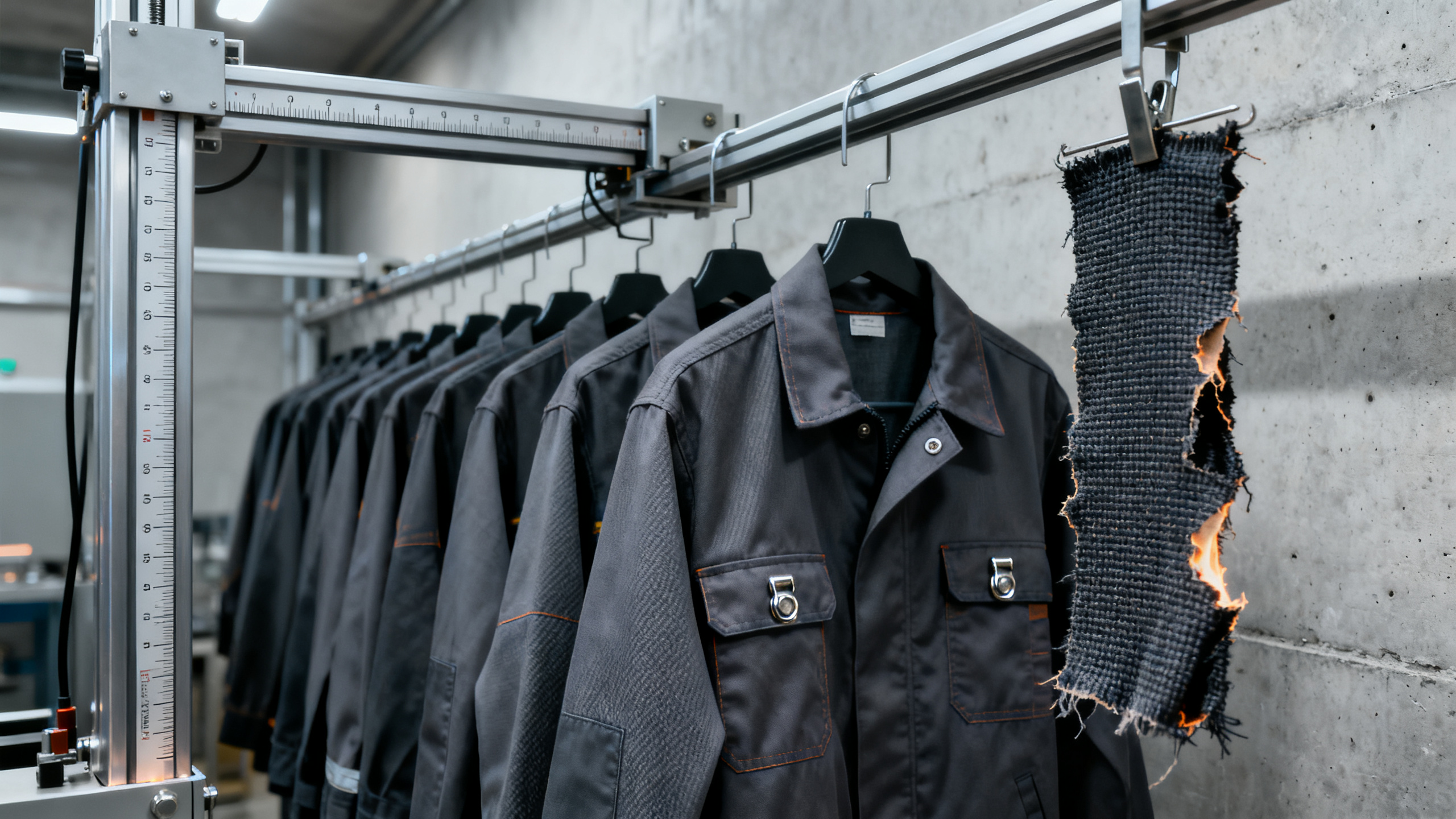
On May 12, 2026, the U.S. Consumer Product Safety Commission (CPSC) released the Proposed Revision to 16 CFR Part 1610, targeting industrial-grade personal protective equipment (PPE) workwear. The draft regulation would tighten the vertical flame spread limit from 7 inches/minute to 3.5 inches/minute and mandate post-thermal-radiation residual strength testing. This development directly affects exporters of flame-resistant workwear and related textile manufacturers—particularly those supplying the North American industrial safety market—and signals a meaningful shift in compliance expectations for U.S.-bound PPE apparel.
Event Overview
On May 12, 2026, the U.S. Consumer Product Safety Commission (CPSC) published the Draft Amendment to 16 CFR Part 1610. The proposal applies specifically to industrial-grade PPE workwear. Key technical changes include: (1) reducing the maximum allowable vertical flame spread rate from 7 inches per minute to 3.5 inches per minute; and (2) introducing a new mandatory test for residual tensile strength after exposure to thermal radiation. As confirmed by publicly available CPSC documentation, the draft is currently in the notice-and-comment phase and has not yet been finalized or codified into law.
Industries Affected
Direct Exporters & Trading Companies
These firms face immediate pressure on order timelines and certification validity. Since the proposed standard requires updated material composition and additional finishing steps, existing certifications under the current Part 1610 may no longer support new shipments post-implementation—even if the rule is not yet final. Delivery lead times have already extended from 8 to 12 weeks on average, compressing planning windows and increasing pre-shipment risk.
Flame-Resistant Fabric Manufacturers
Domestic producers report that compliance necessitates reformulating aramid blend ratios and adding post-finishing treatments—both of which impact yield, cost, and process control. Headline suppliers indicate certification cycles are now longer due to retesting requirements, and some smaller mills have suspended new order intake pending clarity on the timeline and scope of enforcement.
Raw Material Suppliers (e.g., Aramid Fiber Producers)
Changes in required aramid content ratios may alter demand profiles for specific fiber grades or surface-treated variants. While not directly regulated, upstream suppliers may see shifting purchase specifications from fabric mills—particularly around thermal stability and post-exposure mechanical retention—requiring tighter batch consistency and expanded test reporting.
Supply Chain & Compliance Service Providers
Laboratories, certification bodies, and third-party testing services are likely to experience increased demand for both vertical flame testing (per revised parameters) and the newly mandated residual strength assessment. Capacity constraints may emerge as more clients seek pre-submission validation ahead of final rule issuance.
What Stakeholders Should Monitor and Do Now
Track Official CPSC Timeline and Scope Clarifications
Monitor the Federal Register docket for updates on the comment deadline, potential revisions to the draft, and any stated effective date or phase-in period. The current proposal does not specify a transition window; stakeholders should treat any final rule as potentially applicable to new production runs upon publication unless otherwise indicated.
Verify Which Product Categories Fall Under the Proposed Definition of ‘Industrial-Grade PPE Workwear’
The draft’s applicability hinges on functional classification—not just fabric type. Firms should cross-reference their product descriptions, labeling, and marketing claims against CPSC’s working definition (e.g., garments marketed or intended for arc flash, flash fire, or molten metal splash protection). Non-PPE general workwear may remain outside the scope—but boundary cases require documentation.
Distinguish Between Regulatory Signal and Enforceable Requirement
This remains a proposal—not a rule. No penalties or enforcement actions apply until the final version is published in the Federal Register and enters into force. However, importers and brand owners may begin updating internal specifications ahead of adoption, making early alignment with testing labs and mills operationally prudent.
Assess and Adjust Lead-Time Buffers and Raw Material Procurement Schedules
With current average delivery stretched to 12 weeks—and variability rising—reassess safety stock levels for key components (e.g., certified aramid blends), confirm lab capacity for dual-test protocols, and initiate dialogue with downstream buyers about potential timeline adjustments or interim compliance pathways.
Editorial Perspective / Industry Observation
Observably, this proposal reflects a broader trend toward performance-based, outcome-oriented safety standards in U.S. PPE regulation—shifting emphasis from single-point flammability metrics to multi-criteria survivability assessment. Analysis shows the inclusion of residual strength testing suggests CPSC is prioritizing real-world garment integrity after thermal exposure, not just ignition resistance. Currently, this is best understood as a strong regulatory signal rather than an implemented requirement; its significance lies less in immediate compliance obligations and more in its indication of evolving benchmark expectations for North American industrial apparel markets. Continued monitoring is warranted—not only for legal adoption but also for ripple effects on buyer specifications, insurance underwriting criteria, and global harmonization efforts.
In summary, the CPSC’s proposed revision to 16 CFR Part 1610 marks a consequential step in tightening technical expectations for flame-resistant PPE workwear destined for the U.S. market. It does not yet constitute enforceable law, but it introduces tangible operational implications for exporters, fabric mills, and supporting service providers. Stakeholders are advised to treat it as a forward-looking indicator—neither urgent nor optional, but structurally significant for medium-term planning and capability alignment.
Source: U.S. Consumer Product Safety Commission (CPSC), Draft Amendment to 16 CFR Part 1610, published May 12, 2026. Note: Final rulemaking status, effective date, and transitional provisions remain pending and subject to ongoing public comment and agency review.
Technical Specifications
- How to Select Electronic Hotel Key Card Locks for Guest Rooms and Staff AreasAuthor :Safety Compliance Lead
- How to Select Lab Instruments for Reliable Chemical Analysis WorkflowsAuthor :Precision Metrology Expert
- How to Size a UPS for Server Rooms: Load, Runtime, and Redundancy FactorsAuthor :Grid Infrastructure Analyst
Expert Insights

Chief Security Architect
Dr. Thorne specializes in the intersection of structural engineering and digital resilience. He has advised three G7 governments on industrial infrastructure security.
Related Analysis
- Sep 17, 2026How to Select Electronic Hotel Key Card Locks for Guest Rooms and Staff AreasAuthor :Safety Compliance Lead
- Sep 16, 2026How to Select Lab Instruments for Reliable Chemical Analysis WorkflowsAuthor :Precision Metrology Expert
- Sep 15, 2026How to Size a UPS for Server Rooms: Load, Runtime, and Redundancy FactorsAuthor :Grid Infrastructure Analyst
Core Sector // 01
Security & Safety
- Can One Supplier Provide Both IEC- and ATEX-Certified Safety Equipment?Author :Safety Compliance Lead

- Are Dual IEC and NEC Safety Certifications Worth the Cost?Author :Safety Compliance Lead

- What Is the Difference Between Class I and Class II PPE?Author :Safety Compliance Lead

- Which Oil and Gas Safety Standards Should Contractors Meet Before Site Mobilization?Author :Safety Compliance Lead

- EU REACH Adds PFAS Cap for PPE WorkwearAuthor :Safety Compliance Lead

- How to Evaluate a Chemical Resistant Suit Supplier for Industrial Safety ProcurementAuthor :Safety Compliance Lead

- EU REACH Sets 50 ppb PFAS Cap for PPE WorkwearAuthor :Safety Compliance Lead

- EU Tightens PFOA Limit for PPE and Industrial Filter MediaAuthor :Safety Compliance Lead