Is a low security & safety price worth the hidden risk
Author
Date Published
Reading Time
A low Security & Safety price may look attractive on a procurement sheet, but for financial decision-makers, the hidden cost of failure can far exceed the initial savings. From compliance penalties to downtime, liability, and reputational loss, the real question is not what you save today, but what risk you absorb tomorrow. This article examines whether chasing the lowest Security & Safety price is ever worth the exposure.
For most finance approvers, the short answer is no: the lowest Security & Safety price is rarely the lowest total cost. In industrial settings, cheaper purchasing often shifts cost into failures, legal exposure, maintenance, and operational interruption.
The real decision is not whether cost matters. It does. The issue is whether the quoted price reflects the full financial impact across the asset’s working life, regulatory environment, and failure consequences.
That is why procurement decisions on alarms, protective devices, sensors, emergency systems, access control, and related infrastructure must be evaluated through a risk-adjusted lens, not a unit-price lens alone.
What finance approvers are really trying to decide
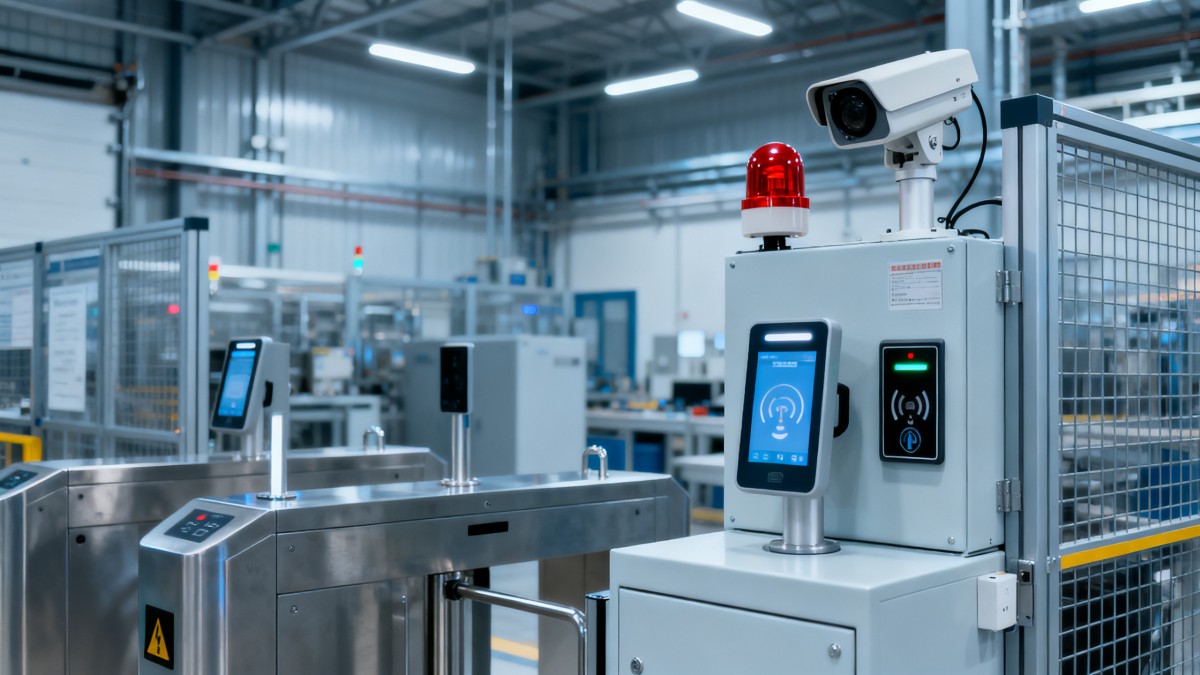
When someone searches whether a low Security & Safety price is worth the risk, they are usually not asking a technical question. They are asking a capital allocation question with compliance, liability, and continuity implications.
Financial approvers want to know three things. First, where low-price sourcing creates measurable hidden costs. Second, how to compare offers without overbuying. Third, how to defend the final decision internally if something goes wrong later.
They are also looking for a practical framework. Technical teams may argue for higher-spec products, while procurement pushes for budget discipline. Finance sits between those pressures and needs a decision model that is commercially rational.
In that context, the best question is not, “What is the cheapest compliant option?” It is, “What option minimizes expected total financial exposure while still meeting operational requirements?”
The hidden costs behind a low Security & Safety price
A low upfront Security & Safety price can hide costs in several layers. Some are visible only after installation. Others emerge only when an incident, audit, shutdown, or claim brings them to the surface.
The first hidden cost is non-compliance risk. If a product lacks proper CE, UL, ISO, or sector-specific certification, the initial savings may be erased by failed inspections, replacement costs, delayed commissioning, or insurance complications.
The second hidden cost is downtime. In industrial environments, a failed safety relay, unreliable detector, poor enclosure integrity, or inaccurate monitoring component can stop a process line worth far more than the original purchase value.
The third hidden cost is maintenance intensity. Lower-cost products often require more frequent calibration, replacement, troubleshooting, or spare inventory. Over time, labor and interruption costs can exceed the savings gained from the lower purchase price.
The fourth hidden cost is liability exposure. If a lower-cost safety solution contributes to injury, fire, contamination, unauthorized access, or equipment damage, the financial consequences may include claims, legal fees, and uninsured losses.
The fifth hidden cost is reputational damage. This is harder to model, but for major contractors, manufacturers, and infrastructure operators, a visible safety failure can weaken customer trust, delay future awards, and increase commercial scrutiny.
Why unit price is the wrong metric for critical systems
Finance teams naturally compare line items. That works well for standardized, low-risk consumables. It works poorly for mission-critical Security & Safety systems where failure probability and consequence matter more than purchase price alone.
Two products can appear equivalent on a quotation because both perform the same basic function. Yet they may differ sharply in certification depth, mean time between failures, service support, ingress protection, material quality, and traceability.
These differences affect expected cost over the life of the system. A cheaper component with a slightly higher failure rate may still look acceptable until multiplied across a facility, a portfolio, or a ten-year operating horizon.
That is why unit economics should be replaced by total cost of ownership analysis. For finance approvers, that means asking what the asset really costs after installation, testing, maintenance, compliance review, and risk transfer are included.
A simple total-cost framework finance teams can use
To evaluate Security & Safety price intelligently, finance does not need to become an engineering department. It needs a structured comparison model with financial categories that expose hidden risk before approval.
Start with acquisition cost. This includes purchase price, shipping, duties, integration, training, commissioning, and documentation. Low bids sometimes exclude these items and only appear cheaper at the quotation stage.
Next, estimate operating cost. Include inspection intervals, calibration, software updates, spare parts, energy use, contractor support, and internal labor. A modest annual difference becomes significant across large-scale facilities.
Then calculate compliance cost. Ask whether the vendor provides test records, certifications, audit-ready documentation, and region-specific approvals. If not, the buyer may absorb the cost later through validation work or replacement.
After that, assess failure cost. Estimate the financial effect of one malfunction event, one false alarm event, one shutdown event, or one incident investigation. Even rough numbers can dramatically change the comparison.
Finally, add strategic risk cost. This includes supplier instability, long lead times, poor after-sales support, lack of local service, and weak traceability. These factors may not hit the budget immediately, but they strongly affect resilience.
When a lower price may be acceptable
Not every lower Security & Safety price is automatically a bad decision. Sometimes a lower price reflects manufacturing scale, better supply chain efficiency, regional pricing advantages, or reduced brand premium rather than reduced integrity.
A lower-cost offer may be acceptable when the product is fully certified for the intended market, proven in similar duty conditions, backed by documented performance data, and supported by a reliable service and warranty structure.
It may also be acceptable when the application is non-critical, consequences of failure are limited, and redundancy exists elsewhere in the system. In those cases, finance can approve a lower-cost option with more confidence.
However, acceptability depends on evidence, not promises. If a vendor cannot provide transparent documentation, testing records, reference cases, and supply continuity assurance, the lower price is not a saving. It is a gamble.
Red flags that suggest the cheapest option is too risky
Finance approvers should be cautious when a bid is materially below market without a clear reason. Extreme price gaps often signal compromised materials, incomplete certification, shorter service life, or unsupported technical claims.
Another red flag is vague compliance language. Terms like “meets international standards” are not enough. Approvers should ask exactly which standards apply, whether certification is current, and whether documentation is available for audit purposes.
Watch for unclear warranty terms, limited traceability, or missing serial-level records. In regulated or high-risk sectors, poor traceability can become a major problem after incidents, recalls, or insurance reviews.
Lead time instability is another warning sign. A low quoted Security & Safety price may depend on inconsistent sourcing. If replacement parts or service support are unreliable, even a minor failure can escalate into prolonged disruption.
Finally, be careful when vendors resist lifecycle discussions. Serious suppliers are usually prepared to discuss maintenance intervals, failure data, environmental limitations, and operational fit. Avoiding those topics often indicates hidden weakness.
How to align procurement, engineering, and finance
Many bad purchasing decisions are not caused by bad intent. They happen because different teams optimize for different metrics. Procurement targets savings, engineering targets reliability, and finance targets control, predictability, and accountability.
The solution is a shared approval framework. Before final vendor selection, define weighted criteria covering price, compliance, lifecycle cost, failure consequence, support capability, and supplier credibility. This reduces subjective conflict.
Finance should require that any low-price recommendation include a documented exception analysis. If a bid is significantly cheaper, the sponsor should explain why and provide evidence that the lower cost does not create disproportionate exposure.
Engineering should translate technical concerns into financial language. Instead of saying a component is “better,” teams should estimate expected uptime benefit, reduced maintenance hours, lower false alarm rates, or lower replacement probability.
Procurement should then negotiate from a stronger position. When the buyer understands the true drivers of value, it becomes easier to push for better warranty terms, service commitments, documentation, and bundled lifecycle support.
Questions finance approvers should ask before signing off
A practical review process starts with a few disciplined questions. Is the offered Security & Safety price supported by full compliance evidence for the target jurisdiction and application environment?
What is the estimated total cost of ownership over the expected service period? If two options are compared, what assumptions were used for maintenance, replacement cycles, service support, and downtime exposure?
What happens if the component fails? Ask for the operational consequence, not just the technical description. Can production continue? Is there redundancy? Will the event trigger reporting obligations, shutdowns, or contractual penalties?
Who stands behind the product? Review warranty enforceability, local support presence, response time, spare availability, and supplier financial stability. Cheap products from weak vendors often become expensive when issues appear.
Finally, ask whether this is a price decision or a risk decision. In critical systems, those are rarely separate. The approval should reflect the organization’s actual risk appetite, not only this quarter’s purchasing target.
The financially sound view of Security & Safety spending
For financial decision-makers, the objective is not to spend more. It is to spend intelligently where failure cost is asymmetric. Security & Safety investments belong in that category because downside events are severe and often nonlinear.
A small reduction in purchase price can create a large increase in tail risk. That trade is rarely attractive when human safety, regulatory exposure, project continuity, or enterprise reputation is involved.
Viewed properly, higher-quality Security & Safety procurement is not merely a cost center. It is a form of loss prevention, cash-flow protection, and operational resilience. In many cases, it is also the cheaper decision over time.
That is especially true for global industrial operators, EPC contractors, and facility managers working across demanding environments where certification, traceability, and reliability are not optional commercial extras but operating necessities.
Conclusion: the cheapest price is often the most expensive decision
Is a low Security & Safety price worth the hidden risk? For most industrial and commercial use cases, no. The apparent savings are often outweighed by compliance gaps, downtime, maintenance burden, liability, and supplier weakness.
The smarter approach is to evaluate Security & Safety price through total cost, risk exposure, and lifecycle performance. Finance approvers do not need to reject low-cost options automatically, but they should demand evidence before accepting them.
If a lower price comes with verified compliance, proven reliability, and credible support, it may be a sound buying decision. If it comes with uncertainty, missing documentation, or unexplained gaps, it is not saving money. It is storing future cost.
In critical environments, the best financial discipline is not paying the least today. It is avoiding the losses that the wrong decision can trigger tomorrow.
Technical Specifications
- How to Select Electronic Hotel Key Card Locks for Guest Rooms and Staff AreasAuthor :Safety Compliance Lead
- How to Select Lab Instruments for Reliable Chemical Analysis WorkflowsAuthor :Precision Metrology Expert
- How to Size a UPS for Server Rooms: Load, Runtime, and Redundancy FactorsAuthor :Grid Infrastructure Analyst
Expert Insights

Chief Security Architect
Dr. Thorne specializes in the intersection of structural engineering and digital resilience. He has advised three G7 governments on industrial infrastructure security.
Related Analysis
- Sep 17, 2026How to Select Electronic Hotel Key Card Locks for Guest Rooms and Staff AreasAuthor :Safety Compliance Lead
- Sep 16, 2026How to Select Lab Instruments for Reliable Chemical Analysis WorkflowsAuthor :Precision Metrology Expert
- Sep 15, 2026How to Size a UPS for Server Rooms: Load, Runtime, and Redundancy FactorsAuthor :Grid Infrastructure Analyst
Core Sector // 01
Security & Safety
- Can One Supplier Provide Both IEC- and ATEX-Certified Safety Equipment?Author :Safety Compliance Lead

- Are Dual IEC and NEC Safety Certifications Worth the Cost?Author :Safety Compliance Lead

- What Is the Difference Between Class I and Class II PPE?Author :Safety Compliance Lead

- Which Oil and Gas Safety Standards Should Contractors Meet Before Site Mobilization?Author :Safety Compliance Lead

- EU REACH Adds PFAS Cap for PPE WorkwearAuthor :Safety Compliance Lead

- How to Evaluate a Chemical Resistant Suit Supplier for Industrial Safety ProcurementAuthor :Safety Compliance Lead

- EU REACH Sets 50 ppb PFAS Cap for PPE WorkwearAuthor :Safety Compliance Lead

- EU Tightens PFOA Limit for PPE and Industrial Filter MediaAuthor :Safety Compliance Lead