How a Security & Safety supplier affects delivery and compliance
Author
Date Published
Reading Time
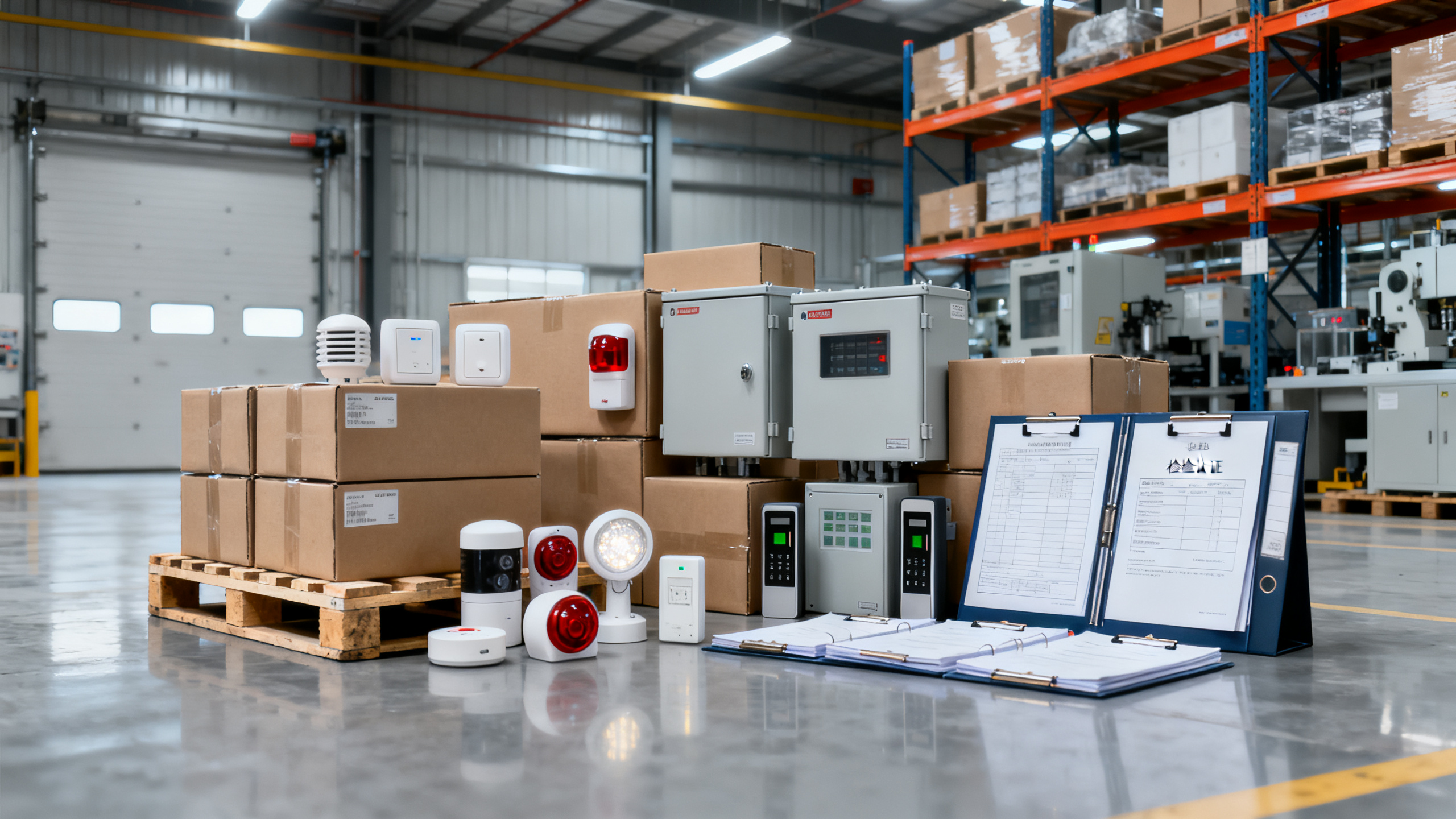
Choosing a capable Security & Safety supplier shapes far more than product availability. It influences shipment predictability, inspection readiness, site safety performance, and the ability to pass global compliance reviews without delay.
In industrial projects, delivery failure often becomes a safety problem, and compliance failure often becomes a financial problem. A reliable Security & Safety supplier helps reduce both by aligning documentation, lead times, and certified product quality.
This article examines where supplier selection matters most, how needs vary by application, and what signals support resilient sourcing decisions across complex industrial environments.
Why scenario-based supplier selection matters in industrial delivery
A Security & Safety supplier serving a warehouse retrofit faces different requirements than one supporting a greenfield plant, offshore platform, or utility substation expansion.
The product category may look similar on paper. Yet installation windows, regulatory standards, environmental stress, and document control needs can differ sharply.
That is why a scenario-based evaluation works better than a price-only comparison. It reveals whether a Security & Safety supplier can support actual operating conditions, not only initial purchase orders.
In many projects, late delivery of alarms, detectors, PPE, emergency lighting, or access control hardware disrupts commissioning sequences. One missing certified component can hold back an entire handover milestone.
Compliance pressure is equally scenario-driven. A facility handling hazardous materials needs stronger traceability than a standard commercial site. Export projects may require CE, UL, ISO, or local approval evidence.
Scenario 1: Fast-track construction projects where schedule risk is highest
Fast-track builds depend on synchronized procurement. Here, a Security & Safety supplier affects delivery reliability through production planning, stock depth, packaging accuracy, and shipment visibility.
Core judgment points include realistic lead times, substitute part control, and the ability to deliver complete documentation before goods reach site.
What usually matters most
- Batch consistency across multiple deliveries
- Accurate packing lists linked to installation zones
- Early notice of component shortages
- Document packs ready for site acceptance
A strong Security & Safety supplier does not simply ship products. It supports project sequencing by reducing mismatch between engineering revisions and delivered materials.
Scenario 2: Regulated facilities where audit exposure is the main concern
In pharmaceuticals, food processing, energy, chemicals, and public infrastructure, audit readiness can be more critical than upfront savings.
In these settings, a Security & Safety supplier affects compliance through certification validity, lot traceability, test records, and change notification discipline.
Key compliance checks by scenario
- Are CE, UL, ISO, or local approvals current and product-specific?
- Can serial numbers and batches be traced to test certificates?
- Is there formal control over engineering or material changes?
- Are declarations, manuals, and labels aligned with shipment content?
A weak Security & Safety supplier may still provide usable products. However, missing evidence can create nonconformance findings, customs delays, or failed commissioning audits.
Scenario 3: Harsh operating environments where reliability drives total cost
Mining sites, offshore assets, wastewater plants, and heavy manufacturing lines expose equipment to dust, vibration, moisture, corrosion, and temperature swings.
Here, a Security & Safety supplier influences long-term performance by recommending products that match environmental ratings, installation methods, and maintenance realities.
The right supplier asks practical questions. It checks enclosure ratings, cable compatibility, cleaning chemicals, power quality, and spare strategy before quoting.
This scenario often separates strategic partners from commodity sellers. A qualified Security & Safety supplier connects product selection with lifecycle stability, not only initial specification sheets.
How delivery and compliance priorities change across scenarios
This comparison shows why one evaluation method rarely fits every project. The best Security & Safety supplier for one scenario may not be the best choice for another.
Practical indicators that a Security & Safety supplier will support resilience
Supplier resilience becomes visible through measurable behaviors. These indicators are more useful than marketing claims because they predict real execution quality.
Operational indicators
- On-time delivery performance across recent projects
- Transparent communication on shortages and alternatives
- Defined escalation path for urgent orders
- Capability to support phased or call-off shipments
Compliance indicators
- Controlled master file for certifications and declarations
- Product traceability from source to shipped batch
- Documented quality checks before dispatch
- Consistency between labels, manuals, and approved drawings
When a Security & Safety supplier performs well across both sets of indicators, the sourcing decision usually gains durability under changing project conditions.
Scenario-fit recommendations before awarding supply
A structured review reduces surprises later. Instead of asking generic questions, tie each review point to the operating scenario and project criticality.
- Map the equipment to the installation sequence and identify critical-path items.
- Define mandatory standards, certificates, and local approvals before quotation review.
- Request recent evidence of delivery performance for comparable project conditions.
- Test document control with a sample pack, not a verbal promise.
- Check whether the Security & Safety supplier manages engineering changes formally.
- Review spare parts, replacement lead times, and after-delivery technical support.
These steps help separate suppliers that can protect continuity from those that only meet the minimum commercial requirement.
Common misjudgments that weaken delivery and compliance outcomes
One frequent mistake is assuming certificates alone prove suitability. Documents matter, but they do not replace product matching, packaging discipline, or schedule control.
Another mistake is evaluating a Security & Safety supplier by catalog breadth without checking execution depth. A large range does not guarantee traceability or responsive support.
Teams also overlook regional compliance differences. A product accepted in one market may still require different marks, language support, or test evidence elsewhere.
Finally, short-term cost focus can mask downstream losses. Rework, idle labor, inspection failures, and emergency freight can easily outweigh an initial unit-price saving.
Next-step actions for stronger supplier decisions
A better sourcing outcome starts with a scenario-led checklist. Rank delivery criticality, compliance exposure, and environmental severity before comparing offers.
Then evaluate each Security & Safety supplier against those conditions using evidence, not assumptions. Ask for lead-time history, sample compliance files, and references from similar operating contexts.
For global industrial programs, the most valuable supplier is rarely the cheapest line item. It is the one that consistently protects continuity, supports audits, and reduces avoidable risk across the full project lifecycle.
When delivery reliability and compliance confidence matter equally, choosing the right Security & Safety supplier becomes a strategic control point rather than a routine purchase decision.
Technical Specifications
- How to Select Electronic Hotel Key Card Locks for Guest Rooms and Staff AreasAuthor :Safety Compliance Lead
- How to Select Lab Instruments for Reliable Chemical Analysis WorkflowsAuthor :Precision Metrology Expert
- How to Size a UPS for Server Rooms: Load, Runtime, and Redundancy FactorsAuthor :Grid Infrastructure Analyst
Expert Insights

Chief Security Architect
Dr. Thorne specializes in the intersection of structural engineering and digital resilience. He has advised three G7 governments on industrial infrastructure security.
Related Analysis
- Sep 17, 2026How to Select Electronic Hotel Key Card Locks for Guest Rooms and Staff AreasAuthor :Safety Compliance Lead
- Sep 16, 2026How to Select Lab Instruments for Reliable Chemical Analysis WorkflowsAuthor :Precision Metrology Expert
- Sep 15, 2026How to Size a UPS for Server Rooms: Load, Runtime, and Redundancy FactorsAuthor :Grid Infrastructure Analyst
Core Sector // 01
Security & Safety
- Can One Supplier Provide Both IEC- and ATEX-Certified Safety Equipment?Author :Safety Compliance Lead

- Are Dual IEC and NEC Safety Certifications Worth the Cost?Author :Safety Compliance Lead

- What Is the Difference Between Class I and Class II PPE?Author :Safety Compliance Lead

- Which Oil and Gas Safety Standards Should Contractors Meet Before Site Mobilization?Author :Safety Compliance Lead

- EU REACH Adds PFAS Cap for PPE WorkwearAuthor :Safety Compliance Lead

- How to Evaluate a Chemical Resistant Suit Supplier for Industrial Safety ProcurementAuthor :Safety Compliance Lead

- EU REACH Sets 50 ppb PFAS Cap for PPE WorkwearAuthor :Safety Compliance Lead

- EU Tightens PFOA Limit for PPE and Industrial Filter MediaAuthor :Safety Compliance Lead