How security guard uniforms affect safety and trust
Author
Date Published
Reading Time
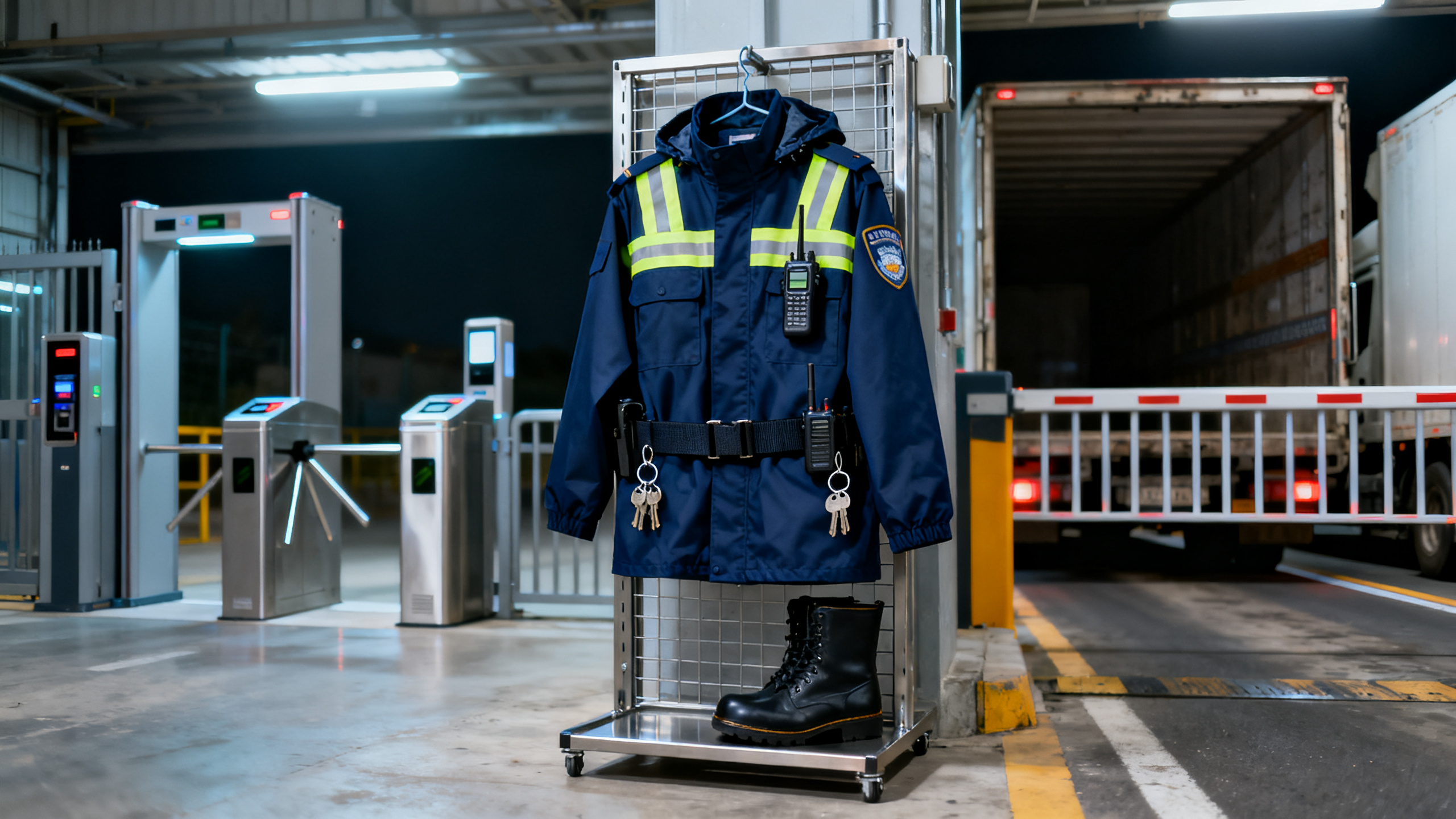
In high-risk facilities, security guard uniforms are more than a dress code. They are visible control measures that influence identification, authority, response time, and trust.
A well-designed uniform system supports compliance, reduces confusion during incidents, and helps employees, visitors, and contractors recognize legitimate security personnel quickly.
From durable fabrics to role-based insignia, security guard uniforms affect both operational safety and perceived professionalism across industrial, commercial, logistics, and public-facing environments.
Why security guard uniforms need a checklist approach
Uniform decisions often look simple until an emergency exposes gaps. A missing badge, poor visibility, or unsuitable fabric can slow verification and response.
Security guard uniforms should be assessed as part of a broader safety control system, not as a cosmetic procurement item.
A checklist makes decisions repeatable. It helps compare garments, confirm site requirements, and document why a uniform style supports operational risk control.
This approach is especially important where access control, hazardous zones, visitor management, and emergency coordination overlap during daily operations.
Core checklist for safer and more trusted security guard uniforms
Use the following checklist when reviewing new security guard uniforms or auditing an existing uniform program across multiple locations.
- Verify visual authority by selecting colors, cuts, and insignia that distinguish guards from staff, visitors, contractors, and emergency responders.
- Confirm role identification with name badges, rank markings, department patches, and site-specific access indicators that remain readable at working distance.
- Specify durable fabrics that resist abrasion, repeated washing, weather exposure, and light industrial contact without losing shape or professional appearance.
- Assess high-visibility needs for gates, loading bays, parking areas, night patrols, and vehicle routes where moving equipment creates collision risk.
- Check PPE compatibility so jackets, trousers, belts, and shirts do not interfere with helmets, gloves, radios, body cameras, or safety footwear.
- Review climate suitability by matching breathable, insulated, waterproof, or flame-resistant options to indoor posts, outdoor patrols, and seasonal extremes.
- Standardize pocket placement for notebooks, access cards, flashlights, keys, and communication devices, reducing delays during checks or incident response.
- Control branding details to avoid confusion with police, military, or public emergency services while preserving clear site authority.
- Document cleaning and replacement cycles so security guard uniforms remain hygienic, intact, color-consistent, and presentable during all shifts.
- Test movement comfort through walking, standing, bending, vehicle entry, stair climbing, and emergency sprint drills before final approval.
- Confirm gender-inclusive sizing and fit options, ensuring every guard can wear the uniform safely without restriction, discomfort, or improvised alteration.
- Maintain issue records for each uniform item, including size, serial markings, return status, and disposal after employment or contract changes.
How uniforms influence safety performance
Security guard uniforms improve safety first through fast recognition. During an alarm, people need to know who can give instructions.
Clear identification reduces hesitation. It also helps responders locate access points, incident witnesses, and people responsible for local control procedures.
Visibility is equally important. Reflective strips, contrast panels, and high-visibility outerwear support safer patrols near trucks, forklifts, and low-light zones.
Security guard uniforms also affect posture and readiness. Poor fit restricts movement, while weak seams or loose accessories can create snagging hazards.
In facilities with hazardous materials or electrical rooms, uniform materials should be reviewed against the site risk assessment and PPE matrix.
How uniforms build trust and reduce friction
Trust begins with consistency. When security guard uniforms look standardized, maintained, and appropriate, people perceive the security function as controlled.
A neat uniform does not replace competence. However, it strengthens first impressions before a badge is checked or a procedure is explained.
Trust also depends on legitimacy. Site-specific patches, identification cards, and visitor-facing name plates help prevent impersonation and unauthorized direction.
When uniform standards are weak, people may challenge instructions. That delay can matter during evacuations, gate closures, or restricted-area enforcement.
Well-managed security guard uniforms create a visible boundary between authorized security action and informal intervention by unqualified personnel.
Scenario guidance for different operating environments
Industrial plants and critical infrastructure
Industrial sites need security guard uniforms that work around machinery, restricted zones, chemicals, dust, heat, and heavy vehicle traffic.
Choose high-visibility elements, robust footwear compatibility, and fabrics that support the required PPE hierarchy without creating heat stress.
Corporate campuses and commercial buildings
Commercial environments often prioritize approachability and brand alignment. Security guard uniforms should look professional without appearing overly militarized.
Blazers, soft-shell jackets, clear badges, and discreet radio management can support reception control while maintaining visible authority.
Logistics hubs, ports, and warehouses
These sites require rapid recognition across distance. High-contrast security guard uniforms help drivers and loading teams identify checkpoint authority.
Weatherproof layers, reflective tape, reinforced pockets, and radio-friendly designs are essential for long outdoor shifts and traffic coordination.
Hospitals, schools, and public venues
Public-facing sites need uniforms that reduce anxiety while remaining unmistakable. Overly aggressive styling can undermine cooperation.
Use calm colors, clear identification, and practical equipment placement to support de-escalation, wayfinding, and controlled access.
Common risks often missed in uniform programs
Ignoring local legal restrictions. Some jurisdictions restrict uniform colors, emblems, titles, or designs that resemble official police or military apparel.
Using one design for every post. Gate patrol, control room monitoring, reception screening, and emergency response may require different uniform components.
Overlooking night conditions. A uniform that looks clear indoors can disappear near dark yards, wet pavement, or glare from vehicle headlights.
Allowing unofficial accessories. Personal jackets, caps, bags, or tactical items can dilute identity and create inconsistent impressions.
Failing to retire old uniforms. Unreturned security guard uniforms increase impersonation risk, especially where access control depends on visual recognition.
Neglecting laundering standards. Dirty, faded, or damaged garments weaken trust and may expose guards to hygiene, odor, or contamination issues.
Practical execution steps for a reliable uniform system
- Map every security post, patrol route, hazard zone, weather exposure, and visitor contact point before selecting any garment specification.
- Build a uniform matrix that defines standard items, optional layers, PPE interfaces, insignia rules, and replacement intervals.
- Run a field trial across day, night, indoor, outdoor, and emergency drill conditions before committing to full deployment.
- Collect feedback on mobility, heat, radio use, pocket access, badge readability, and comfort during long shifts.
- Approve final security guard uniforms only after confirming legal compliance, site identity requirements, and documented safety performance.
- Train guards on correct wear, prohibited modifications, cleaning expectations, badge display, and return procedures after role changes.
- Audit uniform condition during routine supervision, incident reviews, and seasonal changes to keep standards consistent.
Execution should include documentation. A simple approval record can show why a uniform was selected and how risks were addressed.
That record may include fabric specifications, visibility references, sample photos, supplier data, cleaning guidance, and site approval dates.
Key specification points to include before approval
- Define primary garment materials, weight, breathability, colorfastness, seam strength, and expected service life under normal duty cycles.
- Specify reflective material placement where vehicle movement, dim lighting, or poor weather affects guard visibility.
- Set badge dimensions, logo placement, rank indicators, and wording to support recognition without violating local regulations.
- List compatible equipment, including radios, keys, flashlights, access cards, gloves, body cameras, and emergency communication devices.
- Require sample testing after laundering, since shrinkage, fading, curled patches, and weakened closures often appear later.
Security guard uniforms should be evaluated like safety equipment with visual, operational, and behavioral effects.
The best specification balances authority, comfort, durability, compliance, and site identity without adding unnecessary complexity.
Summary and action guide
Security guard uniforms affect safety by improving recognition, visibility, movement, equipment access, and emergency coordination.
They affect trust by signaling legitimacy, consistency, preparedness, and professional control across routine and high-pressure situations.
Start with a site risk review. Then create a checklist covering identification, visibility, fabric performance, PPE compatibility, comfort, and control procedures.
Test security guard uniforms in real working conditions before full rollout, and review them after incidents, seasonal changes, or site layout updates.
A disciplined uniform program is a low-friction way to strengthen operational safety and visible trust across modern industrial and commercial environments.
Technical Specifications
- How to Select Electronic Hotel Key Card Locks for Guest Rooms and Staff AreasAuthor :Safety Compliance Lead
- How to Select Lab Instruments for Reliable Chemical Analysis WorkflowsAuthor :Precision Metrology Expert
- How to Size a UPS for Server Rooms: Load, Runtime, and Redundancy FactorsAuthor :Grid Infrastructure Analyst
Expert Insights

Chief Security Architect
Dr. Thorne specializes in the intersection of structural engineering and digital resilience. He has advised three G7 governments on industrial infrastructure security.
Related Analysis
- Sep 17, 2026How to Select Electronic Hotel Key Card Locks for Guest Rooms and Staff AreasAuthor :Safety Compliance Lead
- Sep 16, 2026How to Select Lab Instruments for Reliable Chemical Analysis WorkflowsAuthor :Precision Metrology Expert
- Sep 15, 2026How to Size a UPS for Server Rooms: Load, Runtime, and Redundancy FactorsAuthor :Grid Infrastructure Analyst
Core Sector // 01
Security & Safety
- Can One Supplier Provide Both IEC- and ATEX-Certified Safety Equipment?Author :Safety Compliance Lead

- Are Dual IEC and NEC Safety Certifications Worth the Cost?Author :Safety Compliance Lead

- What Is the Difference Between Class I and Class II PPE?Author :Safety Compliance Lead

- Which Oil and Gas Safety Standards Should Contractors Meet Before Site Mobilization?Author :Safety Compliance Lead

- EU REACH Adds PFAS Cap for PPE WorkwearAuthor :Safety Compliance Lead

- How to Evaluate a Chemical Resistant Suit Supplier for Industrial Safety ProcurementAuthor :Safety Compliance Lead

- EU REACH Sets 50 ppb PFAS Cap for PPE WorkwearAuthor :Safety Compliance Lead

- EU Tightens PFOA Limit for PPE and Industrial Filter MediaAuthor :Safety Compliance Lead