Is a low Security & Safety price worth the hidden risk?
Author
Date Published
Reading Time
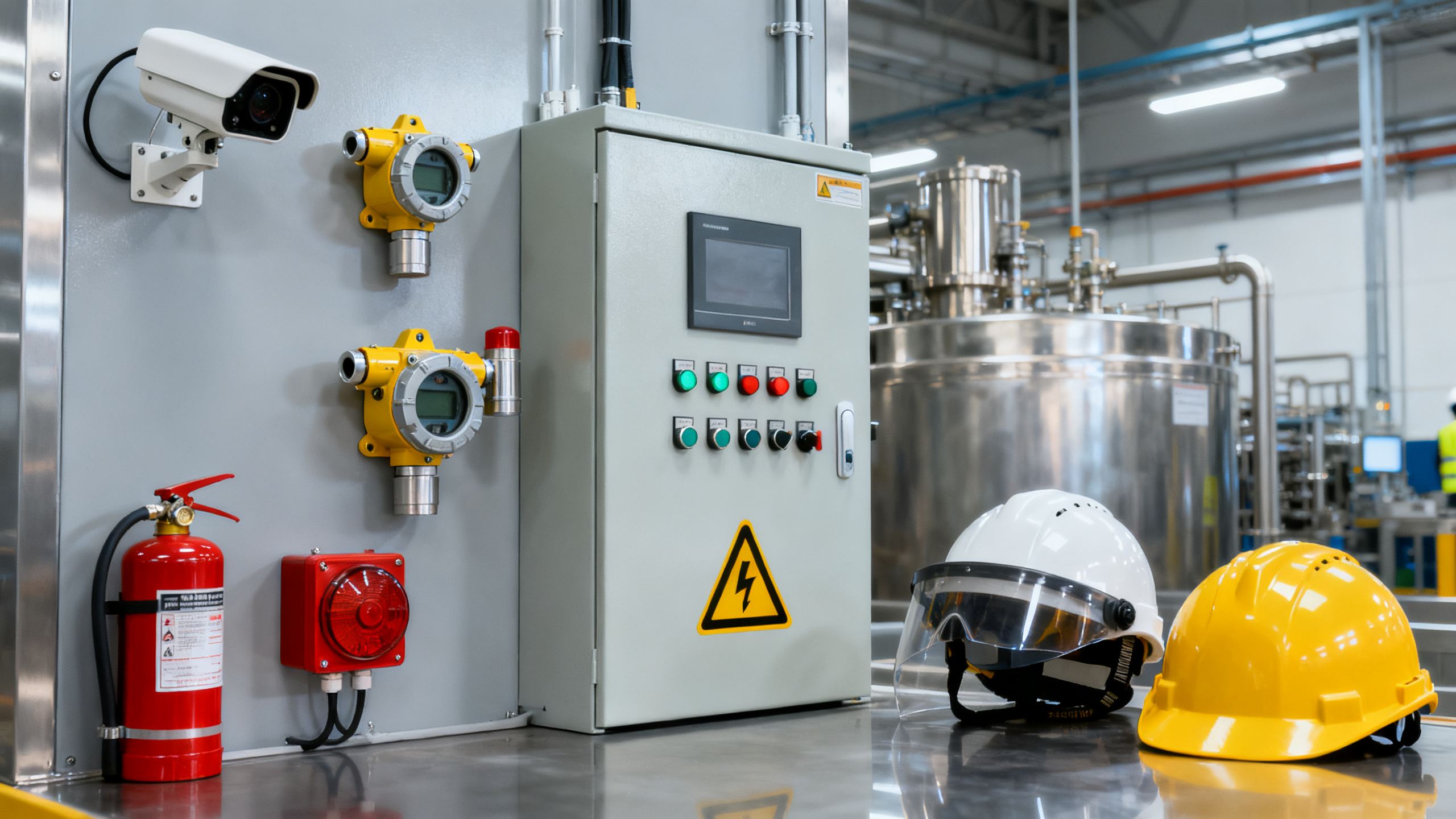
A low Security & Safety price may look attractive on paper, but for quality control and safety managers, the hidden cost can be far greater than the initial savings. In industrial environments where compliance, reliability, and risk prevention are non-negotiable, choosing the cheapest option can expose operations to failures, penalties, and long-term liability. This article explores what that price really includes—and what it may leave dangerously uncovered.
What does a low Security & Safety price usually include—and exclude?
Security & Safety price often reflects more than the visible item cost. It may include hardware, but exclude testing, certification, maintenance, training, or technical support.
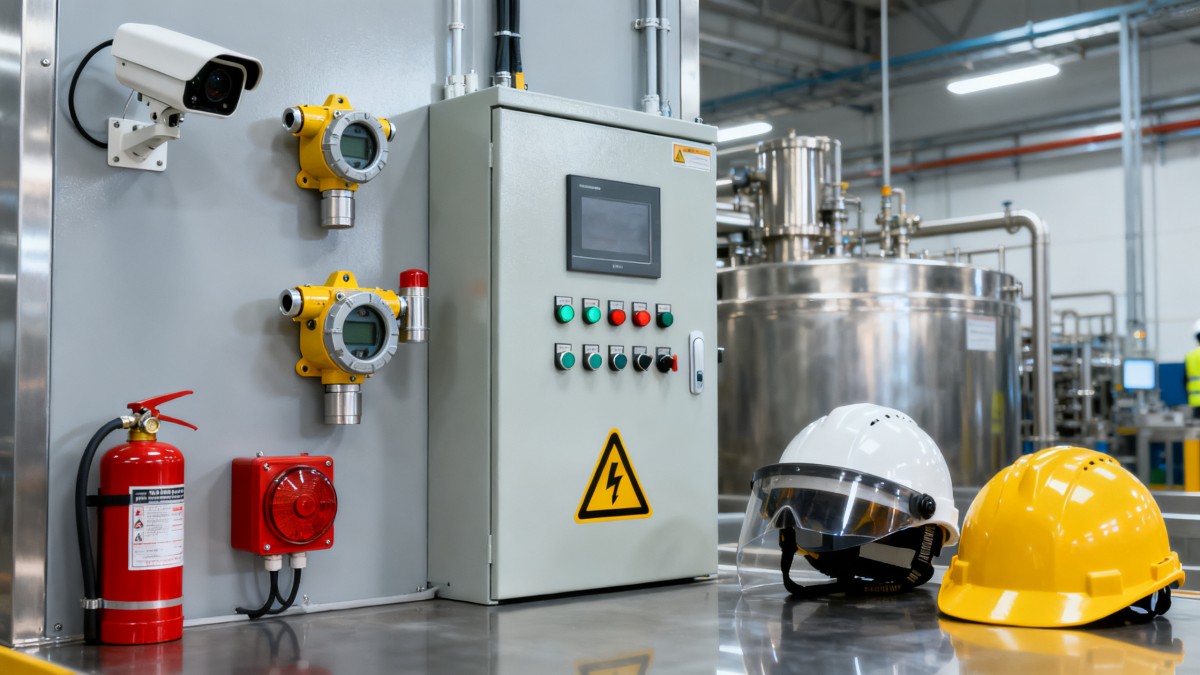
In industrial settings, these exclusions matter immediately. A cheaper detector, barrier, switch, helmet, or surveillance unit may appear equivalent, yet perform differently under heat, dust, vibration, or chemical exposure.
The lowest Security & Safety price may also hide weaker materials, shorter service life, reduced ingress protection, or limited compatibility with existing systems.
Another common issue is documentation. Some products lack traceable test records, calibration evidence, installation guidance, or updated compliance files.
When documentation is missing, the operational burden shifts downstream. Site teams then spend extra time validating performance, resolving audit questions, or replacing components after inspection failures.
A realistic Security & Safety price should be judged as a lifecycle figure, not a purchase line alone. That means considering acquisition, installation, verification, service intervals, and decommissioning risk.
Typical hidden exclusions behind a low quote
- Factory acceptance testing or site commissioning
- CE, UL, ISO, or application-specific certification support
- Spare parts availability and replacement lead times
- Cybersecurity updates for connected safety systems
- Training, user manuals, and multilingual technical support
- Calibration, inspection, or preventive maintenance plans
Why can the lowest Security & Safety price create higher operational risk?
Industrial risk rarely appears at the purchasing stage. It appears during an alarm event, an emergency shutdown, an evacuation, or a regulatory inspection.
At that moment, a low Security & Safety price stops being a savings story. It becomes a performance test under pressure.
If a sensor drifts out of tolerance, a fire door fails, or PPE degrades early, the consequences can extend far beyond replacement cost.
Hidden risk usually falls into five areas: compliance exposure, downtime, injury potential, insurance complications, and reputational damage.
How risk expands after a cheap selection
- Failure rates rise in harsh environments.
- Maintenance frequency increases unexpectedly.
- Shutdowns become longer due to missing parts.
- Audits uncover gaps in standards compliance.
- Incident investigations reveal preventable weaknesses.
For example, a lower Security & Safety price on emergency lighting may save budget initially. However, battery failure during outage conditions can trigger evacuation issues and compliance breaches.
A cheaper access control device may also increase unauthorized entry risk. If system logs are incomplete, post-incident traceability becomes unreliable.
This is why industrial buyers often compare consequence severity, not only item price. In critical systems, one weak point can compromise an entire safety chain.
How should Security & Safety price be evaluated beyond unit cost?
A better method is total value evaluation. This approach connects Security & Safety price with performance, compliance, resilience, and support.
Start by defining the operational context. Indoor office requirements differ greatly from refineries, tunnels, ports, mines, food plants, or power facilities.
Then review environmental stress factors. Temperature swings, corrosive media, dust load, vibration, washdown exposure, and electromagnetic interference affect real cost.
Questions that reveal the true Security & Safety price
- What standards does the product meet, and who verified them?
- What is the expected lifespan in actual site conditions?
- How often does calibration or replacement occur?
- Are spare parts stocked regionally?
- Can the product integrate with legacy systems?
- What happens if the device fails during a critical event?
These questions move the discussion from price alone to suitability. That shift is essential in the comprehensive industrial sector, where one specification gap can disrupt multiple operations.
The best Security & Safety price is rarely the lowest. It is the most defensible when measured against risk-adjusted lifecycle cost.
Which application scenarios are most sensitive to a low Security & Safety price?
Not every application carries the same consequence level. Some settings can absorb failure more easily, while others cannot tolerate even brief underperformance.
High-sensitivity scenarios usually involve hazardous processes, dense occupancy, environmental liability, or mission-critical infrastructure.
Examples where a low Security & Safety price is especially risky
- Gas detection in chemical processing areas
- Fire suppression interfaces in logistics hubs
- Electrical arc protection in substations
- Confined-space monitoring in heavy maintenance zones
- CCTV and access control around critical assets
- Emergency communication systems in large facilities
In these cases, the Security & Safety price must support reliability evidence. Field performance history, certification scope, and service responsiveness matter more than headline discounting.
By contrast, low-consequence zones may permit broader commercial flexibility. Even then, baseline compliance and traceability should never be compromised.
How can options be compared without falling for misleading price gaps?
The cleanest way is to compare offers line by line. Many apparent Security & Safety price advantages disappear after normalization.
One quote may include installation kits, documentation, validation, and warranty. Another may list only the base unit.
Use a structured comparison table before deciding. That prevents low-price anchoring and reveals hidden cost drivers early.
This comparison method also strengthens internal justification. It connects Security & Safety price to measurable business impact rather than subjective preference.
What practical steps reduce hidden risk when reviewing Security & Safety price?
A disciplined review process prevents false savings. It also improves technical alignment across safety, engineering, maintenance, and compliance functions.
Recommended checklist
- Define the application risk level before comparing quotes.
- Confirm relevant standards, ratings, and approval scope.
- Request lifecycle cost assumptions, not just unit pricing.
- Review warranty terms, service response, and spare availability.
- Check installation complexity and integration requirements.
- Validate supplier documentation and audit readiness.
- Test critical products in real or simulated conditions.
If a low Security & Safety price still passes these checks, it may be a genuine value opportunity. If not, the discount is likely masking future exposure.
Strong decisions are built on evidence. In industrial environments, evidence beats assumptions every time.
Quick FAQ reference
A low Security & Safety price can be worth considering, but only after the hidden layers are examined carefully. In complex industrial operations, the cheapest line item can become the most expensive decision.
The smarter approach is to evaluate Security & Safety price through compliance, reliability, serviceability, and consequence of failure. That is where real value becomes visible.
For the next review, build a side-by-side risk and lifecycle checklist before approving any offer. A stronger decision today can prevent avoidable loss tomorrow.
Technical Specifications
- How to Select Electronic Hotel Key Card Locks for Guest Rooms and Staff AreasAuthor :Safety Compliance Lead
- How to Select Lab Instruments for Reliable Chemical Analysis WorkflowsAuthor :Precision Metrology Expert
- How to Size a UPS for Server Rooms: Load, Runtime, and Redundancy FactorsAuthor :Grid Infrastructure Analyst
Expert Insights

Chief Security Architect
Dr. Thorne specializes in the intersection of structural engineering and digital resilience. He has advised three G7 governments on industrial infrastructure security.
Related Analysis
- Sep 17, 2026How to Select Electronic Hotel Key Card Locks for Guest Rooms and Staff AreasAuthor :Safety Compliance Lead
- Sep 16, 2026How to Select Lab Instruments for Reliable Chemical Analysis WorkflowsAuthor :Precision Metrology Expert
- Sep 15, 2026How to Size a UPS for Server Rooms: Load, Runtime, and Redundancy FactorsAuthor :Grid Infrastructure Analyst
Core Sector // 01
Security & Safety
- Can One Supplier Provide Both IEC- and ATEX-Certified Safety Equipment?Author :Safety Compliance Lead

- Are Dual IEC and NEC Safety Certifications Worth the Cost?Author :Safety Compliance Lead

- What Is the Difference Between Class I and Class II PPE?Author :Safety Compliance Lead

- Which Oil and Gas Safety Standards Should Contractors Meet Before Site Mobilization?Author :Safety Compliance Lead

- EU REACH Adds PFAS Cap for PPE WorkwearAuthor :Safety Compliance Lead

- How to Evaluate a Chemical Resistant Suit Supplier for Industrial Safety ProcurementAuthor :Safety Compliance Lead

- EU REACH Sets 50 ppb PFAS Cap for PPE WorkwearAuthor :Safety Compliance Lead

- EU Tightens PFOA Limit for PPE and Industrial Filter MediaAuthor :Safety Compliance Lead