How to Choose Electrical Safety Equipment for Industrial Maintenance Tasks
Author
Date Published
Reading Time
Why electrical safety equipment decisions are getting more demanding
Industrial maintenance has changed in a visible way. Tasks now happen around denser electrical systems, tighter uptime targets, and stricter documentation requirements.
That shift makes electrical safety equipment more than a checklist item. It now sits at the intersection of injury prevention, compliance, and operational continuity.
In many facilities, maintenance teams face mixed environments. Legacy switchgear, upgraded drives, temporary power setups, and digital controls often exist side by side.
As a result, one generic kit rarely covers real exposure. The right electrical safety equipment must match voltage level, fault energy, work method, and site conditions.
This is also where recent industry practice has matured. The conversation is moving from “Do we have PPE?” to “Is each item suitable, verified, and used correctly?”
That distinction matters. Infrastructural work leaves little room for assumptions, especially where electrical and mechanical hazards overlap during maintenance shutdowns or live testing.
A clear signal from the field: hazard profiles are no longer uniform
From recent maintenance practice, the most obvious change is variability. The same shift may include troubleshooting, isolation, testing, and panel access across different systems.
That is why electrical safety equipment selection now starts with exposure mapping, not brand preference. The hazard determines the equipment, not the other way around.
Several factors are driving this change:
- More arc flash awareness in industrial maintenance programs.
- Aging infrastructure mixed with newer automation hardware.
- Stronger enforcement of CE, UL, ISO, and site-specific procedures.
- Increased use of temporary contractors during outages and turnaround work.
- Demand for traceable inspection records and equipment condition checks.
These signals align with the wider industrial view seen across safety, measurement, and power systems. Reliable selection depends on technical fit, test integrity, and documented compliance.
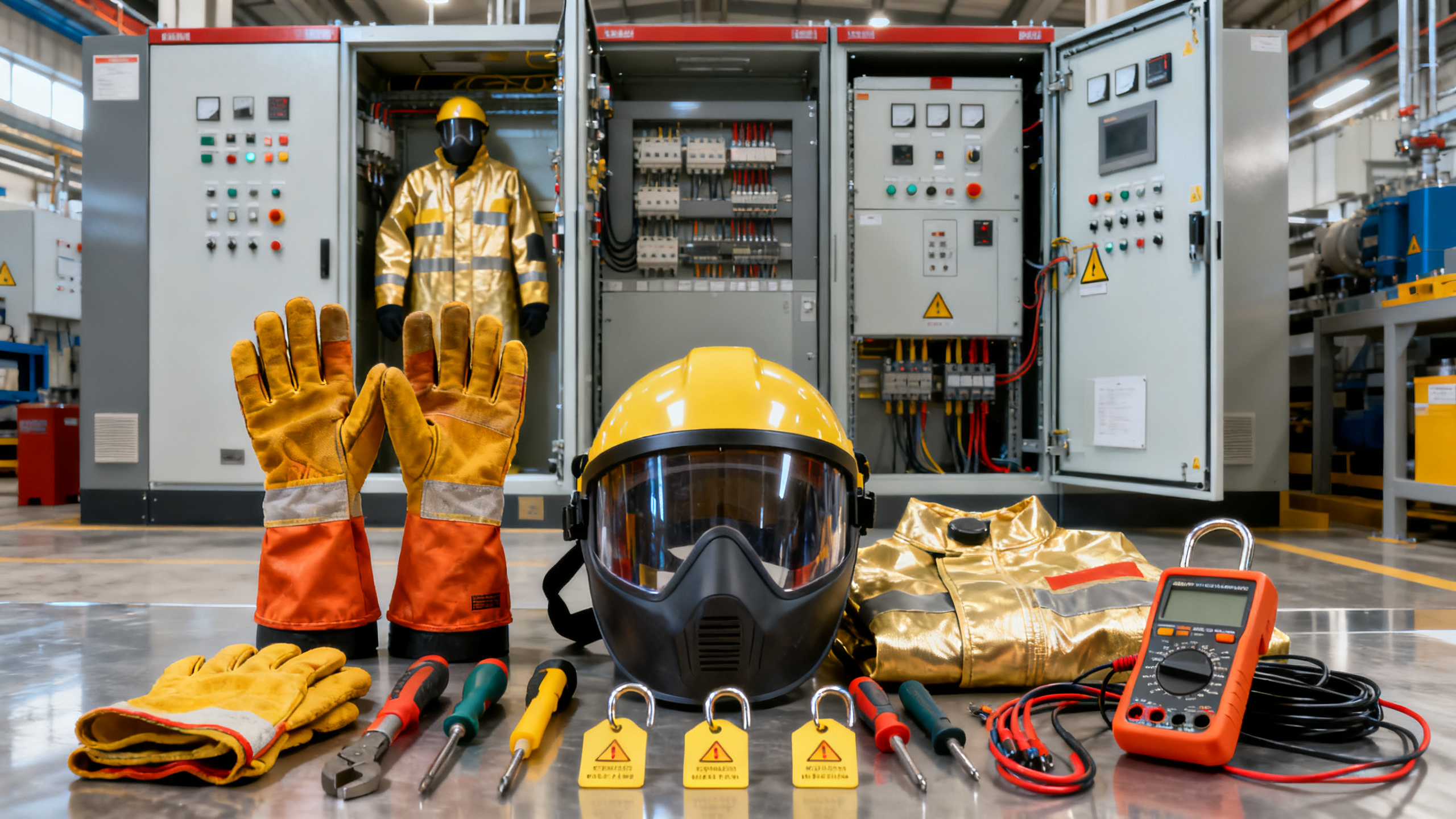
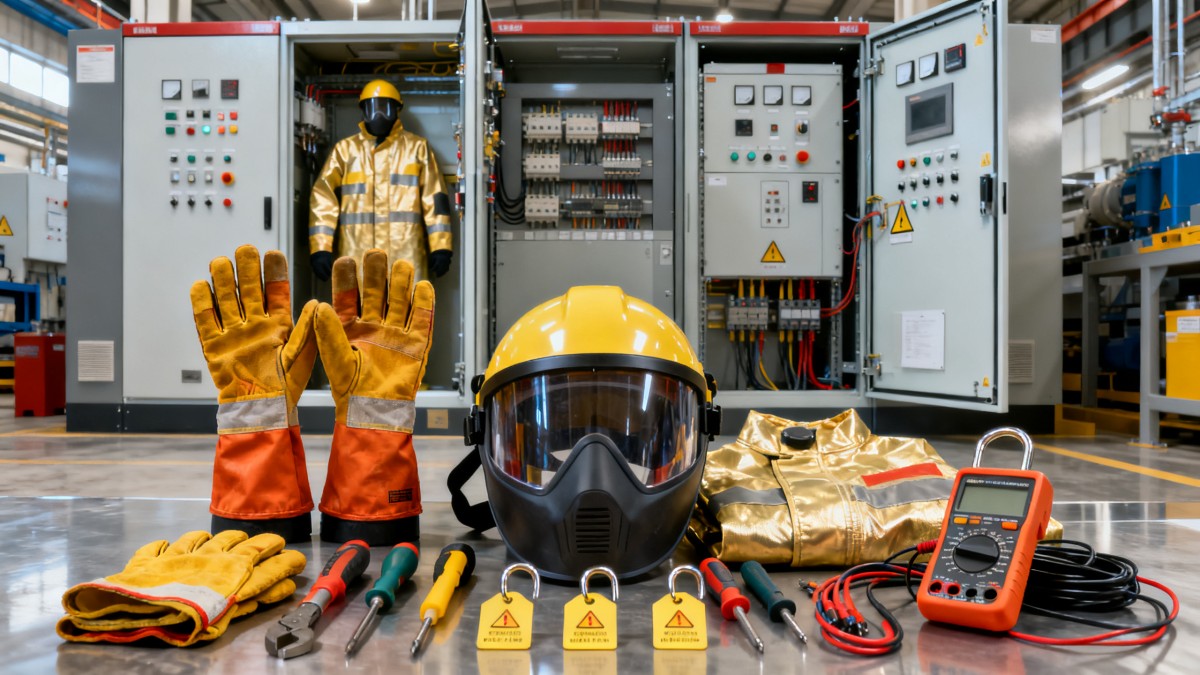
In practice, this means insulated gloves, face shields, arc-rated clothing, voltage detectors, insulated tools, and lockout/tagout devices should be evaluated as one system.
What to evaluate before choosing electrical safety equipment
The safest choices usually come from asking better questions early. Good electrical safety equipment fits the task, the environment, and the actual failure mode.
Start with the electrical exposure, not the product label
Check nominal voltage, possible transient conditions, and whether arc flash energy has been assessed. A glove rating alone does not define total protection.
If work includes testing energized circuits, meter category matters. CAT ratings must align with the installation point and fault potential.
Look closely at standards and certification credibility
Industrial sites increasingly reject vague claims. Electrical safety equipment should show recognized markings, current standards alignment, and clear testing information.
Pay attention to certification scope. A face shield tested for impact is not automatically suitable for arc flash exposure.
Fit and usability affect real protection
Poor fit leads to shortcuts. Oversized gloves reduce dexterity, fogging visors reduce visibility, and heavy clothing can tempt improper wear during long tasks.
The best electrical safety equipment protects without making routine maintenance unworkable. Comfort is not a luxury issue; it directly affects compliance in the field.
Inspection life matters as much as purchase condition
Some failures happen after issue, not before use. Gloves age, testers drift, labels fade, and lockout devices disappear into tool carts.
Selection should include inspection intervals, storage rules, replacement triggers, and calibration or retest requirements where applicable.
The equipment mix that usually deserves closer attention
Not every maintenance task needs the same set. Still, a few categories of electrical safety equipment repeatedly determine whether protection is adequate or superficial.
The table shows a broader pattern. Most weak points come from mismatch, not absence. Sites may own electrical safety equipment but still expose workers through poor alignment.
Why selection errors often appear during maintenance, not procurement
A frequent problem is that equipment looks compliant on paper but fails in actual use. Maintenance work reveals gaps faster than storage shelves do.
Live-dead-live testing may be skipped if the meter is awkward. Arc-rated hoods may stay off if heat stress becomes excessive in confined spaces.
Another issue is cross-discipline interference. Electrical tasks often happen during mechanical isolation, cleaning, or instrumentation checks, which complicates control of boundaries and PPE consistency.
This is why the best electrical safety equipment strategy is operational, not purely administrative. Selection should be validated against the job plan, not just the specification sheet.
- Review recent near misses linked to testing, panel access, or isolation.
- Compare issued gear with the actual task sequence.
- Check whether workers improvise around missing accessories or poor fit.
- Confirm that inspection records are visible and current at point of use.
Those observations often reveal more than any catalog review. They show whether electrical safety equipment is truly integrated into maintenance behavior.
What matters more now: integration of safety, measurement, and documentation
A stronger trend across industrial infrastructure is convergence. Safety gear, test instruments, and compliance records are no longer managed as separate topics.
That view is consistent with how critical industries now assess resilience. Protection depends on reliable components, verified readings, and traceable procedures working together.
For electrical safety equipment, this leads to several practical changes:
- PPE selection is increasingly linked to arc studies and equipment labels.
- Meters and detectors are checked within broader instrument control programs.
- Lockout tools are reviewed alongside maintenance permits and isolation maps.
- Replacement cycles are based more on condition evidence than routine guesswork.
This integrated approach reduces blind spots. It also supports the higher trust standards expected in heavy industry and internationally connected operations.
The next few decisions should focus on suitability, evidence, and repeatability
The strongest judgment going forward is simple. Electrical safety equipment should be selected as a controlled risk measure, not as a static inventory item.
Where task conditions are changing, old assumptions become expensive. A glove class, a meter category, or an arc-rated garment may no longer fit upgraded equipment or revised procedures.
A useful next step is to review the highest-risk maintenance tasks first. Focus on energized verification, panel entry, temporary power work, and shutdown isolation points.
Then compare current electrical safety equipment against three questions:
- Is it suitable for the real hazard level?
- Is there credible evidence of compliance and condition?
- Can it be used correctly, every time, under field conditions?
If any answer is uncertain, the equipment set needs attention. That may mean better matching, updated training, tighter inspection control, or a revised task method.
In industrial maintenance, safe performance rarely depends on one item alone. It depends on choosing electrical safety equipment that keeps pace with the system it is meant to protect against.
Technical Specifications
- How to Select Electronic Hotel Key Card Locks for Guest Rooms and Staff AreasAuthor :Safety Compliance Lead
- How to Select Lab Instruments for Reliable Chemical Analysis WorkflowsAuthor :Precision Metrology Expert
- How to Size a UPS for Server Rooms: Load, Runtime, and Redundancy FactorsAuthor :Grid Infrastructure Analyst
Expert Insights

Chief Security Architect
Dr. Thorne specializes in the intersection of structural engineering and digital resilience. He has advised three G7 governments on industrial infrastructure security.
Related Analysis
- Sep 17, 2026How to Select Electronic Hotel Key Card Locks for Guest Rooms and Staff AreasAuthor :Safety Compliance Lead
- Sep 16, 2026How to Select Lab Instruments for Reliable Chemical Analysis WorkflowsAuthor :Precision Metrology Expert
- Sep 15, 2026How to Size a UPS for Server Rooms: Load, Runtime, and Redundancy FactorsAuthor :Grid Infrastructure Analyst
Core Sector // 01
Security & Safety
- Can One Supplier Provide Both IEC- and ATEX-Certified Safety Equipment?Author :Safety Compliance Lead

- Are Dual IEC and NEC Safety Certifications Worth the Cost?Author :Safety Compliance Lead

- What Is the Difference Between Class I and Class II PPE?Author :Safety Compliance Lead

- Which Oil and Gas Safety Standards Should Contractors Meet Before Site Mobilization?Author :Safety Compliance Lead

- EU REACH Adds PFAS Cap for PPE WorkwearAuthor :Safety Compliance Lead

- How to Evaluate a Chemical Resistant Suit Supplier for Industrial Safety ProcurementAuthor :Safety Compliance Lead

- EU REACH Sets 50 ppb PFAS Cap for PPE WorkwearAuthor :Safety Compliance Lead

- EU Tightens PFOA Limit for PPE and Industrial Filter MediaAuthor :Safety Compliance Lead