Mandatory National Standard for L2 ADAS Reopens for Public Comment
Author
Date Published
Reading Time
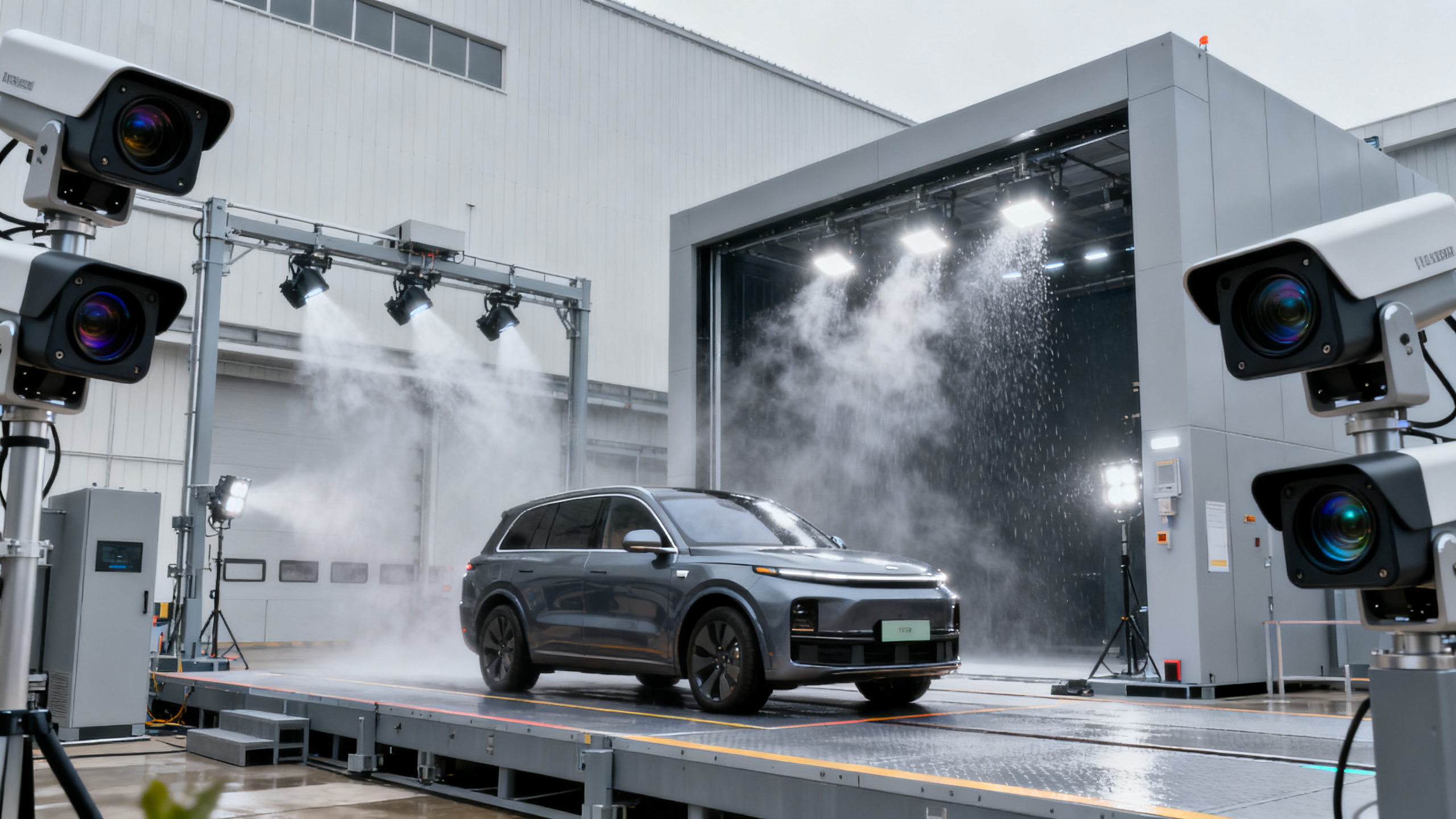
On April 14, the Ministry of Industry and Information Technology (MIIT) reopened public consultation on the mandatory national standard for Level 2 (L2) advanced driver-assistance systems (ADAS). The updated draft introduces new technical requirements—including sensor fusion reliability, robustness in extreme weather recognition, and human-machine takeover response time. This development directly impacts suppliers in automotive surround-view camera (CCTV & Access Control), ADAS testing and measurement equipment, and automotive-grade industrial optics (e.g., vehicle-mounted lenses), prompting upgrades in product performance and validation capabilities. It also signals growing alignment between Chinese component suppliers and international ADAS system integrators.
Event Overview
On April 14, MIIT published a revised draft of the mandatory national standard for L2-level intelligent driving systems for public comment. The draft specifies new mandatory provisions related to sensor fusion reliability, robustness of extreme-weather perception, and human-machine takeover response time. No final adoption date or enforcement timeline has been announced; this remains an open consultation phase.
Industries Affected
Vehicular Surround-View Camera (CCTV & Access Control) Suppliers
These suppliers are affected because the standard now explicitly requires validated performance under degraded visual conditions (e.g., heavy rain, fog, glare) and reliable multi-camera synchronization—core functions of surround-view systems. Impact manifests in stricter functional safety validation, expanded environmental test coverage, and tighter latency specifications for image processing pipelines.
ADAS Testing & Measurement Equipment Providers
Testing equipment vendors face increased demand for simulation and real-world validation tools capable of quantifying sensor fusion behavior and takeover readiness under edge-case scenarios. Impact includes higher expectations for scenario library depth (e.g., low-visibility object detection), timestamp-synchronized multi-sensor data capture, and traceable metrics for human response latency.
Automotive-Grade Industrial Optics (e.g., Vehicle-Mounted Lens) Manufacturers
Lens manufacturers must address optical performance consistency across temperature, humidity, and contamination—factors directly tied to the standard’s robustness requirements for perception subsystems. Impact centers on enhanced environmental durability testing, tighter MTF and distortion tolerances under thermal cycling, and documentation supporting ISO 26262 ASIL-relevant optical chain analysis.
Key Considerations and Recommended Actions for Stakeholders
Monitor official updates from MIIT and SAC/TC114
The current draft is subject to revision before finalization. Stakeholders should track official notices from the Standardization Administration of China (SAC) and its Technical Committee 114 (Intelligent Transport Systems), particularly regarding timelines for comment closure, potential transitional arrangements, and clarification of conformity assessment methods.
Assess exposure to specific technical clauses—not just the headline scope
Impact varies significantly by product role: e.g., a lens supplier supporting only parking cameras may face lower scrutiny than one supplying front-facing ADAS lenses. Companies should map internal product portfolios against the draft’s annexes on test conditions, failure mode definitions, and pass/fail criteria—not only the general requirement statements.
Distinguish policy signal from immediate compliance obligation
This consultation reflects regulatory intent but does not yet impose legal obligations. Commercial contracts, OEM procurement specs, and voluntary certification programs (e.g., C-NCAP, i-VISTA) may adopt elements earlier than the mandatory standard. Prioritize alignment with near-term customer requirements over premature full-scale re-engineering.
Initiate cross-functional readiness review for validation infrastructure
Organizations should evaluate current test lab capabilities—especially for dynamic weather simulation, synchronized multi-sensor stimulus generation, and human-response timing measurement—to identify gaps relative to the draft’s test methodology descriptions. Early gap analysis supports phased investment planning rather than reactive upgrades.
Editorial Perspective / Industry Observation
Observably, this consultation marks a shift from functional capability benchmarks toward verifiable system-level resilience—a move consistent with global ADAS regulatory trends (e.g., UN-R157, ISO/PAS 21448 SOTIF). Analysis shows it is primarily a forward-looking signal: while not yet enforceable, it establishes technical guardrails that will shape OEM sourcing decisions, tier-1 system integration architectures, and third-party validation expectations over the next 12–24 months. From an industry perspective, its significance lies less in immediate compliance deadlines and more in its role as a reference point for technical maturity—particularly for non-Chinese ADAS integrators evaluating domestic supply chain readiness.
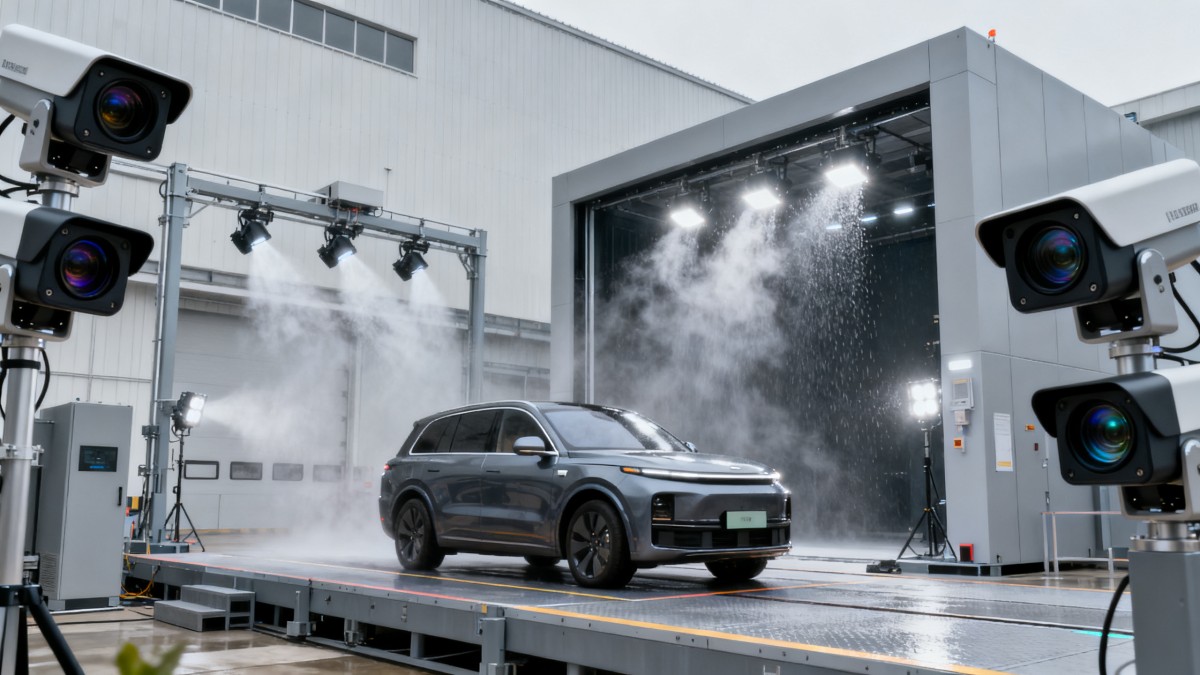
Conclusion: This consultation does not introduce immediate regulatory enforcement but formalizes emerging technical expectations for L2 ADAS system robustness in China. It serves as a benchmark for product development roadmaps and validation planning—not a trigger for urgent certification. Currently, it is better understood as a strategic alignment indicator for supply chain stakeholders, rather than an operational mandate.
Source: Ministry of Industry and Information Technology (MIIT), Public Consultation Notice issued April 14 (draft standard document number not specified in source input).
Note: Final standard text, effective date, and conformity assessment procedures remain pending and require ongoing observation.
Technical Specifications
- How to Select Electronic Hotel Key Card Locks for Guest Rooms and Staff AreasAuthor :Safety Compliance Lead
- How to Select Lab Instruments for Reliable Chemical Analysis WorkflowsAuthor :Precision Metrology Expert
- How to Size a UPS for Server Rooms: Load, Runtime, and Redundancy FactorsAuthor :Grid Infrastructure Analyst
Expert Insights

Chief Security Architect
Dr. Thorne specializes in the intersection of structural engineering and digital resilience. He has advised three G7 governments on industrial infrastructure security.
Related Analysis
- Sep 17, 2026How to Select Electronic Hotel Key Card Locks for Guest Rooms and Staff AreasAuthor :Safety Compliance Lead
- Sep 16, 2026How to Select Lab Instruments for Reliable Chemical Analysis WorkflowsAuthor :Precision Metrology Expert
- Sep 15, 2026How to Size a UPS for Server Rooms: Load, Runtime, and Redundancy FactorsAuthor :Grid Infrastructure Analyst
Core Sector // 01
Security & Safety
- How to Select Electronic Hotel Key Card Locks for Guest Rooms and Staff AreasAuthor :Safety Compliance Lead

- How to Evaluate a Hotel Key Card Lock Supplier for Multi-Property RolloutsAuthor :Safety Compliance Lead

- Pre-Contract Audit Checklist for Verified Production Safety and Environmental ComplianceAuthor :Safety Compliance Lead

- How Can Distributors Build Procurement-Oriented Industrial Content That Drives RFQs?Author :Safety Compliance Lead

- EU Mandates EN 50131-1:2026 for Security SystemsAuthor :Safety Compliance Lead

- EU EN 50131-1:2026 Takes Effect on CCTV ComplianceAuthor :Safety Compliance Lead

- IEC Issues CCTV Interoperability Test StandardAuthor :Safety Compliance Lead

- EN 50131-4:2026 Raises EU Security Compliance BarAuthor :Safety Compliance Lead