Wood Moisture Tester Buying Guide: Pin vs Pinless, Accuracy, and Best Use Cases
Author
Date Published
Reading Time
Wood Moisture Tester Buying Guide: Pin vs Pinless, Accuracy, and Best Use Cases
Choosing the right wood moisture tester can shape inspection accuracy, material acceptance, and sourcing efficiency.
That matters even more when incoming wood affects safety, finish quality, or dimensional stability.
A poor reading can lead to warped flooring, failed coatings, mold risk, or rejected production batches.
In practical buying terms, the main question is simple.
Should you choose a pin or pinless wood moisture tester, and what level of accuracy is worth the budget?
The answer depends on material type, inspection volume, surface sensitivity, and reporting needs.
This guide breaks down the differences clearly, so buying decisions become faster and lower risk.
Why a wood moisture tester matters in procurement
A wood moisture tester is not just a handheld checker.
It is a quality control tool that protects material value across storage, transport, fabrication, and installation.
For buyers, it also supports vendor comparison and incoming inspection consistency.
That means fewer disputes with suppliers and fewer hidden moisture problems after delivery.
From recent market behavior, one signal stands out.
More projects now require traceable readings, faster inspection rounds, and lower surface damage.
That is exactly where the right wood moisture tester creates measurable value.
Pin vs pinless wood moisture tester: the core difference
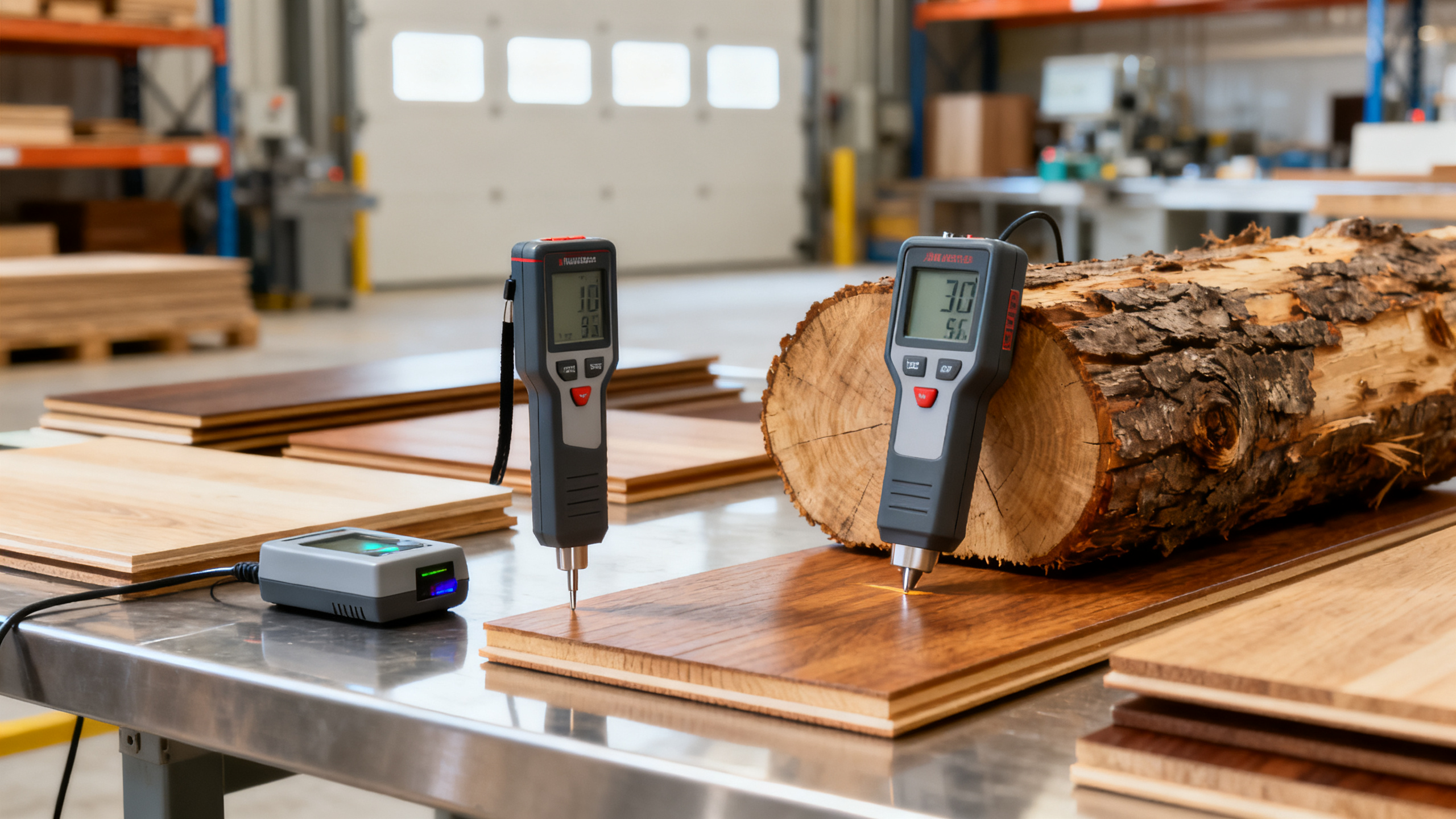
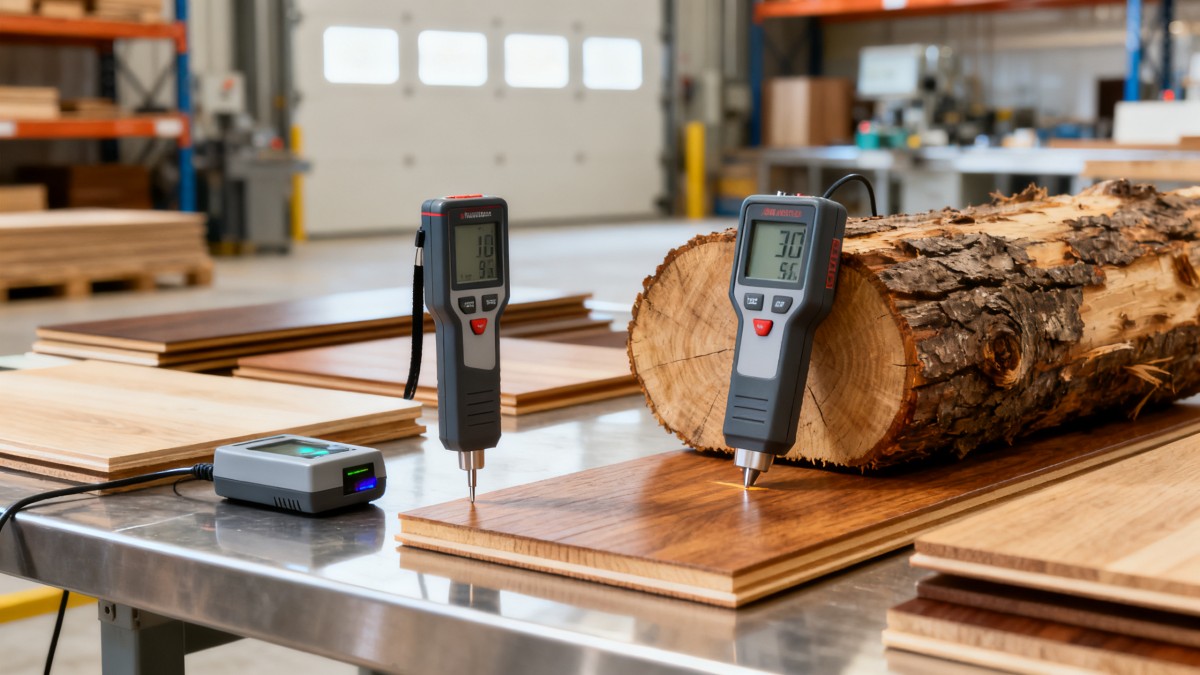
A pin wood moisture tester uses two probes that enter the material.
It measures electrical resistance between the pins and converts that into moisture content.
A pinless wood moisture tester works differently.
It scans below the surface through an electromagnetic field, without puncturing the wood.
Neither design is universally better.
Each wood moisture tester suits different inspection workflows and risk profiles.
When a pin wood moisture tester makes more sense
- Need to detect moisture at a targeted spot.
- Want better readings in uneven or rough lumber.
- Inspect thick stock where localized moisture pockets matter.
- Accept small pinholes on unfinished material.
When a pinless wood moisture tester works better
- Need fast scanning over large areas.
- Inspect finished panels, flooring, or furniture surfaces.
- Want non-destructive checks during final inspection.
- Need more consistent speed across high-volume receiving tasks.
Accuracy: what buyers should really evaluate
Accuracy is often the first selling point, but the headline number alone can mislead.
A wood moisture tester may perform well in ideal conditions, then drift in field use.
Real accuracy depends on species settings, depth range, temperature correction, and calibration stability.
This also means two buyers can use the same meter and get different outcomes.
Key accuracy factors to compare
- Measurement range for low, medium, and high moisture content.
- Wood species correction or programmable material groups.
- Scanning depth or pin penetration suitability.
- Calibration verification method and adjustment process.
- Resistance to temperature, density, and surface condition variation.
- Readout resolution, repeatability, and data logging support.
In business use, repeatability often matters more than a marketing accuracy claim.
If a wood moisture tester delivers stable readings across teams and locations, decisions become easier to standardize.
Questions worth asking suppliers
- Is the stated accuracy based on oven-dry reference testing?
- How many species groups are preloaded?
- Can the meter store readings for audit records?
- What calibration accessories are included?
- Does the device meet CE, UL, or relevant internal compliance needs?
Best use cases for each wood moisture tester type
The best choice usually becomes obvious once the use case is clear.
Different environments create different moisture risks, handling limits, and inspection speeds.
If inspection conditions change often, a dual-mode wood moisture tester can reduce replacement risk.
It costs more upfront, but may simplify training and inventory later.
Cost, durability, and total buying value
Price matters, but the cheapest wood moisture tester can become expensive in daily use.
Frequent recalibration, damaged sensors, or poor repeatability adds hidden operating cost.
This is especially true in industrial receiving, field inspection, or multi-shift production settings.
Cost factors beyond unit price
- Calibration blocks, replacement pins, and accessory availability.
- Battery life and charging convenience.
- Housing durability against drops, dust, and site conditions.
- Warranty period and service response time.
- Training time for inspectors and warehouse staff.
A stronger buying decision balances accuracy, usability, and lifecycle support.
That approach is usually better than comparing list price alone.
A practical shortlist for sourcing
Before placing an order, use a simple shortlist process.
It keeps the wood moisture tester selection tied to operations, not just product claims.
- Define target materials, such as hardwood, softwood, plywood, or finished flooring.
- Set acceptable moisture thresholds for receiving and release decisions.
- Choose pin, pinless, or dual-mode based on surface sensitivity and scan volume.
- Request calibration proof, standards details, and sample reporting outputs.
- Test the wood moisture tester on real materials from current suppliers.
- Compare warranty, support, and accessory lead times before final approval.
This kind of field-based evaluation often reveals more than a polished brochure.
It also reduces the chance of buying a meter that performs well only in lab-style conditions.
Final takeaway
The right wood moisture tester depends on how wood is inspected, handled, and approved in real operations.
Pin models are strong for targeted checks and rough material.
Pinless models shine where speed and surface protection matter most.
If requirements vary, a dual-mode wood moisture tester may offer the best long-term value.
Start with your material risk, not the product catalog.
Once the use case is clear, accuracy, cost, and fit become much easier to judge with confidence.
Technical Specifications
- Air Handling Unit Supplier Checklist: Performance Data, Lead Times, and SupportAuthor :Environmental Engineering Director
- Buying Fiberglass Water Tanks Wholesale: Compare Quotes and Delivery CostsAuthor :Environmental Engineering Director
- Choosing an XLPE Power Cable Supplier: Test Reports, Traceability, and Lead TimesAuthor :Grid Infrastructure Analyst
Expert Insights

Chief Security Architect
Dr. Thorne specializes in the intersection of structural engineering and digital resilience. He has advised three G7 governments on industrial infrastructure security.
Related Analysis
- Oct 19, 2026Air Handling Unit Supplier Checklist: Performance Data, Lead Times, and SupportAuthor :Environmental Engineering Director
- Oct 18, 2026Buying Fiberglass Water Tanks Wholesale: Compare Quotes and Delivery CostsAuthor :Environmental Engineering Director
- Oct 17, 2026Choosing an XLPE Power Cable Supplier: Test Reports, Traceability, and Lead TimesAuthor :Grid Infrastructure Analyst
Core Sector // 01
Security & Safety
- Choosing a Bluetooth Total Station: Software Compatibility and Connection RangeAuthor :Precision Metrology Expert

- Material Testing Standards: ASTM E8 vs. ISO 6892-1 for Metal Tensile TestsAuthor :Precision Metrology Expert

- How to Verify Accuracy in Industrial Measurement Data and Test ReportsAuthor :Precision Metrology Expert

- Selecting a Steam Vortex Flow Meter: Sizing, Pressure, and Temperature LimitsAuthor :Precision Metrology Expert

- How to Select an Industrial Infrared Thermometer for Hot, Moving EquipmentAuthor :Precision Metrology Expert

- How to Evaluate a Precision Measurement Equipment Manufacturer for Critical TolerancesAuthor :Precision Metrology Expert

- How to Select an Emissions Monitoring System Analyzer for Compliance ReportingAuthor :Precision Metrology Expert

- Portable Gas Monitor Calibration: How Often Is It Needed for Safe Confined-Space Work?Author :Precision Metrology Expert