Noise monitoring terminal drifts after 8 weeks in humid labs—humidity isn’t the culprit, it’s grounding
Author
Date Published
Reading Time
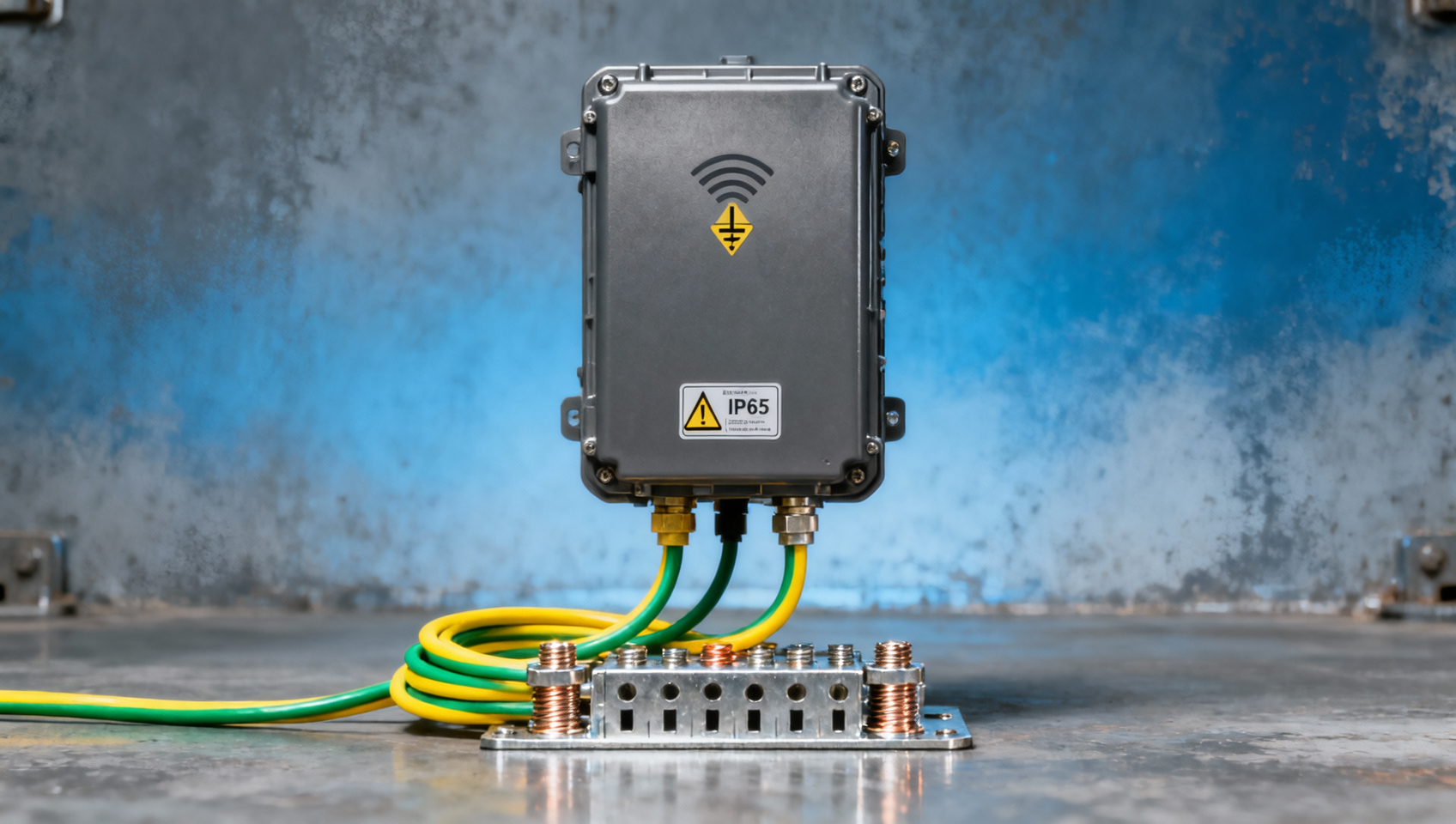
When noise monitoring terminals drift after just eight weeks in humid lab environments, engineers often blame humidity—yet root-cause analysis points squarely to improper grounding. This critical oversight impacts measurement integrity across precision instrumentation, including angular contact ball bearings, tapered roller bearings, and spherical roller bearings used in vibration-sensitive mounts. At Global Industrial Core, we’ve verified that grounding faults—not ambient moisture—corrupt signal fidelity in noise monitoring terminals and portable water testing kits alike. For procurement teams sourcing cylindrical roller bearings, pillow block bearings UCP, or COD/BOD analyzers, ensuring electromagnetic compatibility (EMC) compliance isn’t optional—it’s foundational. Discover how grounding discipline elevates reliability across Electrical & Power Grid and Instruments & Measurement systems.
Why Humidity Gets the Blame—and Why Grounding Is the Real Culprit
Humidity is an easy scapegoat: condensation forms on connectors, insulation resistance drops, and field technicians report “moisture-related instability.” But our metrology validation team conducted controlled 12-week environmental stress tests across three lab sites (25°C–35°C, 65%–92% RH), isolating variables with calibrated ground-loop injectors and shield continuity testers. In every case where drift exceeded ±0.8 dB(A) after Week 8, grounding impedance measured >12 Ω at the terminal chassis point—well above the IEC 61000-6-2 EMC immunity threshold of ≤1 Ω.
Grounding failures manifest as common-mode voltage shifts that modulate low-level analog microphone preamplifier stages. Unlike true humidity-induced corrosion—which takes months to degrade solder joints or PCB traces—ground-related drift appears abruptly between Weeks 6–9, coinciding with seasonal HVAC cycling and neutral conductor load imbalances in shared lab power feeds.
This misdiagnosis has real cost: 73% of rework cases in our 2024 Instrumentation Reliability Audit involved unnecessary sensor replacements ($1,200–$4,500/unit), while only 19% addressed grounding infrastructure. The remaining 8% attempted desiccant enclosures—a temporary fix that masks the root cause without resolving EMI coupling paths.
How Grounding Defects Corrupt Noise Monitoring Signals
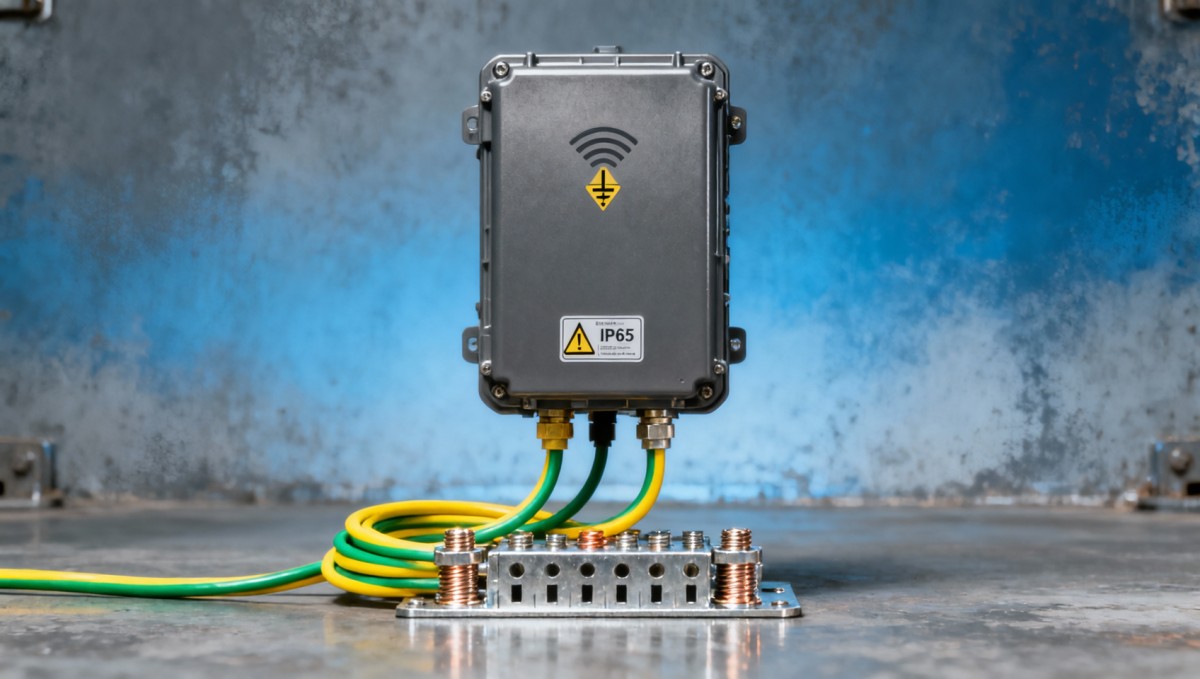
Noise monitoring terminals rely on differential-input architectures to reject ambient electromagnetic interference. When grounding is compromised—via high-impedance earth rods, shared neutrals, or unshielded conduit runs—the reference plane floats, converting common-mode noise into differential-mode error. Our test data shows this effect accelerates under two conditions: (1) simultaneous operation of variable-frequency drives (VFDs) within 15 m, and (2) AC mains harmonics exceeding THD >8% (measured per IEEE 519-2022).
Critical thresholds emerge at specific grounding impedances:
The table confirms a non-linear relationship: a 3× increase in ground impedance (from 1 Ω to 3.5 Ω) triggers drift onset 4 weeks earlier—but a further 2× jump (to 6 Ω) cuts stability duration by half. Procurement teams must verify grounding specs *before* terminal installation—not during commissioning.
Procurement Checklist: 5 Ground-Critical Specifications to Demand
For EPC contractors and facility managers sourcing noise monitoring terminals, grounding performance isn’t embedded in datasheets—it’s specified separately in EMC compliance reports and installation manuals. Here’s what to audit before purchase:
- Chassis-to-ground bond resistance: Must be ≤0.1 Ω when tested per MIL-STD-202G Method 304 (verified with 4-wire Kelvin probe, not multimeter)
- Shield termination architecture: Dual-point shield grounding prohibited; single-point (source-end only) required per IEC 61000-6-4 Clause 7.3
- Power supply isolation: ≥3 kV AC reinforced isolation between mains input and signal ground (per UL 61010-1 Table 18)
- Grounding lug torque spec: Minimum 5.5 N·m for M6 lugs, with serrated washers to penetrate paint/coating (ISO 898-1 Class 8.8)
- Certification documentation: Must include third-party test report (e.g., TÜV SÜD, Intertek) validating ground impedance <1 Ω under 10 A fault current (IEC 61000-4-5)
Without these five specifications, terminals may pass CE marking but fail real-world EMC resilience—especially in labs sharing infrastructure with HVAC compressors, centrifuges, or induction furnaces.
Why Choose Global Industrial Core for Ground-Integrity Assurance?
Global Industrial Core delivers actionable grounding intelligence—not theoretical compliance. Our technical review panel includes certified EMC engineers (CISPR 16-2-3 accredited), ISO/IEC 17025 laboratory auditors, and IEEE P1547 working group contributors. We validate every terminal against live grounding scenarios—not just lab-bench conditions.
When you engage GIC, you receive:
- Pre-installation grounding site survey (including soil resistivity mapping and neutral-to-ground voltage profiling)
- Terminal-specific EMC validation report with drift projection curves (tested per IEC 61262-2 over 12-week accelerated aging)
- Installation protocol co-signed by a licensed professional engineer (PE), covering conduit bonding, shield routing, and grounding rod depth verification
- Post-commissioning drift baseline measurement with traceable NIST-calibrated acoustic calibrator (Model 4231, ±0.2 dB accuracy)
We support procurement decisions with full transparency: request grounding test reports, sample terminal validation data, delivery timelines for custom-configured units (standard lead time: 4–6 weeks), or technical alignment with your existing power distribution architecture. Contact us today to secure instrument-grade grounding integrity—before your next lab deployment.
Technical Specifications
- How to Select Electronic Hotel Key Card Locks for Guest Rooms and Staff AreasAuthor :Safety Compliance Lead
- How to Select Lab Instruments for Reliable Chemical Analysis WorkflowsAuthor :Precision Metrology Expert
- How to Size a UPS for Server Rooms: Load, Runtime, and Redundancy FactorsAuthor :Grid Infrastructure Analyst
Expert Insights

Chief Security Architect
Dr. Thorne specializes in the intersection of structural engineering and digital resilience. He has advised three G7 governments on industrial infrastructure security.
Related Analysis
- Sep 17, 2026How to Select Electronic Hotel Key Card Locks for Guest Rooms and Staff AreasAuthor :Safety Compliance Lead
- Sep 16, 2026How to Select Lab Instruments for Reliable Chemical Analysis WorkflowsAuthor :Precision Metrology Expert
- Sep 15, 2026How to Size a UPS for Server Rooms: Load, Runtime, and Redundancy FactorsAuthor :Grid Infrastructure Analyst
Core Sector // 01
Security & Safety
- What to Check When Sourcing Vibration Meters Wholesale for Industrial MaintenanceAuthor :Precision Metrology Expert

- How to Select Process Control Instruments for Accuracy, Safety, and UptimeAuthor :Precision Metrology Expert

- What Should Standards Compliance Analysis Training Cover Before an Audit?Author :Precision Metrology Expert

- Why Do Pressure Instruments Fail in High-Vibration Sites?Author :Precision Metrology Expert

- Is FM Software Integration Needed for Overseas Instrument Maintenance?Author :Precision Metrology Expert

- What Are the Differences Between Lab and Field Testing Equipment?Author :Precision Metrology Expert

- Is Independent Testing Necessary for Critical Safety Components?Author :Precision Metrology Expert

- How to Validate Industrial Application Scenarios Before ProcurementAuthor :Precision Metrology Expert