Multi-Dept Release AI Terminal 'Health Check' Standard for Exports
Author
Date Published
Reading Time
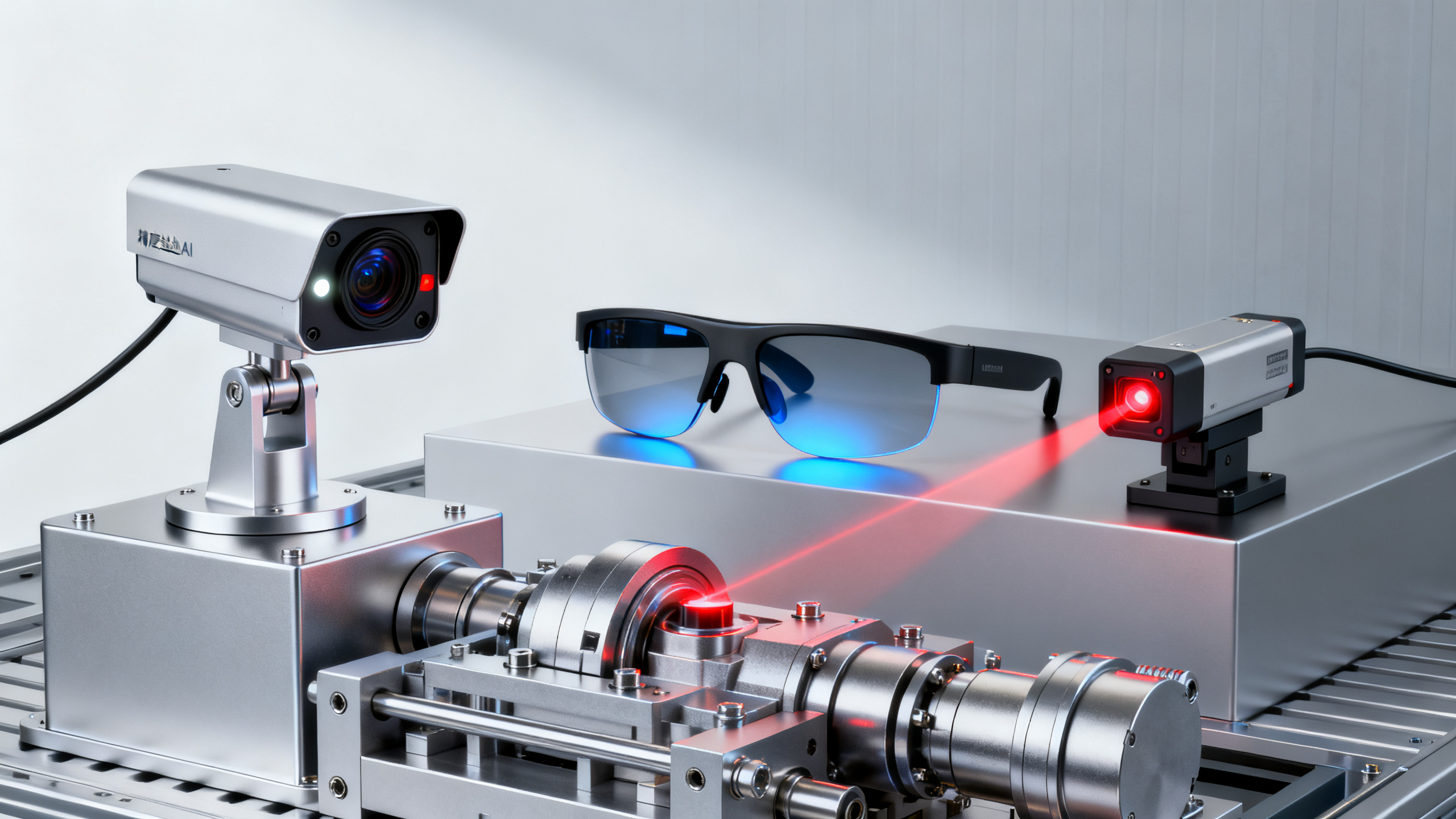
On May 13, 2026, China’s Ministry of Industry and Information Technology (MIIT), State Administration for Market Regulation (SAMR), and three other departments jointly issued the national standard Intelligence Grading for Artificial Intelligence Terminals (GB/Z 177—2026). This marks the first time AR smart glasses, industrial laser sensors, and edge AI cameras are subject to mandatory intelligence grading. Exporters of these products must complete grading tests and affix grade labels before Q4 2026 — making it a critical compliance milestone for manufacturers and traders in industrial automation, smart manufacturing, and AI hardware supply chains.
Event Overview
On May 13, 2026, MIIT, SAMR, and three additional Chinese regulatory departments published GB/Z 177—2026, titled Intelligence Grading for Artificial Intelligence Terminals. The standard formally introduces mandatory intelligence classification for AR smart glasses, industrial laser sensors, and edge AI cameras. It serves as a prerequisite technical basis for international certifications including CE, UL, and KC. Exporters must complete grading testing and label products with their assigned intelligence grade by the end of Q4 2026.
Industries Affected
Direct Exporters and Trade Enterprises
These enterprises face immediate compliance pressure: failure to obtain and display the required grade label may block customs clearance or trigger rejections in destination markets relying on CE/UL/KC alignment. Since GB/Z 177—2026 is designated as a prerequisite for those certifications, export documentation and test reports now require explicit reference to this grading result.
Manufacturers and OEM/ODM Producers
Production lines for AR smart glasses, industrial laser sensors, and edge AI cameras must adapt to standardized test protocols defined under GB/Z 177—2026 — including functional validation, inference latency benchmarks, and on-device model update capabilities. Product design cycles and firmware release timelines may need revision to accommodate pre-certification grading verification.
Supply Chain and Component Suppliers
Suppliers providing key modules — such as embedded AI accelerators, optical waveguides for AR glasses, or real-time image processing units for edge cameras — may see increased technical specification requests from downstream integrators. Their datasheets and compliance documentation may be scrutinized against the grading criteria, especially where system-level intelligence depends on component performance.
What Enterprises and Practitioners Should Focus On Now
Monitor official interpretation and test protocol releases
The standard is published as a guidance document (GB/Z), not a mandatory standard (GB). However, its designation as a prerequisite for CE/UL/KC means de facto enforceability. Enterprises should track announcements from accredited testing institutions (e.g., China National Institute of Standardization, CQC) regarding officially endorsed test methods and laboratory accreditation status.
Prioritize product categories explicitly named in the standard
Only AR smart glasses, industrial laser sensors, and edge AI cameras are currently listed under mandatory grading. Other AI terminals — such as voice assistants or AI-enabled wearables — are not covered. Exporters should confirm whether their specific models fall within the scope defined in Annex A of GB/Z 177—2026 before initiating testing.
Distinguish between policy signal and operational readiness
While the deadline is Q4 2026, test capacity at accredited labs is expected to peak in Q3. Enterprises should verify lab availability and lead times now — rather than waiting for final certification templates or labeling guidelines, which remain pending.
Update technical documentation and supplier communications
Manufacturers should revise internal test plans, quality control checklists, and BOM-level compliance notes to reflect GB/Z 177—2026 requirements. Procurement teams should engage component suppliers to confirm compatibility with graded system-level performance thresholds — particularly for real-time inference and thermal stability under continuous operation.
Editorial Perspective / Industry Observation
Observably, GB/Z 177—2026 functions less as an isolated technical rule and more as a structural signal: it reflects China’s effort to institutionalize AI hardware evaluation at the device layer — aligning domestic standards with global conformity assessment pathways. Analysis shows this is not yet a fully enforced regulation (as indicated by its GB/Z designation), but its linkage to CE/UL/KC strongly implies rapid operational adoption. From an industry perspective, this standard is best understood as a coordination mechanism — one that pressures exporters to harmonize testing across jurisdictions early, rather than retrofitting for each market separately. Continued monitoring is warranted, especially for updates on accredited laboratories and any revisions to Annex A’s scope definition.
Conclusion
GB/Z 177—2026 introduces a new layer of technical governance for AI terminal exports — specifically targeting AR smart glasses, industrial laser sensors, and edge AI cameras. Its significance lies not in immediate legal force, but in its role as a gatekeeping prerequisite for widely accepted international certifications. For affected enterprises, the current phase is one of preparation and alignment: verifying scope applicability, securing test capacity, and updating technical workflows. It is more accurately understood as an evolving compliance checkpoint — not a finalized regulatory endpoint — requiring sustained attention through Q3 2026.
Source Attribution
Main source: Official joint announcement by MIIT, SAMR, and three other departments, published May 13, 2026. Test methodology details, laboratory accreditation status, and potential scope expansions remain under observation and are not yet publicly confirmed.
Technical Specifications
- How to Select Electronic Hotel Key Card Locks for Guest Rooms and Staff AreasAuthor :Safety Compliance Lead
- How to Select Lab Instruments for Reliable Chemical Analysis WorkflowsAuthor :Precision Metrology Expert
- How to Size a UPS for Server Rooms: Load, Runtime, and Redundancy FactorsAuthor :Grid Infrastructure Analyst
Expert Insights

Chief Security Architect
Dr. Thorne specializes in the intersection of structural engineering and digital resilience. He has advised three G7 governments on industrial infrastructure security.
Related Analysis
- Sep 17, 2026How to Select Electronic Hotel Key Card Locks for Guest Rooms and Staff AreasAuthor :Safety Compliance Lead
- Sep 16, 2026How to Select Lab Instruments for Reliable Chemical Analysis WorkflowsAuthor :Precision Metrology Expert
- Sep 15, 2026How to Size a UPS for Server Rooms: Load, Runtime, and Redundancy FactorsAuthor :Grid Infrastructure Analyst
Core Sector // 01
Security & Safety
- What to Check When Sourcing Vibration Meters Wholesale for Industrial MaintenanceAuthor :Precision Metrology Expert

- How to Select Process Control Instruments for Accuracy, Safety, and UptimeAuthor :Precision Metrology Expert

- What Should Standards Compliance Analysis Training Cover Before an Audit?Author :Precision Metrology Expert

- Why Do Pressure Instruments Fail in High-Vibration Sites?Author :Precision Metrology Expert

- Is FM Software Integration Needed for Overseas Instrument Maintenance?Author :Precision Metrology Expert

- What Are the Differences Between Lab and Field Testing Equipment?Author :Precision Metrology Expert

- Is Independent Testing Necessary for Critical Safety Components?Author :Precision Metrology Expert

- How to Validate Industrial Application Scenarios Before ProcurementAuthor :Precision Metrology Expert