Materials Evaluation for Industry Services: What to Test Before Supplier Approval
Author
Date Published
Reading Time

Why does materials evaluation for industry services matter before supplier approval?

Supplier approval in industrial environments cannot rely on pricing sheets, catalog claims, or a clean certificate file alone.
The real question is whether the material will still perform after heat, pressure, vibration, moisture, chemicals, and long service cycles.
That is where materials evaluation for industry services becomes a control point rather than a paperwork step.
In practice, approval decisions often affect piping, enclosures, fasteners, cable systems, seals, structural parts, and safety-related assemblies.
If the wrong alloy, polymer, coating, or treatment is accepted, the problem may stay hidden until commissioning or field exposure.
By then, replacement costs are only part of the damage. Downtime, safety events, and compliance findings usually cost more.
A stronger approval process asks for evidence under expected service conditions.
That means confirming base material identity, mechanical behavior, environmental resistance, dimensional consistency, and standard compliance.
Global Industrial Core frames this issue with a practical industrial view.
Across safety systems, measurement hardware, power infrastructure, environmental equipment, and metallurgical components, failure tolerance is low.
So, materials evaluation for industry services is not just technical validation. It is risk screening before a supplier enters the approved list.
Which tests should be non-negotiable in a first-round review?
The answer depends on the application, but some tests appear again and again because they expose the most common approval failures.
A first-round review should usually cover five areas.
- Material verification: grade confirmation by chemical analysis, PMI, or laboratory composition testing.
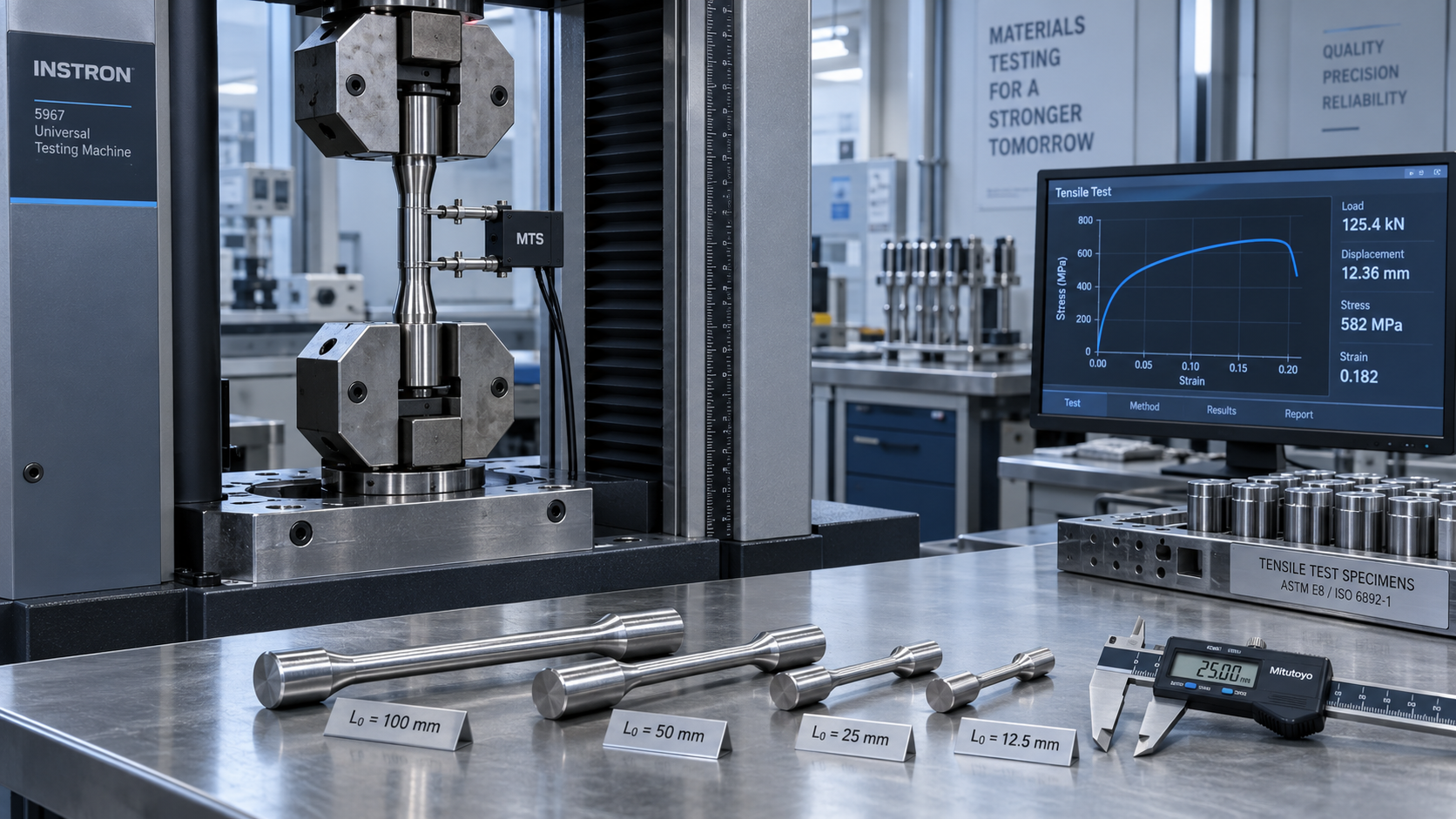
- Mechanical performance: tensile strength, yield strength, elongation, hardness, impact resistance, or fatigue behavior.
- Corrosion and environmental durability: salt spray, humidity, chemical immersion, UV exposure, or galvanic compatibility checks.
- Dimensional and surface control: tolerance measurement, coating thickness, roughness, flatness, and microcrack inspection.
- Compliance evidence: CE, UL, ISO-linked testing records, traceability, and lot-level documentation.
More specific applications may add fire performance, dielectric strength, ingress protection, weldability, or low-temperature impact testing.
What matters is matching the test plan to the actual duty cycle, not to a generic template.
For example, a stainless fastener for coastal use needs more than tensile data.
It also needs corrosion evidence that reflects chloride exposure and installation contact with other metals.
A cable insulation material may pass a routine visual check but still fail under temperature aging or dielectric stress.
That is why materials evaluation for industry services works best when test scope is linked to failure mode.
A quick reference for common approval-stage tests
This table helps connect typical industrial concerns with the tests that usually answer them.
How do you choose the right test plan instead of overtesting everything?
A common mistake is assuming that more testing automatically means better control.
In reality, unmanaged test scope creates delay, cost, and noise without improving the approval decision.
A better approach is to rank the supplier and the material by consequence of failure.
Start with three questions.
- What happens if this part fails in service?
- Which environmental stress is most likely to trigger failure?
- Is the supplied material new, modified, or already proven in a similar duty cycle?
If the part is safety-critical, externally exposed, pressure-retaining, or electrically sensitive, test depth should increase.
If the supplier proposes an alternative grade, a thinner coating, or a process change, revalidation is usually justified.
More experienced teams also separate qualification testing from batch acceptance testing.
Qualification proves the material system can work.
Acceptance testing confirms that current production still matches the approved baseline.
That distinction keeps materials evaluation for industry services efficient and defensible during audits.
Where standards apply, align the test matrix with ASTM, ISO, IEC, UL, or EN methods already recognized by the project.
That avoids disputes about method validity later.
Are certificates enough, or do samples still need independent verification?
Certificates are useful, but they should be treated as evidence to verify, not evidence to trust without question.
The strongest approval files combine supplier documents with sample-based confirmation.
This is especially important when material origin, subcontract processing, heat treatment, or coating application involves multiple parties.
In actual supply chains, the paperwork may describe one condition while the shipped lot reflects another.
Independent checks help reveal that gap early.
Useful verification steps often include reviewing mill test reports, checking lot traceability, witnessing test samples, and retesting at an accredited lab.
For higher-risk items, cross-checking between declared standard, actual test method, and service condition is essential.
A corrosion test run under mild exposure may look impressive on paper and still be irrelevant to offshore use.
The same applies to flame ratings, UV stability, and vibration endurance.
Global Industrial Core regularly emphasizes traceable technical evidence because infrastructure systems rarely fail for a single simple reason.
They fail at the intersection of material choice, process control, and operating stress.
That is exactly why materials evaluation for industry services should include both document review and physical validation.
Where do supplier approval programs usually go wrong?
Most failures do not come from missing every test.
They come from testing the wrong thing, at the wrong stage, with weak acceptance criteria.
Several patterns appear often.
- The sample was tested, but production lots were never tied back to that sample.
- The material passed a standard, but the standard did not reflect real operating conditions.
- Mechanical data existed, but no one checked corrosion, aging, or coating failure.
- A substitute material was accepted because dimensions matched, while chemistry and durability did not.
- Retest triggers were not defined after process changes, site failures, or supplier relocation.
Another weak point is treating all supplied items the same.
Fasteners for a dry indoor panel do not need the same validation depth as a coated steel bracket near corrosive discharge zones.
The better control method is to write acceptance rules that are material-specific and service-specific.
That includes sample size, retest intervals, disqualification triggers, and documentation format.
When materials evaluation for industry services is written into supplier onboarding this way, approval decisions become more consistent across sites and projects.
What should happen after the first approval decision?
Approval should be the start of control, not the end of it.
Once a supplier is accepted, the next step is building a review loop that keeps the original material baseline intact.
A practical post-approval plan usually includes periodic lot verification, change notification rules, field feedback review, and scheduled certificate renewal checks.
It also helps to keep a short decision record showing why each test was selected and what failure mode it addressed.
That record becomes valuable during incident review, audits, and specification updates.
For organizations working across power, safety, mechanical, and environmental systems, a shared evaluation framework reduces inconsistency.
It also makes new supplier comparisons faster because the decision logic is already established.
Materials evaluation for industry services delivers the most value when it connects testing, compliance, and operating reality in one approval workflow.
If the next supplier review is approaching, begin by mapping service conditions, identifying likely failure modes, and checking which claims still lack direct evidence.
From there, build a lean test matrix, confirm recognized standards, and define what would trigger rejection, retest, or conditional approval.
That turns supplier approval into a controlled technical judgment instead of an administrative shortcut.
Technical Specifications
- Air Handling Unit Supplier Checklist: Performance Data, Lead Times, and SupportAuthor :Environmental Engineering Director
- Buying Fiberglass Water Tanks Wholesale: Compare Quotes and Delivery CostsAuthor :Environmental Engineering Director
- Choosing an XLPE Power Cable Supplier: Test Reports, Traceability, and Lead TimesAuthor :Grid Infrastructure Analyst
Expert Insights

Chief Security Architect
Dr. Thorne specializes in the intersection of structural engineering and digital resilience. He has advised three G7 governments on industrial infrastructure security.
Related Analysis
- Oct 19, 2026Air Handling Unit Supplier Checklist: Performance Data, Lead Times, and SupportAuthor :Environmental Engineering Director
- Oct 18, 2026Buying Fiberglass Water Tanks Wholesale: Compare Quotes and Delivery CostsAuthor :Environmental Engineering Director
- Oct 17, 2026Choosing an XLPE Power Cable Supplier: Test Reports, Traceability, and Lead TimesAuthor :Grid Infrastructure Analyst
Core Sector // 01
Security & Safety
- Choosing a Bluetooth Total Station: Software Compatibility and Connection RangeAuthor :Precision Metrology Expert

- Material Testing Standards: ASTM E8 vs. ISO 6892-1 for Metal Tensile TestsAuthor :Precision Metrology Expert

- How to Verify Accuracy in Industrial Measurement Data and Test ReportsAuthor :Precision Metrology Expert

- Selecting a Steam Vortex Flow Meter: Sizing, Pressure, and Temperature LimitsAuthor :Precision Metrology Expert

- How to Select an Industrial Infrared Thermometer for Hot, Moving EquipmentAuthor :Precision Metrology Expert

- How to Evaluate a Precision Measurement Equipment Manufacturer for Critical TolerancesAuthor :Precision Metrology Expert

- How to Select an Emissions Monitoring System Analyzer for Compliance ReportingAuthor :Precision Metrology Expert

- Portable Gas Monitor Calibration: How Often Is It Needed for Safe Confined-Space Work?Author :Precision Metrology Expert