12V Battery Tester Wholesale: What to Check Before Comparing MOQ, Accuracy, and Warranty
Author
Date Published
Reading Time
Why does 12V battery tester wholesale deserve a deeper comparison?
In 12V battery tester wholesale, price breaks and low MOQ often get early attention. They should not be the first filter.
A weak tester creates returns, distributor friction, and damaged credibility far faster than a slightly higher unit cost.
That is especially true when the tool is sold into workshops, fleet service, power maintenance, and industrial battery support.
The better question is simple: can the product produce stable readings, survive field use, and meet compliance expectations across markets?
At Global Industrial Core, sourcing decisions are usually reviewed through the same lens used in industrial instrumentation.
That means performance data, safety documentation, production discipline, and post-sale support matter more than headline pricing.
For 12V battery tester wholesale programs, those factors directly affect resale confidence, claim rates, and long-term channel margin.
So before comparing offers, it helps to understand what separates a usable battery tester from a quote-friendly one.
What should be checked before MOQ even enters the conversation?
Start with test method. Not every 12V battery tester measures battery condition in the same way.
Some models estimate condition from internal resistance. Others add conductance analysis, ripple checks, charging tests, or cranking evaluation.
If the reseller market expects automotive diagnostics, a basic pass-fail screen may be enough.
If the product is positioned for service networks or industrial maintenance, narrow functionality becomes a limitation very quickly.
The second checkpoint is battery chemistry support. Lead-acid variants are common, but compatibility details still matter.
AGM, GEL, EFB, and flooded batteries should be clearly listed, not vaguely implied in sales sheets.
Then review the current rating range. A tester that only handles a narrow CCA window can restrict sales options.
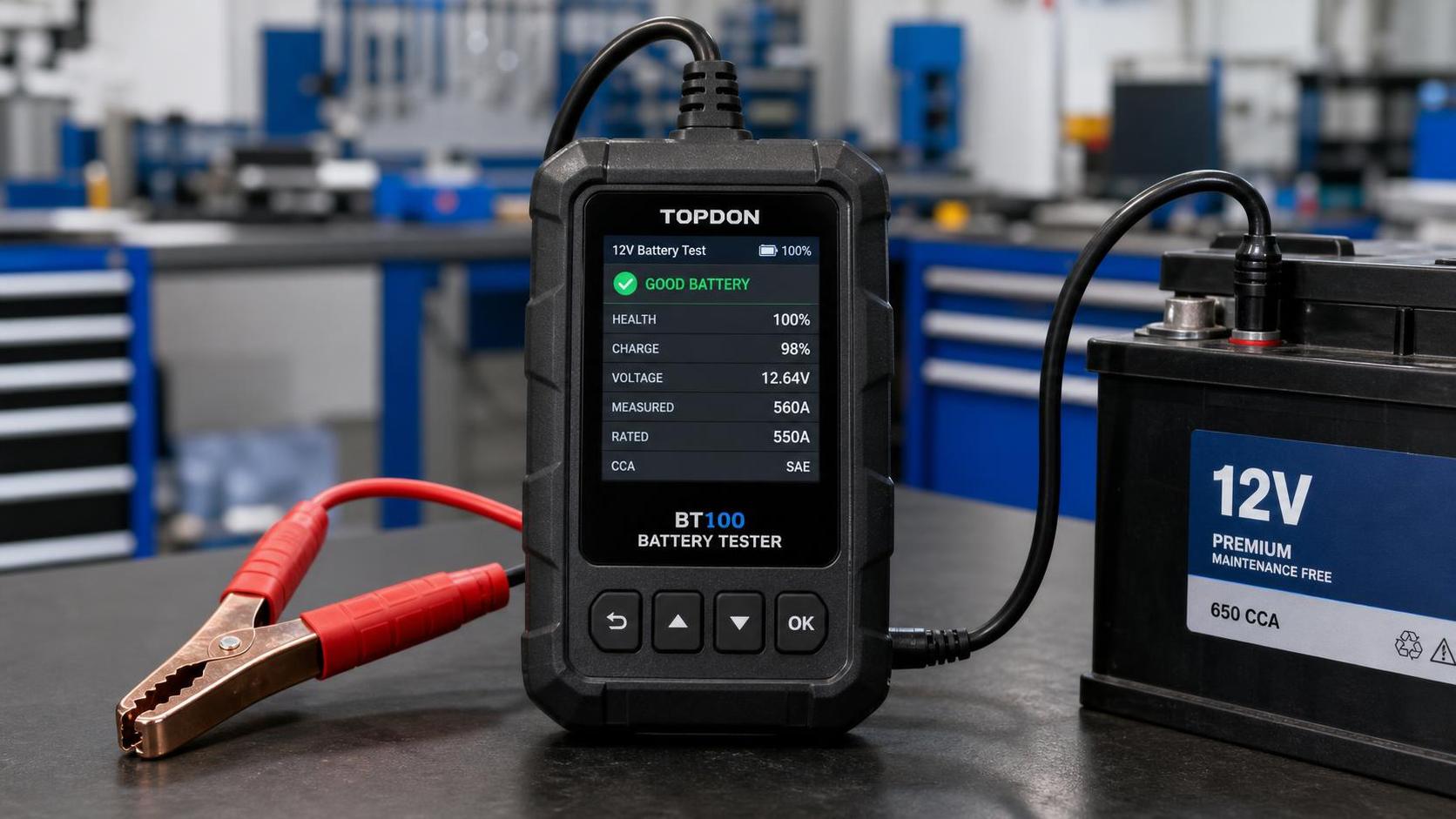
Good 12V battery tester wholesale evaluation also includes display visibility, cable quality, clamp durability, and menu language support.
These details sound small. In actual use, they decide whether the product feels professional or disposable.
A quick screening table helps narrow suppliers faster
Before asking for final pricing, compare suppliers against operating requirements rather than marketing wording.
How accurate does a wholesale 12V battery tester really need to be?
Accuracy should be judged by use case, not by a single promotional number.
Many quotes mention precision, but fewer explain repeatability across temperature, operator habits, and battery condition variance.
That missing context is where channel problems usually begin.
For 12V battery tester wholesale, ask for validation data under defined conditions.
A strong supplier can show comparison tests, calibration routines, and consistency between production lots.
If readings drift noticeably between units, support teams end up debating the tool instead of solving the customer issue.
More practical than chasing laboratory language is this question: do several units produce materially similar decisions on the same battery?
In field sales, decision consistency matters more than abstract technical claims.
It is also wise to check whether firmware can be updated.
A tester that supports controlled updates is easier to maintain when standards, battery technologies, or user feedback evolve.
Are certifications and factory controls more important than warranty length?
Usually, yes. A long warranty sounds reassuring, but weak factory control makes that warranty expensive to use.
For 12V battery tester wholesale, certification and process evidence often predict reliability better than a printed promise.
Check whether the supplier provides compliance files tied to the exact model being quoted.
Generic certificates with vague descriptions should be treated carefully.
The useful review points include EMC behavior, electrical safety, labeling accuracy, and consistency between certified and shipped versions.
Factory discipline matters just as much. Ask about incoming inspection, final test routines, and batch traceability.
Suppliers aligned with industrial sourcing expectations usually answer these questions quickly and with documents.
That is one reason GIC places compliance and measurement credibility near the center of sourcing analysis.
Instruments that touch electrical diagnostics cannot be judged like simple accessories.
- Ask for the latest test reports, not only logo copies.
- Confirm whether the factory runs aging tests or sample burn-in.
- Check if serial numbers can link units to production batches.
- Review packaging drop protection for export handling.
What cost drivers are often hidden in 12V battery tester wholesale quotes?
The unit price is only one layer of cost. The bigger costs often appear after the first shipment lands.
Low-cost quotes may exclude calibration checks, localized manuals, branded packaging, spare clamps, or replacement turnaround terms.
Some offers also assume a single-language interface, which limits resale in mixed regional markets.
Another hidden factor is defect handling time. A cheap tester becomes costly when claims take six weeks to close.
In 12V battery tester wholesale, margin quality depends on how quickly issues can be diagnosed and resolved.
Lead time stability should also be reviewed against seasonality.
Battery service tools often experience demand spikes around weather shifts, vehicle maintenance cycles, or service contract renewals.
A supplier with attractive pricing but unstable replenishment can disrupt the entire channel plan.
A more reliable comparison method is to calculate total support cost per sellable unit.
That figure includes freight exposure, defect rate, accessory completeness, packaging readiness, and service response time.
Common quote gaps worth clarifying early
- Does the warranty cover replacement, repair, or credit only?
- Are batteries, cables, and clamps treated as consumables?
- Is private label artwork included in the MOQ quoted?
- Can the supplier hold safety stock for repeat orders?
- Will firmware version changes be announced before shipment?
How can you tell whether a supplier is suitable for repeat orders?
One shipment proves very little. Repeat-order suitability comes from consistency, communication, and documented problem handling.
A dependable 12V battery tester wholesale supplier usually shows stable BOM control and clear revision management.
That matters because unnoticed component changes can alter reading behavior, screen quality, or enclosure durability.
Sample evaluation should go beyond appearance. Test several units from the sample batch on known batteries.
Compare warm-start behavior, screen readability, clamp grip, and reading repeatability after repeated use.
It also helps to ask how claims are categorized. Serious suppliers track failure reasons instead of issuing generic replacements.
That practice shows whether they are learning from field data or simply absorbing complaints.
When GIC evaluates industrial sourcing credibility, after-sales structure is treated as a technical capability, not just a service promise.
For battery testers, that distinction is important because user trust is built on reliable answers from the tool.
So what is the smartest next step before placing a wholesale order?
Create a short decision sheet before requesting final quotations.
List battery types, target channels, required test functions, market certifications, branding needs, and acceptable claim response time.
Then compare each 12V battery tester wholesale offer against that sheet, not against MOQ alone.
In practical terms, the best wholesale choice is rarely the cheapest tester or the longest warranty headline.
It is the option that combines credible accuracy, compliance readiness, stable production, and manageable support cost.
That approach usually protects resale value better and reduces avoidable channel friction later.
For teams building a durable sourcing standard, the next move is straightforward.
Screen suppliers by technical fit, request evidence, test samples under repeat conditions, and only then negotiate volume and terms.
That is how 12V battery tester wholesale decisions become more predictable, more defensible, and more profitable over time.
Technical Specifications
- Steel Dynamics Reports Q3 2026 Results: Record Shipments and Strong EarningsAuthor :
- Vetting a Fall Protection Harness Supplier: Test Reports and TraceabilityAuthor :Safety Compliance Lead
- Air Handling Unit Supplier Checklist: Performance Data, Lead Times, and SupportAuthor :Environmental Engineering Director
Expert Insights

Chief Security Architect
Dr. Thorne specializes in the intersection of structural engineering and digital resilience. He has advised three G7 governments on industrial infrastructure security.
Related Analysis
- Oct 20, 2026Steel Dynamics Reports Q3 2026 Results: Record Shipments and Strong EarningsAuthor :
- Oct 20, 2026Vetting a Fall Protection Harness Supplier: Test Reports and TraceabilityAuthor :Safety Compliance Lead
- Oct 19, 2026Air Handling Unit Supplier Checklist: Performance Data, Lead Times, and SupportAuthor :Environmental Engineering Director
Core Sector // 01
Security & Safety
- Choosing a Bluetooth Total Station: Software Compatibility and Connection RangeAuthor :Precision Metrology Expert

- Material Testing Standards: ASTM E8 vs. ISO 6892-1 for Metal Tensile TestsAuthor :Precision Metrology Expert

- How to Verify Accuracy in Industrial Measurement Data and Test ReportsAuthor :Precision Metrology Expert

- Selecting a Steam Vortex Flow Meter: Sizing, Pressure, and Temperature LimitsAuthor :Precision Metrology Expert

- How to Select an Industrial Infrared Thermometer for Hot, Moving EquipmentAuthor :Precision Metrology Expert

- How to Evaluate a Precision Measurement Equipment Manufacturer for Critical TolerancesAuthor :Precision Metrology Expert

- How to Select an Emissions Monitoring System Analyzer for Compliance ReportingAuthor :Precision Metrology Expert

- Portable Gas Monitor Calibration: How Often Is It Needed for Safe Confined-Space Work?Author :Precision Metrology Expert