Industrial Procurement References: What to Check Before Comparing Suppliers and Quotes
Author
Date Published
Reading Time
Why do industrial procurement references matter before price comparisons?
Price usually gets attention first. In industrial sourcing, that shortcut often creates the biggest hidden cost.
Industrial procurement references show how a supplier performs when drawings, deadlines, certification, and site conditions become difficult.
That is why experienced evaluators review references before ranking quotes. A low number on paper means little without delivery proof.
In practice, good references answer four questions at once: can the supplier comply, can they deliver, can they support, and can they stay consistent?
This matters across security systems, measurement devices, power components, environmental controls, and mechanical assemblies where failure carries operational consequences.
Global Industrial Core often frames this as a reliability filter. The quote is a snapshot, but references reveal the operating history behind it.
A useful reference check also prevents false equivalence. Two suppliers may offer similar specifications, yet differ sharply in traceability, inspection discipline, and field response.
What counts as a strong reference, not just a name on a customer list?
A strong reference is specific, recent, and relevant to the intended application. Generic logos on a presentation deck are not enough.
The best industrial procurement references connect to comparable load conditions, operating temperatures, regulatory expectations, and project complexity.
For example, a supplier with experience in light commercial projects may not be the right benchmark for a corrosive processing environment.
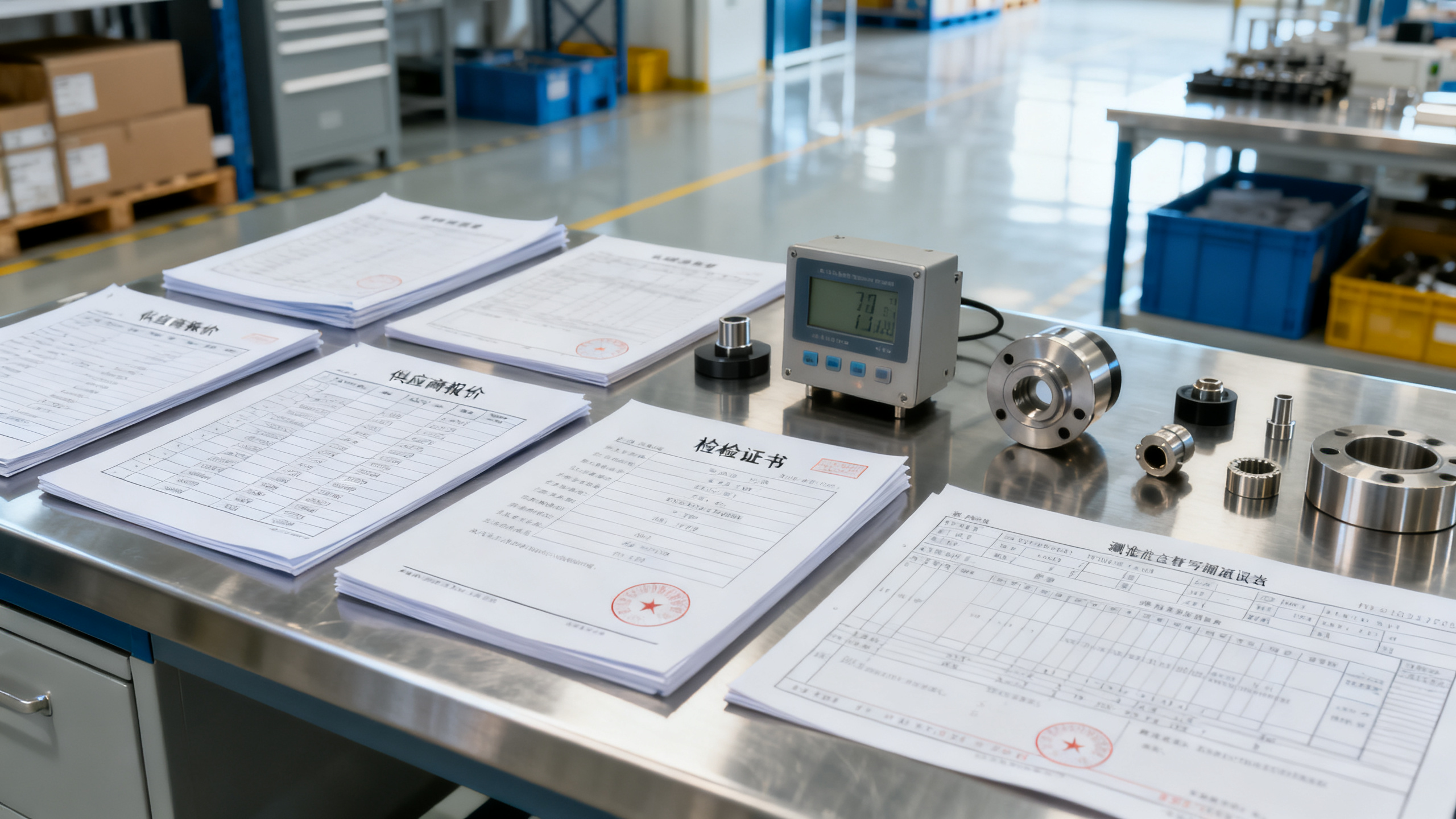
More useful references usually include documented shipment records, inspection reports, test certificates, and post-installation performance feedback.
When reviewing them, it helps to look beyond brand recognition and ask whether the previous project required the same discipline your project requires.
- Application match: similar equipment duty, material grade, or compliance environment.
- Time relevance: references from the last two to three years usually show current capability better.
- Evidence depth: QA records, FAT data, calibration logs, or corrective action history.
- Support quality: responsiveness during changes, delays, commissioning, or warranty events.
That distinction becomes especially important when comparing suppliers from different regions with different documentation habits and certification pathways.
Which checks reveal real supplier capability fastest?
The fastest checks are the ones tied directly to risk. Start with compliance, manufacturing control, delivery history, and technical communication.
If the item affects safety, power continuity, emissions control, or measurement accuracy, references should show verified conformance, not verbal assurance.
A short comparison table often keeps the review disciplined and prevents attention from drifting toward price too early.
This kind of review is common in GIC-aligned sourcing analysis because foundational systems must survive real operating pressure, not just bid review.
If one supplier cannot provide evidence in these areas, that gap should influence the quote ranking immediately.
Can industrial procurement references help estimate total cost, not only purchase cost?
Yes, and this is where industrial procurement references become especially valuable. They help convert a cheap quote into a realistic ownership picture.
A supplier with recurring field failures, weak packaging, or slow document turnover often creates costs that never appear in the original quotation.
Common examples include missed commissioning dates, emergency expediting, repeated calibration, replacement freight, and extended maintenance downtime.
References can also reveal whether a supplier handles engineering changes smoothly. That matters when specifications evolve during EPC execution.
A slightly higher quote may still be the better financial decision if documentation is complete, tolerances are stable, and support remains available for years.
- Look for repeat orders from similar projects. Repeat business often signals lower lifecycle friction.
- Check whether spare parts and replacements stayed consistent across product revisions.
- Review how warranty cases were resolved, not just whether a warranty existed.
In other words, references turn cost analysis into risk-adjusted cost analysis, which is far more useful for industrial decisions.
Where do reference checks usually go wrong?
The biggest mistake is treating industrial procurement references as a formality after the preferred supplier has already been chosen.
Another common issue is accepting polished case studies without checking whether they match the same technical and contractual demands.
It is also easy to overvalue export volume. High shipment numbers do not automatically mean strong quality control or project responsiveness.
In actual sourcing reviews, weaker signals often appear in small details: inconsistent test records, vague lead-time commitments, or incomplete material traceability.
These warnings deserve attention before negotiation, because they become expensive once equipment is already in fabrication or transit.
- Do not rely on one reference only, especially if it comes from a different industry setting.
- Do not separate technical references from commercial evaluation. They affect each other.
- Do not ignore document control speed. Slow submittals often predict schedule pressure later.
- Do not assume all certifications apply to the offered configuration or country of use.
A careful review does not need to be slow. It needs to be targeted and tied to the project’s failure points.
How should quotes and references be combined into a practical decision?
A useful approach is to score references before final quote normalization. That keeps technical evidence from being overshadowed by headline price.
In many industrial categories, a quote should be adjusted mentally for risk. Weak references usually mean the real cost is higher than the stated price.
More balanced decisions often combine three layers: compliance readiness, execution reliability, and lifecycle support strength.
If two suppliers are technically close, industrial procurement references often become the deciding factor because they show how each one behaves under pressure.
That is also where trusted editorial sources such as Global Industrial Core add value. Curated technical context makes supplier evidence easier to interpret.
For the next step, build a short reference checklist around your actual operating risks, then compare quotes against that same structure.
When the checks are relevant and documented, supplier comparison becomes clearer, negotiations become sharper, and the final decision becomes easier to defend.
Technical Specifications
- Air Handling Unit Supplier Checklist: Performance Data, Lead Times, and SupportAuthor :Environmental Engineering Director
- Buying Fiberglass Water Tanks Wholesale: Compare Quotes and Delivery CostsAuthor :Environmental Engineering Director
- Choosing an XLPE Power Cable Supplier: Test Reports, Traceability, and Lead TimesAuthor :Grid Infrastructure Analyst
Expert Insights

Chief Security Architect
Dr. Thorne specializes in the intersection of structural engineering and digital resilience. He has advised three G7 governments on industrial infrastructure security.
Related Analysis
- Oct 19, 2026Air Handling Unit Supplier Checklist: Performance Data, Lead Times, and SupportAuthor :Environmental Engineering Director
- Oct 18, 2026Buying Fiberglass Water Tanks Wholesale: Compare Quotes and Delivery CostsAuthor :Environmental Engineering Director
- Oct 17, 2026Choosing an XLPE Power Cable Supplier: Test Reports, Traceability, and Lead TimesAuthor :Grid Infrastructure Analyst
Core Sector // 01
Security & Safety
- Choosing a Bluetooth Total Station: Software Compatibility and Connection RangeAuthor :Precision Metrology Expert

- Material Testing Standards: ASTM E8 vs. ISO 6892-1 for Metal Tensile TestsAuthor :Precision Metrology Expert

- How to Verify Accuracy in Industrial Measurement Data and Test ReportsAuthor :Precision Metrology Expert

- Selecting a Steam Vortex Flow Meter: Sizing, Pressure, and Temperature LimitsAuthor :Precision Metrology Expert

- How to Select an Industrial Infrared Thermometer for Hot, Moving EquipmentAuthor :Precision Metrology Expert

- How to Evaluate a Precision Measurement Equipment Manufacturer for Critical TolerancesAuthor :Precision Metrology Expert

- How to Select an Emissions Monitoring System Analyzer for Compliance ReportingAuthor :Precision Metrology Expert

- Portable Gas Monitor Calibration: How Often Is It Needed for Safe Confined-Space Work?Author :Precision Metrology Expert