China's Open-Source LLM Downloads Surpass 10 Billion
Author
Date Published
Reading Time
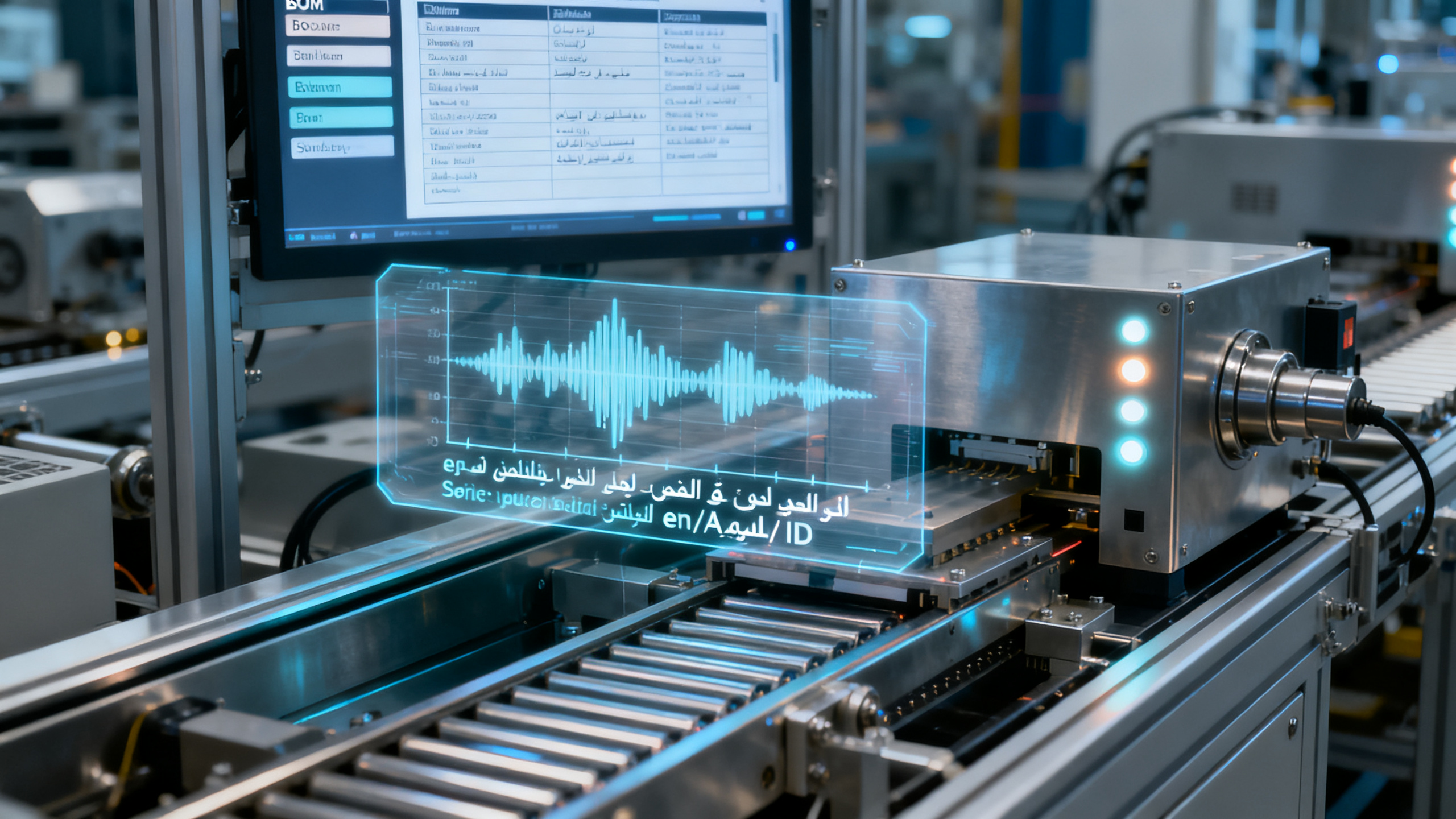
As of April 27, cumulative downloads of China-developed open-source large language models have exceeded 10 billion. This milestone reflects accelerated adoption and iterative upgrades targeting industrial applications—including defect detection in manufacturing, voice command parsing for equipment interfaces, and multilingual BOM document understanding. Testing & Measurement device vendors, Lab & Analytics solution providers, and CCTV & Access Control system integrators—particularly those serving emerging markets such as Southeast Asia, the Middle East, and Latin America—should monitor this development closely, as it directly influences UI localization, automated report generation, and multilingual alerting capabilities.
Event Overview
On April 27, publicly available data indicated that total downloads of domestically developed open-source large language models had surpassed 10 billion. The technical evolution emphasizes domain-specific functionality: industrial defect identification, device-level voice instruction interpretation, and multilingual understanding of Bill-of-Materials (BOM) documentation. These capabilities are now being applied to enhance user interface localization for Testing & Measurement equipment, enable automatic report generation in Lab & Analytics workflows, and support multilingual alarm prompts in CCTV & Access Control systems.
Impact on Specific Industry Segments
Testing & Measurement Equipment Manufacturers
These manufacturers rely on intuitive, localized UIs for global deployment. With open-source LLMs enabling faster, lower-cost UI adaptation—including real-time translation and context-aware labeling—their ability to meet regional compliance and usability expectations in emerging markets improves. Impact manifests in reduced localization lead time, expanded language coverage per product release cycle, and improved first-time-use experience for non-Chinese-speaking technicians.
Lab & Analytics Software Providers
Providers delivering lab reporting or analytical dashboards benefit from automated report generation powered by multilingual LLMs trained on technical documentation. This reduces manual post-processing effort when generating regulatory-compliant summaries for clients across ASEAN, GCC, or Andean countries. Impact includes shortened report turnaround time, consistent terminology across language versions, and tighter integration between instrument output and narrative interpretation.
CCTV & Physical Access Control System Integrators
Integrators deploying surveillance or access management solutions in multilingual environments face growing demand for localized alerting—e.g., spoken or on-screen warnings in Arabic, Bahasa Indonesia, or Spanish. The availability of lightweight, open-source LLMs fine-tuned for domain-specific speech-to-text and text-to-alert tasks lowers integration barriers. Impact appears in faster configuration of localized notification rules, reduced dependency on proprietary NLP modules, and more scalable support for regional compliance requirements (e.g., GDPR-style logging with native-language metadata).
What Relevant Enterprises or Practitioners Should Monitor and Do Now
Track model licensing terms and update frequency
Many of these open-source LLMs carry permissive licenses (e.g., Apache 2.0), but usage scope—including commercial redistribution and derivative training—varies. Enterprises should audit current and planned integrations against license compatibility, especially where models are embedded into firmware or SaaS offerings.
Validate performance on domain-specific multilingual tasks
Download volume does not equate to production readiness. Practitioners should prioritize benchmarking on actual use cases—e.g., parsing Vietnamese-language BOM tables or transcribing noisy Arabic voice commands in factory environments—before committing to integration timelines.
Assess infrastructure readiness for on-device or edge inference
Industrial deployments often require low-latency, offline-capable inference. Teams should evaluate whether selected models meet memory, latency, and quantization requirements for embedded Linux or RTOS-based controllers—not just cloud or server-grade hardware.
Monitor upstream community activity—not just download metrics
High download counts reflect broad interest, but long-term maintainability depends on active contributor engagement, documentation quality, and issue resolution velocity. Prioritize models with transparent versioning, published evaluation benchmarks, and responsive maintainer channels.
Editor Perspective / Industry Observation
Observably, this milestone signals growing institutional confidence in domestic open-source AI infrastructure—not as a research artifact, but as a deployable component in industrial software stacks. Analysis shows the 10-billion-download threshold is less about raw popularity and more about functional convergence: multiple models now deliver stable, task-specific performance in constrained, multilingual, real-world settings. From an industry perspective, this is best understood not as a finished capability, but as an accelerating enabler—one that lowers entry barriers for localized feature development, yet raises expectations around interoperability, maintenance, and domain validation. Continued attention is warranted because adoption patterns are shifting from experimental PoCs toward embedded, safety-adjacent use cases—where reliability and traceability matter more than headline metrics.
Conclusion: This milestone reflects maturing open-source AI capacity within China’s industrial software ecosystem. It does not represent a universal solution, nor does it eliminate integration complexity—but it does meaningfully compress the time and cost required to add multilingual, context-aware intelligence to field-deployed equipment and analytics platforms. Currently, it is more accurate to interpret this development as an operational enabler gaining traction—not a market disruption, nor a regulatory shift—but a tangible resource for engineering teams building for global industrial customers.
Source: Publicly reported download statistics and application use cases as of April 27; no additional sources or background information were provided or verified. Ongoing observation is recommended regarding model licensing updates, community maintenance health, and real-world deployment feedback from industrial end users.
Technical Specifications
- How to Select Electronic Hotel Key Card Locks for Guest Rooms and Staff AreasAuthor :Safety Compliance Lead
- How to Select Lab Instruments for Reliable Chemical Analysis WorkflowsAuthor :Precision Metrology Expert
- How to Size a UPS for Server Rooms: Load, Runtime, and Redundancy FactorsAuthor :Grid Infrastructure Analyst
Expert Insights

Chief Security Architect
Dr. Thorne specializes in the intersection of structural engineering and digital resilience. He has advised three G7 governments on industrial infrastructure security.
Related Analysis
- Sep 17, 2026How to Select Electronic Hotel Key Card Locks for Guest Rooms and Staff AreasAuthor :Safety Compliance Lead
- Sep 16, 2026How to Select Lab Instruments for Reliable Chemical Analysis WorkflowsAuthor :Precision Metrology Expert
- Sep 15, 2026How to Size a UPS for Server Rooms: Load, Runtime, and Redundancy FactorsAuthor :Grid Infrastructure Analyst
Core Sector // 01
Security & Safety
- What to Check When Sourcing Vibration Meters Wholesale for Industrial MaintenanceAuthor :Precision Metrology Expert

- How to Select Process Control Instruments for Accuracy, Safety, and UptimeAuthor :Precision Metrology Expert

- What Should Standards Compliance Analysis Training Cover Before an Audit?Author :Precision Metrology Expert

- Why Do Pressure Instruments Fail in High-Vibration Sites?Author :Precision Metrology Expert

- Is FM Software Integration Needed for Overseas Instrument Maintenance?Author :Precision Metrology Expert

- What Are the Differences Between Lab and Field Testing Equipment?Author :Precision Metrology Expert

- Is Independent Testing Necessary for Critical Safety Components?Author :Precision Metrology Expert

- How to Validate Industrial Application Scenarios Before ProcurementAuthor :Precision Metrology Expert