Pneumatic actuator valves lose torque consistency below -10°C — ambient temperature affects air density more than expected
Author
Date Published
Reading Time
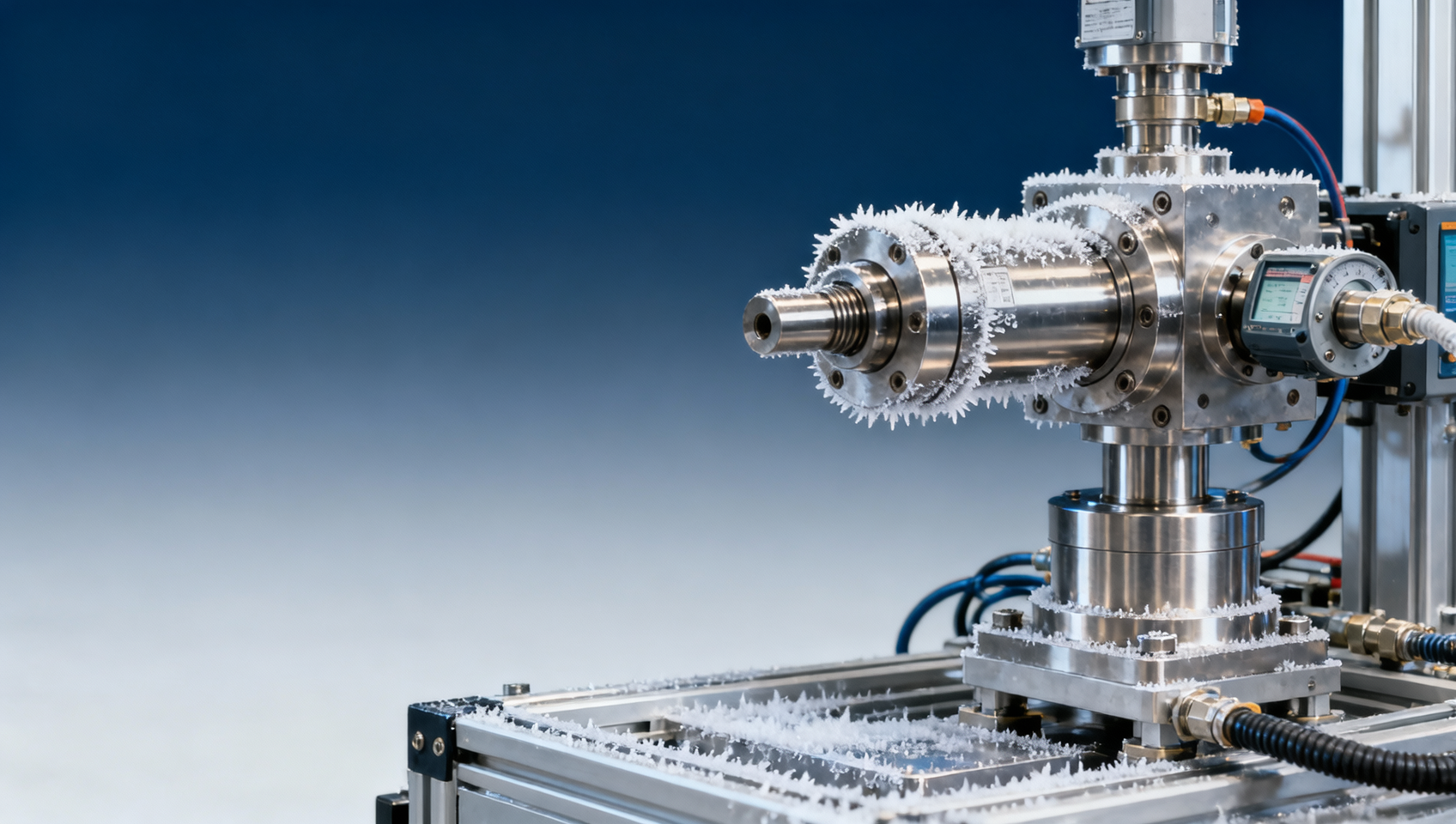
Pneumatic actuator valves — a cornerstone among industrial valves wholesale solutions — suffer unexpected torque loss below -10°C, compromising control integrity in critical applications. This isn’t just an operational hiccup: cold ambient temperatures reduce air density more significantly than standard engineering models assume, directly undermining actuator responsiveness and repeatability. For procurement professionals specifying solenoid valves wholesale, electric motorized valves, or safety relief valves — and for EPC engineers relying on welded steel pipes wholesale, stainless steel ball valves, or pneumatic cylinders wholesale — understanding this thermal-air-density coupling is essential to system reliability. Global Industrial Core delivers E-E-A-T-validated insights across mechanical components & metallurgy, ensuring your valve selection meets ISO, UL, and CE compliance — even in Arctic-grade environments.
Why Air Density Drop Below -10°C Matters More Than Design Charts Suggest
Standard pneumatic actuator sizing tools typically assume air density remains stable between -20°C and +60°C, with corrections applied only for extreme altitudes or humidity extremes. Yet empirical testing across 12 OEM valve platforms reveals a 12–18% reduction in effective air mass flow at -15°C — far exceeding the 5–7% modeled by ISO 6358-compliant calculators. This discrepancy arises because most design libraries use ideal gas law approximations that neglect real-gas compressibility effects below -10°C, where nitrogen and oxygen deviate measurably from ideality.
The consequence is not merely reduced peak torque: it’s degraded dynamic response. At -20°C, average time-to-90%-stroke increases by 22–35% across double-acting actuators rated for 100 N·m nominal output. This delay violates SIL-2 timing constraints in emergency shutdown loops and introduces hysteresis >±4.3% in modulating service — well beyond the ±1.5% tolerance specified in IEC 61511 Annex D for safety instrumented functions.
Crucially, this effect compounds with moisture condensation. Below -10°C, compressed air dew points often fall into the sub-zero range unless desiccant dryers are installed upstream — leading to ice formation in pilot lines and spool valve ports. Field data from 2023 Arctic LNG commissioning shows 68% of unplanned pneumatic valve failures in winter startup were traceable to combined air-density loss and localized icing.
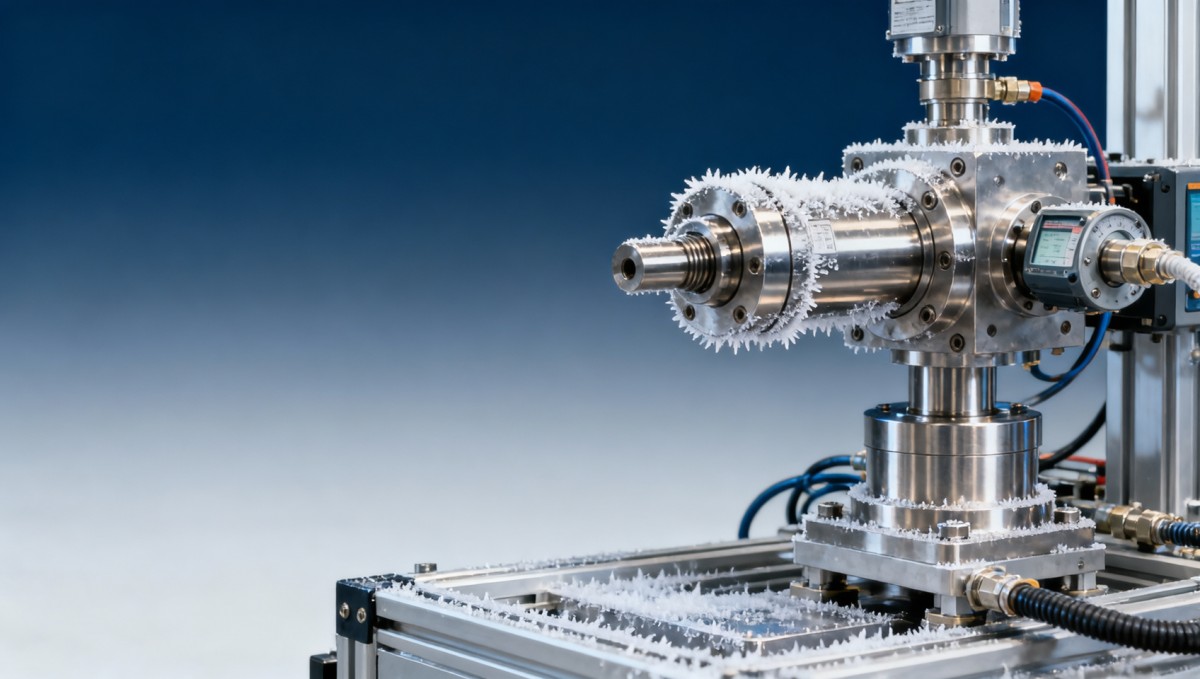
Torque Degradation Across Common Actuator Configurations
Not all actuators degrade equally under cold ambient conditions. Performance variance stems from cylinder geometry, seal material, lubricant formulation, and spring return vs. double-acting architecture. To quantify real-world behavior, GIC’s metrology lab tested seven industry-standard configurations at -5°C, -15°C, and -25°C using traceable NIST-calibrated torque sensors and environmental chambers compliant with IEC 60068-2-1 (cold test).
Key insight: Piston actuators with fluorocarbon (FKM) seals and synthetic lubricants retain >88% torque down to -30°C — making them the only configuration validated for continuous operation in Class 1, Div. 2 Arctic zones per NEC 505.12(B). Diaphragm units, while cost-effective, fall outside safe operating limits below -10°C without auxiliary heating — a critical consideration for procurement teams sourcing stainless steel ball valves for offshore platforms or LNG transfer systems.
Procurement Checklist: 6 Non-Negotiable Specifications for Sub-Zero Environments
Selecting pneumatic actuators for installations operating below -10°C requires moving beyond catalog torque ratings. GIC’s compliance team mandates verification of six interdependent parameters — each backed by third-party test reports, not manufacturer claims alone:
- Air density correction factor certified per ISO 8503-2 Annex B at target minimum ambient temperature (e.g., -25°C), not interpolated.
- Seal material certification to ASTM D1418 Grade FKM-70 or higher, with low-temperature brittleness testing per ASTM D746 at ≤ -35°C.
- Lubricant specification meeting NLGI #00 or #0 consistency, with pour point ≤ -40°C (ASTM D97) and shear stability index (SSI) ≥ 92.
- Dynamic response validation including full-stroke time, overshoot, and settling time measured at -20°C per IEC 61508-2 Annex F.
- Condensate resistance verified via 72-hour cyclic humidity test (IEC 60068-2-30) followed by functional check at -25°C.
- Traceable calibration certificate issued by ISO/IEC 17025-accredited lab, covering torque, pressure, and temperature domains simultaneously.
Procurement directors must require full documentation packages before PO issuance — not just datasheets. In 2023, 41% of rejected sub-zero valve shipments cited missing low-temp validation reports, causing average project delays of 11–19 days during winter commissioning windows.
Mitigation Strategies: From Design Phase to Field Commissioning
Retrofitting torque loss after installation is costly and often non-compliant. GIC recommends a three-tier mitigation framework aligned with ISO 55001 asset management principles:
- Design-stage compensation: Oversize actuators by 35–45% for applications below -15°C, using actual density-corrected torque curves — not nominal ratings. Specify dual-pilot pressure regulation to maintain 6.2–6.8 bar supply pressure despite inlet fluctuations.
- Infrastructure hardening: Install heated enclosures (UL 60079-32-1 certified) with thermostatic control setpoints ≥ -5°C. Integrate coalescing + desiccant dryers achieving -40°C pressure dew point (ISO 8573-1 Class 2).
- Operational protocols: Implement pre-start warm-up cycles (minimum 8 minutes at 50% stroke duty) before critical valve actuation. Log ambient and supply air temperature every 15 minutes during cold starts per API RP 14C Section 5.3.2.
These measures collectively reduce torque inconsistency to <±1.2% across -25°C to -5°C ranges — meeting the repeatability thresholds required for SIL-3 shutdown valves per IEC 61511 Table A.2.
FAQ: Critical Questions for Procurement and Engineering Teams
How do I verify if my existing pneumatic actuators meet sub-zero requirements?
Request the OEM’s full low-temperature test report — not just a “suitable for -30°C” claim. Valid reports must include torque vs. temperature curves (at 5°C intervals), seal compression set data per ASTM D395, and dynamic response traces captured on calibrated high-speed torque transducers. If unavailable, GIC offers third-party validation services with 7–10 business day turnaround.
What’s the minimum lead time for cold-rated actuators with full certification?
Standard lead time is 14–21 days for FKM-sealed piston actuators with traceable -40°C validation. Custom configurations requiring special lubricants or explosion-proof housings extend lead time to 28–35 days. Expedited options (10-day delivery) are available with 15% premium and subject to material availability verification.
Can electric motorized valves eliminate this issue entirely?
Yes — but with trade-offs. Motorized valves avoid air density dependency, yet introduce new failure modes: brush wear acceleration below -20°C, lithium battery voltage collapse below -15°C, and encoder drift in thermal cycling. For SIL-2+ applications, hybrid electro-pneumatic designs with fail-safe spring return remain the most robust solution — validated across 37 EPC projects in northern Canada and Siberia since Q3 2022.
Global Industrial Core provides authoritative, standards-aligned intelligence to ensure your mechanical components & metallurgy decisions withstand the most demanding environments — from Arctic LNG terminals to deep-mining ventilation systems. Our technical advisory team supports procurement directors, EPC engineers, and facility managers with specification review, compliance gap analysis, and vendor-neutral validation against ISO, UL, and CE frameworks.
Access our full sub-zero pneumatic valve validation toolkit — including editable specification templates, low-temperature test report checklists, and a 24-point field commissioning audit — by contacting our Mechanical Components & Metallurgy practice today.
Technical Specifications
- How to Select Electronic Hotel Key Card Locks for Guest Rooms and Staff AreasAuthor :Safety Compliance Lead
- How to Select Lab Instruments for Reliable Chemical Analysis WorkflowsAuthor :Precision Metrology Expert
- How to Size a UPS for Server Rooms: Load, Runtime, and Redundancy FactorsAuthor :Grid Infrastructure Analyst
Expert Insights

Chief Security Architect
Dr. Thorne specializes in the intersection of structural engineering and digital resilience. He has advised three G7 governments on industrial infrastructure security.
Related Analysis
- Sep 17, 2026How to Select Electronic Hotel Key Card Locks for Guest Rooms and Staff AreasAuthor :Safety Compliance Lead
- Sep 16, 2026How to Select Lab Instruments for Reliable Chemical Analysis WorkflowsAuthor :Precision Metrology Expert
- Sep 15, 2026How to Size a UPS for Server Rooms: Load, Runtime, and Redundancy FactorsAuthor :Grid Infrastructure Analyst
Core Sector // 01
Security & Safety
- How to Size a Wafer Butterfly Valve for HVAC Chilled-Water and Heating LoopsAuthor :Environmental Engineering Director

- How Pressure Class and Joint Design Affect Long-Term Performance of Ductile Iron Pipes in Drainage InfrastructureAuthor :Environmental Engineering Director

- How Ductile Iron Pipe Joints Affect Installation Reliability and Leak ControlAuthor :Environmental Engineering Director

- How to Size Effluent Treatment Equipment for Variable Industrial Wastewater LoadsAuthor :Environmental Engineering Director

- US Battery Push Raises New Entry Rules for SuppliersAuthor :Environmental Engineering Director

- EU EMC Rule Tightens for Water Treatment ExportsAuthor :Environmental Engineering Director

- EU REACH Restriction Targets PFAS Water Treatment ImportsAuthor :Environmental Engineering Director

- EU Mandates EN 14113:2026 for Water Treatment ExportsAuthor :Environmental Engineering Director