Industrial RO Water Purification Plant Sizing: Capacity, Feed Water, and Recovery Rate
Author
Date Published
Reading Time
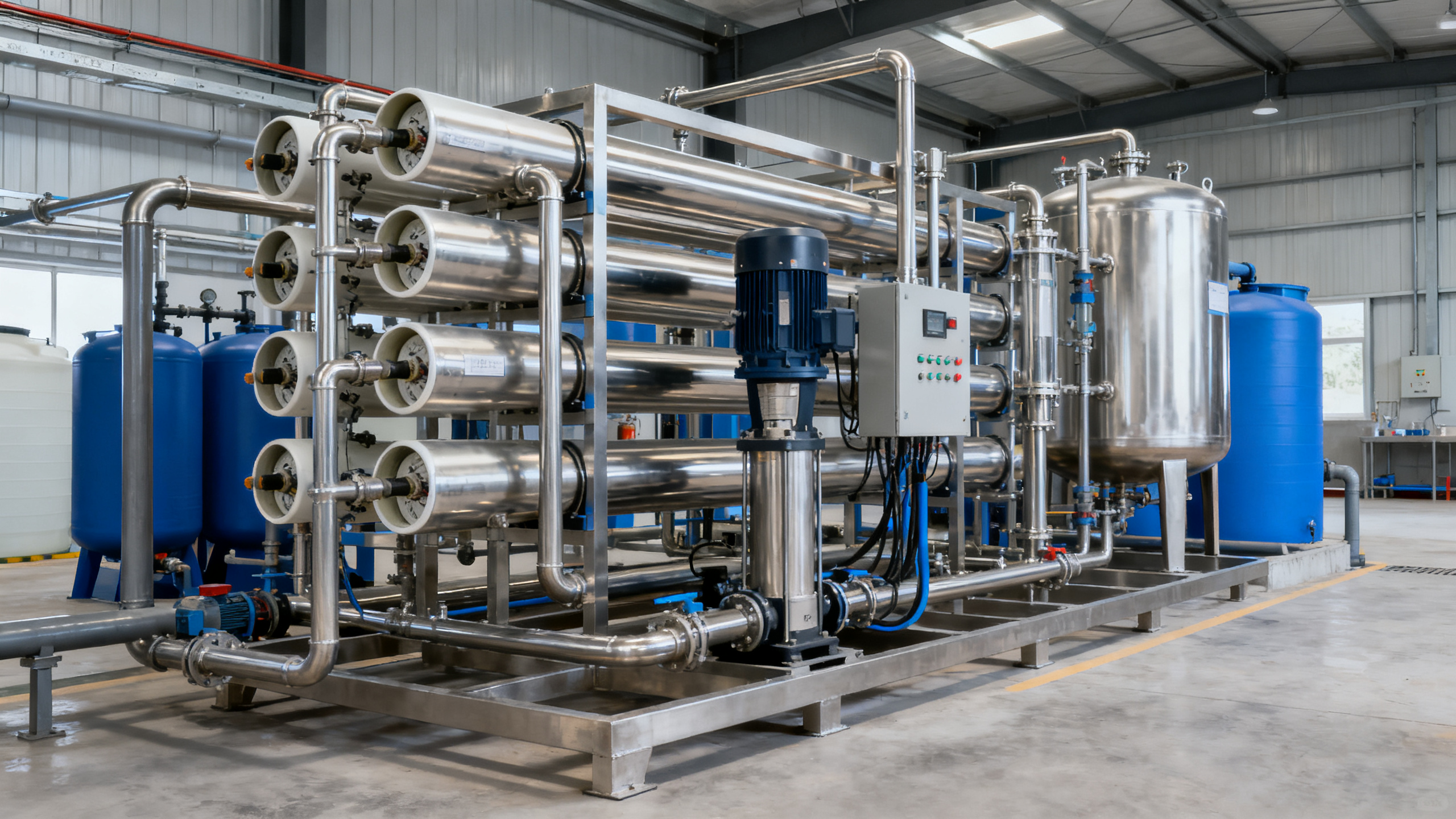
Choosing the right industrial RO water purification plant begins with sizing, not with equipment brochures. Capacity, feed water quality, and recovery rate shape operating cost, uptime, membrane life, and compliance risk. In heavy industry, where water supports production, cleaning, cooling, and process integrity, a sizing error can lock in years of avoidable expense.
That is why plant sizing has become a board-level infrastructure question rather than a narrow utility decision. A properly sized industrial RO water purification plant supports resilience across environmental management, power systems, process control, and asset protection, which aligns closely with the evidence-driven approach promoted by Global Industrial Core.
Why sizing matters before equipment selection
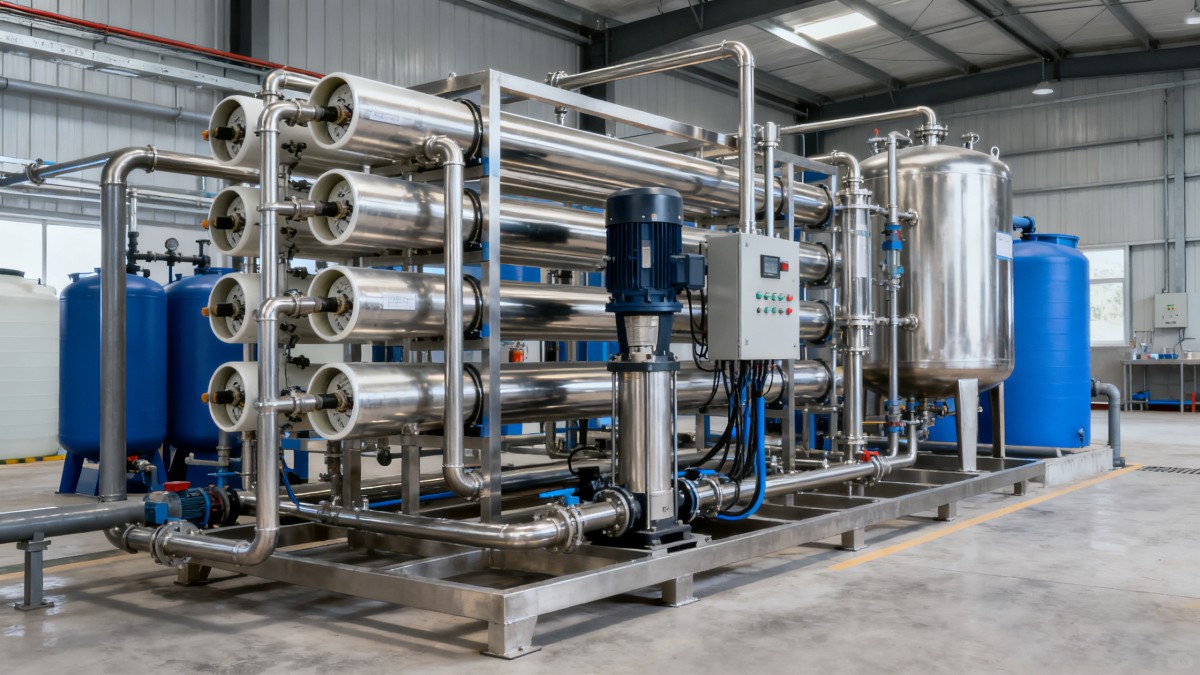
An industrial RO water purification plant is designed to remove dissolved salts, suspended solids, and contaminants through pressure-driven membrane separation. The concept is familiar. The sizing work is where commercial value is won or lost.
If capacity is undersized, production interruptions become more likely. If it is oversized, capital cost rises, energy use may become inefficient, and membranes may operate outside their best range.
Sizing also affects upstream and downstream equipment. Pretreatment, storage tanks, pumps, CIP systems, chemical dosing, and reject handling all depend on the actual design basis.
In practical terms, the plant is not just a water unit. It is part of a wider industrial reliability system.
Capacity is more than daily flow demand
Capacity is often discussed as cubic meters per hour or per day. That number matters, but headline flow alone is rarely enough to size an industrial RO water purification plant correctly.
A sound assessment looks at several demand layers at once. Continuous load, peak demand, seasonal shifts, maintenance downtime, and future expansion can all change the required design point.
Questions behind the flow number
- Is water demand steady, batch-based, or linked to shift patterns?
- Will the system support one process line or several lines?
- How much buffer storage is available during maintenance?
- Is projected expansion expected within two to five years?
- Does the plant need redundancy for critical operations?
A facility with moderate average demand but sharp peak loads may require a different configuration than a site with flat, uninterrupted consumption. In some cases, storage smooths the profile. In others, parallel skids are the better answer.
This is especially relevant for EPC planning and retrofit programs. A design that looks efficient on paper can struggle if the usage profile was simplified too early.
Feed water quality sets the real design boundary
Feed water quality is often the strongest hidden variable in industrial RO sizing. Two plants needing the same permeate flow may require very different system designs if source water conditions differ.
The industrial RO water purification plant must be sized around what enters the system, not only what should come out. TDS, hardness, silica, iron, manganese, SDI, organic load, temperature, and biological activity all matter.
Typical feed water sources and implications
A single laboratory report is not always enough. Seasonal sampling and upset-condition data often reveal the real treatment challenge. This matters because membrane fouling risk is usually created by variability, not by average values.
In sectors where compliance and traceability matter, documented feed water characterization also improves supplier comparison. It creates a common design basis instead of relying on generic assumptions.
Recovery rate is a financial and operational lever
Recovery rate describes how much feed water becomes usable permeate and how much leaves as concentrate. It is one of the most discussed metrics in any industrial RO water purification plant because it touches water cost, discharge volume, and membrane stress.
Higher recovery sounds attractive. Less water is wasted, and discharge handling may be reduced. But pushing recovery too far can increase scaling, fouling, cleaning frequency, and membrane replacement cost.
The right recovery target depends on feed chemistry, pretreatment quality, antiscalant strategy, reject disposal limits, and the value of recovered water at the site. There is no universal best number.
How to read recovery tradeoffs
- Higher recovery can lower raw water intake.
- Higher recovery can also raise scaling risk and pressure demand.
- Lower recovery may protect membranes and simplify operation.
- Lower recovery may increase wastewater and utility cost.
For many facilities, the best outcome comes from optimizing total lifecycle cost rather than chasing the highest recovery percentage. That view is more credible than selecting a target that looks efficient only in proposal documents.
Where sizing decisions show up in real operations
Sizing choices affect more than water quality. They influence energy consumption, asset planning, environmental reporting, and maintenance exposure across the site.
In boiler feed applications, inadequate sizing may compromise steam system reliability. In process manufacturing, it can create quality variation. In electronics, food processing, metals, chemicals, and power support systems, the tolerance for unstable water performance is often low.
This is where the broader GIC perspective becomes useful. Water treatment is connected to instrumentation accuracy, power continuity, safety compliance, corrosion control, and environmental obligations. An industrial RO water purification plant should be assessed as part of that connected infrastructure.
Signals that the original sizing basis may be weak
- Frequent membrane cleaning earlier than expected
- Large conductivity swings in permeate quality
- Unplanned chemical consumption increases
- Persistent mismatch between design flow and actual demand
- Reject handling or discharge becoming a cost issue
A practical framework for evaluating options
When comparing proposals for an industrial RO water purification plant, the most useful question is not simply which system is larger or cheaper. The better question is whether the sizing basis is transparent and defensible.
A disciplined review usually includes these points.
- Confirmed feed water analysis, including worst-case conditions
- Clear permeate demand profile, not just daily average
- Documented recovery assumptions and reject volumes
- Pretreatment scope tied to actual fouling risks
- Energy, chemical, and membrane replacement estimates
- Provision for maintenance, redundancy, and expansion
- Alignment with CE, UL, ISO, and site-specific compliance needs
The value of this framework is simple. It shifts the discussion from equipment claims to verifiable operating assumptions.
What to do next with a sizing decision
The next step is to turn water treatment from a generic utility package into a defined infrastructure requirement. That means gathering representative water data, mapping real demand patterns, and testing whether proposed recovery targets match site constraints.
For any planned industrial RO water purification plant, a useful decision file should include source water variability, downtime tolerance, discharge limits, pretreatment needs, and the cost of poor water performance across production.
Once those inputs are organized, supplier comparisons become sharper and far more reliable. The result is not just a better-sized industrial RO water purification plant, but a stronger foundation for long-term efficiency, compliance, and operational resilience.
Technical Specifications
- Air Handling Unit Supplier Checklist: Performance Data, Lead Times, and SupportAuthor :Environmental Engineering Director
- Buying Fiberglass Water Tanks Wholesale: Compare Quotes and Delivery CostsAuthor :Environmental Engineering Director
- Choosing an XLPE Power Cable Supplier: Test Reports, Traceability, and Lead TimesAuthor :Grid Infrastructure Analyst
Expert Insights

Chief Security Architect
Dr. Thorne specializes in the intersection of structural engineering and digital resilience. He has advised three G7 governments on industrial infrastructure security.
Related Analysis
- Oct 19, 2026Air Handling Unit Supplier Checklist: Performance Data, Lead Times, and SupportAuthor :Environmental Engineering Director
- Oct 18, 2026Buying Fiberglass Water Tanks Wholesale: Compare Quotes and Delivery CostsAuthor :Environmental Engineering Director
- Oct 17, 2026Choosing an XLPE Power Cable Supplier: Test Reports, Traceability, and Lead TimesAuthor :Grid Infrastructure Analyst
Core Sector // 01
Security & Safety
- Buying Fiberglass Water Tanks Wholesale: Compare Quotes and Delivery CostsAuthor :Environmental Engineering Director

- How to Select Industrial pH Meters for Continuous Wastewater Process ControlAuthor :Environmental Engineering Director

- How to Size a Rinse Fill Cap Machine for Your Bottle Format and Target OutputAuthor :Environmental Engineering Director

- How to Size a Heavy-Duty Submersible Sewage Pump for High-Solids Lift StationsAuthor :Environmental Engineering Director

- How to Size a Wafer Butterfly Valve for HVAC Chilled-Water and Heating LoopsAuthor :Environmental Engineering Director

- How Pressure Class and Joint Design Affect Long-Term Performance of Ductile Iron Pipes in Drainage InfrastructureAuthor :Environmental Engineering Director

- How Ductile Iron Pipe Joints Affect Installation Reliability and Leak ControlAuthor :Environmental Engineering Director

- How to Size Effluent Treatment Equipment for Variable Industrial Wastewater LoadsAuthor :Environmental Engineering Director