How to Evaluate an Environment & Ecology Exporter for Compliance and Supply Reliability
Author
Date Published
Reading Time
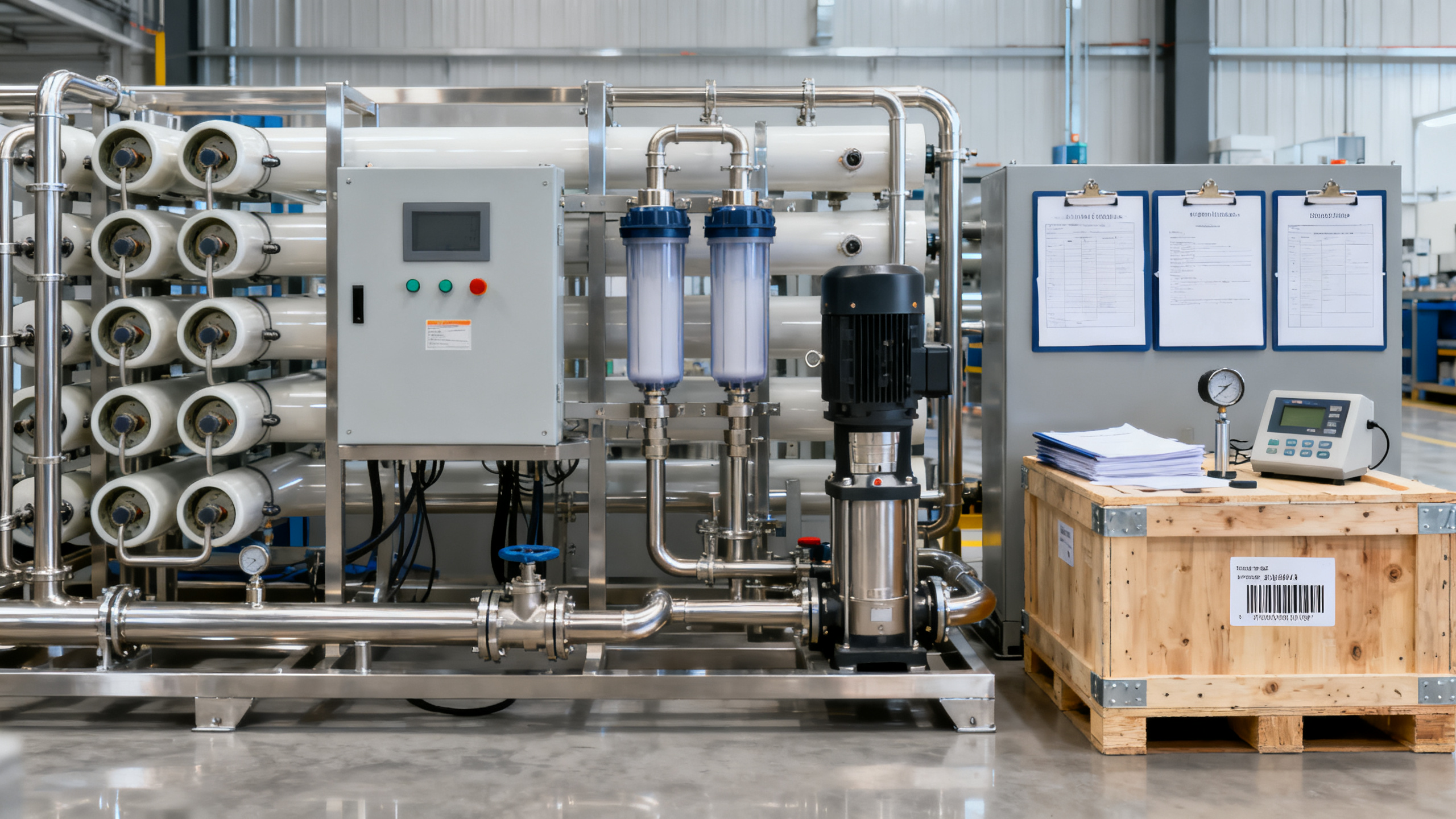
Choosing an Environment & Ecology exporter is rarely a simple sourcing exercise. In industrial projects, the exporter often sits between regulatory exposure and operational continuity, shaping whether environmental systems arrive certified, traceable, and ready for use.
That matters more now because environmental equipment is tied to emissions control, water treatment, waste handling, workplace safety, and public compliance. A weak supplier may look competitive on paper, yet create delays, rework, customs issues, or audit failures later.
For organizations working across heavy industry, utilities, infrastructure, and EPC delivery, evaluation has to go beyond catalogs and quotations. The more reliable path is a structured review of compliance depth, manufacturing discipline, export capability, and supply resilience.
Why this exporter category deserves closer scrutiny

Environment and ecology products affect regulated outcomes, not just purchasing metrics.
An Environment & Ecology exporter may supply filtration units, air pollution control components, wastewater treatment assemblies, monitoring devices, containment systems, or related engineered packages. Each category touches different standards, testing methods, and documentation duties.
In practice, exporters in this space are judged by more than shipping ability. They are evaluated on whether they understand destination-market rules, maintain documentation integrity, and protect project schedules when demand or logistics conditions change.
This is also where the broader industrial context becomes important. Global Industrial Core places environmental sourcing alongside safety, measurement, power, and mechanical systems because these pillars often interact. A treatment skid may depend on electrical conformity, instrument calibration, and corrosion-resistant metallurgy at the same time.
What compliance really means in exporter evaluation
Compliance is often reduced to a certificate file. That is too narrow.
A capable Environment & Ecology exporter should be able to show how product conformity is built into design, sourcing, production, inspection, packaging, and export records. The real question is not whether a certificate exists, but whether it remains valid under the actual shipment scope.
Core documentation to review
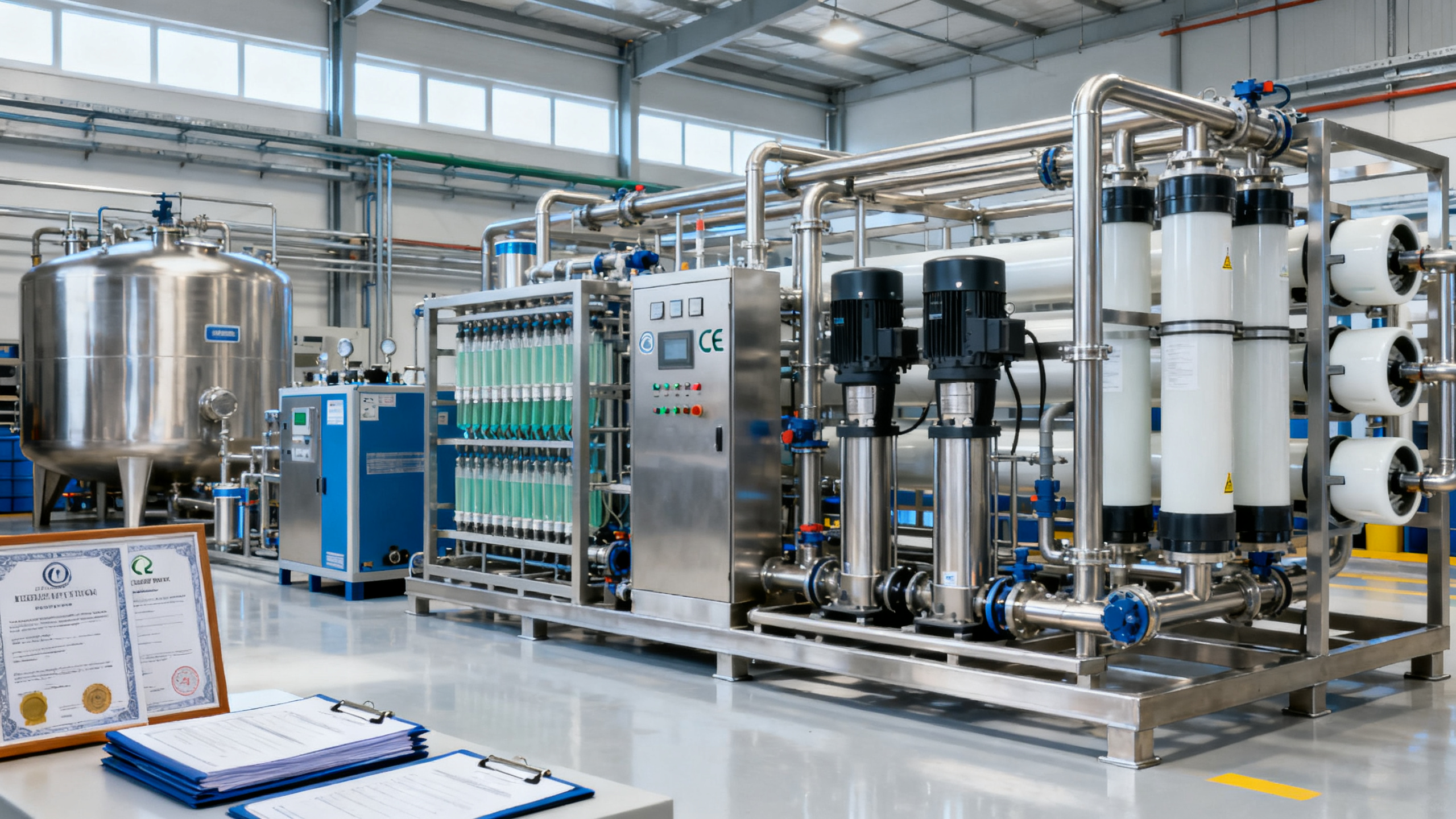
- Applicable certifications such as CE, ISO, UL, or market-specific environmental approvals.
- Material traceability records, especially for pressure, chemical, or corrosion-sensitive applications.
- Factory inspection reports, test procedures, and final acceptance records.
- Declarations covering restricted substances, safety labeling, and packaging compliance.
- Export documents that align with product identity, model codes, and destination regulations.
A common risk appears when exporters provide generic certificates that do not match the exact bill of materials. Another appears when testing was performed on one configuration, while the shipped version includes substitutions.
That is why document consistency matters as much as document presence.
Supply reliability starts inside the factory
A dependable Environment & Ecology exporter usually has visible production controls, not just a polished sales process.
When reviewing supply reliability, it helps to look at how the exporter manages incoming materials, process checkpoints, subcontractors, and final packing. Environmental systems often contain pumps, valves, sensors, membranes, steel parts, and electrical assemblies sourced from multiple tiers.
If supplier control is weak, delays and variation tend to surface late.
Signals of a stronger operating model
- Documented quality checkpoints for each production stage.
- Approved vendor lists for critical components.
- Clear nonconformance handling and corrective action records.
- Buffer planning for long-lead parts and export packaging materials.
- Production visibility through milestone reporting, not vague progress updates.
A useful evaluation method is to ask how the exporter performs during disruption. If one component supplier fails, is there a validated substitute? If port congestion rises, can shipment be rerouted without compromising packing integrity or customs classification?
Reliable exporters answer these questions with process evidence, not reassurance alone.
How to compare exporters in practical terms
A structured comparison reduces bias from price, branding, or presentation quality. It also helps separate exporters that are globally capable from those that only manage straightforward shipments.
This type of matrix is especially useful when two exporters appear similar on technical scope but differ in execution discipline.
Where evaluation criteria change by project scenario
Not every Environment & Ecology exporter is being assessed for the same reason. Context changes the weight of each criterion.
EPC and infrastructure packages
Integrated projects usually prioritize documentation completeness, interface coordination, and schedule certainty. Missing drawings or delayed technical replies can disrupt approval chains across multiple contractors.
Operating facility replacement demand
For installed plants, the focus often shifts to dimensional compatibility, replacement lead time, and after-sales responsiveness. Here, a fast but inaccurate exporter may create longer shutdowns than a slower, more disciplined one.
Cross-border market entry
When entering a new region, the exporter’s familiarity with local marking, labeling, and customs expectations becomes more important. This includes language accuracy in manuals and consistency between shipping and technical files.
Seen this way, exporter assessment is less about finding a universally “best” company and more about matching capability to risk profile.
Questions that reveal hidden risk
Some of the most useful checks are simple, but specific.
- Which components are single-source, and what is the backup plan?
- How are engineering changes recorded after order confirmation?
- Can the exporter provide shipment examples for similar regulated markets?
- What percentage of orders require post-shipment document correction?
- How quickly are warranty claims, missing parts, or field issues closed?
Answers to these points often reveal more than marketing presentations. They show whether the Environment & Ecology exporter understands risk as an operational issue, not a sales objection.
This is also where trusted industry intelligence has value. A data-driven review framework, like the editorial approach associated with Global Industrial Core, helps place supplier claims against broader technical and compliance expectations rather than isolated vendor narratives.
A practical next step for stronger supplier decisions
A sound evaluation process usually starts with a short internal scorecard. Include compliance evidence, production control, delivery history, technical response quality, and contingency strength. Then test each exporter against the actual project scenario, not a generic checklist alone.
If two options remain close, review traceability depth and issue-handling records before reviewing price again. In environmental systems, the lowest visible cost can easily become the highest total risk.
The most dependable Environment & Ecology exporter is usually the one that can prove conformity, explain process control, and sustain delivery under pressure. That is the basis for a supply decision that remains defensible long after the purchase order is placed.
Technical Specifications
- How to Select Electronic Hotel Key Card Locks for Guest Rooms and Staff AreasAuthor :Safety Compliance Lead
- How to Select Lab Instruments for Reliable Chemical Analysis WorkflowsAuthor :Precision Metrology Expert
- How to Size a UPS for Server Rooms: Load, Runtime, and Redundancy FactorsAuthor :Grid Infrastructure Analyst
Expert Insights

Chief Security Architect
Dr. Thorne specializes in the intersection of structural engineering and digital resilience. He has advised three G7 governments on industrial infrastructure security.
Related Analysis
- Sep 17, 2026How to Select Electronic Hotel Key Card Locks for Guest Rooms and Staff AreasAuthor :Safety Compliance Lead
- Sep 16, 2026How to Select Lab Instruments for Reliable Chemical Analysis WorkflowsAuthor :Precision Metrology Expert
- Sep 15, 2026How to Size a UPS for Server Rooms: Load, Runtime, and Redundancy FactorsAuthor :Grid Infrastructure Analyst
Core Sector // 01
Security & Safety
- How to Size a Wafer Butterfly Valve for HVAC Chilled-Water and Heating LoopsAuthor :Environmental Engineering Director

- How Pressure Class and Joint Design Affect Long-Term Performance of Ductile Iron Pipes in Drainage InfrastructureAuthor :Environmental Engineering Director

- How Ductile Iron Pipe Joints Affect Installation Reliability and Leak ControlAuthor :Environmental Engineering Director

- How to Size Effluent Treatment Equipment for Variable Industrial Wastewater LoadsAuthor :Environmental Engineering Director

- US Battery Push Raises New Entry Rules for SuppliersAuthor :Environmental Engineering Director

- EU EMC Rule Tightens for Water Treatment ExportsAuthor :Environmental Engineering Director

- EU REACH Restriction Targets PFAS Water Treatment ImportsAuthor :Environmental Engineering Director

- EU Mandates EN 14113:2026 for Water Treatment ExportsAuthor :Environmental Engineering Director