EN 17552:2026 Becomes Mandatory for EU Water Devices
Author
Date Published
Reading Time
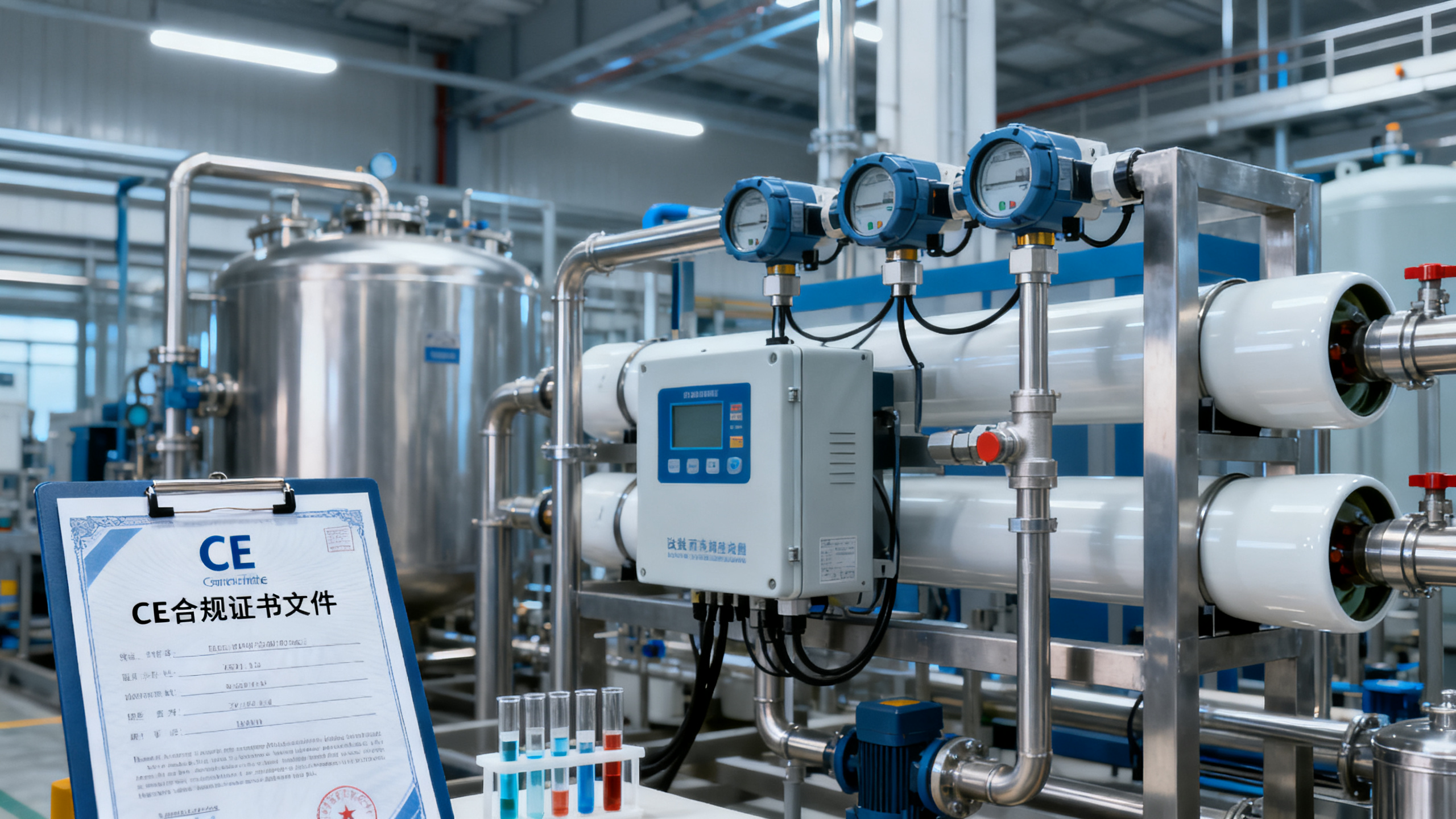
From 12 June 2026, the EU has moved from a standard update to a market-access requirement for industrial water treatment equipment. Under the mandatory implementation of EN 17552:2026, products such as online monitoring modules, sensors, and control units must not only carry CE marking but also meet the full safety and performance requirements of the new standard. For exporters, importers, procurement teams, and compliance functions tied to Industrial Water Treatment equipment, this is worth close attention because the change directly affects customs clearance and continued market availability in the EU.
What the rule now requires
The confirmed change is clear. As of 12 June 2026, the EU formally enforces EN 17552:2026 for industrial water treatment equipment. The scope includes online monitoring modules, sensors, and control units within this product area.
The requirement is not limited to CE marking alone. The products concerned must both hold CE certification and additionally comply with all safety and performance provisions under EN 17552:2026.
The stated consequence for non-compliant products is also explicit: they may be refused customs clearance or removed from the market. This directly affects export access to the EU for Industrial Water Treatment equipment.
Where the pressure is likely to appear first
Export shipments facing a stricter entry threshold
From an industry perspective, exporters are the first group likely to feel the effect because market entry now depends on dual alignment: CE status and conformity with EN 17552:2026. The immediate business impact is likely to center on shipment readiness, customs documentation, product declarations, and the ability to demonstrate that the equipment falls within the required compliance framework.
Manufacturing and assembly linked to technical file readiness
Manufacturers and integrators of monitoring modules, sensors, and control units may be affected at the product-definition and delivery stages. Analysis shows that the key issue is not only whether a product can be sold technically, but whether its safety and performance documentation, supporting test materials, and specification alignment can stand up to the new mandatory benchmark during export and placement on the EU market.
Procurement and project teams under new qualification checks
Buyers and project procurement teams may need to treat EN 17552:2026 compliance as a practical sourcing condition rather than a background technical preference. What deserves closer attention is whether bid documents, purchase specifications, and supplier qualification reviews begin to reference the new standard together with CE requirements, especially for equipment intended for EU delivery.
Certification and testing service providers facing verification demand
Certification-related service providers and testing bodies may see higher demand for compliance review support. Observably, the important point for companies is not to assume that existing CE-related materials automatically cover the new standard, but to verify whether additional assessment, documentation, or technical review is needed for the products concerned.
What companies should review now
Check whether current approvals cover the new requirement
Analysis shows that companies should first distinguish between existing CE compliance and the additional requirement created by EN 17552:2026. For products already prepared for EU export, the practical question is whether current certification and technical files are sufficient under the new mandatory framework.
Revisit product documents and transaction paperwork
What deserves closer attention is the consistency of product descriptions, technical documents, declarations, test materials, and trade paperwork used during export and delivery. Where compliance evidence is incomplete or unclear, the risk may appear not only at customs but also at listing, acceptance, or downstream project execution.
Watch delivery schedules and supplier qualification timing
For companies with active EU-bound orders or pipeline projects, it is more appropriate to understand this as a timing issue as well as a compliance issue. If additional review or certification work is required, delivery schedules, procurement planning, and supplier onboarding may need closer coordination. The current input does not provide detailed enforcement procedures, so companies should treat timing assumptions cautiously and continue monitoring implementation signals.
Follow how the requirement appears in commercial practice
Observably, another area to monitor is how the rule is reflected in tender documents, customer specifications, after-sales expectations, and product traceability requests. The input confirms the mandatory standard and the risk of customs refusal or delisting, but it does not define every operational checkpoint, so businesses should keep watching for more concrete compliance language in transactions and project documents.
Why this looks like an execution signal, not just a policy update
Analysis shows that this development is better understood as an implemented market-access condition rather than an early consultation signal. The reason is that the effective date and the consequence of non-compliance are already stated: products that do not meet the requirement may be blocked at customs or removed from the market.
At the same time, it would be premature to treat every downstream outcome as settled. Observably, the market still needs to watch how the requirement is applied in documentation review, commercial qualification, technical bidding, and post-sale compliance expectations. In that sense, the rule change is already in force, while its detailed operating impact still deserves continued observation.
How this development is best understood now
For the industrial water treatment equipment segment, this update signals a firmer compliance threshold for access to the EU market. The immediate meaning is not simply that a new standard exists, but that CE marking alone is no longer sufficient where EN 17552:2026 applies.
It is more appropriate to understand this event as a confirmed rule implementation with direct trade and compliance consequences. The broader commercial effect on sourcing, delivery, qualification, and market response will depend on how companies and counterparties translate the requirement into day-to-day execution.
Basis of this article and what still needs verification
This article is based on the user-provided title, event date, and summary describing the mandatory implementation of EN 17552:2026 from 12 June 2026 and its effect on CE-linked compliance for industrial water treatment equipment.
For events of this type, commonly relevant source categories may include official notices, regulatory authority releases, customs or trade authority information, industry association updates, standard-setting organization documents, and reporting by authoritative media. No specific official source link was provided in the input, so the exact official reference still requires ongoing verification.
Further observation should focus on any later clarification of enforcement wording, certification interpretation, tender-document updates, market feedback, and how affected companies implement the requirement in export, procurement, and delivery practice.
Technical Specifications
- How to Select Electronic Hotel Key Card Locks for Guest Rooms and Staff AreasAuthor :Safety Compliance Lead
- How to Select Lab Instruments for Reliable Chemical Analysis WorkflowsAuthor :Precision Metrology Expert
- How to Size a UPS for Server Rooms: Load, Runtime, and Redundancy FactorsAuthor :Grid Infrastructure Analyst
Expert Insights

Chief Security Architect
Dr. Thorne specializes in the intersection of structural engineering and digital resilience. He has advised three G7 governments on industrial infrastructure security.
Related Analysis
- Sep 17, 2026How to Select Electronic Hotel Key Card Locks for Guest Rooms and Staff AreasAuthor :Safety Compliance Lead
- Sep 16, 2026How to Select Lab Instruments for Reliable Chemical Analysis WorkflowsAuthor :Precision Metrology Expert
- Sep 15, 2026How to Size a UPS for Server Rooms: Load, Runtime, and Redundancy FactorsAuthor :Grid Infrastructure Analyst
Core Sector // 01
Security & Safety
- How to Size a Wafer Butterfly Valve for HVAC Chilled-Water and Heating LoopsAuthor :Environmental Engineering Director

- How Pressure Class and Joint Design Affect Long-Term Performance of Ductile Iron Pipes in Drainage InfrastructureAuthor :Environmental Engineering Director

- How Ductile Iron Pipe Joints Affect Installation Reliability and Leak ControlAuthor :Environmental Engineering Director

- How to Size Effluent Treatment Equipment for Variable Industrial Wastewater LoadsAuthor :Environmental Engineering Director

- US Battery Push Raises New Entry Rules for SuppliersAuthor :Environmental Engineering Director

- EU EMC Rule Tightens for Water Treatment ExportsAuthor :Environmental Engineering Director

- EU REACH Restriction Targets PFAS Water Treatment ImportsAuthor :Environmental Engineering Director

- EU Mandates EN 14113:2026 for Water Treatment ExportsAuthor :Environmental Engineering Director