EU EN 17552:2026 Takes Effect for Water Monitoring Exports
Author
Date Published
Reading Time
On June 12, 2026, the EU made EN 17552:2026 mandatory for industrial water treatment equipment used in municipal and industrial settings, bringing immediate compliance pressure to exporters of online water quality analyzers, turbidity, residual chlorine, pH and conductivity sensors, and automatic sampling systems. The development matters not only to manufacturers, but also to trading companies, buyers, supply chain teams, and service providers because uncertified products may be blocked at customs or removed from sale, while the new technical thresholds directly affect delivery schedules and adaptation costs.
What the New Standard Now Requires
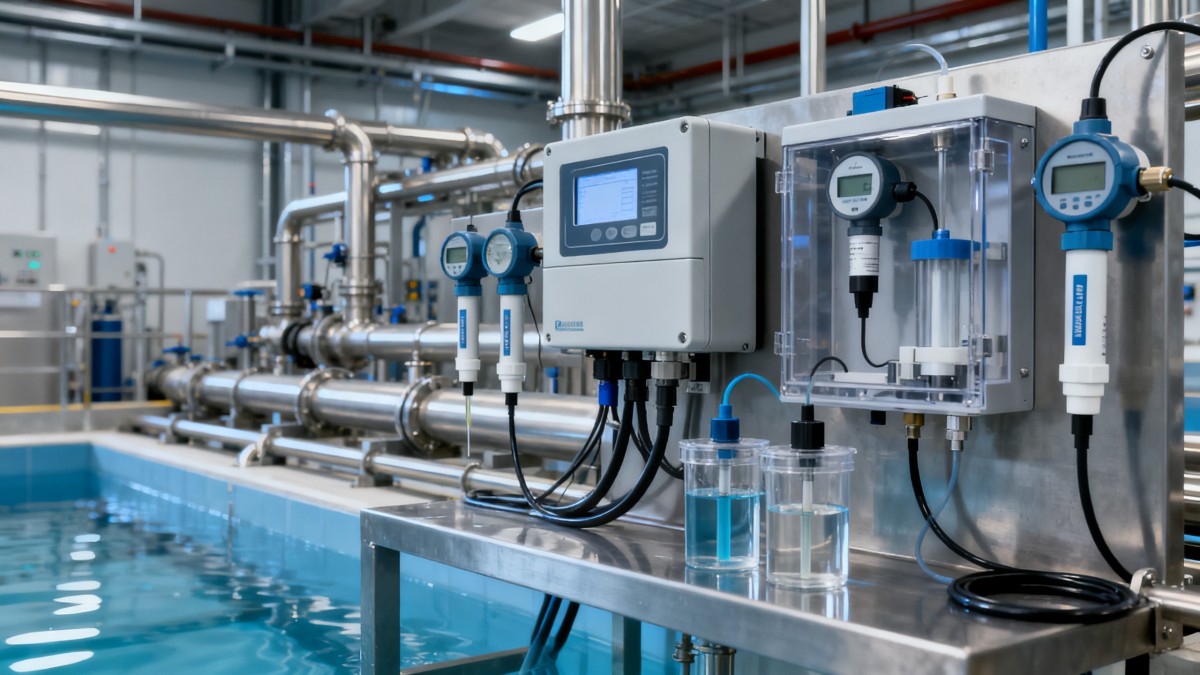
According to the provided information, EN 17552:2026, described as the EU standard for safety and performance assessment of industrial water treatment equipment, became mandatory on June 12, 2026. Its scope covers online water quality analyzers and related devices used in municipal and industrial scenarios, including turbidity, residual chlorine, pH, and conductivity sensors, as well as automatic sampling systems.
The same information states that products without certification will not be allowed to clear customs or remain listed for sale. It also confirms three newly added mandatory requirements: AI abnormality recognition response latency of no more than 300 ms, electromagnetic interference resistance at IEC 61000-4-3 Level 4, and encrypted data transmission at TLS 1.3 or above.
Where the Pressure Appears Across the Chain
Export-facing suppliers face an immediate delivery risk
From an industry perspective, the most direct impact falls on companies shipping covered equipment into the EU market. The reason is straightforward: once certification is mandatory, the risk is no longer limited to future bidding or customer preference, but to whether goods can clear customs or stay on the market at all. What deserves closer attention is the link between compliance readiness and shipment timing, especially for products already close to delivery.
Manufacturers must reconcile design compliance with production rhythm
Analysis shows that device makers are likely to feel pressure in product design, testing preparation, and production scheduling at the same time. The newly stated requirements are not limited to basic hardware performance; they also touch AI response speed, electromagnetic compatibility, and encrypted transmission. That means compliance work may involve both hardware and software adaptation, which can affect technical validation and factory release timing.
Distributors and channel operators need to reassess product eligibility
Observably, distributors and channel partners selling covered devices into the EU need to focus on whether current product portfolios remain marketable under the new rule. The key issue is not only new orders, but also whether existing listed products or planned shipments can still proceed without interruption if certification status is incomplete.
Procurement and end users may see longer qualification discussions
For buyers and end-use organizations, the impact may show up in supplier qualification, documentation review, and project delivery coordination. From an industry perspective, once compliance becomes a market access condition, procurement teams are more likely to ask for clearer certification status, technical documentation, and delivery commitments before moving forward.
What Companies Should Check First
Confirm which product lines are within scope
The first practical issue is product mapping. Companies involved with online water quality analyzers, turbidity, residual chlorine, pH and conductivity sensors, and automatic sampling systems should review whether their current export portfolio falls within the covered categories described in the provided information.
Review technical gaps against the three new hard requirements
Analysis shows that the most urgent technical review points are the newly added thresholds: AI abnormality recognition response latency at no more than 300 ms, electromagnetic interference resistance at IEC 61000-4-3 Level 4, and encrypted data transmission at TLS 1.3 or above. What deserves closer attention is whether current product architecture can meet these requirements without delaying shipment or triggering redesign.
Prepare certification and shipment documents together
Observably, compliance is not only a technical issue but also a delivery management issue. Since uncertified products may be denied customs clearance or removed from sale, exporters, trading teams, and logistics coordinators should align certification status, shipment planning, and customer documentation more closely than before.
Set expectations early with EU-side customers and partners
From an industry perspective, communication becomes part of risk control once a standard is already mandatory. Companies may need to clarify product status, expected compliance timelines, and any possible delivery changes with customers, distributors, or project partners to reduce disruption in order execution.
Why This Looks Like More Than a Passing Update
Analysis shows that this is better understood as an immediate compliance event rather than a policy signal waiting for interpretation, because the mandatory date has already arrived and market access consequences are clearly stated in the provided information. At the same time, it is also a longer-term signal that technical expectations for industrial water monitoring equipment are extending beyond traditional measurement performance into response speed, electromagnetic resilience, and secure data transmission.
Observably, the most important point is not to overread broader market conclusions from a single update, but to recognize that the rule changes the threshold for exporting covered products into the EU. That makes it relevant both as a short-term operational issue and as a longer-term product adaptation direction.
How to Read This Development Now
At this stage, it is more appropriate to understand the enforcement of EN 17552:2026 as a concrete market-access requirement with immediate operational consequences for covered industrial water monitoring equipment. The confirmed facts already point to direct effects on customs clearance, product listing status, technical adaptation workload, and export scheduling. The broader commercial impact still requires continued observation, but the compliance trigger itself is no longer uncertain.
Basis of This Article and What Still Needs Verification
This article is generated based on the user-provided news title, event date, and event summary. For this type of development, common source categories usually include official notices, company disclosures, industry association updates, authoritative media coverage, and standard organization documents. No specific official source link was provided in the input, so the exact official document path remains to be verified on an ongoing basis. Follow-up attention should focus on any further official wording, implementation clarifications, and document-level confirmation related to EN 17552:2026 and its practical enforcement.
Technical Specifications
- How to Select Electronic Hotel Key Card Locks for Guest Rooms and Staff AreasAuthor :Safety Compliance Lead
- How to Select Lab Instruments for Reliable Chemical Analysis WorkflowsAuthor :Precision Metrology Expert
- How to Size a UPS for Server Rooms: Load, Runtime, and Redundancy FactorsAuthor :Grid Infrastructure Analyst
Expert Insights

Chief Security Architect
Dr. Thorne specializes in the intersection of structural engineering and digital resilience. He has advised three G7 governments on industrial infrastructure security.
Related Analysis
- Sep 17, 2026How to Select Electronic Hotel Key Card Locks for Guest Rooms and Staff AreasAuthor :Safety Compliance Lead
- Sep 16, 2026How to Select Lab Instruments for Reliable Chemical Analysis WorkflowsAuthor :Precision Metrology Expert
- Sep 15, 2026How to Size a UPS for Server Rooms: Load, Runtime, and Redundancy FactorsAuthor :Grid Infrastructure Analyst
Core Sector // 01
Security & Safety
- How to Size a Wafer Butterfly Valve for HVAC Chilled-Water and Heating LoopsAuthor :Environmental Engineering Director

- How Pressure Class and Joint Design Affect Long-Term Performance of Ductile Iron Pipes in Drainage InfrastructureAuthor :Environmental Engineering Director

- How Ductile Iron Pipe Joints Affect Installation Reliability and Leak ControlAuthor :Environmental Engineering Director

- How to Size Effluent Treatment Equipment for Variable Industrial Wastewater LoadsAuthor :Environmental Engineering Director

- US Battery Push Raises New Entry Rules for SuppliersAuthor :Environmental Engineering Director

- EU EMC Rule Tightens for Water Treatment ExportsAuthor :Environmental Engineering Director

- EU REACH Restriction Targets PFAS Water Treatment ImportsAuthor :Environmental Engineering Director

- EU Mandates EN 14113:2026 for Water Treatment ExportsAuthor :Environmental Engineering Director